
Ofcom Proposes Mandatory Accessibility Quotas and Broadcast-Style Content Rules for Major Streaming Services
The UK's communications regulator has unveiled draft rules requiring major streaming platforms like Netflix and Disney+ to meet strict accessibility quotas and adhere to broadcast-style content standards for the first time.
By Austin Blake

- Accessibility Advocates
- Campaigners and government officials view the quotas as a vital step for digital inclusion.
- Broadcasting Industry
- Legacy television networks welcome the end of a two-tiered regulatory system.
- Legal and Compliance Experts
- Industry lawyers emphasize the significant operational shift required for global platforms.
Why this matters
For years, streaming platforms have operated outside the strict regulations governing traditional UK television. These new rules will guarantee that over 18 million viewers with hearing or sight impairments can reliably access their favorite shows, while ensuring consistent protections against harmful content across all major platforms.
Key points
- Ofcom has drafted new rules requiring Tier 1 streaming services to subtitle at least 80% of their catalogs.
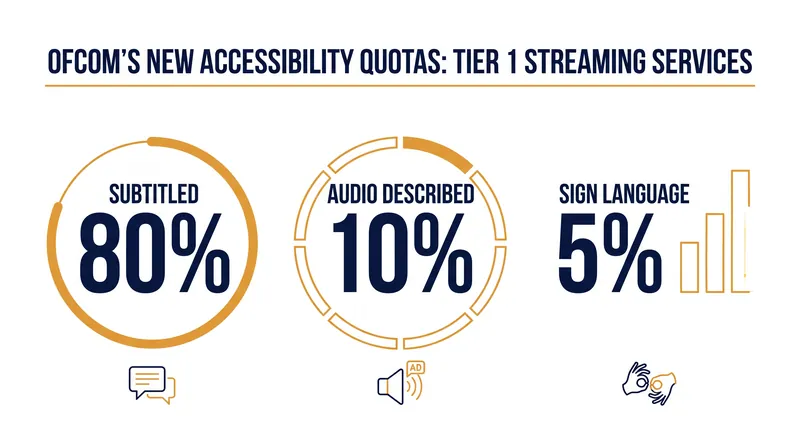
- The regulations also mandate audio description for 10% of content and sign language for 5%.
- Major platforms like Netflix and Disney+ will face broadcast-style content standards regarding harm, fairness, and impartiality.
- The public consultation period closed on August 7, 2026, with final rules expected later this year.
For the first time, major streaming platforms in the United Kingdom are going to be held to the same strict accessibility and content standards as traditional television. Watching a blockbuster on Netflix or a prestige drama on Disney+ has long felt like a regulatory wild west compared to flipping on BBC One. While traditional broadcasters have spent decades adhering to strict Ofcom rules, international streamers have largely operated outside the regulator's purview, even while targeting and profiting from British audiences.[1][2]
That era is officially ending. Empowered by the newly implemented Media Act, Ofcom has drafted sweeping new codes that will force "Tier 1" streaming services—defined as those with over 500,000 UK users, including giants like Amazon Prime Video and Disney+—to meet mandatory accessibility quotas and broadcast-style content protections. The public consultation period for these draft codes officially closed on August 7, 2026, marking the final step before the regulator reviews the industry feedback and publishes the enforceable rules later this year.[2][4]
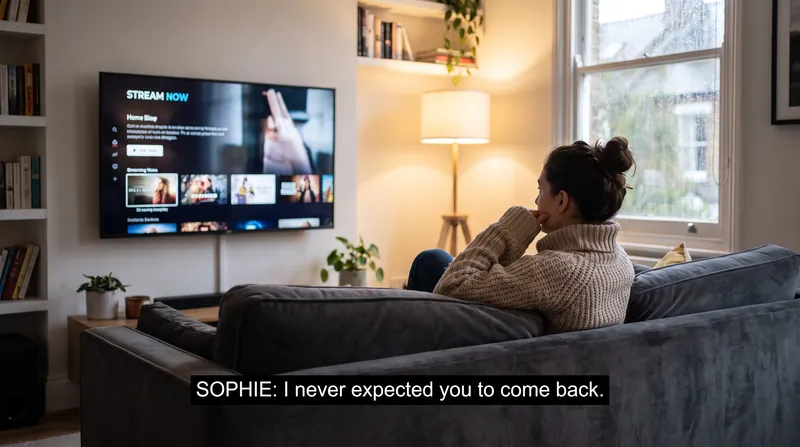
The most immediate and tangible change will be felt by the estimated 18 million people in the UK who live with hearing or sight impairments. Historically, these viewers have faced a fragmented landscape where a show might be fully accessible on broadcast TV but lack basic subtitles when it moves to a streaming platform. Under the new rules, platforms must provide subtitles for at least 80% of their total catalog. Furthermore, 10% of content must feature audio description, and 5% must include sign language interpretation, ensuring that disabled audiences are not left behind in the streaming revolution.[3][5]
Crucially, Ofcom has explicitly noted that poor-quality accessibility features—such as garbled auto-generated captions, poorly synced audio tracks, or inaccurate sign language interpretation—will not count toward these mandatory quotas. The regulator is demanding high-quality, reliable features that genuinely serve the audience. Platforms will also be required to report annually on the quality and usability of their accessibility features, ensuring that the sheer volume of subtitled content is matched by actual utility for disabled viewers who rely on these services daily.[1][6]
Beyond accessibility, the new framework tackles the thorny issue of content standards, bringing Silicon Valley tech giants in line with legacy British broadcasters. Streamers will now face the exact same scrutiny as linear television regarding harmful material, fairness, privacy, and the protection of minors appearing in programs. While potentially harmful or offensive content will not be prohibited outright, platforms will be expected to provide appropriate viewer protections, contextual justification, and clear warnings, ensuring that audiences can make informed viewing choices before pressing play.[2][7]
Beyond accessibility, the new framework tackles the thorny issue of content standards, bringing Silicon Valley tech giants in line with legacy British broadcasters.
The rules also introduce strict editorial justifications for explicit depictions of novel or unusual suicide methods, a measure designed to protect vulnerable viewers from triggering material. This is a direct response to growing concerns over how easily accessible graphic content has become for younger audiences navigating vast, algorithmic streaming libraries without the traditional watershed protections of broadcast television. Streamers will now have to carefully weigh the editorial merit of such scenes against the potential harm they might cause, bringing their internal compliance teams much closer to the rigorous standards employed by traditional networks.[1][7]
Another significant area of regulation concerns news and current affairs content distributed via streaming platforms, an increasingly common format as streamers experiment with live events and documentaries. Streaming services carrying news programming will be required to comply with due impartiality and due accuracy obligations similar to those already applied to UK broadcasters. However, Ofcom proposes allowing impartiality to be maintained across multiple programs rather than within a single broadcast, a pragmatic concession that reflects the binge-watch nature of on-demand viewing where audiences consume entire series in a single sitting.[2][6]
For the streaming giants, this represents a massive operational shift that will require significant investment in compliance infrastructure. Platforms that previously managed global catalogs with a one-size-fits-all approach will now need bespoke compliance pipelines specifically tailored for the UK market. They must build these regulatory checks directly into their production and acquisition pipelines, ensuring that every piece of content—whether it is a blockbuster original or a licensed catalog title—meets Ofcom's exacting standards before it is made available to British users.[3][7]

Traditional broadcasters, meanwhile, have welcomed the end of what they viewed as a fundamentally unfair, two-tiered regulatory system. Legacy networks like the BBC, ITV, and Channel 4 have long complained that they are forced to adhere to strict, costly compliance standards while their streaming competitors operate freely and aggressively compete for the same audience. By bringing Tier 1 streamers under Ofcom's umbrella, the Media Act finally levels the playing field, ensuring that all major players are held to the same standard of accountability.[2][3]
Ultimately, this regulatory overhaul treats television like television, regardless of whether it arrives via a traditional aerial antenna or a high-speed broadband internet connection. As viewing habits continue to shift overwhelmingly toward on-demand platforms, these new codes ensure that audiences will have consistent protections and reliable accessibility however they choose to watch. The era of the unregulated streaming wild west is rapidly closing in the UK, replaced by a mature media landscape where the immense scale of global platforms is finally matched by robust regulatory responsibility and a commitment to viewer welfare.[1][5]
How we got here
May 2024
The UK Parliament passes the Media Act, granting Ofcom new powers to regulate video-on-demand services.
May 2026
Ofcom publishes its draft accessibility and content standards Codes for Tier 1 streaming platforms.
August 7, 2026
The public consultation period for the proposed rules officially closes.
Late 2026
Ofcom is expected to publish the finalized Codes and begin enforcement.
Viewpoints in depth
Accessibility Advocates
Campaigners and government officials view the quotas as a vital step for digital inclusion.
For years, viewers with hearing or sight impairments have faced a fragmented landscape where a show might be fully accessible on broadcast TV but lack basic subtitles when it moves to a streaming platform. Advocates argue that the 80% subtitling and 10% audio description quotas are not just regulatory hurdles, but fundamental civil rights victories that ensure 18 million UK residents aren't locked out of the cultural conversation.
Traditional Broadcasters
Legacy television networks welcome the end of a two-tiered regulatory system.
Traditional broadcasters have long complained that they are forced to adhere to strict, costly compliance standards while their streaming competitors operate freely. By bringing Tier 1 streamers under Ofcom's umbrella, legacy networks believe the Media Act finally levels the playing field, ensuring that all major platforms competing for British eyeballs are playing by the exact same rules regarding impartiality, fairness, and harm.
Legal and Compliance Experts
Industry lawyers emphasize the significant operational shift required for global platforms.
While the goals of the new codes are widely supported, legal analysts note that implementing them will require massive backend changes for international streamers. Platforms that previously managed global catalogs with a one-size-fits-all approach will now need bespoke compliance pipelines for the UK market, particularly when navigating the nuanced rules around due impartiality and the strict definitions of what constitutes 'high-quality' accessibility features.
Sources
Source coverage
7 outlets
3 viewpoints surfaced







[1]OfcomAccessibility Advocates
Stronger protections for UK audiences under new content and accessibility standards for streaming services
Read on Ofcom →[2]Broadband TV NewsBroadcasting Industry
Ofcom unveils streaming rules consultation
Read on Broadband TV News →[3]Advanced TelevisionBroadcasting Industry
Ofcom Proposes Mandatory Accessibility Quotas and Broadcast-Style Content Rules for Major Streaming Services
Read on Advanced Television →[4]Wired GovBroadcasting Industry
Stronger protections for UK audiences under new content and accessibility standards for streaming services
Read on Wired Gov →[5]UK GovernmentAccessibility Advocates
New requirements for UK's biggest video-on-demand services
Read on UK Government →[6]Lewis SilkinLegal and Compliance Experts
Media Act update: Ofcom consults on content standards and accessibility codes
Read on Lewis Silkin →[7]Society for Computers & LawLegal and Compliance Experts
Ofcom consults on new content and accessibility standards for streaming services
Read on Society for Computers & Law →
Comments
Every angle. Every day.
Get entertainment stories with full source coverage and perspective breakdowns delivered to your inbox.