
The Mechanics of the EES Failure: How European Airports Are Suspending Biometric Border Checks to Avoid Travel Chaos
Major European airports are temporarily turning off the EU's new biometric Entry/Exit System during peak hours, reverting to manual passport stamps to prevent massive border delays.
By Irina Belova

- Aviation Industry & Airport Operators
- Airlines and airport managers argue that strict biometric enforcement is incompatible with peak summer travel volumes.
- European Border Authorities
- EU officials emphasize the security imperatives of the EES and view the current suspensions as strictly temporary.
- Travel Advisors & Passengers
- Travelers and their agents are focused on practical workarounds and the system's usability flaws.
Why this matters
For non-EU travelers navigating Europe this summer, understanding when and where biometric checks are suspended can mean the difference between a smooth connection and a missed flight.
Key points
- Major European airports are temporarily suspending the new Entry/Exit System (EES) during peak hours to avoid long queues.
- When lines reach critical thresholds, travelers are routed to traditional desks for manual passport stamping.
- The aviation industry is lobbying to make this emergency bypass flexibility a permanent operational tool.
- The current EU waiver allowing these suspensions is scheduled to expire in early September.
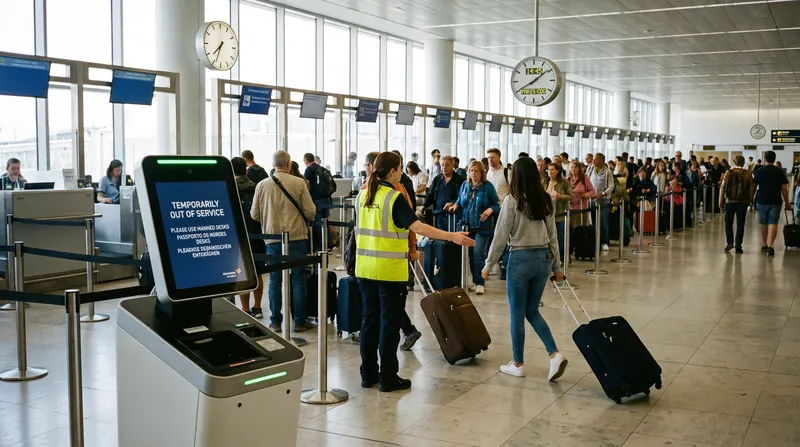
If you are flying into Paris, Amsterdam, or Rome this summer, the most important factor in whether you make your connecting flight might just be how long the line is when you land. After months of anticipation and anxiety over the European Union's new Entry/Exit System (EES), the reality on the ground has taken an unexpected turn. Rather than forcing every passenger through the glowing screens of new biometric scanners, major European airports are quietly pulling the plug on the technology during peak hours to keep travelers moving.[1]
The EES, which fully replaced physical passport stamps with digital facial and fingerprint scans across the Schengen Area in April 2026, was designed to modernize border security. But as the peak summer travel season pushes passenger volumes to their limits, the system has struggled to keep pace. To prevent the kind of five-hour queues that industry groups warned about, border authorities in France, Italy, Spain, and Portugal are exercising emergency provisions to temporarily suspend the digital checks.[1][2][3]
When the lines at hubs like Paris Charles de Gaulle or Amsterdam Schiphol reach critical thresholds, officials simply switch off the biometric kiosks. Travelers are then routed to traditional desks where border guards manually stamp their passports, just as they did before the EES rollout. Air France-KLM confirmed that the system is frequently shut off during the busy summer months to ensure smooth transit at their primary hubs.[1][3]
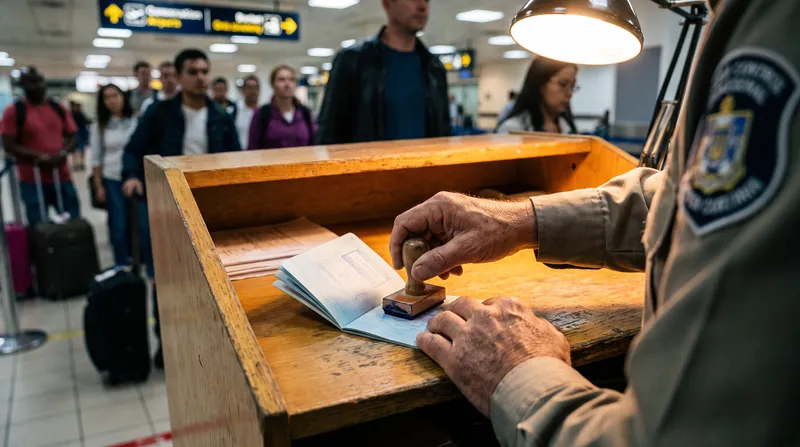
The friction points of the new system are largely physical. Biometric scanners require precise interactions—travelers must know exactly where to stand, where to look, and how to place their hands on the glass. For some demographics, the technology presents unique hurdles; older travelers, for instance, have reported that the machines struggle to read faded fingerprints, forcing them out of the automated lanes and into separate, slower queues for manual processing.[3][6]
Biometric scanners require precise interactions—travelers must know exactly where to stand, where to look, and how to place their hands on the glass.
This "turn it off and turn it back on again" strategy is technically sanctioned by an EU Commission waiver that allows member states to bypass the EES in "exceptional circumstances." However, that flexibility is not permanent. The current waiver is scheduled to expire in early September, and the European border agency Frontex has indicated that the suspension option will not be extended.[1][2]
The looming deadline has sparked intense lobbying from the aviation industry. Airports Council International (ACI) Europe and major airlines have urged the European Commission to establish a permanent mechanism that allows airports to suspend the EES whenever passenger volumes exceed operational capacity. They argue that without the ability to revert to manual checks, the system will inevitably cause missed connections and stranded travelers.[4]
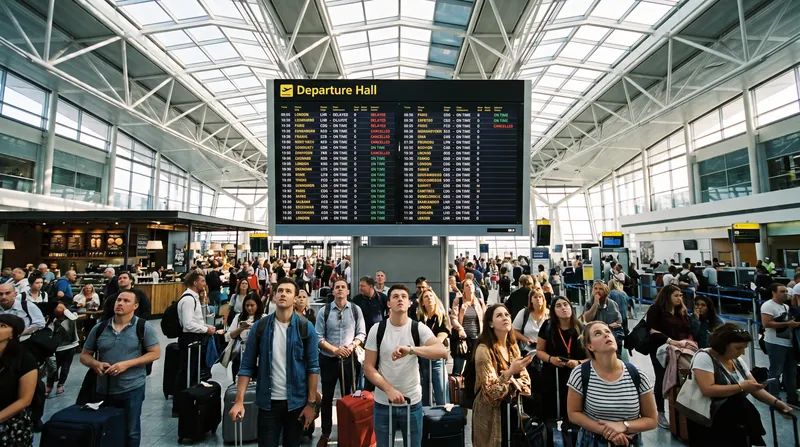
For travelers with late-summer itineraries, the unpredictable nature of the EES means that routing matters more than ever. Travel advisors are increasingly steering clients toward itineraries that avoid connecting flights within the Schengen Area. Flying non-stop to a final destination, or connecting through non-EES hubs like London, Dublin, or Istanbul, eliminates the risk of getting caught in a biometric bottleneck midway through a journey and watching your onward flight board without you.[5]
As the September deadline approaches, European authorities face a delicate balancing act between enforcing strict security mandates and acknowledging the operational realities of massive, echoing airport terminals. Until a permanent solution is reached, non-EU visitors should pack a little extra patience, double-check their connection times, and be prepared for either a swift digital scan or the nostalgic thud of a manual passport stamp.[1][5]
Viewpoints in depth
Aviation Industry & Airport Operators
Airlines and airport managers argue that strict biometric enforcement is incompatible with peak summer travel volumes.
For the aviation sector, the EES represents a logistical bottleneck that threatens the delicate choreography of summer flight schedules. Groups like Airports Council International (ACI) Europe have warned that without the ability to temporarily suspend biometric checks, wait times could stretch to five hours. Airlines point out that missed connections due to border delays are entirely outside their control, yet they bear the brunt of passenger frustration and rebooking costs. They are aggressively lobbying the European Commission to make the current emergency bypass provisions a permanent operational tool.
European Border Authorities
EU officials emphasize the security imperatives of the EES and view the current suspensions as strictly temporary.
From a regulatory and security standpoint, the Entry/Exit System is a necessary modernization of the Schengen Area's borders. It is designed to eliminate human error, catch document fraud, and accurately track visa overstays—objectives that are compromised every time the system is switched off. While agencies like Frontex have tolerated the temporary waivers to prevent summer gridlock, they maintain that the primary goal is full, uninterrupted implementation. Authorities have signaled that the flexibility to revert to manual stamping will expire in September, pushing airports to adapt their infrastructure rather than rely on bypasses.
Travel Advisors & Passengers
Travelers and their agents are focused on practical workarounds and the system's usability flaws.
For the people actually navigating the terminals, the EES is a wildcard that requires strategic planning. Travel advisors are actively rerouting clients through non-Schengen hubs like London or Istanbul to avoid the risk of mid-journey biometric bottlenecks. Meanwhile, passengers are encountering unexpected usability issues on the ground. Older travelers, for example, have reported that the scanners frequently fail to read faded fingerprints, forcing them into slower manual queues. For this group, the promise of a seamless digital border has instead added a new layer of friction to international transit.
Sources
Source coverage
6 outlets
3 viewpoints surfaced






[1]TravelPulseAviation Industry & Airport Operators
Europe's Struggling Entry-Exit System Temporarily Uses Turn It Off, Turn It Back On Again Strategy
Read on TravelPulse →[2]Open JawAviation Industry & Airport Operators
Some European Countries Hit Pause on EES Border Checks
Read on Open Jaw →[3]Biometric UpdateEuropean Border Authorities
Biometric Entry/Exit System facing operational challenges at border points
Read on Biometric Update →[4]The GuardianAviation Industry & Airport Operators
Officials admit new post-Brexit EES system is 'not perfect', as airports and airlines voice fears over delays
Read on The Guardian →[5]ForbesTravel Advisors & Passengers
How And Where To Avoid EES Travel Chaos In Europe
Read on Forbes →[6]Daily ExpressTravel Advisors & Passengers
Elderly Brits are facing extra-long queues at the airport due to their faded fingerprints
Read on Daily Express →
Comments

Every angle. Every day.
Get travel stories with full source coverage and perspective breakdowns delivered to your inbox.