
Cleveland Overhauls Community Benefits Agreements to Mandate Local Hiring and Equity in Development Projects
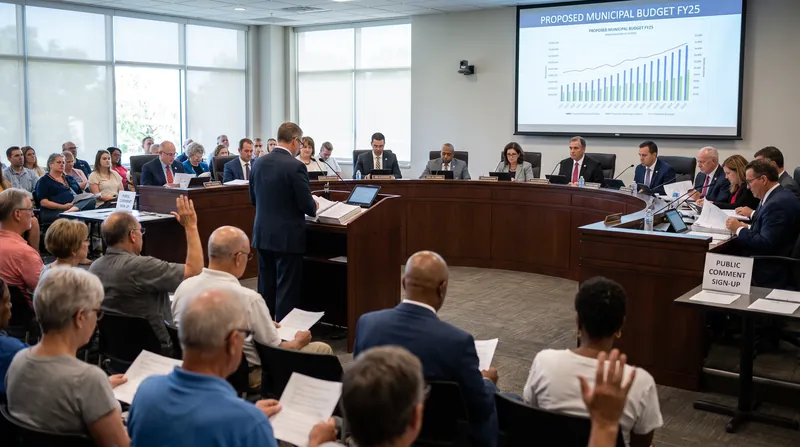
Cleveland has codified its economic development strategy, legally requiring developers who receive public subsidies to hire local workers and partner with diverse businesses. The overhauled ordinance transforms voluntary guidelines into a strict compliance system that guarantees a measurable return on investment for the community.

- Equity Advocates
- Argue that public subsidies must be leveraged to mandate local hiring and dismantle systemic wealth disparities.
- Labor Organizations
- Focus on protecting prevailing wages and creating structured apprenticeship pipelines for local residents.
- Urban Developers
- Value regulatory predictability and standardized approval processes while managing compliance costs.
Perspectives this story doesn't cover
- Non-union independent contractors who may struggle to meet the new compliance and reporting thresholds.
- Small-scale residential developers navigating the baseline requirements for mid-sized projects.
Why this matters
By legally mandating that developers receiving public funds must hire local workers and partner with diverse businesses, Cleveland is transforming taxpayer subsidies into a direct tool for community wealth building. This codified approach provides a blueprint for other cities looking to ensure that economic revitalization directly benefits the residents living in its shadow.
Key points
- Cleveland's overhauled Community Benefits Ordinance mandates local hiring and diverse contracting for projects receiving over $250,000 in city assistance.
- The policy replaces voluntary guidelines with a strict, two-tiered compliance system that scales with the size of the development.
- Since implementation, the city has executed 33 agreements tied to $959 million in investments, generating $147 million in local contracting opportunities.
- A new Community Benefit Scorecard evaluates projects before incentives are awarded, ensuring alignment with the city's equity priorities.
- The ordinance includes financial penalties for non-compliance and requires a public dashboard to track workforce data transparently.
Cleveland has overhauled its economic development strategy, legally mandating that developers receiving public subsidies must hire local workers and partner with minority- and women-owned businesses. Under the city's Community Benefits Ordinance, any project seeking $250,000 or more in municipal financial assistance is now bound by strict, enforceable equity requirements. The policy shift transforms what was once a loose framework of voluntary agreements into a rigid compliance system. For developers, the actionable takeaway is clear: accessing city funds now requires a contractual commitment to share the economic upside with the local workforce. The legislation ensures that public subsidies are no longer handed out without a guaranteed, measurable return on investment for the neighborhoods hosting the new developments.[1]
The overhauled policy replaces a decade-old patchwork of guidelines with a codified, two-tiered system designed to scale with the size and impact of the development. For standard projects, developers must meet baseline goals for local hiring and diverse contracting before they can receive municipal support. For expanded projects—defined as those costing over $20 million—developers face a significantly higher threshold. They must select from a menu of additional community benefits, which can range from funding neighborhood infrastructure improvements like sidewalks and street paving to providing paid apprenticeships for Cleveland high school and community college students. This tiered approach ensures that mega-developments carry a proportional responsibility to uplift the surrounding community.
The financial stakes attached to the new mandates are substantial, fundamentally altering how public money flows through the local economy. Since the framework's implementation, Cleveland has executed 33 binding Community Benefits Agreements tied to more than $959 million in projected real estate investments. By tying public assistance directly to local procurement, these agreements have already carved out over $147 million in guaranteed contracting opportunities for certified local, minority, and female-owned firms. To maintain accountability, the city's economic development department now requires developers to submit regular quarterly reports detailing their progress toward these financial and hiring benchmarks, ensuring that the promised funds actually reach local businesses.
At its core, the overhaul is designed to ensure that public money generates a direct return for a city that has historically ranked among the poorest municipalities in the United States. City Council leaders, who championed the legislation, argued that taxpayer-funded incentives must contribute to the common good rather than exclusively benefiting private real estate portfolios. The ordinance was drafted to explicitly address systemic wealth disparities by ensuring that the communities subsidizing new developments actually participate in the resulting economic growth. By mandating local hiring, the city aims to circulate development dollars within Cleveland's borders, boosting the local tax base and providing residents with a tangible stake in the city's ongoing revitalization.[1]
The mandate specifically targets the construction industry's long-standing demographic imbalances, which have historically excluded marginalized groups from the most lucrative municipal projects. While Cleveland's population is roughly 46 percent Black and 51 percent female, those demographics have long been underrepresented in the regional building trades. The new rules require developers to actively recruit from these populations and utilize Minority Business Enterprises (MBEs) and Female Business Enterprises (FBEs). By setting firm utilization targets, the city aims to expand the pipeline of workers and businesses that have traditionally been locked out of city-backed construction contracts, forcing developers to look beyond their usual networks when staffing a project.[1]
While Cleveland's population is roughly 46 percent Black and 51 percent female, those demographics have long been underrepresented in the regional building trades.
Labor organizations have emerged as key supporters of the standardized requirements, viewing them as a vital mechanism to protect local wages and expand union membership. The Cleveland Building and Construction Trades Council emphasized that the ordinance prevents non-union developers from importing out-of-town labor at below-market rates. Instead, the framework creates a structured, incentivized pipeline for local residents to enter union apprenticeships, secure prevailing wages, and build long-term careers in the trades while working on projects in their own neighborhoods. For union leaders, the mandate represents a critical victory against developers who previously exploited public subsidies without contributing to the local labor ecosystem.
To evaluate proposed developments before any money changes hands, the city introduced a Community Benefit Scorecard. This objective assessment tool is used by the Department of Economic Development to grade projects seeking tax increment financing, commercial tax abatements, or large municipal grants. The scorecard evaluates how well a proposed project aligns with the city's long-term equity priorities, ensuring that financial incentives are awarded only to developers who can prove their projects will deliver measurable, contractual benefits to the surrounding community. This front-end evaluation prevents the city from subsidizing projects that offer minimal public value, shifting the balance of power back toward the municipality during incentive negotiations.
Enforcement and transparency are built directly into the new system, addressing a major criticism of past agreements that lacked regulatory teeth. The current ordinance includes explicit financial penalties for developers who breach their contracts or fail to make a good-faith effort to meet their hiring targets. Furthermore, the legislation requires the city to maintain a publicly available digital dashboard tracking workforce utilization, local business participation, and overall compliance. This public-facing data allows residents, advocacy groups, and journalists to monitor developer performance in real time, ensuring that the promises made during city council hearings translate into actual paychecks for Cleveland residents.[1]
The structured approach also benefits developers by providing regulatory predictability, replacing the uncertainty of ad-hoc community negotiations with a standardized municipal process. Rather than negotiating unique demands with disparate neighborhood groups on a project-by-project basis, builders now have a clear framework for what is expected of them when they apply for municipal assistance. The ordinance outlines exactly which community benefits are mandatory and which are optional, streamlining the approval process for developers who are willing to comply with the city's equity standards. This clarity reduces delays and legal friction, allowing compliant projects to break ground faster.[2]
Cleveland's model reflects a broader national shift in urban planning, where municipalities are increasingly leveraging their zoning and subsidy powers to mandate inclusive economic growth. By codifying these requirements into law, the city has established a blueprint for equitable development that other post-industrial cities are closely watching. The overhaul ensures that as new investments reshape the Cleveland skyline, the economic boom directly employs and empowers the residents living in its shadow, transforming public subsidies from a corporate handout into a powerful tool for community wealth building.[2][3]
How we got here
June 2023
Cleveland City Council passes the Community Benefits Ordinance to overhaul the city's development incentive structure.
September 2023
The new codified requirements officially take effect for all projects seeking municipal financial assistance.
Late 2024
The city introduces the Community Benefit Scorecard to objectively evaluate proposed developments.
August 2026
The city reports 33 executed agreements generating over $147 million in contracting opportunities for certified local firms.
Viewpoints in depth
City Officials & Advocates
Proponents argue that public subsidies must guarantee a direct return on investment for the local workforce.
City Council members and community advocates emphasize that Cleveland has historically ranked among the poorest cities in the nation, making it unacceptable to hand out taxpayer funds without demanding equitable economic returns. They argue that the codified ordinance closes loopholes that previously allowed developers to make vague promises without facing penalties. By mandating local hiring and diverse contracting, this camp believes the city can use its leverage to actively dismantle systemic wealth disparities and build a more inclusive middle class.
Labor Organizations
Unions view the mandate as a critical tool to protect local wages and expand apprenticeship pipelines.
The Cleveland Building and Construction Trades Council and affiliated labor groups strongly support the overhaul, arguing that it prevents developers from undercutting local wages by importing out-of-town, non-union labor. From their perspective, the Community Benefits Ordinance creates a vital, incentivized pathway for residents to enter the trades. They contend that when public money is involved, the jobs created should offer prevailing wages, benefits, and long-term career stability for the people who actually live in the community.
Real Estate Developers
Builders appreciate the regulatory clarity but caution against overly burdensome compliance costs.
While many developers have adapted to the new framework, industry groups often caution that rigid mandates can increase the overall cost and complexity of building in the city. However, they acknowledge that the codified system provides much-needed predictability. Rather than facing eleventh-hour demands from neighborhood groups or city council members, developers now have a clear scorecard and a standardized menu of expectations. This camp argues that as long as the requirements remain economically feasible, the streamlined approval process is a net positive for urban development.
Sources
Source coverage
3 outlets
3 viewpoints surfaced



- [1]Signal ClevelandEquity Advocates
What are Community Benefits Agreements, and how are they supposed to help Clevelanders?
Read on Signal Cleveland → - [2]Michigan State UniversityEquity Advocates
Community Benefits Agreements
Read on Michigan State University → - [3]Factlen Editorial TeamEquity Advocates
Synthesis by Factlen editorial team
Read on Factlen Editorial Team →
Comments

More in Community
See all →Urban Poverty
The Five Deprivations That Define a Slum Household in Global Monitoring
8 sources

Municipal Finance
The Three Revenue Pillars That Dictate Municipal Independence
9 sources
Governance Structures
The Distribution of Authority to the Lowest Competent Level of Governance
4 sources

Social Dynamics
The 25% Critical Mass That Causes a Minority Opinion to Overturn a Social Norm
7 sources

Every angle. Every day.
Get Community stories with full source coverage and perspective breakdowns delivered to your inbox.