
Federal Courts Force Cities to Roll Back Natural Gas Bans in New Construction
A wave of federal court rulings and DOJ lawsuits is forcing municipalities to abandon building codes that mandate all-electric new construction. The legal battles have created a deep geographic divide over whether local climate policies violate a 1975 federal appliance law.

Share this story
After facing aggressive lawsuits from the Department of Justice, the California cities of Morgan Hill and Petaluma quietly scrubbed their municipal codes of mandates that banned natural gas infrastructure in new construction. The DOJ dropped its litigation shortly after the spring 2026 repeals, marking a decisive victory in a growing federal campaign to dismantle local "electrify everything" building codes.[1][2]
The rollbacks represent a massive shift in the battle over American energy policy and housing construction. For years, local governments viewed municipal building codes as their most potent weapon for reducing greenhouse gas emissions and transitioning neighborhoods away from fossil fuels. But a wave of recent federal court rulings has weaponized a decades-old appliance law to strip cities of that authority, forcing dozens of municipalities to abandon their climate mandates.
The legal wrecking ball dismantling these local laws is the Energy Policy and Conservation Act (EPCA) of 1975. Originally passed in the wake of the Arab oil embargo, the federal law was designed to create uniform national energy efficiency standards for consumer appliances, ensuring manufacturers did not have to navigate a patchwork of state regulations. Today, however, courts are interpreting the law's "federal preemption" clause to mean that cities cannot indirectly ban federally regulated gas appliances by prohibiting the pipes that fuel them.
The precedent was set by the city that started the movement. In 2019, Berkeley, California, became the first municipality in the country to ban natural gas hookups in new low-rise residential buildings. The ordinance sparked a nationwide trend, inspiring at least 99 similar local laws across the United States. But the California Restaurant Association sued, arguing the ban bypassed federal energy regulations and threatened the survival of businesses relying on open-flame cooking.
In a landmark decision, the 9th U.S. Circuit Court of Appeals sided with the restaurants, striking down Berkeley's ordinance. The court ruled that local governments cannot circumvent federal preemption simply by banning the piping rather than the appliances themselves. After the court denied a rehearing, Berkeley officially repealed its pioneering law, sending a deep chill through city halls across the American West.
The Berkeley ruling triggered a domino effect. Fearing costly litigation, cities from Eugene, Oregon, to San Luis Obispo, California, voluntarily suspended or reversed their own gas bans. But the Department of Justice decided that voluntary suspensions were not enough. In early 2026, the DOJ launched a direct legal offensive, suing cities like Morgan Hill and Petaluma to force permanent, formal repeals.[2]
Federal prosecutors argued that the local decarbonization measures were policies that denied consumers reliable energy and undermined "American energy dominance." The DOJ's filings emphasized the economic toll of the bans, claiming they impose "crushing costs" on residents by forcing developers to rely entirely on an already strained electric grid, which ultimately drives up the cost of new housing and utility bills.
The construction and restaurant industries have heavily backed the federal intervention. Trade groups argue that natural gas remains the most cost-effective and efficient energy source for heating and cooking in many regions. By mandating all-electric construction, they contend, cities are artificially inflating the cost of building new homes during a national housing shortage, while simultaneously stripping consumers of their preferred energy choices.[3]
Environmental and public health advocates view the legal strategy as a catastrophic misinterpretation of a 1975 efficiency law. They argue that EPCA was never intended to dictate local land-use or building safety codes. Beyond the climate imperative of reducing fossil fuel combustion, advocates point to a growing body of research linking indoor gas stoves to severe health risks, including estimates that gas appliances are responsible for roughly 13 percent of childhood asthma cases in the United States.
The legal arguments often hinge on the specific mechanism of the ban. Berkeley's ordinance explicitly prohibited the installation of natural gas piping in new buildings. In contrast, New York's statewide law and the local codes in Maryland operate by setting strict emissions limits or mandating "net-zero" energy standards for new construction. Proponents argue this distinction is crucial, as it regulates the building's overall environmental impact rather than outright banning a specific fuel pipe.[3]
Despite the DOJ's victories on the West Coast, the legal landscape is rapidly fracturing into a chaotic jurisdictional divide. In March 2026, federal district courts in Maryland and Washington, D.C., explicitly rejected the 9th Circuit's reasoning. Judges in those jurisdictions upheld local all-electric building codes, ruling that the laws regulate the type of energy infrastructure permitted in new construction, not the performance characteristics of the appliances themselves.
The conflict escalated into a full-blown constitutional showdown in late June 2026. The 2nd U.S. Circuit Court of Appeals issued a blockbuster ruling upholding New York's statewide ban on natural gas in new construction. The decision directly contradicts the 9th Circuit's interpretation of federal preemption, creating a stark geographic reality: a building code that is perfectly legal in New York or Maryland is now a federal violation in California or Oregon.[3]
This deep circuit split virtually guarantees that the dispute will land before the United States Supreme Court. Until the high court resolves the fundamental question of whether a 1975 appliance efficiency law supersedes local building codes, developers, climate advocates, and city planners are left navigating a fractured legal map that changes every time a new federal judge issues a ruling.
Key points
- The DOJ successfully pressured California cities to repeal natural gas bans in early 2026.
- Courts in the 9th Circuit ruled that local bans violate the 1975 Energy Policy and Conservation Act.
- Industry groups argue the bans drive up housing costs and limit consumer energy choices.
- Climate advocates say the bans are necessary to cut emissions and improve indoor air quality.
What we don’t know
- Whether the Supreme Court will agree to hear the case and establish a single national precedent.
- How cities in the 9th Circuit will rewrite their climate action plans without the ability to mandate all-electric buildings.
- The long-term impact of the rulings on the cost of new residential construction.
How we got here
July 2019
Berkeley, California, passes the nation's first ban on natural gas hookups in new construction.
April 2023
The 9th Circuit Court of Appeals strikes down Berkeley's ordinance, citing federal preemption.
January 2026
The Department of Justice sues Morgan Hill and Petaluma to force the repeal of their local bans.
March 2026
Federal courts in Maryland and Washington, D.C., uphold local all-electric building codes.
June 2026
The 2nd Circuit Court of Appeals upholds New York's statewide natural gas ban, creating a circuit split.
- Federal Preemption Proponents
- Argue that local gas bans violate federal appliance laws and drive up housing costs.
- Building Electrification Advocates
- Argue that cities must have the authority to regulate infrastructure to meet climate and health goals.
Perspectives this story doesn't cover
- Local utility companies managing grid capacity
Sources
Source coverage
3 outlets
2 viewpoints surfaced



- [1]Politico ProFederal Preemption Proponents
DOJ drops lawsuits after 2 California cities repeal gas appliance bans
Read on Politico Pro → - [2]Los Angeles TimesFederal Preemption Proponents
Trump administration sues two California cities over natural gas bans
Read on Los Angeles Times → - [3]Marcellus Drilling NewsFederal Preemption Proponents
Fed Appeals Court Upholds New York's Ban on NatGas in New Homes
Read on Marcellus Drilling News →
More in Community
See all →Short-Term Rentals
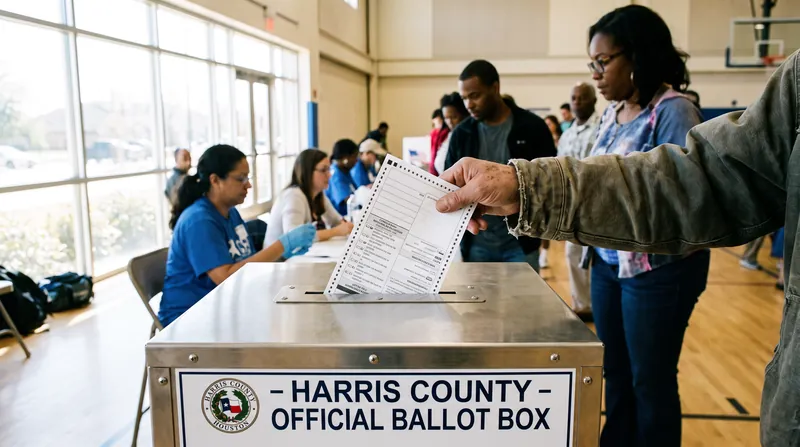
North Chicago Imposes Hard Cap of 25 Units on Short-Term Rentals
1 sources
Stadium Financing
Kansas City Council Committee Advances Funding for Downtown Royals Stadium and Hallmark Headquarters
6 sources
Public Defense
How Washington Cities Are Redesigning Misdemeanor Enforcement to Navigate the Public Defender Crisis
3 sources
Last-Mile Logistics
NYC Mayor Backs 'Delivery Protection Act' to End Amazon's Subcontractor Delivery Model
6 sources
Comments
Every angle. Every day.
Get Community stories with full source coverage and perspective breakdowns, free every day.