
Justice Department Declares EEOC Disparate-Impact Guidelines Unconstitutional
A new Office of Legal Counsel opinion concludes that holding employers liable for unintentional statistical disparities in hiring violates the Constitution, fundamentally altering federal civil rights enforcement.
By Anaya Sharma

- The Administration & Conservative Advocates
- Argues disparate-impact liability forces unconstitutional racial balancing.
- Civil Rights Organizations
- Argues the opinion dismantles a vital tool for fighting systemic discrimination.
- Employment Law Analysts
- Focuses on the practical reduction in federal enforcement risk for employers.
Fast facts
- The Justice Department's Office of Legal Counsel issued a memo declaring the EEOC's disparate-impact guidelines unconstitutional.
- The opinion argues that holding employers liable for unintentional statistical disparities coerces them into race-conscious hiring.
- Employers can now use tools like background checks and aptitude tests with a presumption of lawfulness.
- Plaintiffs must now prove that a specific practice caused a disparity and offer an equally effective alternative.
- Civil rights advocates warn the move guts a 50-year-old legal framework essential for combating systemic discrimination.
Why this matters
By declaring disparate-impact liability unconstitutional, the Justice Department has effectively removed the primary legal mechanism used to challenge systemic workplace discrimination, making it significantly harder for employees to sue over hiring practices that disproportionately exclude minorities and women.
How we got here
April 2025
President Trump signs Executive Order 14281 directing federal agencies to eliminate disparate-impact liability.
December 2025
The Justice Department publishes a final rule ending disparate-impact liability under Title VI for programs receiving federal funds.
June 4, 2026
The EEOC issues a national enforcement plan committing to drop disparate-impact theories from its investigations.
June 9, 2026
The DOJ's Office of Legal Counsel issues a formal opinion declaring the EEOC's disparate-impact guidelines unconstitutional.
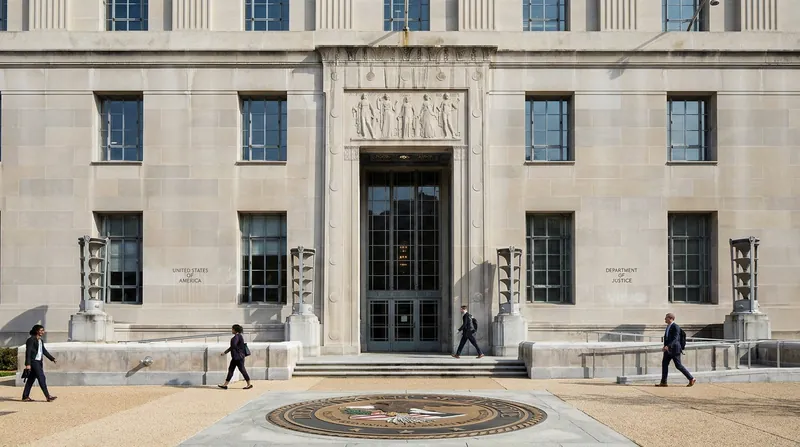
On June 9, the Justice Department's Office of Legal Counsel issued a 25-page memorandum dismantling a 50-year-old pillar of federal civil rights enforcement. The formal opinion declares that the Equal Employment Opportunity Commission’s guidelines on "disparate impact"—the legal doctrine holding employers liable for neutral policies that produce statistically unequal outcomes across demographic groups—are unconstitutional. The directive marks a profound shift in how the federal government interprets workplace discrimination, moving away from evaluating systemic outcomes and toward requiring proof of explicit, intentional animus.[1][3]
Authored by OLC Assistant Attorney General T. Elliot Gaiser and Deputy Assistant Attorney General Joshua Craddock, the memo asserts that the EEOC's historical approach functions as a "qualified racial-proportionality mandate." By threatening employers with crippling liability over raw statistical disparities, the Justice Department argues, the government effectively coerces businesses into engaging in race-conscious hiring and racial balancing simply to avoid lawsuits. The OLC claims this dynamic violates the equal protection guarantees of the Constitution, transforming a law meant to ensure equal treatment into one demanding equal outcomes.[1][2][3]
The opinion fundamentally alters the burden of proof in employment discrimination cases and provides immediate cover for corporate hiring practices. Under the new framework, workplace selection procedures—such as aptitude tests, criminal background checks, and educational requirements—are presumed to be job-related and lawful. To successfully bring a disparate-impact claim, plaintiffs must now prove that a specific employment practice directly caused the disparity and provide concrete evidence of an equally effective alternative practice that carries less disparate impact, a significantly higher bar than previous standards.[1][6][7]
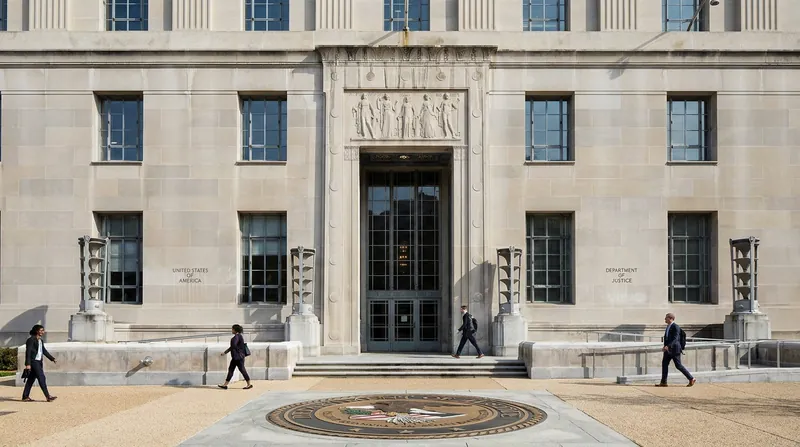
The directive serves to implement Executive Order 14281, signed by President Donald Trump in April 2025, which ordered federal agencies to eliminate disparate-impact liability across civil rights enforcement. Acting Attorney General Todd Blanche, whom Trump recently nominated to serve permanently in the role, stated that the EEOC's previous interpretation "actually fosters the very discrimination its guidelines seek to address." Blanche argued the new standard will allow businesses to hire strictly based on performance, framing the shift as a restoration of meritocracy in the American workplace.[1][2][8]
The Justice Department's intervention was formally requested by EEOC Chair Andrea Lucas, who praised the OLC's analysis upon its release. Lucas stated the memo provides "clarity regarding the Constitutional limits of disparate impact in employment discrimination matters." The EEOC had already begun aligning its enforcement priorities with the administration's goals, issuing a national enforcement plan earlier in the month that committed the agency to dropping disparate-impact theories from its investigations and prioritizing claims of intentional disparate treatment.[1][7][8]
The Justice Department's intervention was formally requested by EEOC Chair Andrea Lucas, who praised the OLC's analysis upon its release.
Disparate-impact theory originated in the 1971 Supreme Court decision Griggs v. Duke Power Co. and was later codified by Congress in the Civil Rights Act of 1991. It was designed to address systemic barriers that exclude protected groups even when overt, intentional animus cannot be proven. The OLC opinion leverages recent Supreme Court jurisprudence, including the voting rights decision in Allen v. Milligan, to argue that liability should only apply to practices reflecting a "significant likelihood of intentional discrimination," effectively overriding decades of administrative precedent.[3][5][7]

Former Justice Department officials and civil rights advocates warn the opinion effectively guts the government's ability to combat modern, structural discrimination. Johnathan Smith, a former deputy assistant attorney general in the Civil Rights Division who currently serves as a managing director at the National Center for Youth Law, called disparate impact a "vital tool in rooting out patterns of discrimination and unlawful conduct." Smith noted that courts, including the Supreme Court, have long recognized its lawfulness and its essential role in ensuring equal opportunity for historically marginalized groups across the country.[2][4]
Critics argue the OLC's requirement to prove intentional discrimination ignores how bias operates in practice. Stacey Young, founder of the DOJ alumni group Justice Connection, stated that discriminatory outcomes frequently occur without explicit animus, which is exactly why disparate-impact liability has been a cornerstone of civil rights enforcement. Regan Rush, director of Red Line for Civil Rights at Democracy Forward, added that the opinion "treats discrimination as if it only exists when someone openly admits to it," describing the move as a broad attempt to narrow civil rights protections.[2][4]
The EEOC opinion is part of a wider, coordinated rollback of disparate-impact enforcement across the entire federal government. In December, the Justice Department published a final rule eliminating disparate-impact liability under Title VI for programs receiving federal financial assistance, arguing that the threat of lawsuits coerced funding recipients into racial balancing. Similar efforts are currently underway at the Department of Education and the Department of Housing and Urban Development, signaling a comprehensive, administration-wide shift in how the executive branch interprets and enforces federal civil rights law, moving decisively away from systemic remedies.[2][5]
Viewpoints in depth
The Administration & Conservative Advocates
Argues that disparate-impact liability forces employers to engage in unconstitutional racial balancing.
Proponents of the OLC opinion, including Acting Attorney General Todd Blanche and groups like the Center for Equal Opportunity, argue that the EEOC's historical enforcement functioned as a de facto racial-proportionality mandate. They contend that by threatening businesses with crippling liability over raw statistical disparities, the government was coercing employers into making race-based hiring decisions. This camp views the new standard as a return to a colorblind Constitution, where individuals are judged strictly on merit and performance, and employers are free to use standard selection tools without fear of federal sanction.
Civil Rights Organizations
Argues that the opinion ignores the reality of systemic bias and dismantles a vital tool for equal opportunity.
Civil rights lawyers and advocacy groups argue that discrimination is rarely overt, making disparate-impact liability essential for challenging neutral policies that function as structural barriers. Advocates like Regan Rush and Johnathan Smith point out that Congress explicitly codified disparate impact in the Civil Rights Act of 1991 to address these exact scenarios. This camp views the OLC opinion as a deliberate misinterpretation of the law designed to shield employers from accountability, warning it will lead to a sharp increase in unchecked discrimination across the American workplace.
Sources
Source coverage
8 outlets
3 viewpoints surfaced







[1]Department of JusticeThe Administration & Conservative Advocates
Justice Department Concludes EEOC Disparate-Impact Guidelines Violate the Constitution
Read on Department of Justice →[2]CBS NewsEmployment Law Analysts
Justice Department accuses EEOC of violating federal civil rights laws
Read on CBS News →[3]Courthouse News ServiceEmployment Law Analysts
Justice Department's Office of Legal Counsel releases opinion concluding EEOC guidelines are unconstitutional
Read on Courthouse News Service →[4]Black EnterpriseCivil Rights Organizations
DOJ Deems EEOC Protection Against Worker Discrimination Is Unconstitutional
Read on Black Enterprise →[5]JuristEmployment Law Analysts
US Department of Justice issues formal legal opinion declaring EEOC approach to disparate impact liability unlawful
Read on Jurist →[6]Center for Equal OpportunityThe Administration & Conservative Advocates
DOJ Opinion Finds EEOC Title VII Disparate Impact Guidelines Unconstitutional
Read on Center for Equal Opportunity →[7]Ogletree DeakinsEmployment Law Analysts
The U.S. Equal Employment Opportunity Commission's guidelines regarding disparate impact liability under Title VII are inconsistent with the statute
Read on Ogletree Deakins →[8]Jackson LewisEmployment Law Analysts
DOJ Opinion Finds EEOC Title VII Disparate Impact Guidelines Unconstitutional
Read on Jackson Lewis →
Comments
Every angle. Every day.
Get news politics stories with full source coverage and perspective breakdowns delivered to your inbox.