
Antarctic Sea Ice Loss Accelerates Past Model Predictions, Raising Tipping Point Alarm
New data reveals that Antarctic sea ice is retreating faster than standard climate models predicted, though scientists have identified a crucial 30-to-50-year window to prepare for the resulting sea-level rise.
By Mateo Ramos

- Climate Modelers
- Focus on refining decadal forecasts and correcting the variables that caused previous models to underestimate warming.
- Climate Monitors
- Track the real-time physical changes in global ocean temperatures and weather patterns driving the melt.
- Adaptation Planners
- Prioritize the practical timeline for coastal preparation, utilizing the 30-to-50-year predictability window to build resilience.
Summary
- Antarctic sea ice is retreating rapidly, transitioning the Southern Ocean from a reflector of sunlight to a heat sink.
- Record-breaking global ocean temperatures are fundamentally altering the physical dynamics at the southern pole.
- The loss of sea ice removes a critical physical buffer, exposing land-based ice shelves to destructive wave action.
- Despite the accelerated melting, scientists project a reliable 30-to-50-year window to forecast sea-level rise before predictability drops.
For coastal residents, urban planners, and infrastructure developers, the timeline for adapting to sea-level rise just became much more specific. A cascade of new data reveals that the ice shielding the southern pole is not just melting—it is fundamentally changing how it interacts with the ocean. This shift is accelerating ice loss past the boundaries of our most trusted climate models, forcing a real-time rewrite of global forecasts.[4]
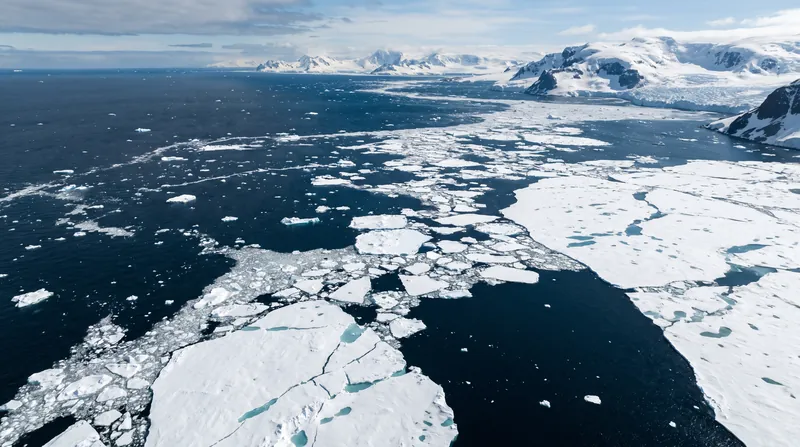
The evidence pack assembled from recent peer-reviewed studies confirms that Antarctic sea ice has entered a new physical state. After decades of defying global warming trends by slowly expanding, the ice extent crashed abruptly and has struggled to recover, driven by a rapidly warming ocean.[1]
To understand what the data actually says, it is necessary to look at the broader context of global ocean temperatures. Recent data confirms that global oceans recorded their hottest July on record, partly fueled by developing El Niño conditions. This unprecedented ocean heat is fundamentally altering the physical dynamics at the poles.[3]
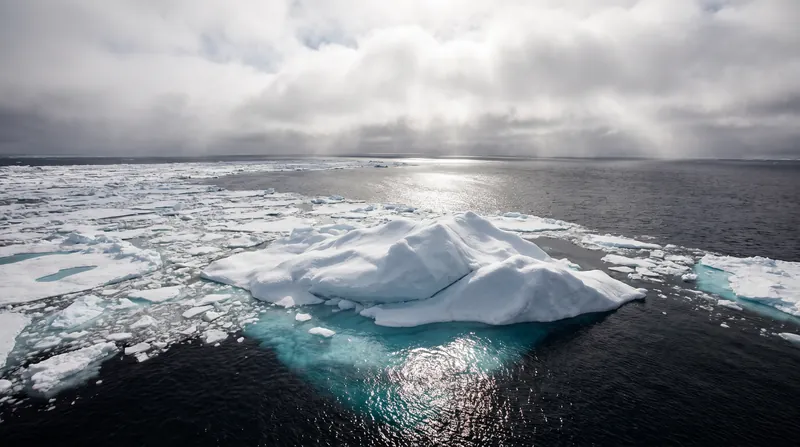
As the Southern Ocean absorbs this excess heat, the sea ice acts as a giant mirror, reflecting incoming solar radiation back into space. When the ice retreats, it exposes vast expanses of dark ocean water, which absorbs the sun's heat rather than reflecting it.[4]
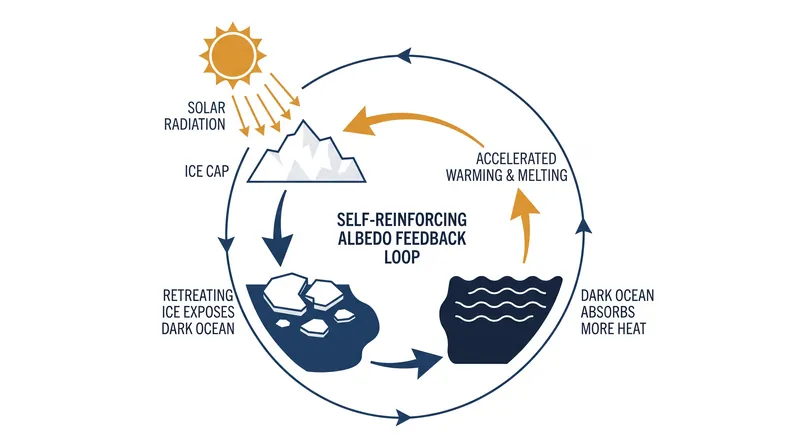
This creates a self-reinforcing feedback loop: the ocean warms, which melts more ice, which exposes more dark water. This transition marks a "regime shift" in the Southern Ocean, moving it from a system that buffers global warming to one that actively amplifies it.[4]
This creates a self-reinforcing feedback loop: the ocean warms, which melts more ice, which exposes more dark water.
The acceleration of these mechanisms caught the scientific community off guard, revealing a significant gap in standard climate models. The models that underpin most global climate policy underestimated the speed of this transition, particularly the complex interactions between ocean heat and ice shelf stability.[1]
The loss of sea ice also removes a critical physical barrier for Antarctica's massive land-based ice shelves. Sea ice acts as a shock absorber, dampening the energy of ocean waves before they can strike the floating tongues of the glaciers. Without this buffer, the ice shelves are exposed to direct wave action and warmer surface waters, increasing the risk of structural collapse.[4]
If these ice shelves disintegrate, the land-based glaciers they hold back will accelerate their flow into the ocean, drastically increasing sea-level rise. However, the evidence is explicit about where our certainty ends. We do not yet know the exact temperature threshold that will trigger the irreversible collapse of the larger West Antarctic Ice Sheet basins.[1][4]
Despite the alarming acceleration, the data offers a crucial silver lining for adaptation planning. A major study published in Nature by Monash University researchers demonstrates that the Antarctic contribution to sea-level rise remains highly predictable for the next three to five decades.[2]
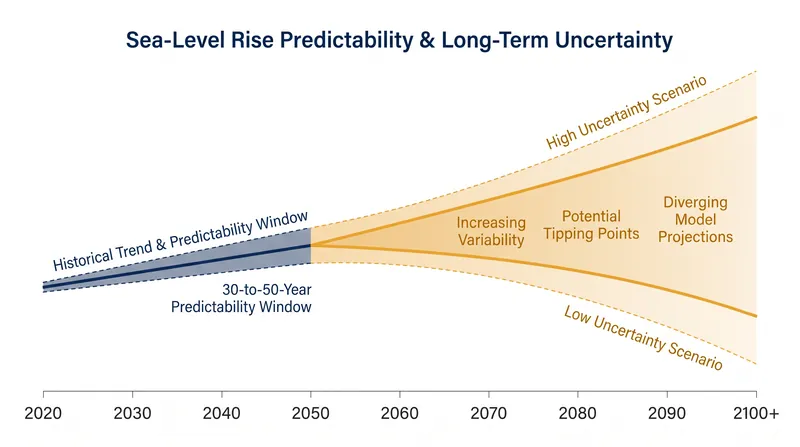
This predictability emerges because the physical processes driving ice loss over the next 30 to 50 years are already locked in by current ocean temperatures and ice dynamics. For governments and coastal planners, this provides a reliable, defined window to build sea walls, relocate vulnerable infrastructure, and update zoning laws.[2][4]
The uncertainty spikes dramatically after 2050. Beyond that mid-century mark, the models show that unstable ice retreat—such as marine ice-cliff instability, where tall ice cliffs collapse under their own weight—could accelerate non-linearly. Once those thresholds are crossed, forecasting the exact rate of sea-level rise becomes exceedingly difficult.[1][2]
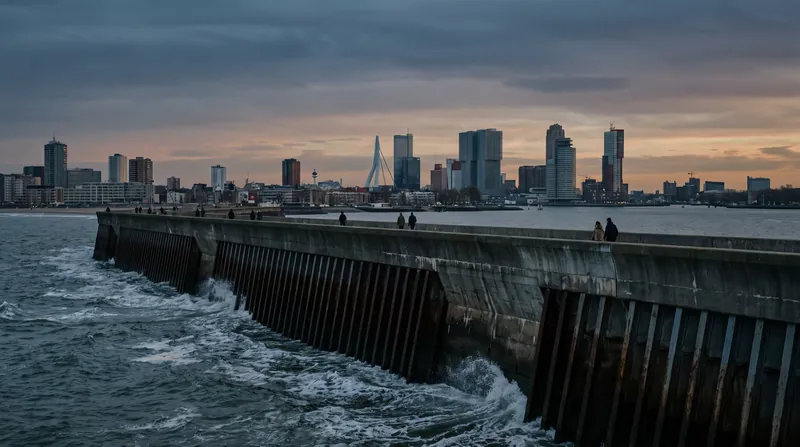
The bottom line of this evidence pack is that the Southern Ocean is in a state of rapid, observable transition. The mechanisms of ocean warming and albedo loss are well-documented, and the resulting model corrections are now coming into focus. While the long-term stability of the ice sheet remains an open question, the near-term data provides policymakers with the exact timeline they need to prepare for the changes already underway.[4]
Definitions
- Albedo Effect
- The ability of a surface to reflect sunlight; white ice has high albedo, while dark ocean water has low albedo and absorbs heat.
- Regime Shift
- A large, abrupt, and persistent change in the structure and function of an ecosystem or climate system.
- Marine Ice Cliff Instability
- A theoretical process where tall ice cliffs at the edge of a retreating glacier collapse under their own weight, accelerating ice loss.
- 30–50 years
- Window of high predictability for sea-level rise contributions
- 2+ meters
- Potential global sea-level rise by 2100 under high emission scenarios
- 2050
- Year when unstable ice retreat is projected to accelerate non-linearly
Chronology
1979–2015
Antarctic sea ice extent gradually expands, defying early global warming predictions.
2016
Sea ice extent abruptly plunges to record lows, initiating a new phase of rapid melt.
July 2026
Global oceans record their hottest July in history, further accelerating polar ice loss.
July 2026
New modeling confirms a 30-to-50-year window of predictable ice loss before unstable retreat accelerates.
Analysis by camp
Climate Modelers
Focus on refining decadal forecasts and correcting the variables that caused previous models to underestimate warming.
For the modeling community, the recent acceleration in ice loss is both a warning and a data opportunity. Standard models struggled to capture the full extent of the ice-albedo feedback loop and its connection to mid-latitude cloud cover. By identifying these missing variables, modelers are now producing much tighter constraints on near-term sea-level rise. Their primary goal is to extend the window of high predictability beyond 2050, attempting to quantify exactly when non-linear events like marine ice-cliff collapse will overwhelm the current linear projections.
Climate Monitors
Track the real-time physical changes in global ocean temperatures and weather patterns driving the melt.
Field researchers and oceanographers view the recent ice crash as a fundamental 'regime shift' in the Southern Ocean. Their data, gathered from robotic probes and satellite observations, points to shifting wind patterns that pulled warm, deep water to the surface. For this camp, the focus is on the physical vulnerability of the ice shelves now that their sea-ice buffer is gone. They argue that understanding the localized ocean currents beneath the ice shelves is the most critical factor in determining how fast the land-based glaciers will flow into the sea.
Adaptation Planners
Prioritize the practical timeline for coastal preparation, utilizing the 30-to-50-year predictability window to build resilience.
For urban planners and policymakers, the exact mechanics of ice loss are less important than the timeline it dictates. The confirmation that sea-level contributions remain highly predictable for the next 30 to 50 years is viewed as a crucial operational window. This camp is focused on translating these locked-in projections into immediate infrastructure investments—building sea walls, updating zoning regulations, and planning managed retreats. They emphasize that the extreme uncertainty post-2050 makes it imperative to complete major resilience projects while the forecasts remain reliable.
Limits of the evidence
- The exact temperature threshold that will trigger the irreversible collapse of the larger West Antarctic Ice Sheet basins.
- Whether the current low-ice state is a permanent 'regime shift' or if anomalous atmospheric conditions could temporarily restore some ice extent.
- How quickly marine ice-cliff instability will accelerate sea-level rise once the 2050 predictability window closes.
Significance
For coastal residents and urban planners, the timeline for sea-level rise just became much more specific. The confirmation of a 30-to-50-year predictability window provides a defined timeframe to build sea walls, relocate infrastructure, and update zoning laws before uncertainty spikes.
Sources
Source coverage
4 outlets
3 viewpoints surfaced




[1]ScienceDailyClimate Modelers
Antarctica may give the world decades to prepare for rising seas
Read on ScienceDaily →[2]NatureClimate Modelers
Emergent decadal predictability in Antarctic contribution to sea-level rise
Read on Nature →[3]BBCClimate Monitors
Ocean heat records broken as hottest July temperature recorded
Read on BBC →[4]Factlen Editorial TeamAdaptation Planners
Synthesis by Factlen editorial team
Read on Factlen Editorial Team →
Comments
Every angle. Every day.
Get science stories with full source coverage and perspective breakdowns delivered to your inbox.