
Drone Strike on Egyptian Port of Damietta Signals New Front in U.S.-Iran War
An unidentified drone struck two liquefied natural gas vessels at Egypt's Damietta Port, threatening critical energy infrastructure and drawing Cairo closer to the expanding regional conflict.

- Egyptian Authorities
- Prioritizing economic security and strategic neutrality.
- U.S. and Allied Security Analysts
- Framing the strike as a deliberate expansion of Iranian pressure.
- Iranian Officials
- Denying involvement and warning against escalation.
- Regional Strategists
- Focusing on the risk of Egypt being dragged into the broader war.
Perspectives this story doesn't cover
- European energy importers reliant on Damietta LNG
- Local residents of Damietta city
Why it matters
The strike demonstrates that the U.S.-Iran conflict is no longer confined to the Persian Gulf or the Red Sea. By targeting a critical Mediterranean energy hub, the attackers have threatened the primary alternative route for Middle Eastern gas exports to Europe, raising the risk of global energy shocks.
For months, Egypt has attempted to remain a neutral broker in the expanding U.S.-Iran war, absorbing the economic damage of Red Sea shipping disruptions while refusing to join multinational military coalitions. That balancing act was shattered on July 29 when an unidentified drone struck two liquefied natural gas vessels at the Mediterranean port of Damietta. The attack, which targeted a U.S.-owned storage unit and a Greek-owned tanker, forces Cairo to confront a conflict that has now physically reached its shores.[1][5]
The strike ignited massive fires aboard the U.S.-owned Energos Winter and the Greek-owned GasLog Salem, which together held a capacity of 300,000 cubic meters of LNG. Marine officers described a frantic scramble to separate the vessels and tow them away from the docks, fearing an explosion that could have leveled the port and devastated the adjacent city of 300,000 residents.[4][8]
Following initial confusion over the cause of the blaze, the Egyptian cabinet formally confirmed that an unmanned aerial vehicle was responsible. No group has claimed the attack, and Cairo has deliberately avoided naming a perpetrator as investigations continue, reflecting its reluctance to formally enter the hostilities.[1][7]
The strategic logic of the strike is clear to security analysts: it demonstrates that energy corridors far beyond the Persian Gulf and the Bab el-Mandeb strait are vulnerable. Damietta is the linchpin of Egypt's ambition to serve as the Eastern Mediterranean's primary energy hub, providing a vital alternative route for Gulf oil and gas exports to Europe that bypasses Iranian-contested waters.[5][6]
U.S. officials and allied researchers view the incident as an expansion of Tehran's pressure campaign. By striking a U.S.-owned asset in an Egyptian port, the attackers signaled that global shipping can be disrupted at will, challenging Washington's ability to protect its regional partners and threatening a primary artery of the global energy market.[2][6]
officials and allied researchers view the incident as an expansion of Tehran's pressure campaign.
Tehran has categorically denied involvement. Iranian Foreign Ministry officials rejected accusations that they targeted the Damietta facility, with some characterizing the allegations as an attempt to justify further U.S. military escalation in the region. The denial aligns with Iran's broader strategy of utilizing proxy forces to maintain plausible deniability while exerting regional pressure.[1][8]
The attack occurred against the backdrop of intensifying hostilities, including renewed U.S. strikes on Iranian-aligned militia command centers in Iraq and naval skirmishes in the Strait of Hormuz. Regional strategists note that the Damietta strike tests Egypt's doctrine of strategic restraint, pushing Cairo toward a more active maritime defense posture without crossing the threshold into open warfare.[2][5]
While port operations have resumed and the damaged vessels have been relocated, the structural reality of the conflict has shifted. Egypt can no longer treat the U.S.-Iran war as a distant geopolitical crisis; the strike establishes that the infrastructure underpinning the region's energy economy is now an active front.[4][5][6]
What to know
- A drone strike hit two liquefied natural gas vessels at Egypt's Damietta Port on July 29, causing massive fires but no casualties.
- The attack targeted the U.S.-owned Energos Winter and the Greek-owned GasLog Salem, threatening critical LNG infrastructure.
- The Egyptian cabinet confirmed the strike, marking the first direct attack on Egyptian territory since the U.S.-Iran war escalated.
- U.S. analysts view the strike as an Iranian-linked effort to threaten alternative energy export routes to Europe.
- Tehran has denied any involvement in the attack, while Egypt has refrained from officially naming a perpetrator.
Where opinion splits
Egyptian Authorities
Prioritizing economic security and strategic neutrality.
Cairo views the attack as a direct threat to its national security and its ambitions as an Eastern Mediterranean energy hub. However, Egyptian leadership is deliberately avoiding megaphone diplomacy or immediate military retaliation. By focusing on the ongoing investigation and the successful containment of the fires, Egypt aims to protect its infrastructure without being dragged into a direct military confrontation that contradicts its core domestic and economic interests.
U.S. and Allied Security Analysts
Framing the strike as a deliberate expansion of Iranian pressure.
Defense researchers and U.S. officials interpret the Damietta strike as a calculated message from Tehran or its proxies. By targeting a U.S.-owned vessel in a port that serves as a safe bypass for the contested Red Sea and Strait of Hormuz, the attackers demonstrated the capability to disrupt global energy markets anywhere in the region. Analysts argue this necessitates a stronger, multinational maritime defense coalition that includes Egypt.
Iranian Officials
Denying involvement and warning against escalation.
Tehran has categorically rejected accusations of orchestrating the Damietta strike. Iranian diplomats and state media have framed the incident as either an accident or a "false flag" operation designed by adversaries to justify further U.S. military strikes. They maintain that Iran has no strategic interest in attacking Egyptian infrastructure and warn that baseless accusations only serve to destabilize the region further.
Sources
Source coverage
8 outlets
4 viewpoints surfaced








- [1]Al JazeeraIranian Officials
Two ships used for the processing and storage of gas catch fire in Egyptian port of Damietta after drone strike
Read on Al Jazeera → - [2]ReutersU.S. and Allied Security Analysts
Drone strike on gas vessels in Egypt's Mediterranean port of Damietta signaled a potential new front in the U.S.-Iran war
Read on Reuters → - [3]CBS NewsU.S. and Allied Security Analysts
The port of Damietta on Egypt's Mediterranean coast struck in drone attack
Read on CBS News → - [4]Al-MonitorEgyptian Authorities
Egypt captains recount scramble to stop disaster after drone strike
Read on Al-Monitor → - [5]Carnegie Endowment for International PeaceRegional Strategists
The Drone Attack on Egypt and the Widening Middle East War
Read on Carnegie Endowment for International Peace → - [6]Foundation for Defense of DemocraciesU.S. and Allied Security Analysts
Drone Strike on Egypt Spotlights Iran's Expanding Pressure Campaign
Read on Foundation for Defense of Democracies → - [7]Global NewsU.S. and Allied Security Analysts
Drone strike on gas vessels in Egypt's Mediterranean port of Damietta
Read on Global News → - [8]WikipediaIranian Officials
2026 Damietta drone strike
Read on Wikipedia →
Comments
More in World
See all →Defense Modernization
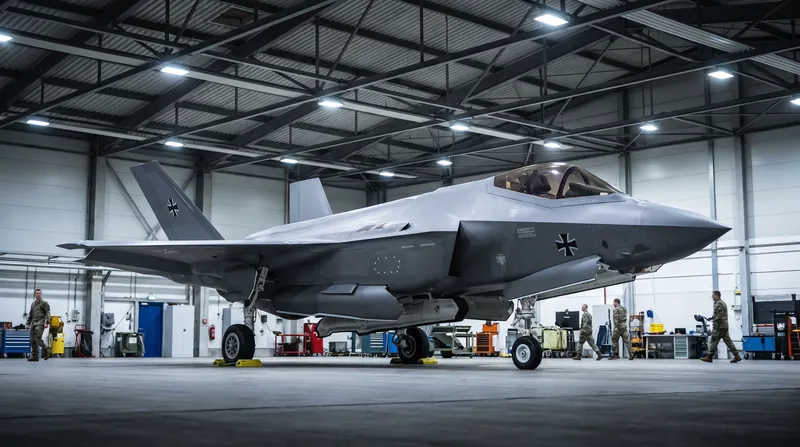
Germany Receives First F-35A, Beginning €10 Billion Shift to Stealth Airpower and NATO Nuclear Role
2 sources
Poverty Rate
Argentina's Poverty Rate Jumps to 32.3%, Marking First Increase Under Milei
5 sources

Italian Education
Italy Bans Burqas in Schools and Caps Foreign Student Enrollment per Classroom
6 sources

Trade Diversification
India Accelerates Trade Talks With Canada and Mexico Amid US Tariff Disruption
3 sources

Every angle. Every day.
Get World stories with full source coverage and perspective breakdowns delivered to your inbox.