
Proposed Federal Tax Credit Would Offer Seniors Up to $10,000 for 'Aging-in-Place' Home Upgrades
A new congressional bill aims to make aging in place more affordable by offering a $10,000 annual tax credit for home accessibility modifications like ramps, widened doorways, and walk-in showers.
By Noor Saidi

- Legislative Sponsors
- Lawmakers argue the tax code should support seniors' right to age with dignity in their own communities.
- Aging-in-Place Advocates
- Advocacy groups emphasize that proactive modifications prevent costly health crises.
- Housing Industry Groups
- Real estate and construction professionals view the credit as a catalyst for the remodeling market.
For the vast majority of older Americans, the goal is simple: stay in the home they already know. But while the desire to "age in place" is nearly universal, the physical reality of traditional housing often stands in the way. Stairs, narrow doorways, and standard bathtubs can quickly transform a beloved family home into a daily hazard. Now, a bipartisan push in Congress is attempting to bridge the gap between where seniors want to live and what they can afford to change.[2][3]
The Senior Accessible Housing Tax Credit Act of 2026, introduced in both the House and Senate this summer, proposes a direct financial lifeline for older homeowners. The legislation would create a nonrefundable federal tax credit of up to $10,000 annually for taxpayers aged 60 and older who make qualifying accessibility modifications to their primary or secondary residences. Unlike a tax deduction, which merely reduces taxable income, a tax credit directly subtracts from the taxes owed, offering a dollar-for-dollar reduction up to the $10,000 cap.[1][3]
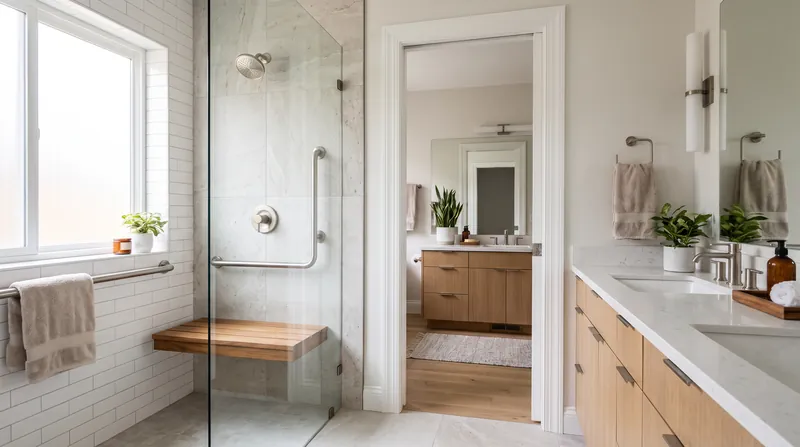
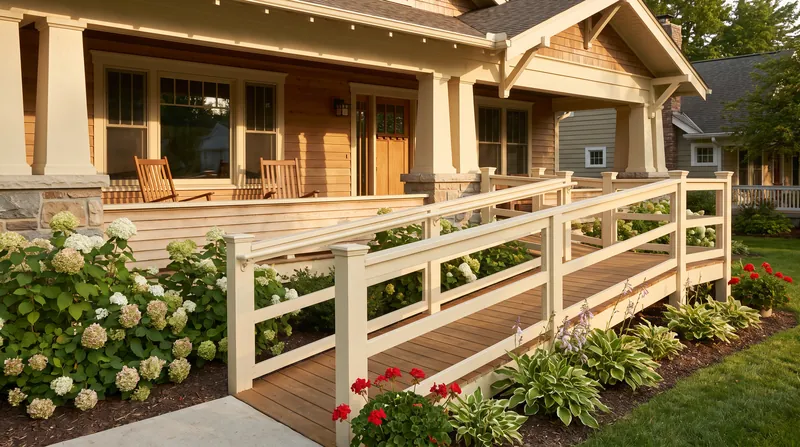
The scope of the proposed credit is designed to cover the most critical—and often most expensive—retrofits required for safe independent living. Eligible expenditures under the bill include the installation of wheelchair ramps, handrails, chair lifts, and shower seats, as well as the widening of doorways and the replacement of traditional fixtures with accessible alternatives. Crucially, the credit also covers the labor costs associated with preparing, assembling, and installing these modifications, acknowledging that professional contractor fees often make up the bulk of a remodeling budget.[1][3]
This legislative effort addresses a significant blind spot in current federal support systems. While Medicare Part B covers certain medically necessary durable medical equipment prescribed by a doctor—such as walkers, hospital beds, and wheelchairs—it generally does not pay for structural home modifications. "Convenience" items like bathroom grab bars or raised toilet seats are also excluded from Medicare coverage. As a result, families are frequently left to pay for essential safety upgrades entirely out of pocket, a burden that can force seniors on fixed incomes to delay necessary changes until a fall or injury occurs.[3]
This legislative effort addresses a significant blind spot in current federal support systems.
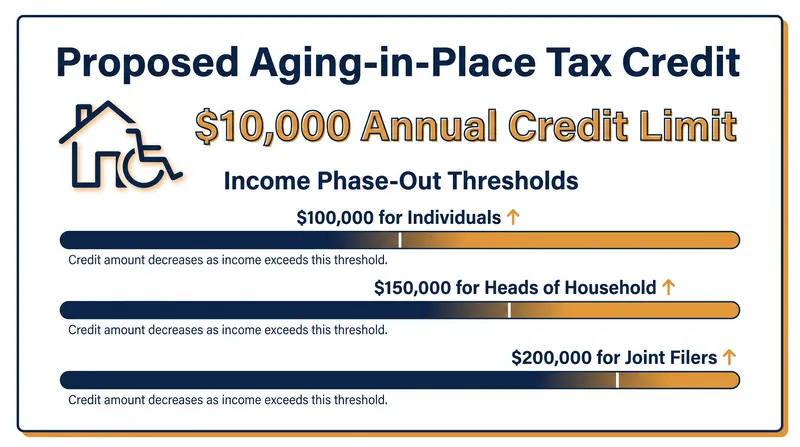
To ensure the benefit targets those who need it most, the bill includes income phase-outs. The credit would be reduced for higher-income taxpayers, lowering by $1 for every $2 of modified adjusted gross income above specific thresholds: $200,000 for joint filers, $150,000 for heads of household, and $100,000 for individual taxpayers. If enacted, the new tax credit rules would apply to tax years beginning after December 31, 2026, with the income limits and credit caps adjusted annually for inflation starting in 2027.[1]
The demand for such a program is starkly illustrated by recent demographic research. According to AARP's 2024 Home and Community Preferences Survey, 75 percent of adults aged 50 and older want to remain in their current homes as they age. Yet, housing experts estimate that less than 5 percent of the national housing supply is currently designed with the accessibility features necessary to accommodate individuals with even moderate mobility limitations. This mismatch between preference and infrastructure is driving a growing crisis as the U.S. population ages.[2][3]
Beyond the tax credit, the legislation also seeks to bolster existing community support networks. The bill authorizes $100 million per year from fiscal years 2027 through 2031 for the Department of Housing and Urban Development's Older Adult Home Modification Grant Program. This program provides direct grants to local organizations and nonprofits that help low-income older adults make safety and functional home modifications, ensuring that seniors whose tax liability is too low to benefit from a nonrefundable credit still receive assistance.[1][3]
While the bill faces the standard procedural hurdles in the House Ways and Means Committee and the Senate Finance Committee, it has already garnered significant backing from major industry and advocacy groups, including LeadingAge and the National Association of Realtors. For families currently weighing the steep monthly costs of assisted living against the upfront expense of a bathroom remodel, the proposed credit represents a potential paradigm shift—one that could finally make aging in place a financially viable reality rather than just a preference.[3]
The stakes
For millions of older adults, the cost of retrofitting a home to prevent falls or accommodate a wheelchair is the primary barrier to staying out of assisted living. This tax credit would offset those out-of-pocket expenses, allowing seniors to age safely in their own homes while reducing long-term care costs.
The essentials
- The proposed Senior Accessible Housing Tax Credit Act of 2026 would offer up to $10,000 annually for home accessibility upgrades.
- Eligible expenses include wheelchair ramps, widened doorways, walk-in showers, and the labor required to install them.
- The nonrefundable credit is targeted at taxpayers aged 60 and older, with income phase-outs starting at $100,000 for individuals.
- The bill also authorizes $100 million annually for HUD grants to assist low-income seniors with home modifications.
Perspectives explored
Legislative Sponsors
Lawmakers argue the tax code should support seniors' right to age with dignity in their own communities.
The lawmakers behind the Senior Accessible Housing Tax Credit Act frame the issue as a matter of fundamental rights and economic common sense. They argue that a safe, accessible place to live should not be a privilege reserved only for the wealthy. By offsetting the cost of necessary home modifications, sponsors contend the legislation will allow older adults to maintain their independence and preserve the stability of homeownership, while simultaneously reducing the long-term financial strain on federal programs like Medicaid that often bear the brunt of nursing home costs.
Aging-in-Place Advocates
Advocacy groups emphasize that proactive modifications prevent costly health crises.
Organizations focused on senior welfare, such as LeadingAge and AARP, highlight the stark disconnect between what older adults want and what the current housing stock can provide. With less than 5 percent of U.S. homes built to accommodate mobility limitations, advocates argue that financial incentives are desperately needed to spur proactive renovations. They point out that falls are a leading cause of hospitalization and institutionalization among seniors; by making it affordable to install grab bars and ramps before a crisis occurs, the tax credit could drastically reduce injury rates and keep seniors safely integrated in their communities.
Housing Industry Groups
Real estate and construction professionals view the credit as a catalyst for the remodeling market.
Groups like the National Association of Realtors and various contractor coalitions support the measure as a dual-benefit policy. Not only does it help families afford to stay in their homes, but it also promises to stimulate the residential remodeling sector. Industry advocates note that the high upfront costs of accessibility retrofits often cause homeowners to delay or cancel projects. A $10,000 tax credit that explicitly covers professional labor costs would likely unlock a wave of deferred renovations, creating jobs for skilled tradespeople while upgrading the nation's aging housing infrastructure.
Sources
Source coverage
3 outlets
3 viewpoints surfaced



[1]GovInfoLegislative Sponsors
H.R. 9554 - Senior Accessible Housing Tax Credit Act of 2026
Read on GovInfo →[2]AARPAging-in-Place Advocates
2024 Home and Community Preferences Survey
Read on AARP →[3]Factlen Editorial TeamHousing Industry Groups
Synthesis by Factlen editorial team
Read on Factlen Editorial Team →
Comments


Every angle. Every day.
Get home stories with full source coverage and perspective breakdowns delivered to your inbox.