
FAA Certifies Boeing 737 MAX-7, Ending Years-Long Regulatory Review
The Federal Aviation Administration has granted certification to the Boeing 737 MAX-7, clearing the smallest variant of the MAX family for commercial service after extensive safety reviews.

- Aviation Regulators
- Focused on ensuring rigorous compliance with safety mandates and maintaining strict oversight of manufacturing.
- Aerospace Manufacturers
- Focused on clearing regulatory hurdles, validating engineering designs, and resuming aircraft deliveries.
- Airlines & Fleet Planners
- Focused on modernizing fleets, reducing fuel costs, and deploying the aircraft on long, thin routes.
- Aviation Analysts
- Focused on the broader implications for Boeing's production rates and the upcoming MAX-10 certification.
Perspectives this story doesn't cover
- Passenger Advocacy Groups
- Aviation Labor Unions
Why this matters
The certification clears a major backlog for Boeing and allows airlines like Southwest to finally deploy a highly efficient, long-range narrow-body jet on thinner routes, modernizing aging fleets and reducing fuel consumption.
The Federal Aviation Administration has officially certified the Boeing 737 MAX-7, ending a nearly decade-long regulatory review and clearing the smallest variant of the MAX family for commercial service. The amended type certificate, granted on August 3, authorizes Boeing to begin production and deliveries of the aircraft, marking a critical milestone for the manufacturer's industrial recovery.[1][2][4]
The certification process for the MAX-7 was heavily delayed by heightened regulatory scrutiny following the fatal MAX 8 crashes in 2018 and 2019, as well as a January 2024 mid-air cabin panel blowout on an Alaska Airlines MAX 9. In response to these events, the FAA implemented a tougher, slower certification regime that required Boeing to demonstrate compliance with new safety mandates.[2][3]
To secure approval, the FAA required Boeing to incorporate several key improvements into the MAX-7's design. These included updates to the flight-control software, modifications to the flightcrew alerting system, and a completely redesigned engine anti-ice system. The anti-ice system redesign was a particularly complex hurdle that delayed certification by over a year, as engineers worked to prevent the engine inlet from overheating and potentially weakening the surrounding structure.[1][3]
The FAA stated that these changes provide pilots with clearer information and warnings, addressing requirements in the Aircraft Certification, Safety, and Accountability Act and recommendations from the National Transportation Safety Board. The agency also confirmed that its safety inspectors will remain on-site at Boeing production facilities to closely monitor the manufacturing process and assess the company's safety culture.[1]
The MAX-7 is the smallest and longest-range member of the 737 MAX family. It is capable of carrying between 135 and 160 passengers in a standard two-class configuration, but it boasts a range of up to 3,800 nautical miles—roughly 10% more than its larger siblings. This combination of low capacity and high range makes it uniquely suited for "thinner" routes that lack the passenger demand to support a wide-body plane.[3][4]
The MAX-7 is the smallest and longest-range member of the 737 MAX family.
Like other jets in the MAX family, the 737-7 is designed to reduce fuel consumption and carbon dioxide emissions by 20% compared to the older aircraft it replaces, while also cutting its noise footprint in half. These efficiency gains are largely driven by the aircraft's advanced CFM International LEAP-1B engines and aerodynamic winglets.[4]
Southwest Airlines is the launch customer for the MAX-7, with a massive order book of nearly 270 aircraft. The Dallas-based carrier plans to use the new jets to replace its aging fleet of 737-700s, some of which are now more than 20 years old. A spokesperson for Southwest indicated that the airline expects to begin flying passengers on the MAX-7 three to six months after taking delivery of the first jet, likely placing its commercial debut in early 2027.[2][3]
The certification of the MAX-7 also paves the way for the approval of the MAX-10, the largest variant in the narrow-body family. The MAX-10 recently concluded its certification flight testing in July, logging over 2,000 flight hours. Because the MAX-10 features many of the same engineering adjustments as the MAX-7, industry analysts expect its certification to follow in the coming months.[2][5]
For Boeing, the regulatory clearance is a much-needed victory. The company has already built around 30 MAX-7s and is currently working to increase its overall 737 MAX production rate to 47 jets per month. Clearing the MAX-7 for delivery allows Boeing to begin converting its stored inventory into revenue, providing crucial cash flow as the manufacturer seeks to stabilize its operations and rebuild trust with regulators and the flying public.[2][3][6]
Key points
- The FAA granted an amended type certificate for the Boeing 737 MAX-7 on August 3, 2026.
- Certification required updates to flight-control software and a redesigned engine anti-ice system.
- The MAX-7 is the smallest variant in the family, seating 135 to 160 passengers.
- It offers the longest range of any MAX jet, capable of flying up to 3,800 nautical miles.
- Launch customer Southwest Airlines expects to begin passenger flights in early 2027.
- The approval paves the way for the certification of the larger MAX-10 variant.
Sources
Source coverage
6 outlets
4 viewpoints surfaced






- [1]Federal Aviation AdministrationAviation Regulators
FAA Statement on Certification of the Boeing 737 MAX-7
Read on Federal Aviation Administration → - [2]Aviation WeekAirlines & Fleet Planners
Boeing 737 MAX 7 Earns FAA Certification
Read on Aviation Week → - [3]The Points GuyAirlines & Fleet Planners
FAA certifies smallest Boeing 737 MAX after years of delays
Read on The Points Guy → - [4]BoeingAerospace Manufacturers
Regulatory approval clears another 737 MAX variant for service
Read on Boeing → - [5]Simple FlyingAviation Analysts
Boeing 737 MAX 7 And 10 Certification 'Closer Than Ever,' FAA Says
Read on Simple Flying → - [6]WGRZAviation Analysts
FAA certifies Boeing 737 MAX-7 to fly after years of delays
Read on WGRZ →
Comments
More in Transportation
See all →Space Megaprojects
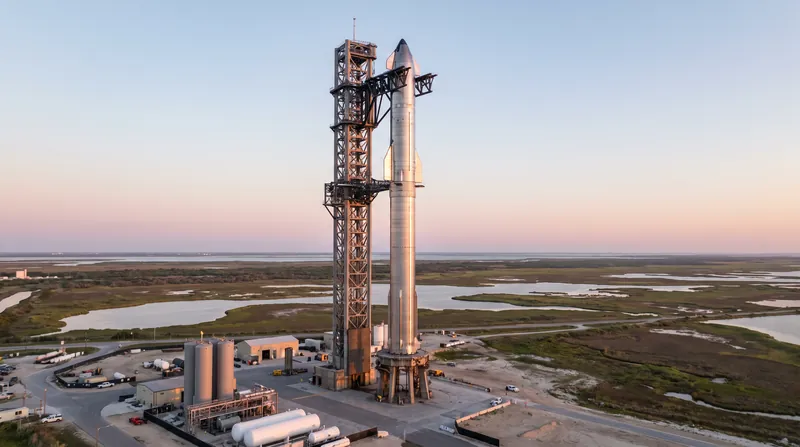
SpaceX Stacks Starship and Completes Wet Dress Rehearsal Ahead of First Orbital Flight Attempt
5 sources
Aerodynamics
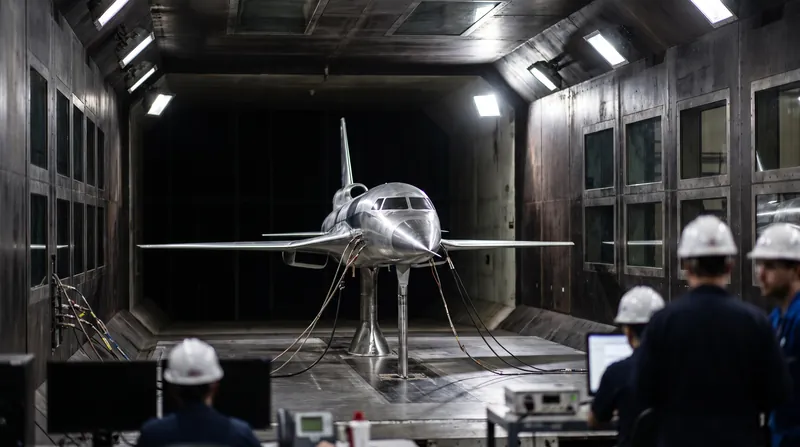
The Equivalent Body of Revolution and the Area Rule That Minimize Transonic Drag
6 sources
Freight Electrification
Germany Begins Construction on €1 Billion National Fast-Charging Network for Electric Trucks
4 sources

Aviation Infrastructure
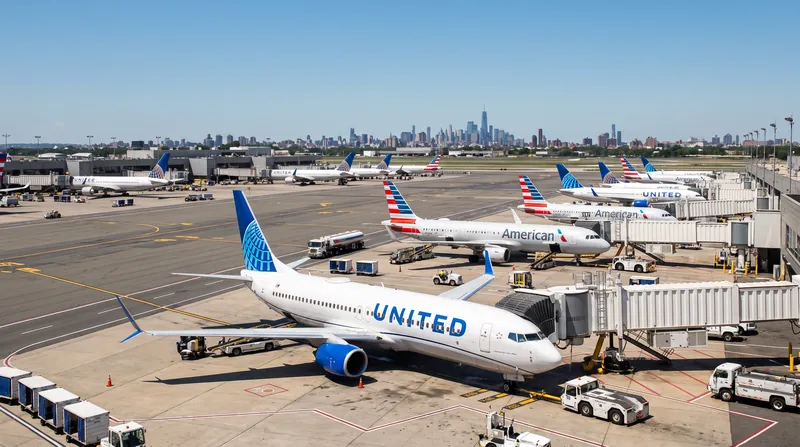
East Coast Flights Resume After Dual Telecom Failures Ground Thousands of Aircraft
4 sources
Every angle. Every day.
Get Transportation stories with full source coverage and perspective breakdowns delivered to your inbox.