
American Airlines Operates First U.S. Commercial Flight Powered by Electro-Synthetic Fuel
American Airlines and Infinium have completed the first U.S. commercial passenger flight utilizing electro-sustainable aviation fuel, demonstrating a power-to-liquids technology that bypasses agricultural feedstocks.

Share this story
A commercial passenger jet departing Corpus Christi International Airport for Dallas Fort Worth this week carried a fuel blend that required no agricultural land, no waste cooking oil, and no bio-feedstocks. American Airlines and energy firm Infinium completed the first United States commercial flight powered by electro-sustainable aviation fuel (eSAF), marking a structural shift in how the aviation sector approaches its long-term decarbonization targets.
The flight represents the transition of power-to-liquids technology from isolated pilot testing into the active commercial supply chain, proving that synthetic hydrocarbons can function seamlessly within the rigid safety parameters of modern passenger aviation.[1][3][5]
The flight utilized a drop-in fuel synthesized entirely from captured carbon dioxide and renewable electricity. Produced at Infinium's Pathfinder facility in Texas, which has been operating at commercial scale since 2023, the eSAF was blended with conventional jet fuel and certified to meet stringent ASTM International specifications for Jet A fuel. This chemical equivalence allowed the fuel to be pumped directly into the airport's common storage tanks and loaded into the aircraft without requiring any mechanical modifications to the plane's engines or the airport's existing fueling infrastructure.[1][2][6]
Aviation currently consumes nearly 100 billion gallons of jet fuel annually across the globe, with sustainable aviation fuel accounting for less than one percent of the total supply. Historically, the sustainable fuel market has relied heavily on bio-based feedstocks, such as agricultural waste, beef tallow, and used cooking oil.
While these organic inputs are effective in the short term for reducing emissions, bio-SAF faces inherent scalability limits. The industry cannot grow its fuel supply indefinitely on waste oils alone, and expanding purpose-grown crops introduces complex land-use concerns and direct competition with global food systems and other agricultural needs.[3][4]
Electro-fuels, often referred to as power-to-liquids, bypass the biological bottleneck entirely. By utilizing waste carbon dioxide and renewable power, the process creates a synthetic hydrocarbon that mirrors the exact chemical properties of petroleum-based jet fuel without relying on arable land. Infinium reports that its eSAF reduces lifecycle greenhouse gas emissions by more than 90 percent compared to conventional kerosene. This offers a much deeper and more permanent decarbonization pathway than many first-generation biofuels, fundamentally decoupling the future of flight from both fossil fuel extraction and agricultural constraints.[1][5][6]
The Corpus Christi flight serves as a functional proof of concept for a much larger industrial pipeline currently in development. American Airlines has already secured a firm offtake agreement for commercial volumes from Infinium's upcoming Project Roadrunner.
Currently under construction and slated to begin deliveries in 2027, the Roadrunner facility is projected to produce over five million gallons of electro-sustainable aviation fuel annually. This transition from a demonstration batch to a multi-million-gallon continuous supply contract indicates that major carriers are beginning to view synthetic fuels as a reliable node in their future energy procurement strategies.[2][4][5]
The financial architecture behind Project Roadrunner illustrates the highly capital-intensive nature of scaling synthetic fuels to a global level. The production facility is backed by Breakthrough Energy Catalyst and Brookfield Asset Management, with nonrecourse project debt provided by HSBC.
Corporate partnerships also play a crucial role in the economics of the plant; Citigroup has signed a parallel agreement with American Airlines to utilize the environmental attributes of the eSAF to reduce the bank's own Scope 3 emissions stemming from employee corporate travel, effectively sharing the green premium across multiple corporate balance sheets.[1][2][4]
For the broader aviation network, the successful deployment of eSAF at a commercial airport validates the industry's preferred "drop-in" strategy. Because electro-fuels are chemically identical to conventional jet fuel, airlines do not need to overhaul their multi-million-dollar aircraft fleets, and airport authorities do not need to rebuild their subterranean pipeline networks. The entire energy transition happens upstream at the chemical production facility, leaving the downstream operational logistics, safety protocols, and turnaround times completely unchanged for the carriers and their passengers.[1][3]
As the global airline industry looks toward its 2030 and 2050 emissions reduction targets, the diversification of fuel sources becomes a critical energy security mechanism. While bio-based sustainable aviation fuel will continue to play a foundational role in the near term, the maturation of power-to-liquids technology provides a highly scalable, industrial-grade alternative. As renewable energy capacity expands globally, electro-fuels are positioned to grow alongside it, gradually transforming commercial aviation from a sector dependent on extracted carbon into one powered by recycled emissions and the electrical grid.[1][5]
Key points
- American Airlines completed the first U.S. commercial flight using electro-sustainable aviation fuel (eSAF) from Corpus Christi to Dallas Fort Worth.
- The fuel, produced by Infinium, is synthesized from waste carbon dioxide and renewable electricity rather than agricultural feedstocks.
- The eSAF was blended with conventional jet fuel and required no modifications to the aircraft or airport infrastructure.
- American Airlines has signed an offtake agreement for 5 million gallons annually from Infinium's upcoming Project Roadrunner facility.
- Aviation Operators
- Focus on the seamless integration of drop-in fuels into existing supply chains.
- Synthetic Fuel Producers
- Focus on overcoming agricultural feedstock limits via scalable power-to-liquids technology.
- Climate Financiers
- Focus on capital deployment, offtake agreements, and Scope 3 emission reductions.
Perspectives this story doesn't cover
- Environmental NGOs evaluating the true lifecycle footprint of the renewable electricity used
- Ticket-buying passengers who may ultimately absorb the green premium of synthetic fuels
Sources
Source coverage
6 outlets
3 viewpoints surfaced






- [1]American AirlinesAviation Operators
American Airlines and Infinium advance aviation with commercial deployment of electro sustainable aviation fuel
- [2]AviacionlineAviation Operators
eSAF debuts on American Airlines scheduled flight in Texas
- [3]TravelPulseAviation Operators
American Airlines Operates Passenger Flight Powered By Ultra-Low Carbon Electrofuel
- [4]Investing.comClimate Financiers
American Airlines flies first US commercial flight with electro-SAF
- [5]H2 BulletinSynthetic Fuel Producers
American Airlines completes first commercial passenger flight using Infinium's electro-SAF
- [6]ChemXploreSynthetic Fuel Producers
Infinium and American Airlines deliver eSAF on commercial passenger flight

More in Transportation
See all →Regional Aviation
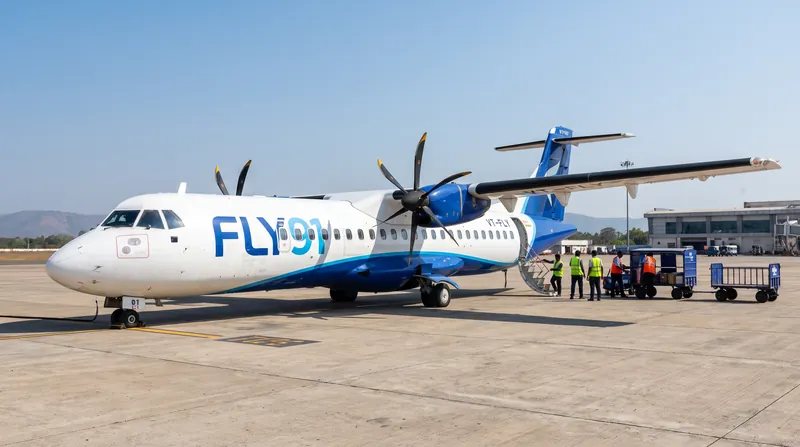
Indian Regional Carrier FLY91 Places $1 Billion Firm Order for 40 ATR 72-600 Turboprops
7 sources
Open Fan Architecture
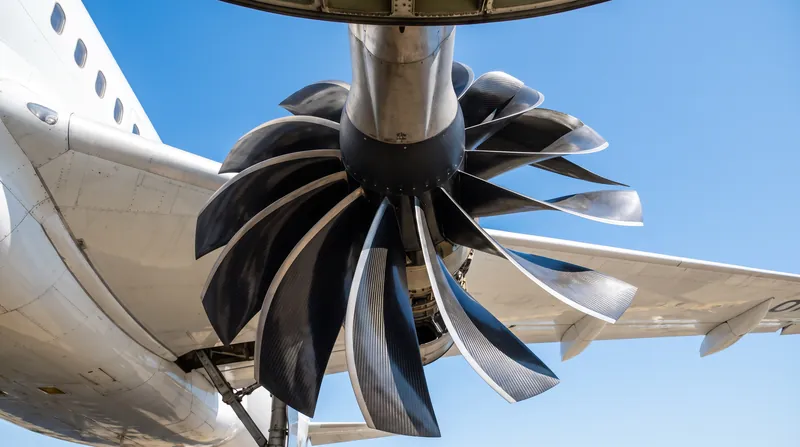
CFM RISE Open Fan Engine Architecture Clears Strict ICAO Noise Standards
6 sources
Defense Procurement
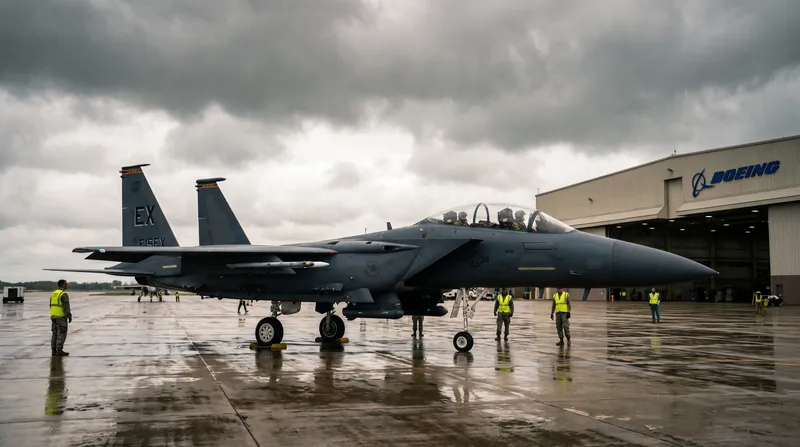
Pentagon Report Details Cost and Schedule Risks in Expanded F-15EX Order
3 sources
Cabin Architecture
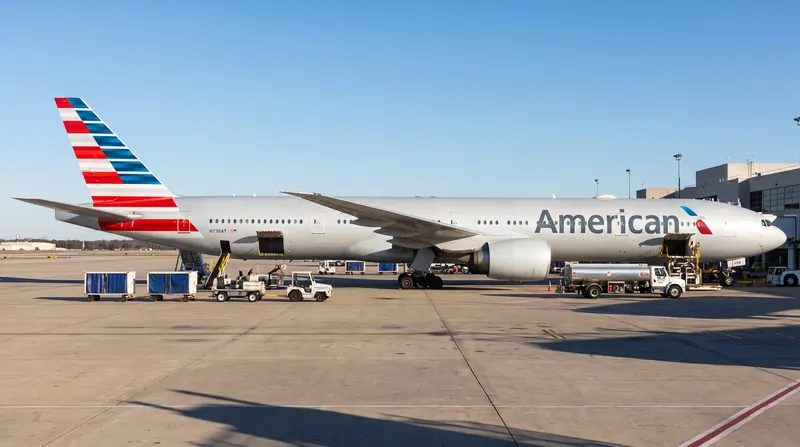
American Airlines Unveils Retrofitted 777-300ER, Eliminating International First Class for Expanded Premium Seating
6 sources
Comments
Every angle. Every day.
Get Transportation stories with full source coverage and perspective breakdowns, free every day.