
FAA Finalizes BVLOS Drone Rules, Opening US Airspace to Commercial Operations
The FAA has officially finalized Part 108, eliminating the need for case-by-case waivers and establishing a standardized regulatory framework for commercial drones to fly beyond visual line of sight.

Share this story
The Federal Aviation Administration has officially finalized Part 108, the long-awaited regulatory framework that permits commercial drones to fly Beyond Visual Line of Sight (BVLOS) in US airspace. This marks the most significant shift in unmanned aviation since the initial commercial drone rules were established a decade ago.
By replacing a restrictive waiver system with standardized performance rules, the agency has effectively opened the skies to automated retail delivery, large-scale agricultural spraying, and autonomous infrastructure inspection. The ruling signals that the FAA now views drones not just as remote-controlled devices, but as integrated aircraft sharing the national airspace.[1][3]
For years, the commercial drone industry has been tethered by a single, restrictive bottleneck: the Part 107 regulations, which required pilots to maintain direct, unbroken visual contact with their aircraft at all times. Operating beyond that visual line of sight required companies to navigate a complex, case-by-case waiver process that could take months to secure and was frequently rejected.
This waiver system made it nearly impossible for companies to scale their operations efficiently. It forced delivery networks, energy companies, and industrial surveyors to rely on localized, labor-intensive pilot programs rather than building the profitable, nationwide route networks they had envisioned.[5][7]
The new Part 108 framework dismantles this waiver bottleneck by introducing a standardized, two-tier authorization system based entirely on operational risk and population density. Tier one covers 'Permitted Operations,' which provides a streamlined approval pathway for smaller aircraft conducting lower-risk missions in sparsely populated areas.
Tier two introduces 'Operational Certificates' for highly complex, higher-risk missions involving heavier aircraft, multi-drone fleets, or flights over dense urban environments. By standardizing these requirements, the FAA is shifting the industry from a bespoke permission model to a predictable regulatory pathway, allowing businesses to plan long-term investments with regulatory certainty.[1][8]
One of the most transformative changes embedded in the finalized rule is the dramatic increase in allowable aircraft weight. Under the previous Part 107 regulations, commercial drones were strictly capped at a maximum takeoff weight of 55 pounds, severely limiting their payload capacity.
Part 108 shatters that ceiling, raising the limit to 1,320 pounds for certificated operations. This exponential increase pulls heavy-lift platforms—capable of carrying significant cargo, industrial chemicals, or advanced multi-sensor payloads—into a workable regulatory framework for the first time, unlocking heavy industrial logistics that were previously grounded by red tape.[4][8]
The new rules also fundamentally change who is legally responsible for the safety of the flight. Instead of relying solely on an individual remote pilot holding a Part 107 license, Part 108 shifts accountability directly to the operating organization.
Companies must now designate specific corporate roles, such as an Operations Supervisor and a Flight Coordinator, and implement comprehensive Safety Management Systems (SMS) to monitor risk. This mirrors the corporate compliance models used in traditional crewed aviation, reflecting the FAA's recognition that BVLOS operations are enterprise-level endeavors rather than individual piloting tasks.[5][8]
Flying blind to the human eye requires machines that can see for themselves, making onboard technology the linchpin of the new rule. To qualify for BVLOS operations, drones must be equipped with advanced Detect-and-Avoid (DAA) systems that meet rigorous ASTM performance standards. These onboard sensor suites—often a sophisticated combination of radar, LiDAR, and optical cameras—allow the drone to autonomously identify obstacles, terrain, and other aircraft. The systems must be capable of calculating and executing avoidance maneuvers in real-time without any human intervention, ensuring the aircraft can safely navigate unexpected hazards.[3][5]
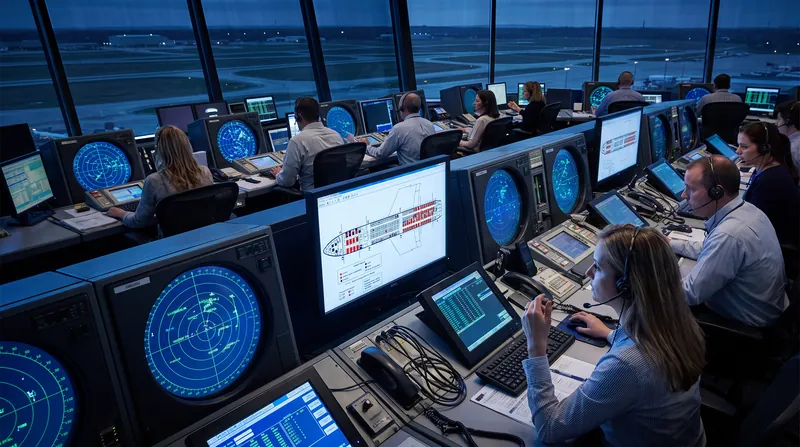
Because these autonomous drones will share the sky with helicopters, crop dusters, and other low-flying crewed aircraft, the FAA is simultaneously rolling out a companion rule known as Part 146. This regulation establishes a certification framework for Automated Data Service Providers (ADSPs). These third-party entities will act as a digital air traffic control network for unmanned systems. They will provide strategic deconfliction, continuous position tracking, and real-time airspace awareness, ensuring that automated flight paths do not intersect and that operators maintain a comprehensive digital picture of the airspace.[5][7]
The finalization of Part 108 is expected to trigger explosive economic growth across the commercial sector. Market analysts project the US commercial drone market will surge to nearly $19 billion by 2028, driven heavily by the newly legalized BVLOS capabilities. Major retail and logistics players, including Walmart, Amazon Prime Air, Wing, and Zipline, are already pivoting from localized testing to expanding their same-day delivery networks. With the regulatory path cleared, these companies are preparing to launch operations across dozens of new metropolitan areas, fundamentally altering the last-mile logistics landscape.[2][3]
Beyond retail delivery, the industrial and agricultural applications unlocked by the rule are vast. Energy companies can now deploy autonomous drones to inspect hundreds of miles of pipelines, wind turbines, or power transmission lines in a single continuous flight, drastically reducing the cost and physical danger associated with traditional crewed helicopter inspections. In agriculture, the ability to fly heavy-lift drones beyond the line of sight allows for highly efficient, automated crop spraying and multispectral field monitoring over thousands of acres, offering farmers a scalable tool for precision agriculture.[1][7]
Despite the commercial enthusiasm, the rule's passage was fiercely contested during the public comment period, primarily over the highly sensitive issue of airspace right-of-way. Traditionally, crewed aircraft have always held absolute priority in the sky, with drones required to yield in all circumstances. However, under specific low-altitude scenarios in Part 108, a BVLOS drone equipped with certified DAA technology holds 'presumptive right-of-way' over a crewed aircraft if that crewed aircraft is not broadcasting its position electronically via an ADS-B Out transponder.[5][8]
This inversion of the traditional aviation hierarchy sparked intense opposition from general aviation groups and private pilot associations. Many older, recreational aircraft, as well as low-flying agricultural helicopters, are not equipped with modern electronic conspicuity devices. Aviation advocates argued forcefully that forcing crewed aircraft to yield to automated drones—or requiring pilots to purchase expensive equipment upgrades just to retain their right-of-way—creates a severe safety hazard in uncontrolled, low-altitude airspace where split-second visibility is critical.[4][8]
Drone manufacturers have also raised concerns about the regulatory burden and data privacy implications of the new framework. Companies have pushed back against mandates that require operators to share extensive BVLOS flight data with both manufacturers and the FAA, arguing that the requirements are overly broad. Industry advocates are pushing for a more targeted approach, suggesting that operators should only be required to submit incident or accident data rather than comprehensive telemetry for every routine flight, which could expose proprietary route information.[6]
While the rules are now finalized, the reality of skies filled with autonomous commercial drones is still several months away. The implementation window requires companies to build their internal Safety Management Systems, certify their aircraft against the new standards, and ensure their personnel pass required Transportation Security Administration (TSA) threat assessments.
Furthermore, the effectiveness of the new Automated Data Service Providers remains untested at a national scale. The true test of Part 108 will be whether this digital infrastructure can seamlessly integrate thousands of autonomous vehicles into the world's busiest airspace without compromising safety.[1][8]
Key points
- The FAA's Part 108 rule replaces the restrictive waiver system for Beyond Visual Line of Sight (BVLOS) drone flights.
- Commercial drones can now weigh up to 1,320 pounds, enabling heavy-lift industrial and agricultural operations.
- Responsibility shifts from individual pilots to operating organizations, requiring corporate Safety Management Systems.
- Drones must be equipped with autonomous Detect-and-Avoid (DAA) systems to navigate around obstacles.
What we don’t know
- How effectively the new Automated Data Service Providers (ADSPs) will manage complex, high-density drone traffic in real-world conditions.
- Whether general aviation groups will pursue legal action to block the controversial right-of-way provisions.
- How quickly the FAA can process the expected surge of Operational Certificate applications once the implementation window opens.
How we got here
2016
The FAA implements Part 107, requiring visual line of sight and case-by-case waivers for advanced operations.
March 2022
The BVLOS Aviation Rulemaking Committee (ARC) submits its final recommendations to the FAA.
August 2025
The FAA publishes the Notice of Proposed Rulemaking (NPRM) for Part 108, sparking intense debate over right-of-way rules.
July 2026
The FAA officially finalizes Part 108, establishing the permanent regulatory framework for BVLOS flights.
- Commercial Operators & Logistics
- Logistics and infrastructure companies view the rule as the critical unlock for profitable, scalable drone networks.
- General Aviation Advocates
- Private pilots and general aviation groups argue the new right-of-way rules compromise safety for crewed aircraft.
- Regulatory & Compliance Experts
- Focuses on the shift toward corporate safety management systems and the integration of third-party digital air traffic control.
- Drone Manufacturers
- Manufacturers support the technical standards but warn against overly burdensome data-sharing mandates.
Perspectives this story doesn't cover
- Local municipalities concerned about noise and visual pollution from high-volume drone delivery routes.
- Privacy advocates worried about low-flying drones equipped with high-resolution optical and LiDAR sensors.
Sources
Source coverage
8 outlets
4 viewpoints surfaced








- [1]Federal RegisterRegulatory & Compliance Experts
Normalizing Unmanned Aircraft Systems Beyond Visual Line of Sight Operations
Read on Federal Register → - [2]Drone Industry InsightsDrone Manufacturers
2026 Commercial Drone Market Report: The Impact of Part 108
- [3]SkyDrone MaxCommercial Operators & Logistics
FAA Finalizes BVLOS Rules: Drone Delivery Enters New Era in 2026
- [4]Vertical Aviation InternationalGeneral Aviation Advocates
FAA proposes rules for drone BVLOS operations, sparking right-of-way debate
- [5]Pilot InstituteDrone Manufacturers
Part 108 Explained: The Future of BVLOS Drone Operations
- [6]DJIDrone Manufacturers
DJI Statement on the FAA's Proposed Part 108 BVLOS Rule
- [7]Censys TechnologiesCommercial Operators & Logistics
How Part 108 Will Transform Infrastructure Inspection
- [8]Sky TradeRegulatory & Compliance Experts
Where FAA Part 108 BVLOS rulemaking stands in 2026
More in Transportation
See all →Airline Acquisition
Apollo Global Management Agrees to Acquire EasyJet for £5.7 Billion
6 sources
Aviation Consolidation
Boeing Sells Wisk Autonomous Air Taxi Unit to Archer in Major eVTOL Consolidation Deal
8 sources
Airspace Modernization
FAA Awards $875 Million Contract to Launch AI-Powered 'SMART' System for U.S. Airspace Modernization
8 sources
Air Traffic Control
How the Aviation System Safely Handled a Massive Radar Outage Across the Midwest
6 sources
Comments
Every angle. Every day.
Get Transportation stories with full source coverage and perspective breakdowns, free every day.