
The End of the Walled Garden: How 2026 Became the Year of Social Media Interoperability
Driven by new state mandates and maturing open protocols, social media platforms are finally being forced to let users take their followers and data wherever they want.
By Factlen Editorial Team

- Open-Web Advocates
- Believe interoperability breaks algorithmic monopolies and empowers users.
- Privacy Skeptics
- Warn that forced portability exposes nonconsenting users' data to third parties.
- Platform Implementers
- Focus on the technical challenges of syncing data and moderation across networks.
- Neutral Analysts
- Provide objective synthesis of the technological and legal landscape.
What's not represented
- · Everyday users who prioritize convenience over data ownership
- · Independent creators reliant on centralized algorithmic discovery
Why this matters
For the first time in the modern internet era, users are gaining the legal right and technical ability to pack up their digital lives and leave a platform without losing their friends. This shift threatens to dismantle the 'walled garden' business model, forcing tech giants to compete on feature quality rather than holding your social network hostage.
Key points
- New state laws, led by Utah's Digital Choice Act taking effect in July 2026, are mandating social media interoperability.
- Open protocols like ActivityPub and the AT Protocol are providing the technical foundation for users to own their social graphs.
- Bluesky's AT Protocol allows users to migrate between hosting providers without losing their followers or post history.
- Interoperability enables 'composable moderation,' letting users choose their own third-party content filters.
- Privacy advocates warn that forced data transfers could expose the interactions of nonconsenting users to AI scrapers.
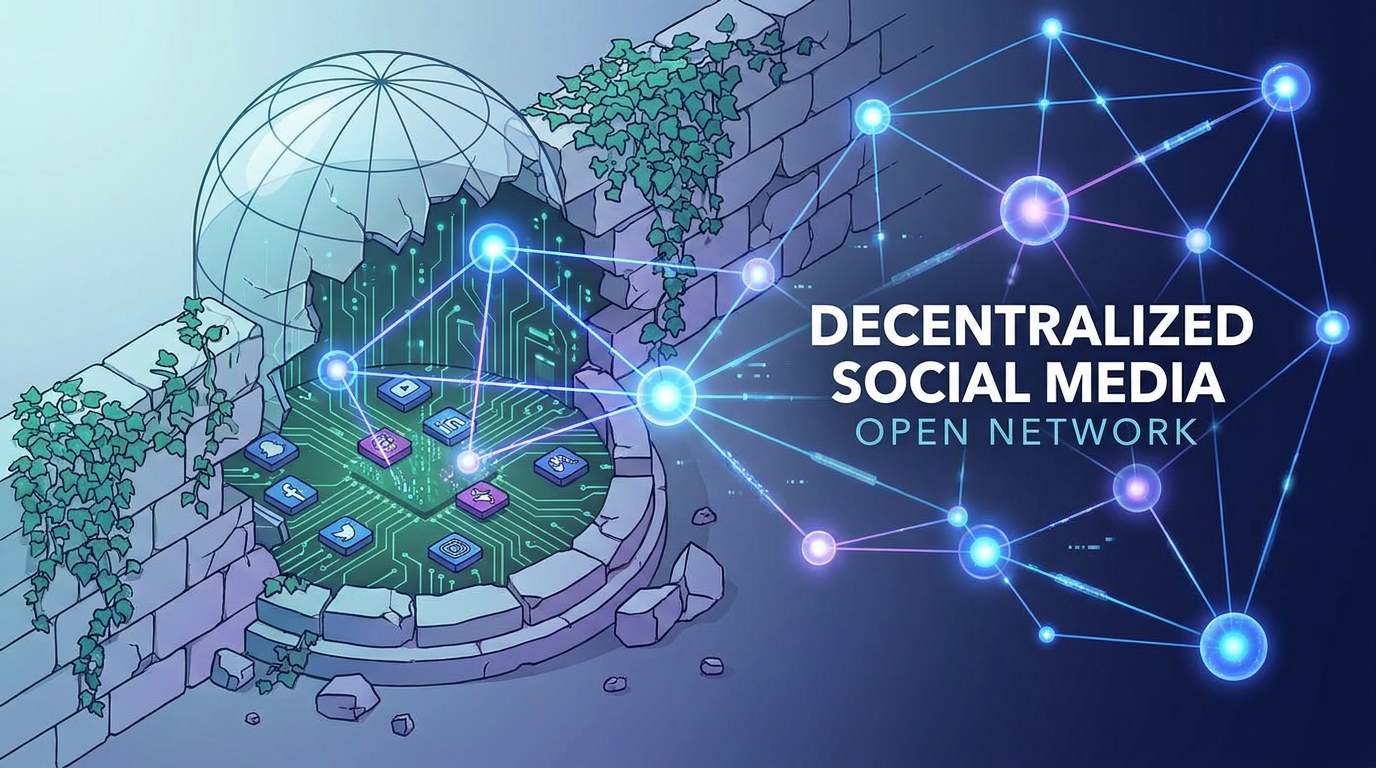
For the last fifteen years, social media has operated like a series of exclusive nightclubs. If you built an audience on Instagram, you couldn't take those followers to TikTok. If you were tired of X's algorithm, leaving meant abandoning your entire digital social circle. But in 2026, the architecture of the internet is undergoing a fundamental rewiring. Driven by a rare convergence of maturing open-source protocols and aggressive new state legislation, the era of the "walled garden" is beginning to crack, giving way to a model where users actually own their social graphs.[8]
The most immediate catalyst is legal. On July 1, 2026, Utah's pioneering Digital Choice Act officially takes effect, mandating that social media operators implement sweeping new features. Platforms must now allow users to move their accounts and data to competing services without losing their content or social connections. Furthermore, the law requires "social media interoperability"—meaning a user on one platform must be able to socially interact with users on an entirely different service.[3][7]
Utah is not acting alone. California is advancing Assembly Bill 2169, heavily backed by Project Liberty, which would require platforms to provide users with their social graph in a format that can be seamlessly uploaded elsewhere. The bill also demands that platforms allow users to post across different networks simultaneously. Across the Atlantic, the European Commission is conducting a critical 2026 review of the Digital Markets Act (DMA), assessing whether the interoperability mandates currently applied to messaging apps like WhatsApp should be extended to all major social networking services.[1][6]

But legislation is only half the story; the underlying technology has finally caught up to the policy demands. The push for interoperability relies heavily on decentralized protocols, primarily ActivityPub and the AT Protocol. ActivityPub, a standard maintained by the World Wide Web Consortium, acts as a universal translator between servers. It is the engine behind the "Fediverse," powering platforms like Mastodon and, increasingly, Meta's Threads. Meta has spent the last two years gradually integrating Threads with ActivityPub, allowing users to share posts to other compliant servers and view aggregated metrics from across the decentralized web.[5]
Meanwhile, the AT Protocol—the technical foundation of Bluesky—has emerged as a formidable alternative. By May 2026, Bluesky's user base swelled to over 44 million, driven by its unique approach to federation. Unlike ActivityPub, which binds a user's identity to a specific server, the AT Protocol treats identity more like a passport. Users can migrate from one hosting provider to another, taking their username, followers, and entire post history with them, without relying on the original platform's permission.[4]

Meanwhile, the AT Protocol—the technical foundation of Bluesky—has emerged as a formidable alternative.
This technical shift fundamentally alters the balance of power between platforms and users. When content can flow freely between services, network effects cease to function as lock-in mechanisms. As researchers at the DSA Observatory point out, depriving massive platforms of their monopoly over algorithmic content curation opens the market to independent developers. If you own your social graph, you can plug it into a third-party app that sorts your feed chronologically, or one optimized for public-interest news rather than outrage-driven engagement.[1][2]
This decoupling of the network from the interface also revolutionizes content moderation. Bluesky has pioneered "composable moderation," a system where independent labeling services flag content, and users choose which filters to apply. In 2026, this ecosystem expanded to include third-party moderation services operating across the entire AT Protocol network. Users can subscribe to a strict family-friendly filter built by a non-profit, or a specialized anti-harassment blocklist, giving them granular control over their experience without requiring top-down enforcement from a single tech CEO.[4]
Despite the utopian promise, forcing massive, legacy platforms to open their borders is an implementation nightmare. Software engineers face the daunting task of translating complex, proprietary data structures into open standards. A minimal interoperable schema requires standardizing visibility statuses, restriction reasons, and timestamps across platforms that were never designed to talk to each other. Furthermore, platforms must figure out how to keep personal data synchronized in real-time when a user is simultaneously active on three different interoperable apps.[2][7]

The most severe criticisms of the 2026 interoperability push center on privacy. Legal scholars warn that state mandates like Utah's expose nonconsenting users to significant risks. If a user decides to export their entire account history to a new, loosely regulated platform, they are inevitably dragging along the replies, tags, and direct messages of their connections, who never consented to having their data moved. Critics argue that these bills fail to identify a clear market failure, noting that users already multi-home across several apps and that existing privacy regimes already allow for basic data downloads.[3]
There are also mounting concerns about artificial intelligence. Some proposed legislation, such as Virginia's SB 85, goes beyond basic social networking to require the portability of "contextual data" directly to AI models. Privacy advocates fear that forced interoperability could inadvertently create massive, legally sanctioned pipelines for AI companies to scrape intimate social interactions, chat histories, and model-generated inferences without adequate safeguards.[3][6]
Moderation metadata presents another unresolved vulnerability. If a user is banned on one platform for posting illegal content, does that ban follow them across the interoperable network? Organizations like INHOPE are racing to create global standards and interoperable hash sets to identify restricted content, but standardizing the definition of "harmful" across thousands of independent servers remains a profound geopolitical and technical challenge. If platforms fail to converge on a shared moderation schema, the decentralized web risks becoming a haven for content that centralized platforms have spent billions trying to eradicate.[2]
Ultimately, 2026 marks the point of no return for the walled garden model. While mega-platforms will not disappear, their business models are being forced to pivot. When users are no longer held hostage by the fear of losing their digital communities, platforms can no longer compete simply by trapping audiences. Instead, the next era of social media will require companies to compete on the actual quality of their features, the transparency of their algorithms, and the respect they afford their users' data.[1][2][8]
How we got here
March 2024
Meta begins integrating Threads with the ActivityPub protocol, allowing users to share posts to the Fediverse.
March 2025
Utah signs the Digital Choice Act into law, setting the template for state-level interoperability mandates.
May 2026
Bluesky reaches 44 million users, proving the viability of the AT Protocol's portable identity model.
July 2026
Utah's Digital Choice Act officially takes effect, legally requiring platforms to support data portability and cross-platform interaction.
Viewpoints in depth
Open-Web Advocates
Argue that interoperability breaks monopolies and returns control to users.
Proponents, including the creators of the AT Protocol and digital rights groups like Panoptykon, view interoperability as the only structural fix to social media's current flaws. They argue that as long as platforms control both the network and the algorithm, users are trapped in engagement-optimized echo chambers. By decoupling the social graph from the interface, advocates believe users will finally be able to choose chronological feeds, apply custom moderation filters, and switch providers without social penalty.
Platform Implementers
Focus on the immense technical friction of syncing disparate networks.
Engineers and technical analysts highlight that social media platforms were fundamentally designed as closed ecosystems. Translating proprietary data structures into open standards like ActivityPub requires massive architectural overhauls. Implementers worry about the latency of keeping personal data synchronized across multiple apps simultaneously, and the challenge of standardizing moderation metadata—such as visibility statuses and restriction reasons—across platforms with vastly different community guidelines.
Privacy & Security Skeptics
Warn that forced data portability creates massive consent and scraping loopholes.
Legal scholars and privacy advocates caution that 'digital choice' bills often ignore the collateral damage of data transfers. When a user exports their social graph, they inevitably export the replies, tags, and messages of their connections, who never consented to having their data moved to a new server. Skeptics also fear that mandating third-party access to contextual data will create legally sanctioned pipelines for AI companies to scrape intimate social interactions without oversight.
What we don't know
- How major legacy platforms will technically implement real-time data synchronization without severe latency.
- Whether courts will uphold state-level interoperability mandates against inevitable legal challenges from tech giants.
- How decentralized networks will standardize moderation metadata to prevent the cross-platform spread of illegal content.
Key terms
- Interoperability
- The ability of different social media platforms and software systems to communicate, exchange data, and allow users to interact across network boundaries.
- Social Graph
- The digital map of a user's connections, including their followers, the accounts they follow, and their interaction history.
- ActivityPub
- An open, decentralized social networking protocol maintained by the W3C that allows different servers to deliver notifications and content to one another.
- AT Protocol
- An open-source framework for building social apps that provides account portability, allowing users to move their identity and data freely between different hosting providers.
- Data Portability
- The right and technical ability for a user to download their personal data from one service and seamlessly upload it to a competing service.
Frequently asked
If I move to a new platform, do I keep my followers?
Under new interoperability protocols like the AT Protocol, your identity acts like a passport. You can migrate to a new hosting provider and take your username, followers, and post history with you.
Will Facebook and X (Twitter) be forced to talk to each other?
Not immediately, but laws like Utah's Digital Choice Act and the EU's Digital Markets Act review are pushing major platforms toward mandatory interoperability, meaning users on different apps will eventually be able to interact.
What is the Fediverse?
The Fediverse is a decentralized network of independently managed social media servers that can communicate with each other using open standards like ActivityPub, allowing users on different servers to seamlessly interact.
How does composable moderation work?
Instead of a single company deciding what is hidden or allowed, composable moderation lets users subscribe to independent, third-party labeling services to filter out harassment, spam, or specific topics according to their own preferences.
Sources
Source coverage
8 outlets
4 viewpoints surfaced







[1]DSA ObservatoryOpen-Web Advocates
Reclaiming the Algorithm: A call for social media interoperability
Read on DSA Observatory →[2]SmarterArticlesPrivacy Skeptics
Interoperability or Isolation: The Standards Battle Shaping Social Media
Read on SmarterArticles →[3]Truth on the MarketPrivacy Skeptics
Your State Government Has a Friend Request Pending
Read on Truth on the Market →[4]Bluesky BlogOpen-Web Advocates
Bluesky vs Mastodon: Which Platform Wins in 2026?
Read on Bluesky Blog →[5]Engineering at MetaPlatform Implementers
Threads has entered the fediverse
Read on Engineering at Meta →[6]California State AssemblyOpen-Web Advocates
AB 2169 (Lowenthal) - Assembly Bill Policy Committee Analysis
Read on California State Assembly →[7]Dazzle LabsPlatform Implementers
Impact of the Digital Choice Act on Social Media Services
Read on Dazzle Labs →[8]Factlen Editorial TeamNeutral Analysts
Synthesis by Factlen editorial team
Read on Factlen Editorial Team →

More in technology
See all 5 stories →

Every angle. Every day.
Get technology stories with full source coverage and perspective breakdowns delivered to your inbox.