
The Interoperability Era: How the Fediverse is Rewiring Social Media for User Control
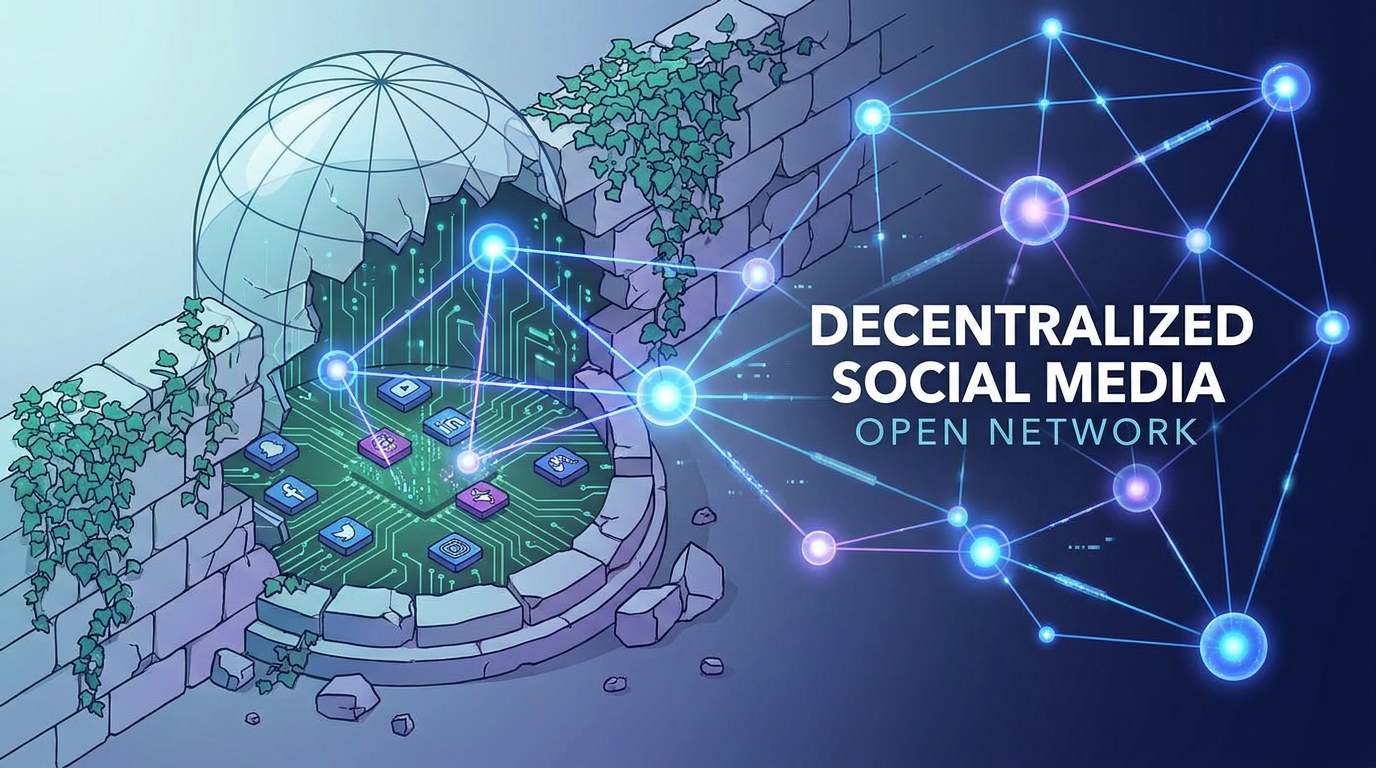
Decentralized protocols like ActivityPub and the AT Protocol are dismantling the 'walled gardens' of legacy social media. By separating the underlying network from the app interface, these open standards are giving users unprecedented control over their data, followers, and algorithms.
By Factlen Editorial Team
- Open-Web Advocates
- Argue that decentralized protocols are essential for returning data ownership, privacy, and censorship resistance to users.
- Commercial Platforms
- View open protocols as a strategic way to build goodwill, tap into broader networks, and reduce antitrust pressure while maintaining their core business.
- Protocol Developers
- Focus on the technical architecture, believing social media should function as a foundational internet layer like email or RSS.
- Trust & Safety Experts
- Highlight the complexities of decentralized moderation and the burden placed on volunteer administrators to police fragmented networks.
What's not represented
- · Independent server administrators who bear the cost and labor of hosting Fediverse instances
- · Marginalized communities navigating the complexities of decentralized moderation and safety
Why this matters
For over a decade, tech giants have owned your social graph, locking you into their platforms and dictating what you see. The rise of decentralized protocols means you can finally own your digital identity, take your followers to any app you choose, and control your own algorithmic feeds.
Key points
- Decentralized social media, or the "Fediverse," allows users on different platforms to interact seamlessly, much like email.
- Open protocols like ActivityPub and the AT Protocol separate the underlying social network from the app interface.
- Users gain true account portability, allowing them to move their followers and data between competing services.
- Decentralized architecture enables users to choose custom algorithmic feeds rather than relying on a corporate "black box."
- Research shows users express more authentic emotions and self-censor less on decentralized platforms.
- Moderation remains a complex challenge, relying on server administrators to block toxic communities through "defederation."
For the past fifteen years, the social internet has been defined by "walled gardens." Users poured their time, photos, and relationships into proprietary platforms owned by a handful of tech giants. If a user disagreed with a platform's algorithm, moderation policies, or monetization tactics, their only recourse was to delete their account and leave their entire social graph behind. The platform owned the network; the user was merely renting space.[1]
But a fundamental rewiring of the social web is now underway, shifting power from central authorities back to the users. This movement is driven by decentralized social media—a rapidly maturing ecosystem of interconnected networks collectively known as the "Fediverse." Rather than relying on a single corporate server, these platforms operate on open protocols that allow different apps and communities to talk to one another seamlessly.[1][4]
To understand the Fediverse, the most accurate analogy is email. A person using a Gmail account does not need to convince their friends to abandon Yahoo or Outlook to send them a message. Because all email providers use the same underlying open protocols, the services are interoperable. Decentralized social media applies this exact logic to timelines, likes, and followers. A user on one platform can follow, reply to, and share content from a user on a completely different platform.[4]

The backbone of this interoperability is ActivityPub, an open social networking protocol endorsed by the World Wide Web Consortium (W3C) in 2018. For years, ActivityPub was the quiet engine powering niche networks like Mastodon (a microblogging site) and PeerTube (a decentralized video host). It allowed independent, community-run servers to stitch themselves together into a global fabric, free from corporate algorithms and advertising models.[6]
The decentralized web experienced a seismic shift when Meta, the ultimate architect of the walled garden, embraced interoperability. Meta built its newest text-based app, Threads, to be compatible with ActivityPub. Users on Threads can now opt to federate their profiles, broadcasting their posts to Mastodon and other independent servers, and receiving replies from networks they don't even have accounts on. This integration signaled that open protocols were no longer just an ideological experiment; they were becoming an industry standard.[2]
Running parallel to ActivityPub is the AT Protocol (Authenticated Transfer Protocol), the engine behind Bluesky. Originally incubated inside Twitter before spinning out as an independent company, Bluesky has grown to over 44 million users by mid-2026. While ActivityPub focuses heavily on server-to-server communication, the AT Protocol was designed from the ground up to prioritize account portability and algorithmic choice.[3]
Account portability is arguably the most radical consumer benefit of the decentralized web. On the AT Protocol, a user's identity and social graph are cryptographically tied to them, not to the app they are using. If a Bluesky user decides they no longer like the app's interface or corporate direction, they can seamlessly migrate their handle, their posts, and their followers to a competing app built on the same protocol. The user owns their audience.[3]

Account portability is arguably the most radical consumer benefit of the decentralized web.
This architecture also dismantles the monopoly of the "black box" algorithm. On traditional platforms, a central algorithm dictates what users see, often prioritizing outrage and engagement to maximize ad revenue. Decentralized networks separate the hosting infrastructure from the content delivery mechanism. Users can subscribe to custom feeds built by third-party developers—choosing an algorithm that prioritizes chronological news, positive updates, or specific academic topics, and swapping them out as easily as changing a playlist.[1][3]
Research indicates that this structural shift fundamentally changes how people behave online. A 2026 study published in the European Journal of Marketing by Washington State University analyzed over 26,000 comments and conducted controlled simulations. The researchers found that users on decentralized platforms express stronger, more authentic emotions and engage in significantly less self-censorship compared to those on centralized apps, where activity is tightly monitored and tied to a rigid public identity.[5]
For creators and brands, the decentralized web offers a hedge against "platform risk." Historically, a creator might spend years building an audience on a specific app, only to lose their livelihood overnight if the company changed its algorithm or went out of business. By building an audience on an open protocol, creators ensure that their connection to their fans is permanent and platform-agnostic.[1]

The academic and research communities are also reaping the benefits of this open architecture. When legacy platforms locked down their APIs and began charging exorbitant fees for data access, researchers studying misinformation, public health, and social trends were left in the dark. Because decentralized protocols are open by design, public posts are genuinely public, allowing researchers to study community dynamics transparently without needing a corporate gatekeeper's permission.[1][3]
Despite the momentum, the decentralized web faces significant friction. The primary hurdle is onboarding. Explaining "servers," "instances," and "federation" to a general public accustomed to frictionless, one-click app downloads remains a challenge. While apps like Bluesky and Threads have smoothed out the user experience, fully independent networks still require users to make technical choices upfront about where their data will live.[4]
Moderation presents an even more complex challenge. Without a central authority to ban bad actors globally, decentralized networks rely on server-level moderation. If a specific server becomes a haven for hate speech or harassment, other servers can choose to "defederate" from it—essentially cutting off the toxic server's connection to the rest of the network. While this protects individual communities, it can lead to a fragmented landscape where users on different servers experience entirely different versions of the internet.[7]

Furthermore, the financial sustainability of independent servers remains an open question. Running the infrastructure for thousands of users costs money, and without targeted advertising, many Fediverse instances rely on crowdfunding, donations, or volunteer labor. As the network scales to accommodate hundreds of millions of users, the ecosystem will need to develop robust funding models that don't compromise its user-first ethos.[7]
Ultimately, the rise of the Fediverse represents a return to the foundational ideals of the early internet—an open, interoperable web where anyone could build and connect. By decoupling our digital identities from corporate ownership, decentralized protocols are transforming social media from a collection of private, walled-off malls into a shared public utility. The transition will take years, but the infrastructure for a healthier, user-controlled internet is finally in place.[1]
How we got here
2018
The W3C officially publishes the ActivityPub protocol as a recommended web standard.
2019
Twitter initiates the Bluesky project to develop an open social protocol for public conversation.
Late 2022
Following leadership changes at Twitter, millions of users begin migrating to decentralized alternatives like Mastodon.
March 2024
Meta begins allowing Threads users to share their posts to the Fediverse via ActivityPub integration.
May 2026
Bluesky surpasses 44 million users, cementing the AT Protocol as a major pillar of the open social web.
Viewpoints in depth
Open-Web Advocates
Focus on data ownership, censorship resistance, and breaking corporate monopolies.
Advocates for the open web argue that the era of corporate-owned social graphs was a historical anomaly. They view decentralized protocols as a necessary correction that returns power to the user. By ensuring account portability and algorithmic choice, they believe the Fediverse protects free expression and prevents any single billionaire or corporation from dictating the flow of global information.
Commercial Platforms
Embracing open protocols to stay relevant, reduce antitrust pressure, and tap into broader networks.
For massive legacy platforms like Meta, integrating with protocols like ActivityPub is a strategic pivot. It allows them to position themselves as champions of the open web, potentially easing regulatory antitrust scrutiny. Furthermore, by connecting their users to the broader Fediverse, they can increase the utility of their apps without having to build and acquire every new community from scratch.
Protocol Developers
Focus on the technical architecture of interoperability and custom algorithms.
Engineers and developers building the AT Protocol and ActivityPub view social media not as a product, but as a foundational internet layer—similar to HTTP or SMTP. Their goal is to separate the hosting infrastructure from the user interface. They argue that when developers can build new apps on top of an existing, shared social graph, it unlocks a wave of innovation that walled gardens previously stifled.
Trust & Safety Experts
Focus on the challenges of decentralized moderation and the risk of fragmented echo chambers.
Safety researchers caution that the Fediverse's greatest strength—its lack of a central authority—is also its greatest vulnerability. Without a global trust and safety team, the burden of policing harassment, spam, and illegal content falls entirely on volunteer server administrators. Experts warn that the primary tool for moderation, "defederation," can lead to a highly splintered internet where users retreat into isolated, ideologically pure echo chambers.
What we don't know
- How independent, volunteer-run servers will financially sustain themselves as the Fediverse scales to hundreds of millions of users.
- Whether decentralized moderation tools can effectively combat coordinated global harassment campaigns without a central authority.
- If mainstream users will tolerate the initial friction of choosing servers and understanding protocol mechanics.
Key terms
- Fediverse
- A portmanteau of "federation" and "universe," referring to the network of interconnected, decentralized social media servers.
- ActivityPub
- An open, decentralized social networking protocol established by the W3C, used by platforms like Mastodon and Threads.
- AT Protocol
- The Authenticated Transfer Protocol, an open-source framework built by Bluesky that allows for account portability and custom feeds.
- Interoperability
- The ability of different software systems or platforms to communicate, exchange data, and work together seamlessly.
- Defederation
- The process by which one decentralized server severs its connection to another server, usually to block toxic content or harassment.
Frequently asked
Do I have to leave my current social networks to use the Fediverse?
Not necessarily. Platforms like Meta's Threads are integrating ActivityPub, allowing you to connect with decentralized networks from within a familiar app.
If there is no central company, who moderates the content?
Moderation happens at the server (or "instance") level. Server administrators set their own rules and can block (defederate from) other servers that allow harmful content.
Can I take my followers with me if I switch servers?
Yes. Protocols like ActivityPub and the AT Protocol are designed for account portability, meaning your social graph belongs to you, not the platform.
Sources
Source coverage
7 outlets
4 viewpoints surfaced







[1]Factlen Editorial TeamOpen-Web Advocates
Synthesis by Factlen editorial team
Read on Factlen Editorial Team →[2]MetaCommercial Platforms
Threads has entered the fediverse
Read on Meta →[3]BlueskyProtocol Developers
Bluesky FAQ and AT Protocol
Read on Bluesky →[4]LifehackerOpen-Web Advocates
What Is the Fediverse, and Why Does Everyone Keep Talking About It?
Read on Lifehacker →[5]Washington State UniversityOpen-Web Advocates
Decentralized social media fosters more authentic expression
Read on Washington State University →[6]World Wide Web ConsortiumProtocol Developers
ActivityPub
Read on World Wide Web Consortium →[7]LawfareTrust & Safety Experts
What Is the Fediverse?
Read on Lawfare →



Every angle. Every day.
Get technology stories with full source coverage and perspective breakdowns delivered to your inbox.