
The AI Economy Trade-Off: Analyzing the Treasury's Systemic Risk Debate
A leaked draft report by career Treasury analysts labeling the artificial intelligence market a systemic financial risk has been disowned by department leadership. The internal clash highlights a growing global debate over how to manage the macroeconomic vulnerabilities of the unprecedented AI infrastructure buildout.
By Sergei Orlov

- Systemic Risk Analysts
- Regulators and analysts who view the AI infrastructure buildout as a macroeconomic vulnerability.
- Innovation Proponents
- Government officials and industry leaders who view AI as a fundamental driver of a new economic Golden Age.
- Market Pragmatists
- Observers who focus on specific, manageable risks rather than macroeconomic collapse.
Perspectives this story doesn't cover
- Retail Investors
- Regional Utility Operators
- Venture Capital Firms
Why it matters
This internal government debate directly impacts how the global financial system will regulate the massive capital flowing into artificial intelligence. The outcome will determine whether the AI industry faces strict banking-style oversight or is allowed to expand unhindered, affecting everything from stock market stability to the funding of regional power grids.
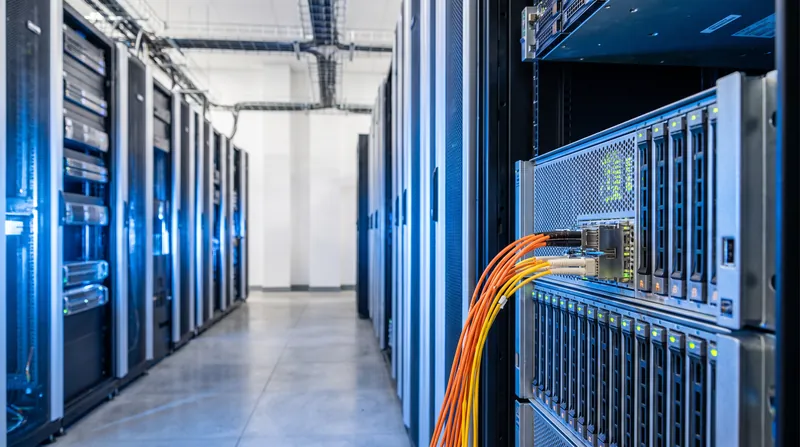
A stark divide has emerged within the United States government over the macroeconomic stakes of the artificial intelligence boom. Career analysts at the U.S. Treasury Department recently drafted a comprehensive report labeling the AI market a systemic risk to the financial system. The document warns that a sudden downturn in the sector would send devastating shockwaves through stock markets, private credit, and utility infrastructure. However, before the report could be finalized, Treasury leadership explicitly disowned its findings. A department spokesperson dismissed the analysis as unvetted, reiterating the administration's stance that artificial intelligence will serve as the primary engine for a new era of American economic dominance. This internal clash highlights a critical global debate over how to manage the unprecedented capital flowing into frontier technologies.[1][2]
To understand the stakes of this debate, one must examine the trade-off between treating artificial intelligence as a systemic financial risk versus managing it as a standard technological boom. The argument for the systemic risk framework centers on the sheer scale of capital entrenchment. Career analysts point out that the industry is heavily reliant on private-market financing and massive debt to fund gigawatt-scale data centers. The evidence supporting this view includes the deep entanglement of AI firms with cloud providers, chipmakers, and regional utility grids. If productivity expectations are not met, the resulting contraction would not be isolated to software valuations but would trigger defaults across the physical infrastructure supply chain.[1][3]
Against the systemic risk framework, proponents of the standard tech boom model argue that aggressive regulation will stifle necessary innovation. The argument for this laissez-faire approach is that artificial intelligence is a fundamental general-purpose technology, much like electricity or the internet, requiring massive upfront investment to realize long-term gains. The evidence supporting this view points to the strong balance sheets of the primary corporate investors and the tangible productivity improvements already visible in software development and logistics. Treasury leadership has publicly praised the estimated 750 billion dollars being invested in AI infrastructure this year, framing it as a necessary capital expenditure rather than a speculative bubble.[2][5]
The historical parallels drawn by both sides further illustrate this trade-off. The systemic risk camp frequently cites the dotcom crash of the early 2000s as a cautionary tale. Their evidence suggests that today's artificial intelligence firms are even more deeply integrated into the broader economy than the web startups of twenty-five years ago. Because the modern financial system relies heavily on AI meeting its stated profitability goals, a failure to deliver could replicate the devastating wealth destruction of the dotcom bust. This historical framing is used to justify preemptive stress tests and tighter oversight of private credit markets funding the buildout.[1][2]
Conversely, the argument against the dotcom comparison emphasizes the fundamental differences in market maturity. Innovation proponents argue that unlike the speculative, revenue-less companies of the late 1990s, today's AI leaders are highly profitable technology giants with massive cash reserves. The evidence here shows that the current infrastructure buildout is being funded largely by companies with established, resilient business models rather than retail investors gambling on unproven startups. Therefore, applying a systemic risk label based on a flawed historical analogy could unnecessarily panic markets and artificially constrain the supply of capital needed to maintain geopolitical technological supremacy.[4]
Conversely, the argument against the dotcom comparison emphasizes the fundamental differences in market maturity.
While the U.S. Treasury leadership has opted to reject the systemic risk label, international regulators are increasingly adopting it. The European Central Bank has mandated that every significant European bank prove its resilience to an AI-powered economic shock by October 31. This move represents a clear application of the systemic risk framework, prioritizing financial stability over unconstrained growth. The evidence driving the European approach includes formal warnings from the European Systemic Risk Board, which concluded that frontier models could severely strain the financial system's cyber resilience by giving attackers an asymmetric advantage in speed and scale.[3][6]
The United Kingdom has also embraced elements of the systemic risk framework, placing major cloud providers under the kind of strict supervision normally reserved for institutions capable of breaking the financial system. The argument for this level of oversight is that the concentration of artificial intelligence infrastructure among a few key vendors creates a single point of failure for the broader economy. The evidence supporting the UK's move includes the increasing reliance of critical financial services on third-party cloud computing and AI application programming interfaces. By treating these providers as systemically important, regulators aim to enforce rigorous operational resilience standards.[3]
Beyond macroeconomic stability, the trade-off analysis must account for cognitive dependency risks. Early audits of institutional AI adoption reveal that reliance on these tools can measurably degrade the baseline abilities of professionals, including physicians and software engineers. The argument for regulatory intervention here is that widespread cognitive deskilling poses a systemic operational risk if the technology fails or is compromised. The evidence includes academic studies showing significant performance drops when AI assistance is removed during complex tasks. This dependency adds a layer of vulnerability that traditional financial models struggle to quantify.[3]
Ultimately, the systemic risk framework fits well when analyzing the physical and financial infrastructure supporting the artificial intelligence boom. It is highly effective for evaluating the resilience of private credit markets, the stress on regional utility grids, and the concentration of critical cloud services. By applying this lens, regulators can identify and mitigate single points of failure before they trigger cascading economic damage. It provides a necessary sobering perspective on the massive debt obligations being accumulated to build out data centers and secure advanced semiconductor supply chains.[1][4]
However, the systemic risk framework does not fit when applied to the actual research and development of frontier models or the deployment of AI in low-risk enterprise software. In these areas, treating the technology as a systemic threat can lead to overly burdensome compliance requirements that lock out smaller competitors and entrench existing monopolies. When evaluating application-layer innovation and fundamental algorithmic research, the standard tech boom framework is far more appropriate. It correctly identifies the rapid advancements as a natural cycle of technological maturation that requires flexibility and a high tolerance for localized failure.[2][5]
The standard tech boom framework fits well when understanding the broader geopolitical competition and the influx of venture capital into specialized AI applications. It accurately captures the reality that maintaining technological leadership requires massive, sometimes inefficient, capital expenditure. This model is ideal for analyzing the competitive dynamics between major technology firms and the rapid commercialization of generative models. It encourages the kind of aggressive investment necessary to achieve breakthroughs in fields like drug discovery, materials science, and autonomous systems.[2]
Conversely, the standard tech boom framework does not fit when assessing the macroeconomic vulnerabilities created by the sheer scale of the current infrastructure buildout. It fails to adequately account for the systemic dangers of vendor concentration, the fragility of the semiconductor supply chain, and the unprecedented energy demands placed on aging power grids. By dismissing these structural risks as mere growing pains, the laissez-faire approach leaves the broader economy exposed to shocks that could easily be mitigated through prudent, targeted oversight. The tension within the Treasury Department perfectly encapsulates this vital balancing act.[1][3]
What to know
- Career Treasury analysts drafted a report labeling the AI market a systemic financial risk.
- Treasury leadership officially disowned the report, calling its findings unvetted.
- The debate centers on whether the $750 billion AI buildout is a standard tech boom or a macroeconomic vulnerability.
- Analysts warn that a market downturn could ripple through private credit, cloud providers, and utilities.
- International regulators, including the European Central Bank, are already mandating AI-specific stress tests.
- Proponents argue that applying systemic risk labels prematurely could stifle necessary technological innovation.
Where opinion splits
Systemic Risk Analysts
Regulators and analysts who view the AI infrastructure buildout as a macroeconomic vulnerability.
This camp argues that the sheer scale of capital required to build gigawatt-scale data centers has created unprecedented entrenchment. They point to the heavy reliance on private credit and the strain on regional utility grids as evidence that a failure to meet AI productivity goals could trigger cascading defaults. Their primary concern is that the financial system is ignoring single points of failure in cloud computing and semiconductor supply chains.
Innovation Proponents
Government officials and industry leaders who view AI as a fundamental driver of a new economic Golden Age.
Proponents of the standard tech boom model argue that aggressive regulation will stifle necessary innovation and cede geopolitical technological supremacy. They emphasize that today's AI leaders are highly profitable giants, not the speculative startups of the dotcom era. This camp believes that the massive capital expenditures currently underway are necessary investments in a general-purpose technology that will ultimately yield massive productivity gains across all sectors of the economy.
Market Pragmatists
Observers who focus on specific, manageable risks rather than macroeconomic collapse.
Market pragmatists reject both the catastrophic systemic risk narrative and the unbridled optimism of the innovation proponents. They argue for targeted interventions, such as monitoring vendor concentration and enforcing strict cyber resilience standards, without attempting to cool the broader market. This viewpoint emphasizes the need for practical frameworks that address immediate vulnerabilities, like data privacy and algorithmic bias, while allowing the underlying infrastructure to mature naturally.
Sources
Source coverage
6 outlets
3 viewpoints surfaced






- [1]NOTUSSystemic Risk Analysts
Treasury Analysts Warn AI Market Poses Systemic Risk
Read on NOTUS → - [2]PYMNTSInnovation Proponents
Treasury Department Disowns Draft Report on AI Dotcom Bubble Risks
Read on PYMNTS → - [3]AI WeeklySystemic Risk Analysts
Regulators Pick a Word for AI: Systemic
Read on AI Weekly → - [4]Que.comMarket Pragmatists
Treasury Analysts Call AI Investment a 'Systemic' Financial Risk
Read on Que.com → - [5]U.S. Department of the TreasuryInnovation Proponents
Managing Artificial Intelligence-Specific Cybersecurity Risks in the Financial Services Sector
Read on U.S. Department of the Treasury → - [6]European Central BankSystemic Risk Analysts
ECB Supervisory Board AI Cyber Resilience Mandate
Read on European Central Bank →
Comments

More in Content Types
See all →Network Protocols
How the Sliding Window and Cumulative Acknowledgements Guarantee Reliable Data Delivery in TCP
6 sources

Statistical Methodology
How Mediation Separates the Mechanism of an Effect from Moderation's Conditional Boundary
8 sources

Disaster Recovery
How the Recovery Point Objective and Recovery Time Objective Separate Data Loss Tolerance from Downtime Cost
8 sources
Political Science
The Six Stages of Acceptability That Define the Overton Window
9 sources

Every angle. Every day.
Get Content Types stories with full source coverage and perspective breakdowns delivered to your inbox.