
The 2026 E-Bike Buying Guide: Navigating Motors, Sensors, and Battery Safety
As electric bicycles become essential transportation, choosing the right model requires understanding key technical differences. This guide breaks down motor types, sensor technology, and the critical importance of UL 2849 safety certification.
By Factlen Editorial Team
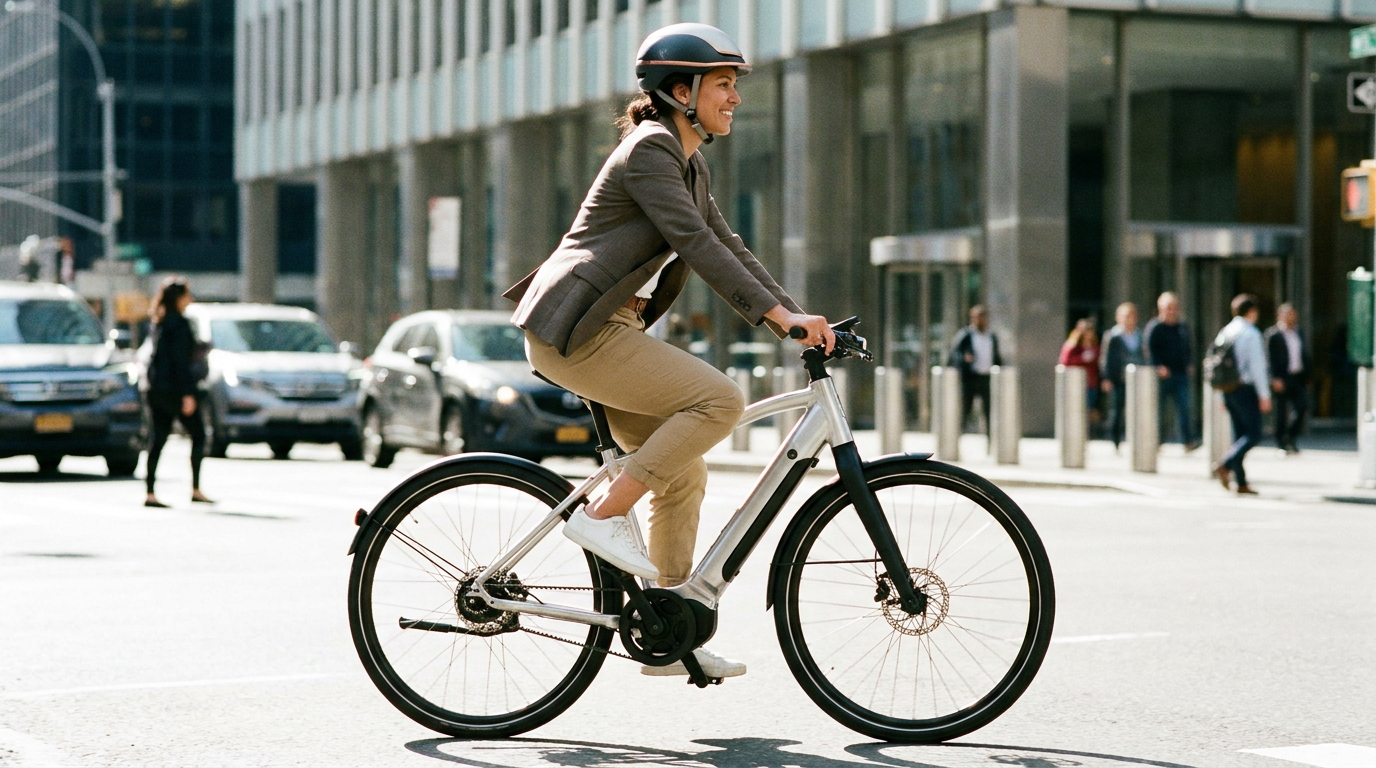
- Urban Commuters & Value Buyers
- Prioritizing affordability, low maintenance, and effortless riding for daily city transit.
- Performance & Cargo Riders
- Focusing on natural ride feel, high torque, and mechanical efficiency for demanding terrain.
- Safety & Standards Advocates
- Emphasizing rigorous third-party testing to eliminate the risk of lithium-ion battery fires.
What's not represented
- · Traditional analog cyclists
- · Pedestrian safety advocates
Why this matters
An e-bike is a significant investment that can replace car trips, improve cardiovascular health, and save thousands in fuel. However, buying the wrong motor configuration or an uncertified battery can lead to a frustrating riding experience or serious fire risks.
Key points
- The e-bike market offers two main motor types: affordable hub motors for flat commutes and efficient mid-drive motors for hills and cargo.
- Torque (Nm) is a more accurate measure of an e-bike's hill-climbing ability than raw wattage.
- Cadence sensors provide effortless, consistent power, while torque sensors amplify physical effort for a natural, workout-friendly ride.
- Battery capacity should be evaluated in Watt-hours (Wh), with real-world range often dropping 20-30% due to hills or cold weather.
- UL 2849 certification is now considered essential, testing the entire electrical system to prevent lithium-ion battery fires.
The electric bicycle market in 2026 has evolved from a niche hobbyist space into a mature, essential segment of global transportation. As cities expand cycling infrastructure and commuters seek alternatives to expensive car ownership, e-bikes have become the vehicle of choice for millions. However, the sheer volume of options has made purchasing one increasingly complex. Buyers are no longer just picking a color and a frame size; they are faced with a dizzying array of technical specifications, from motor placement and sensor types to battery safety certifications. Navigating this landscape requires understanding how these components interact to shape the riding experience. A poorly matched e-bike can turn a daily commute into a frustrating chore, while the right combination of motor, sensor, and battery can make riding feel like having superhuman legs.[1]
The most fundamental decision when choosing an e-bike is motor placement, which dictates both the bike's handling and its price point. The market is primarily divided between hub-drive and mid-drive motors. Hub motors are located in the center of either the front or rear wheel, delivering power directly to the axle independent of the bicycle's gears. This design creates a distinct sensation of being pushed or pulled along the road. Because they have fewer moving parts and simpler mechanics, hub motors are generally more affordable and require less maintenance, making them the standard choice for entry-level and budget-friendly commuter models.[3]
In contrast, a mid-drive motor sits at the bottom bracket, directly between the pedals. Instead of powering the wheel, it drives the bicycle's chain, working in tandem with the existing mechanical gears. This placement keeps the bike's center of gravity low and balanced, which significantly improves handling on uneven terrain. More importantly, because the motor leverages the bike's drivetrain, it can operate at its most efficient revolutions per minute (RPM) regardless of the bike's speed. When a rider shifts into a lower gear to tackle a steep hill, the mid-drive motor also benefits from that mechanical advantage, allowing it to climb efficiently without overheating.[3][5]

This mechanical synergy makes mid-drive systems the undisputed champions of steep inclines, off-road trails, and heavy cargo hauling. By staying within their optimal RPM range, mid-drive motors waste less energy as heat, which can translate to better battery range on hilly routes. Hub motors, being single-speed systems, are highly efficient for cruising at a constant speed on flat pavement but can bog down and drain the battery quickly on long, slow climbs. Therefore, riders in mountainous areas or those carrying heavy loads are almost always better served by a mid-drive system, despite the higher upfront cost and increased wear on the bicycle's chain and cassette.[5]
When evaluating motor power, consumers are often misled by wattage stickers. Manufacturers frequently advertise 500W, 750W, or even 1000W motors, leading buyers to assume that a higher wattage automatically equates to a superior ride. However, wattage primarily measures raw power consumption and top speed potential, which is often legally capped anyway. The more critical metric for real-world performance is torque, measured in Newton-meters (Nm). If watts represent the top speed of the bike, torque represents its muscle—the rotational force that gets a heavy bike off the line at a stoplight and keeps it moving when the road tilts upward.[7]
When evaluating motor power, consumers are often misled by wattage stickers.
Understanding torque ratings is essential for matching an e-bike to its intended environment. A motor with 30 to 40 Nm of torque is perfectly adequate for flat urban commutes and casual boardwalk cruising. Stepping up to the 50 to 60 Nm range provides a versatile sweet spot capable of handling moderate inclines, bridge crossings, and light cargo. For heavy-duty applications—such as fat-tire off-road bikes, hauling groceries, or conquering steep San Francisco-style hills—riders should look for high-torque motors producing 80 Nm or more. A high-torque 500W motor will easily outperform a low-torque 750W motor on a steep climb, proving that raw wattage only tells half the story.[7]

Beyond the motor itself, the brain of the e-bike—the sensor system—profoundly impacts how the power is delivered. E-bikes use either cadence sensors or torque sensors to tell the motor when to engage. A cadence sensor is the simpler of the two; it uses a magnetic disc to detect whether the pedals are turning. Once it senses rotation, it acts like an on/off switch, signaling the motor to deliver a preset amount of power based on the selected assist level. This provides an effortless riding experience where the motor does most of the work, making cadence sensors highly popular among commuters who want to arrive at the office without breaking a sweat.[4]
Torque sensors, on the other hand, measure exactly how hard the rider is pushing on the pedals in real-time. The motor then amplifies that physical effort proportionally: push lightly, and the motor provides a gentle assist; stand on the pedals to sprint, and the motor surges with power. This creates a highly intuitive, natural riding feel that mimics traditional cycling. Because torque sensors only deliver power when the rider is actively exerting force, they are significantly more efficient, often extending battery life by 15 to 25 percent compared to cadence systems. While more expensive, torque sensors are favored by cycling enthusiasts and anyone looking for a responsive, workout-friendly ride.[4]

When assessing an e-bike's range, buyers should focus on the battery's Watt-hour (Wh) rating rather than just its voltage or amp-hours. The Watt-hour figure represents the total energy capacity of the battery pack and is the most accurate predictor of how far the bike can travel on a single charge. However, advertised maximum ranges are notoriously optimistic, usually calculated under ideal conditions with a lightweight rider on flat terrain using the lowest assist setting. In the real world, factors like steep hills, heavy cargo, frequent stop-and-go traffic, and even cold weather can reduce the effective range by 20 to 30 percent. Buyers are advised to purchase a battery with a buffer capacity larger than their daily commuting needs.[1][6]
Perhaps the most critical development in the 2026 e-bike market is the industry-wide shift toward rigorous electrical safety standards, specifically UL 2849. In previous years, a surge in catastrophic lithium-ion battery fires—often sparked by cheap, uncertified aftermarket batteries—prompted widespread safety concerns. UL 2849 is a comprehensive safety standard developed by Underwriters Laboratories that rigorously tests the entire electrical system of the e-bike. It ensures that the battery pack, the battery management system (BMS), the motor, and the charger all communicate and operate safely together under extreme stress.[2][8]

Earning UL 2849 certification requires an e-bike to survive a battery of engineering abuses, including intentional overcharging, short-circuiting, and exposure to temperature extremes. The testing verifies that the BMS will automatically cut off power before a thermal runaway event can occur. This system-level certification is far more robust than simply using UL-recognized individual battery cells. The standard has become so vital for public safety that major online retailers and several municipalities, including New York City, now legally mandate UL 2849 certification for any e-bike sold, leased, or stored in multi-unit residential buildings.[2][8]
Ultimately, choosing the right e-bike requires an honest assessment of daily routes, storage logistics, and riding goals. A heavy, high-torque cargo bike might be perfect for school drop-offs but a nightmare to carry up a flight of apartment stairs. Conversely, a lightweight, cadence-sensing city bike excels on flat pavement but will struggle on weekend mountain trails. Industry experts universally recommend test-riding multiple configurations before purchasing. Experiencing the distinct push of a hub motor versus the natural amplification of a mid-drive, and feeling the immediate response of a torque sensor, provides clarity that a specification sheet simply cannot match.[1][6]
Viewpoints in depth
Urban Commuters & Value Buyers
Prioritizing affordability, low maintenance, and effortless riding for daily city transit.
For riders navigating flat city streets, the priority is arriving at work without breaking a sweat. This camp strongly favors cadence sensors and hub motors. Because cadence sensors deliver preset power regardless of pedaling effort, they offer a 'scooter-like' ease that makes stop-and-go traffic manageable. Furthermore, the mechanical simplicity of hub motors keeps upfront costs low and reduces long-term maintenance, making these setups ideal for budget-conscious urbanites.
Performance & Cargo Riders
Focusing on natural ride feel, high torque, and mechanical efficiency for demanding terrain.
Enthusiasts, mountain bikers, and parents hauling cargo require a system that responds intuitively to their physical input. This group advocates for mid-drive motors paired with torque sensors. By leveraging the bicycle's gearing, mid-drives prevent the motor from bogging down on steep inclines. The torque sensor ensures that the motor's power output perfectly mirrors the rider's effort, providing a workout when desired and raw power when needed, all while maximizing battery efficiency.
Safety & Standards Advocates
Emphasizing rigorous third-party testing to eliminate the risk of lithium-ion battery fires.
Following a string of high-profile battery fires linked to cheap, uncertified e-bikes, regulators and safety organizations have drawn a hard line. This camp views UL 2849 certification not as an optional premium feature, but as a mandatory baseline for consumer safety. They stress that a battery is only as safe as its Battery Management System (BMS) and charger, advocating for strict municipal bans on non-certified electrical systems in residential buildings.
What we don't know
- How the long-term degradation of high-capacity e-bike batteries will impact the secondary resale market over the next decade.
- Whether more local municipalities will follow New York City's lead in legally banning the sale of non-UL 2849 certified e-bikes.
- How upcoming solid-state battery technology might alter the weight and range limitations of current lithium-ion e-bike models.
Key terms
- Mid-drive motor
- An electric motor positioned at the bicycle's bottom bracket that powers the chain and utilizes the bike's mechanical gears.
- Hub motor
- An electric motor built directly into the center of the front or rear wheel, providing propulsion independent of the bike's gears.
- Torque sensor
- A device that measures the physical force a rider applies to the pedals, adjusting motor assistance proportionally for a natural feel.
- Cadence sensor
- A sensor that detects the rotational speed of the pedals, acting as a switch to deliver a consistent, preset level of motor power.
- UL 2849
- A rigorous safety standard that tests an e-bike's entire electrical system—including the battery, motor, and charger—to prevent fire and electrical hazards.
- Watt-hour (Wh)
- A measurement of a battery's total energy capacity, serving as the most reliable indicator of an e-bike's potential range.
Frequently asked
Do I need a special license to ride an e-bike?
In most regions, Class 1 and Class 2 e-bikes (which assist up to 20 mph) are treated like traditional bicycles and do not require a license. However, Class 3 e-bikes or speed pedelecs may have age restrictions or require registration depending on local laws.
How long does an e-bike battery last before it needs replacing?
Most high-quality lithium-ion e-bike batteries are rated for 500 to 1,000 full charge cycles. For the average rider, this translates to roughly 3 to 5 years of use before the battery capacity significantly degrades.
Can I ride my e-bike in the rain?
Yes, most modern e-bikes are water-resistant and designed to handle light to moderate rain. However, they are not waterproof; you should avoid submerging the motor or battery in deep puddles and never use a high-pressure hose to wash the electrical components.
What is the difference between a Class 1, 2, and 3 e-bike?
Class 1 provides pedal assistance up to 20 mph. Class 2 includes a throttle that can propel the bike up to 20 mph without pedaling. Class 3 provides pedal assistance up to 28 mph and is often subject to stricter local regulations.
Sources
Source coverage
8 outlets
3 viewpoints surfaced








[1]Factlen Editorial TeamSafety & Standards Advocates
Synthesis by Factlen editorial team
Read on Factlen Editorial Team →[2]UL SolutionsSafety & Standards Advocates
E-Bikes Certification: Evaluating and Testing to UL 2849
Read on UL Solutions →[3]Polygon BikesPerformance & Cargo Riders
Mid-Drive vs Hub-Drive Electric Bike Motors
Read on Polygon Bikes →[4]HimiwayUrban Commuters & Value Buyers
Cadence Sensor vs Torque Sensor on Electric Bikes
Read on Himiway →[5]MapfourPerformance & Cargo Riders
Hub Motor vs Mid-Drive Motor: Choosing the Right E-Bike
Read on Mapfour →[6]Electric Bike AdvisorPerformance & Cargo Riders
The Beginner's E-Bike Buying Guide (2026 Edition)
Read on Electric Bike Advisor →[7]SeeMoon E-BikeUrban Commuters & Value Buyers
2026 E-Bike Buying Guide: Torque vs Watts
Read on SeeMoon E-Bike →[8]MarsantsxSafety & Standards Advocates
Guide to UL 2849 certification for e-bike battery safety
Read on Marsantsx →


Every angle. Every day.
Get shopping stories with full source coverage and perspective breakdowns delivered to your inbox.