
Tesla's China-Made EV Sales Growth Slows to 3.6% Amid Fierce Local Competition
Tesla's Shanghai factory shipped 86,166 vehicles in August, marking a sharp deceleration in year-over-year growth as domestic rivals offer buyers more affordable alternatives.

Share this story
Tesla's Shanghai manufacturing facility shipped a total of 86,166 vehicles in August, managing to eke out a 3.6 percent year-over-year gain in a fiercely contested market. While this performance officially marks the automaker's tenth consecutive month of growth in the region, the underlying momentum has decelerated sharply from the massive 38 percent surge recorded just one month prior in July.
The sudden cooling of growth highlights the mounting challenges the company faces as it attempts to maintain its dominant position against a rising tide of highly capable domestic competitors. For prospective buyers monitoring the market, this statistical shift signals that the era of uncontested dominance is over, paving the way for a more balanced landscape where consumers hold significantly more leverage.[1][2]
The August wholesale total represents a notable 7.9 percent drop from July's volume, decisively snapping a three-month streak of sequential gains for the American manufacturer. These comprehensive figures encompass both domestic deliveries within mainland China and the vital export volume shipped to international markets, including Europe, Canada, and the broader Asia-Pacific region.
As the Shanghai plant operates as Tesla's primary global export hub, fluctuations in these numbers reflect not just local Chinese demand, but the broader international appetite for the Model 3 and Model Y. The sequential decline suggests that despite aggressive promotional efforts and financing incentives designed to attract new owners, the sheer volume of available alternatives is beginning to fragment the buyer base and dilute the impact of individual brand campaigns.[2][4]
For the everyday car buyer in China, this statistical slowdown translates directly into unprecedented showroom leverage and purchasing power. Local automakers are aggressively flooding the market with more affordable, feature-rich electric vehicles, forcing established players to fight harder for every single sale and keeping relentless downward pressure on sticker prices.
Consumers who previously might have defaulted to a Tesla are now finding that their budgets can stretch significantly further with domestic brands, often securing advanced driver-assistance systems, premium interior materials, and extended battery ranges that would have commanded steep markups just a few years ago. This hyper-competitive environment ensures that the true winners of the current market dynamics are the buyers themselves, who are benefiting from an ongoing price war and rapid technological iteration.[1][6]
As a direct result of this intense local competition, Tesla's slice of China's battery electric vehicle market has contracted to roughly 6.6 percent in recent months, representing a significant drop from its dominant peak of over 15 percent in 2020. Buyers today are presented with dozens of viable, high-quality alternatives from manufacturers like BYD, Nio, and Xpeng, which often undercut the Model 3 and Model Y on base price while offering highly localized software ecosystems.
These domestic vehicles frequently feature deeper integration with popular Chinese digital platforms and voice assistants, providing a seamless user experience that resonates strongly with local tech-savvy consumers. Consequently, the decision-making process for a new vehicle purchase has become far more complex, requiring buyers to weigh brand prestige against the tangible value and localized features offered by homegrown challengers.[1][5]
To maintain peak production volume at the massive Shanghai Gigafactory amid this mounting domestic pressure, the automaker has increasingly relied on securing overseas buyers to absorb its output. In recent quarters, exports have accounted for more than half of the vehicles rolling off the Chinese assembly line, fundamentally shifting the factory's primary role from a dedicated domestic supplier to a critical global export hub.
This strategic pivot ensures that the manufacturing lines remain active and economies of scale are preserved, even as the local market share gradually erodes. However, this heavy reliance on international shipments means that the vehicles available to local buyers are part of a much larger global logistical puzzle, where production schedules and available inventory are frequently dictated by the fluctuating demands of consumers halfway across the world.[1][4]
Those exported vehicles are meeting a decidedly mixed reception abroad, further complicating the purchasing landscape and long-term value proposition for international consumers. August registration data highlighted diverging fortunes across the European continent, showing strong uptake and consumer enthusiasm in markets like France and Denmark, but noticeably softer demand in countries such as Norway, Sweden, and Italy.
This uneven performance underscores the fragmented nature of the global electric vehicle transition, where local incentives, charging infrastructure maturity, and regional economic conditions heavily influence a buyer's willingness to commit to a new EV. For prospective owners in these varied markets, the shifting demand curves can directly impact vehicle availability, delivery timelines, and the aggressiveness of the promotional financing rates offered by local dealerships.[5]
Despite the shifting market share dynamics at the top of the sales charts, the broader new energy vehicle sector in China continues to expand at a rapid and healthy clip. The overall market grew an estimated 16 percent year-over-year in August, clearly indicating that consumer appetite for electric vehicles remains incredibly robust across the country.
Buyers are not retreating from the EV transition; they are simply distributing their spending across a much wider array of domestic brands that better align with their specific needs and price points. This sustained overall growth provides a reassuring signal to consumers that the infrastructure, secondary market, and long-term viability of electric vehicles are secure, even as individual automakers battle fiercely to maintain their specific slice of the expanding pie.[2]
As the year progresses and the crucial fourth-quarter sales push approaches, the pressure on pricing and standard features will likely intensify across the entire automotive industry. For prospective EV owners, this means the balance of power remains firmly entrenched on the demand side, with buyers perfectly positioned to expect continued aggressive financing offers, complimentary software upgrades, and an ever-expanding array of compelling choices.
Automakers will be forced to continuously sweeten the deal to attract foot traffic into their showrooms, ensuring that the cost of entry for high-quality electric mobility continues to fall. Ultimately, the fierce competition that is currently slowing Tesla's localized growth is the exact same force that is democratizing access to advanced electric vehicles for the average consumer.[1][6]
Key points
- Tesla's China-made EV sales reached 86,166 units in August, a 3.6 percent year-over-year increase.
- The growth rate slowed sharply from July's 38 percent jump, snapping a three-month streak of sequential gains.
- Intensifying competition from domestic automakers is driving down prices and expanding choices for local buyers.
- The Shanghai factory continues to rely heavily on exports to Europe and the Asia-Pacific to maintain production volumes.
- Local Market Analysts
- Emphasizes the shrinking domestic market share and the intense pressure from fast-moving Chinese competitors.
- Tesla Investors
- Focuses on the company's sustained year-over-year growth streak and strong export volumes despite domestic headwinds.
- Industry Observers
- Highlights the broader global demand trends and the shifting dynamics of automotive exports.
Perspectives this story doesn't cover
- European import regulators
- Traditional internal combustion engine buyers
Sources
Source coverage
6 outlets
3 viewpoints surfaced





- [1]WKZOIndustry Observers
Tesla's China-made EV sales extend growth streak, but momentum fades
Read on WKZO → - [2]CnEVPostLocal Market Analysts
Tesla China's August wholesale sales total 86,166, snapping 3-month sequential gain streak
Read on CnEVPost → - [3]Breakingthenews.netIndustry Observers
Tesla's China sales up 3.6% in August
Read on Breakingthenews.net → - [4]MarketScreenerLocal Market Analysts
Tesla's China-Made EV Sales Growth Slows Sharply in August
Read on MarketScreener → - [5]TipRanksTesla Investors
Tesla August Sales Rebound Globally, but Europe Remains a Risk for TSLA Stock
Read on TipRanks → - [6]Investing.comTesla Investors
Tesla China sales growth slows to 3.6% in August
Read on Investing.com →
More in Automotive & Transportation
See all →Charging Infrastructure
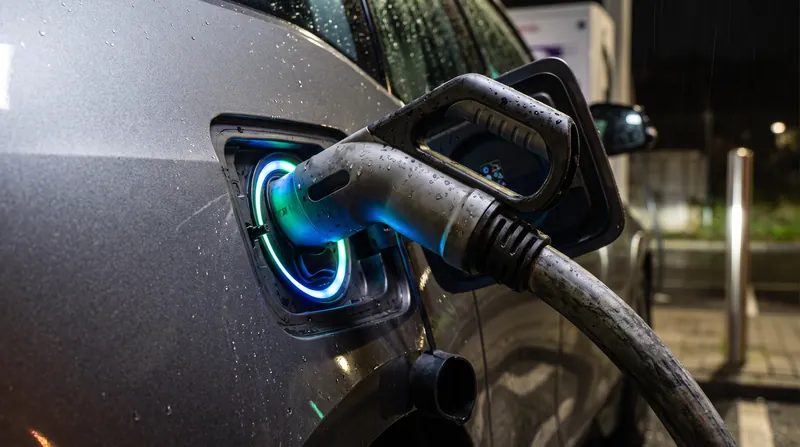
CCS, CHAdeMO, and GB/T: The Three Global Standards for EV Charging Connectors
6 sources
Solid-State Batteries
China Unveils National 5-Year Plan to Lead Global Solid-State Battery Mass Deployment by 2030
8 sources

Powertrain Physics
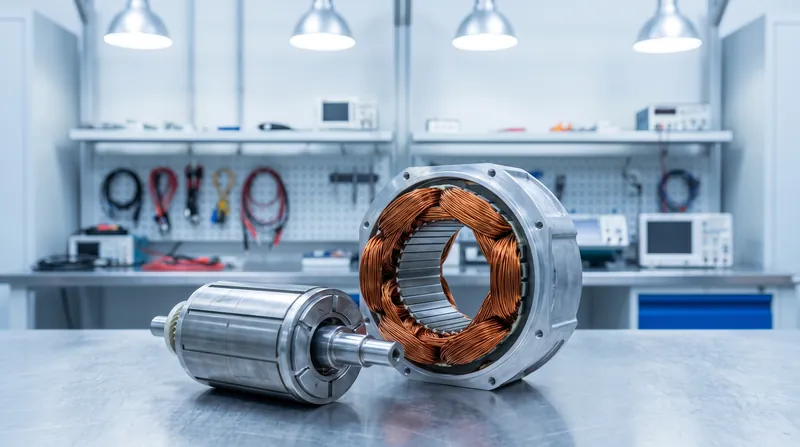
The 90 Percent Plateau: Why an Electric Motor's Efficiency Curve is Broad and Flat Compared to an Internal Combustion Engine
5 sources
Battery Tech
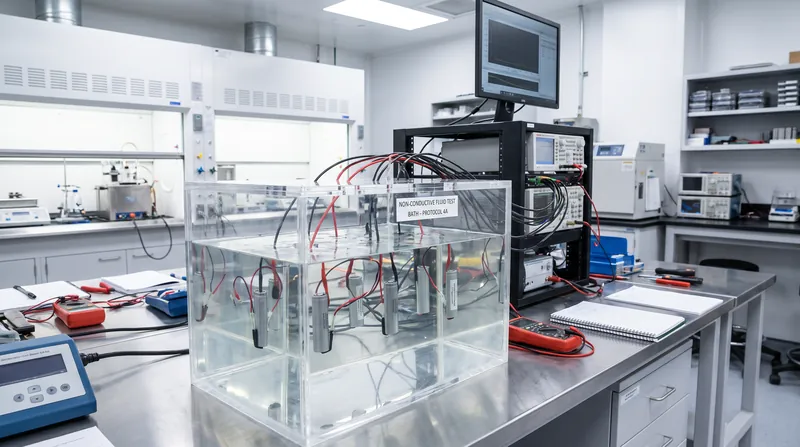
The Thermal Interface: How Immersion Cooling Changes EV Battery Lifespan and Charging Speed
3 sources
Comments
Every angle. Every day.
Get Automotive & Transportation stories with full source coverage and perspective breakdowns, free every day.