
NASA Awards SpaceX $946 Million for Three Additional Crew Dragon Flights to the ISS
NASA has modified its Commercial Crew contract with SpaceX to include three more missions, securing continuous American access to the International Space Station through 2030.

How this story has developed
This report is part of a developing story — read the earlier chapters below.
- NASA Inspector General Warns Boeing Starliner Certification May Slip to 2027
- NASA Awards SpaceX $946 Million for Three Additional Crew Dragon Flights to the ISS (this article)
- NASA Mission Planners
- Prioritize schedule security and uninterrupted access to the orbital laboratory.
- Commercial Space Advocates
- Emphasize SpaceX's reliability and the success of the fixed-price contracting model.
- Aerospace Analysts
- Focus on the financial implications of the $5.92 billion total contract and the market dominance of a single provider.
Perspectives this story doesn't cover
- Boeing Aerospace Division
- International Space Station Partner Agencies
Why this matters
The $946 million contract extension ensures the United States maintains independent, uninterrupted access to the International Space Station through the facility's planned retirement in 2030, mitigating the impact of ongoing delays with Boeing's Starliner program.
On September 18, 2026, NASA modified its Commercial Crew Transportation Capability contract with SpaceX, issuing a $946 million award for three additional crewed missions to the International Space Station.[1][3]
The procurement covers the Crew-12, Crew-13, and Crew-14 flights, extending the operational manifest of the Falcon 9 and Crew Dragon architecture through the end of the decade.[2][4]
With this modification, the total value of SpaceX's commercial crew contract rises to $5.92 billion, encompassing 14 operational flights alongside its initial demonstration missions.[5]
NASA's decision to expand the SpaceX manifest follows ongoing certification delays and technical groundings affecting Boeing's CST-100 Starliner, the agency's second commercial crew provider.[4]
Starliner's recent uncrewed return left a gap in the projected flight rotation, requiring mission planners to rely exclusively on SpaceX hardware to maintain the station's staffing levels.[4]
The $946 million fixed-price award covers ground operations, launch services, on-orbit operations, and return and recovery for each of the four-person crews.[1][3]
The $946 million fixed-price award covers ground operations, launch services, on-orbit operations, and return and recovery for each of the four-person crews.
"This modification allows NASA to maintain an uninterrupted U.S. capability for human access to the space station," the agency stated in its procurement notice, emphasizing the need for schedule security.[1]
By locking in these flights now, mission planners can maintain the standard six-month crew rotation schedule without relying on Russian Soyuz seats to fill domestic shortfalls.[2]
Viewpoints in depth
NASA's Operational Mandate
Mission planners prioritize schedule security and uninterrupted access to the orbital laboratory.
For the agency, the primary objective is maintaining a continuous American presence in low-Earth orbit. Relying on a single operational vehicle introduces baseline risk, but securing the Crew-12 through Crew-14 flights ensures that the six-month rotation schedule remains intact even if alternative transport systems face multi-year delays.
The Commercial Space Sector
Advocates emphasize SpaceX's reliability and the success of the fixed-price contracting model.
Industry observers view the $946 million extension as validation of the commercial crew architecture. By delivering consistent, fixed-price transport, SpaceX has decoupled NASA's operational cadence from the cost overruns that historically plagued bespoke aerospace procurement, establishing a reliable logistics chain for low-Earth orbit.
Market Analysts
Financial observers focus on the implications of the $5.92 billion total contract and the market dominance of a single provider.
While the immediate operational need is met, the expansion of SpaceX's manifest highlights a growing reliance on a single corporate partner. Analysts note that with Boeing's Starliner grounded, SpaceX effectively holds a monopoly on domestic crewed spaceflight, a dynamic that complicates NASA's original goal of fostering a competitive, multi-provider market.
Key points
- NASA awarded SpaceX a $946 million contract modification on September 18, 2026.
- The agreement adds the Crew-12, Crew-13, and Crew-14 missions to the manifest.
- SpaceX's total Commercial Crew Transportation Capability contract is now valued at $5.92 billion.
- The flights ensure continuous U.S. access to the International Space Station through 2030.
- The award follows ongoing technical delays with Boeing's CST-100 Starliner program.
How we got here
2014
NASA awards initial Commercial Crew Transportation Capability contracts to Boeing and SpaceX.
May 2020
SpaceX completes its first crewed demonstration flight to the International Space Station.
August 2024
Boeing's Starliner completes an uncrewed return following technical issues, delaying its certification.
September 18, 2026
NASA adds three additional operational flights to SpaceX's manifest for $946 million.
Sources
Source coverage
5 outlets
3 viewpoints surfaced





- [1]NASANASA Mission Planners
NASA Awards SpaceX Three Crew Flights to Space Station
Read on NASA → - [2]Seeking AlphaAerospace Analysts
SpaceX wins $946M NASA deal to extend ISS crew flights through 2030 - Seeking Alpha
Read on Seeking Alpha → - [3]Ars TechnicaCommercial Space Advocates
NASA Hands SpaceX Another $946 Million and Three More Crew Missions
Read on Ars Technica → - [4]TeslaratiCommercial Space Advocates
NASA taps SpaceX for more astronaut missions as Boeing Starliner remains grounded
Read on Teslarati → - [5]GKTodayAerospace Analysts
SpaceX Expands NASA Crew Mission Deal to $5.92 Billion
Read on GKToday →
Comments
More in Transportation
See all →Fleet Renewal
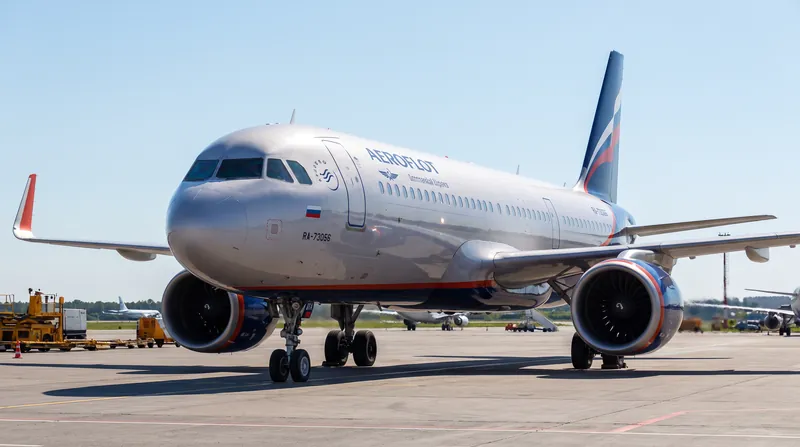
Aeroflot Finalizes Order for 90 Russian-Made MC-21-310 Jets in Major Import Substitution Deal
3 sources
Combustion Chemistry
The 0.7–1.0 Lambda Ratio and the Stoichiometric Air-Fuel Mixture That Define a Gasoline Engine's Peak Power and Efficiency
4 sources

Fluid Dynamics
The 1.025 Specific Gravity and the 20-Foot Draft That Define the Panama Canal's Neopanamax Limits
5 sources
Cross-Border Freight
Union Pacific and Canadian National Link Freight Networks to Expand North-South Corridor Access
7 sources

Every angle. Every day.
Get Transportation stories with full source coverage and perspective breakdowns delivered to your inbox.