
Aeroflot Finalizes Order for 90 Russian-Made MC-21-310 Jets in Major Import Substitution Deal
Russian flag carrier Aeroflot has signed a contract for 90 domestically produced MC-21-310 passenger jets, expanding its total commitment to 108 aircraft. The deal marks a significant step in Russia's effort to replace Western-built fleets with import-substituted aviation technology.

- State Aviation Planners
- Viewing the order as a catalyst for industrial independence.
- Airline Operations Strategy
- Focusing on a phased transition rather than an immediate fleet replacement.
Perspectives this story doesn't cover
- Western aerospace manufacturers
- Independent aviation safety auditors
Inside a signing ceremony in Moscow on September 18, 2026, executives from Russian flag carrier Aeroflot and three state-owned aerospace firms formalized the largest domestic aircraft order in the country's modern civil aviation history. The landmark contract commits Aeroflot to 90 Yakovlev MC-21-310 narrowbody passenger jets, securing a production pipeline that will stretch well into the next decade [1][2]. The comprehensive agreement was signed with United Aircraft Corporation (UAC), leasing company Aviacapital-Service, and United Engine Corporation (UEC), all subsidiaries of the state conglomerate Rostec [2][3].[1][2][3]
Under the finalized schedule, the 90 new aircraft will be delivered in escalating batches between 2029 and 2032. Aeroflot is slated to receive 14 airframes in 2029, followed by 18 in 2030, 24 in 2031, and 34 in 2032 [1][3]. This batch builds upon an earlier 2023 contract for 18 MC-21s, bringing the airline's total commitment to 108 aircraft [1][3]. Beyond the airframes themselves, the comprehensive package includes flight simulators, crew and technical personnel training, and 22 years of guaranteed after-sales technical support for the entire fleet [2][3]. The inclusion of long-term maintenance ensures that UAC will remain directly involved in the aircraft's operational lifecycle.[1][2][3]
The MC-21 program represents the cornerstone of Russia's accelerated import substitution strategy, which aims to decouple the domestic aviation sector from Western suppliers. Following the imposition of international sanctions, UAC was forced to extensively revise the aircraft's original design, replacing foreign-sourced composite wings, avionics, and engines with domestic alternatives [3]. The current MC-21-310 variant is powered by Russian-built Aviadvigatel PD-14 turbofan engines, a critical milestone in establishing a localized supply chain [2][3]. This redesign process added significant time to the development cycle, but Aeroflot executives remain publicly confident. "Our passengers will be the first to appreciate the comfort and reliability of the Russian airliner," the airline's CEO stated following the signing [2].[2][3]
Scaling up manufacturing to meet the delivery timeline remains the immediate hurdle for the state-owned aerospace sector. Production is currently being ramped up at the Irkutsk Aviation Plant, where 18 airframes are in various stages of assembly, with a target output of 36 aircraft annually [1][3]. The extensively modified aircraft has yet to complete its certification flight-test program in the fully domestic configuration [3]. Russian aviation authorities expect to grant final approval in 2027, clearing the way for the first eight aircraft from the initial 2023 order to enter commercial service in the fourth quarter of that year [1][3].[1][3]
Scaling up manufacturing to meet the delivery timeline remains the immediate hurdle for the state-owned aerospace sector.
For Aeroflot, the phased delivery schedule allows the carrier to gradually integrate the new type alongside its existing fleet of Western-built narrowbodies. The airline currently operates dozens of Airbus A320-family and Boeing 737-800 aircraft, which are expected to remain in service into the 2030s [3]. By spreading the MC-21 arrivals over several years, Aeroflot can systematically build the necessary maintenance infrastructure and crew familiarity required to support a dedicated operational ecosystem for the domestic jet [2][3]. The strategy avoids a disruptive, immediate fleet replacement while providing domestic manufacturers with a stable, long-term order book to sustain assembly lines.[2][3]
The sheer scale of the 108-aircraft commitment effectively closes a major portion of the Russian domestic market to foreign manufacturers for the foreseeable future. Even if international trade restrictions were eventually lifted, the state-backed financial architecture of this deal binds Aeroflot to the domestic aerospace sector [2]. For UAC and Rostec, successfully delivering the MC-21-310 to its launch operator is the necessary proving ground before the aircraft can potentially be marketed to allied international carriers as a viable alternative to the Airbus A320 and Boeing 737 families [2][3].[2][3]
The sheer scale of the 108-aircraft commitment effectively closes a major portion of the Russian domestic market to foreign manufacturers for the foreseeable future. Even if international trade restrictions were eventually lifted, the state-backed financial architecture of this deal binds Aeroflot to the domestic aerospace sector [2]. For UAC and Rostec, successfully delivering the MC-21-310 to its launch operator is the necessary proving ground before the aircraft can potentially be marketed to allied international carriers as a viable alternative to the Airbus A320 and Boeing 737 families [2][3].[2][3]
The sheer scale of the 108-aircraft commitment effectively closes a major portion of the Russian domestic market to foreign manufacturers for the foreseeable future. Even if international trade restrictions were eventually lifted, the state-backed financial architecture of this deal binds Aeroflot to the domestic aerospace sector [2]. For UAC and Rostec, successfully delivering the MC-21-310 to its launch operator is the necessary proving ground before the aircraft can potentially be marketed to allied international carriers as a viable alternative to the Airbus A320 and Boeing 737 families [2][3].[2][3]
Key points
- Aeroflot signed a contract for 90 domestically produced MC-21-310 passenger jets, with deliveries scheduled between 2029 and 2032.
- The agreement brings the airline's total commitment to 108 aircraft, building on an initial order of 18 jets placed in 2023.
- The contract includes flight simulators, crew training, and 22 years of comprehensive technical support from state-owned manufacturer UAC.
- The MC-21-310 features localized components, including Russian-built PD-14 engines, following a redesign to replace Western parts.
- Certification of the fully import-substituted aircraft is expected in 2027, ahead of the first commercial deliveries.
Viewpoints in depth
State Aviation Planners
Viewing the order as a catalyst for industrial independence.
For Russian government officials and Rostec executives, the 90-aircraft contract is a structural guarantee that justifies massive investments in domestic manufacturing. By securing a massive launch operator, state planners ensure a predictable, long-term workload for the Irkutsk Aviation Plant and the wider supply chain. They argue that this guaranteed demand allows the industry to systematically scale up serial production of localized components, from the PD-14 engines to the composite wings, ultimately insulating the national transport network from external supply shocks.
Airline Operations Strategy
Focusing on a phased transition rather than an immediate fleet replacement.
From the perspective of Aeroflot's management, the extended 2029–2032 delivery timeline is a pragmatic approach to fleet renewal. Rather than attempting a rapid, disruptive swap of its existing Airbus and Boeing narrowbodies, the airline is treating the MC-21 as a long-term integration project. This phased introduction provides the necessary runway to establish a comprehensive support ecosystem—including certified simulators, trained maintenance crews, and reliable spare parts logistics—before the domestic jets become the absolute backbone of the carrier's short- and medium-haul network.
Why this matters
The agreement establishes a long-term pipeline for Russia to transition its commercial aviation sector away from Airbus and Boeing aircraft. By committing to a fully localized supply chain, the state-backed order tests whether domestic manufacturing can scale to meet the operational demands of a major international carrier.
How we got here
2023
Aeroflot signs an initial contract for 18 MC-21 aircraft.
Early 2026
The MC-21-310 undergoes certification flight testing with localized components.
September 18, 2026
Aeroflot and Rostec subsidiaries finalize the order for 90 additional aircraft.
Late 2027
Expected certification approval and delivery of the first eight aircraft from the 2023 order.
2029
Deliveries of the 90-aircraft batch are scheduled to begin.
Sources
Source coverage
3 outlets
2 viewpoints surfaced



- [1]RuAviationState Aviation Planners
Aeroflot Signs Contract For 90 MC-21-310 Aircraft With Deliveries From 2029
Read on RuAviation → - [2]Defensemirror.comState Aviation Planners
Aeroflot Orders 90 Russian MC-21-310 Medium-range Single Aisle Aircraft
Read on Defensemirror.com → - [3]Air Data NewsAirline Operations Strategy
Despite production delays, Aeroflot orders 90 more Russian MC-21-310 jets
Read on Air Data News →
Comments

More in Transportation
See all →Ammonia Bunkering
World's First Ammonia Ship-to-Ship Bunkering Completed in Japan
7 sources

Combustion Chemistry
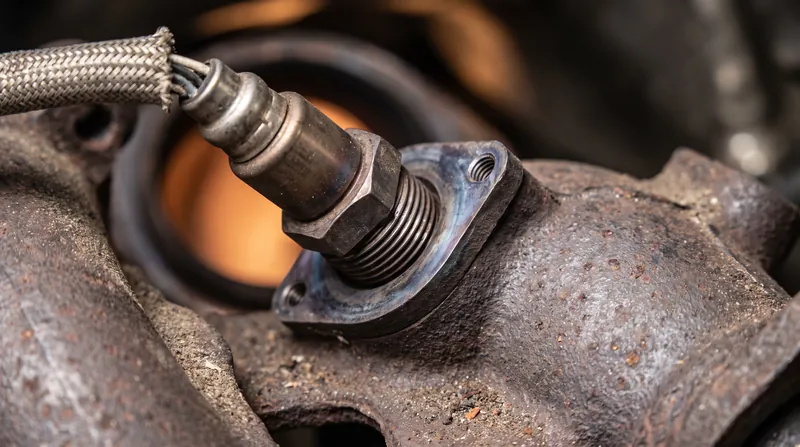
The 0.7–1.0 Lambda Ratio and the Stoichiometric Air-Fuel Mixture That Define a Gasoline Engine's Peak Power and Efficiency
4 sources
Fluid Dynamics
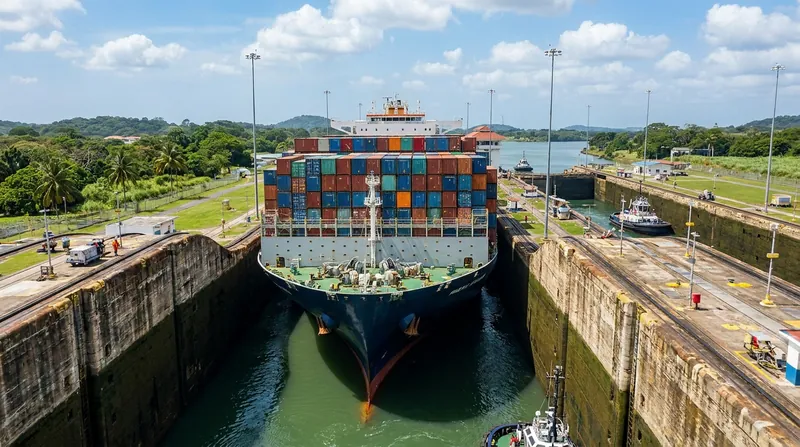
The 1.025 Specific Gravity and the 20-Foot Draft That Define the Panama Canal's Neopanamax Limits
5 sources
Transit Fleets
FTA Allocates $166 Million for New Rail Vehicles in Pittsburgh, Dallas, and Philadelphia
5 sources

Every angle. Every day.
Get Transportation stories with full source coverage and perspective breakdowns delivered to your inbox.