
MSG Sports Files Form 10 to Spin Off Knicks and Rangers Into Separate Public Companies
Madison Square Garden Sports has filed paperwork with the SEC to separate its NBA and NHL franchises, aiming to unlock billions in hidden value by eliminating the 'conglomerate discount.'

- Institutional Investors
- Wall Street funds seeking pure-play exposure to specific sports leagues without cross-collateralized risks.
- Tax & Structuring Analysts
- Financial experts focused on the operational friction and tax liabilities of corporate divorces.
- Franchise Valuation Experts
- Sports business analysts who track the disparity between public and private team sales.
Perspectives this story doesn't cover
- Retail Shareholders
- Players' Associations
Summary
- MSG Sports filed a Form 10 with the SEC to spin off the New York Rangers from the New York Knicks into separate public companies.
- The move aims to eliminate a 'conglomerate discount' that keeps the combined company's stock price below the teams' private-market valuations.
- The Knicks are privately valued at roughly $9.85 billion, while the Rangers are valued near $4 billion.
- The spin-off would create pure-play NBA and NHL assets, making it easier to raise capital and sell minority stakes.
- New federal tax provisions capping executive compensation deductions could create significant tax liabilities for the newly independent entities.
People assume that owning two of the most iconic franchises in sports—the New York Knicks and the New York Rangers—under one corporate umbrella is the ultimate financial flex. The assumption is that synergy creates an unstoppable empire, where shared resources and combined leverage dictate the market. But on Wall Street, packaging a $9.8 billion NBA juggernaut with a $4 billion NHL powerhouse doesn't multiply their value; it actively suppresses it. That is the reality driving Madison Square Garden Sports Corp. (MSG Sports), which on August 7, 2026, filed a confidential initial Form 10 Registration Statement with the Securities and Exchange Commission. The filing is the first formal mechanical step toward spinning off the Rangers and Knicks into two entirely separate, publicly traded companies.[3]
The mechanics of the proposed separation are straightforward, even if the regulatory hurdles are complex. If approved, the transaction will be structured as a tax-free spin-off to existing MSG Sports shareholders. Record holders of the company's Class A and Class B common stock will receive a pro-rata distribution of 100 percent of the common stock in the newly minted public entity. When the dust settles, one company will house the Knicks and their G-League affiliate, the Westchester Knicks. The other will hold the Rangers and their AHL affiliate, the Hartford Wolf Pack. Executive Chairman James L. Dolan will likely retain his controlling voting power through the dual-class share structure, meaning this is not a sale or a relinquishing of control, but a strategic uncoupling designed to change how the market prices the assets.[1][3]
The core claim driving this maneuver is the elimination of the "conglomerate discount." Right now, MSG Sports trades with a public market capitalization hovering around $8.5 billion. Yet, private market appraisals paint a drastically different picture. Sportico and Forbes recently valued the Knicks alone at nearly $9.85 billion, making them the third most valuable franchise in the NBA behind only the Golden State Warriors and Los Angeles Lakers. The Rangers are valued at roughly $3.65 to $4 billion, placing them second in the NHL. Combined, the private-market appraisal of these assets sits north of $13.5 billion. By keeping them tethered together, MSG Sports is trading at a roughly 29 percent discount to the sum of its parts.[2][4]
The reason for this discount lies in investor psychology and targeted capital allocation. Institutional investors who want pure exposure to the NBA's exploding media rights and global growth might not want their capital tied to the NHL's distinct economic model. Conversely, a fund bullish on hockey's live-gate revenue might avoid a conglomerate heavily weighted toward basketball. By separating the franchises, MSG Sports allows the market to evaluate each team's distinct growth prospects, cash flows, and media rights opportunities without the noise of a secondary sport. It creates pure-play assets that are far easier for Wall Street analysts to model and for targeted funds to acquire.[4][5]
The evidence supporting this strategy is rooted in the broader trend of sports franchise monetization. A spin-off dramatically enhances the possibility of raising capital through minority stake sales. If the Knicks want to sell a minority share to a private equity firm or a sovereign wealth fund—a practice the NBA has increasingly embraced—doing so as a standalone entity is far cleaner than carving out equity from a dual-sport conglomerate. It provides both companies with enhanced strategic and financial flexibility, allowing them to tailor their capital structures to the specific economic realities of their respective leagues without cross-collateralizing their risks.[4]
The evidence supporting this strategy is rooted in the broader trend of sports franchise monetization.
However, the transition is not without significant friction and uncertainty. While the spin-off is designed to be tax-free for shareholders, recent federal tax changes introduce a massive operational hurdle for the teams themselves. A revised federal tax provision expanding the Internal Revenue Code limits deductions for executive compensation starting in the 2027 tax year, raising the $1 million deduction cap from five executives to ten. According to Seaport Research Partners, an independent Knicks entity would pay its top five executives and top five players enough to trigger an estimated $55.4 million tax liability. The Rangers would face an additional post-spin tax of nearly $20 million on their payroll.[4]
Splitting the companies also means duplicating certain corporate functions. Currently, the Knicks and Rangers share back-office operations, human resources, legal teams, and marketing infrastructure under the MSG Sports umbrella. Uncoupling them requires building out redundant C-suites and administrative frameworks. These new operational costs, combined with the impending tax hits, could eat into the very value the spin-off is trying to unlock. Skeptics argue that the public markets inherently discount sports teams because of their unpredictable cash flows and reliance on on-field performance, meaning the conglomerate discount might just be replaced by a "sports team discount."[4][5]
There is also the lingering complexity of the physical real estate. Neither the Knicks nor the Rangers own Madison Square Garden. The arena is controlled by Sphere Entertainment Co., another Dolan-led entity that spun off a majority stake in the arena's operating company but retained a significant ownership share. The lease terms, shared operational costs, and cash flows among these various Dolan-controlled entities will become critical factors as the arena's operating permit approaches its 2028 expiration. Investors will need absolute clarity on how much the standalone Knicks and standalone Rangers will be paying to play in the world's most famous arena, as those lease agreements will directly impact the bottom line of both new public companies.[4]
Ultimately, this Form 10 filing is a high-stakes test of sports franchise valuation in the public markets. Very few professional sports teams are publicly traded, and those that are often struggle to match the astronomical valuations seen in private billionaire-to-billionaire sales. If MSG Sports successfully executes this split and the combined market caps of the independent Knicks and Rangers surge to meet their $13.5 billion private valuations, it could provide a blueprint for other multi-team ownership groups. If it fails to close the gap, burdened by duplicated overhead and new tax liabilities, it will serve as a stark reminder that Wall Street and the sports world still measure value using entirely different scoreboards.[2][5]
The timeline for the separation remains fluid, and the execution is far from guaranteed. The confidential filing does not ensure the split will happen immediately, as completion is subject to a gauntlet of various conditions. These include the effectiveness of the Form 10 Registration Statement, receipt of a formal tax opinion from outside counsel, final approval from the MSG Sports board of directors, and crucial sign-offs from both the NBA and the NHL. Until those regulatory and league dominoes fall, the Knicks and Rangers remain tethered together on the balance sheet. But the countdown to their corporate divorce has officially begun, setting the stage for a fascinating experiment in sports capitalism that the entire industry will be watching closely.[1][3]
Definitions
- Form 10 Registration Statement
- A document filed with the SEC that registers a new class of securities, often used as the first formal step in spinning off a division into an independent public company.
- Conglomerate Discount
- A situation where the stock market values a diversified group of businesses at less than the sum of its individual parts.
- Pure-Play Asset
- A publicly traded company that focuses on a single line of business or industry, making it easier for investors to analyze its specific risks and growth potential.
- Pro-Rata Distribution
- A method of assigning an amount to a fraction according to its share of the whole, used here to distribute shares of the new company equally among existing shareholders.
- Dual-Class Share Structure
- A corporate setup where different classes of stock have different voting rights, often used by founders or owners to maintain control of a company despite owning a minority of the total equity.
Questions & answers
Will James Dolan still control the Knicks and Rangers?
Yes. The spin-off is expected to maintain a dual-class share structure, allowing Dolan to retain controlling voting power over both independent companies.
Does this mean the teams are being sold?
No. The Form 10 filing is for a corporate spin-off to existing shareholders, not a sale of either franchise to a new ownership group.
How does this affect Madison Square Garden itself?
The arena is owned by a separate entity, Sphere Entertainment Co. The Knicks and Rangers will continue to operate as tenants, and their lease agreements will be critical factors for investors.
Why are the teams being separated now?
MSG Sports is attempting to eliminate a 'conglomerate discount,' as the combined public company trades at a significantly lower valuation than the estimated private-market value of the two teams.
Sources
Source coverage
5 outlets
3 viewpoints surfaced




- [1]NewsdayFranchise Valuation Experts
MSG Sports files paperwork with SEC to split Knicks, Rangers into separate companies
Read on Newsday → - [2]BloombergTax & Structuring Analysts
MSG Sports Considering Spinning Off New York Knicks, Rangers
Read on Bloomberg → - [3]Business WireInstitutional Investors
MSG Sports Files Initial Form 10 Registration Statement for Proposed Spin-Off of Rangers Business from Knicks Business
Read on Business Wire → - [4]Black EnterpriseTax & Structuring Analysts
Madison Square Garden Sports Corp. Files Form 10 to Spin Off Knicks and Rangers
Read on Black Enterprise → - [5]SportsProFranchise Valuation Experts
MSG Sports considers splitting up New York Knicks and Rangers
Read on SportsPro →
Comments
More in Sports
See all →Recap
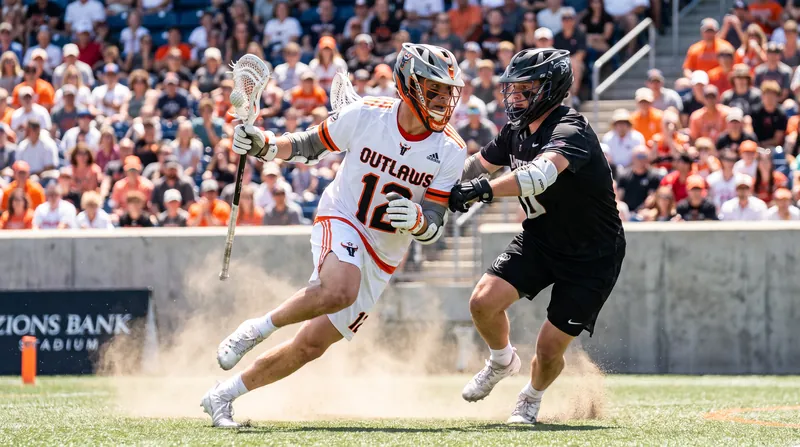
Denver Outlaws Stun Utah Archers 11-5 to Capture Western Conference Crown
6 sources
Standings
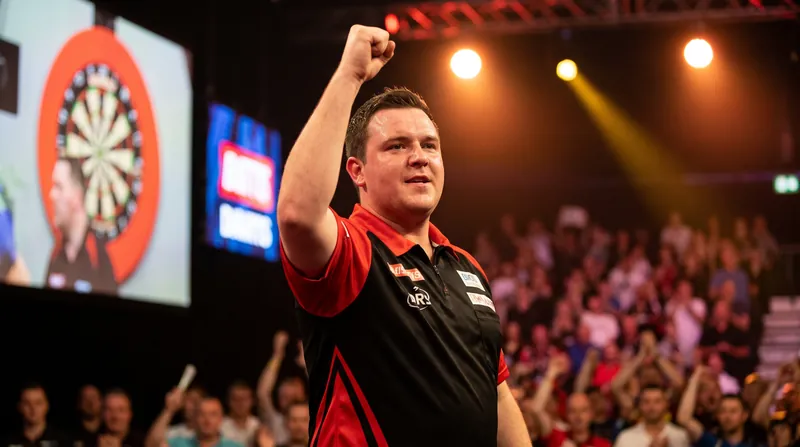
Cameron Menzies Defies Travel Nightmare to Claim PC29 Title as Minehead Bubble Race Intensifies
4 sources
Power ranking
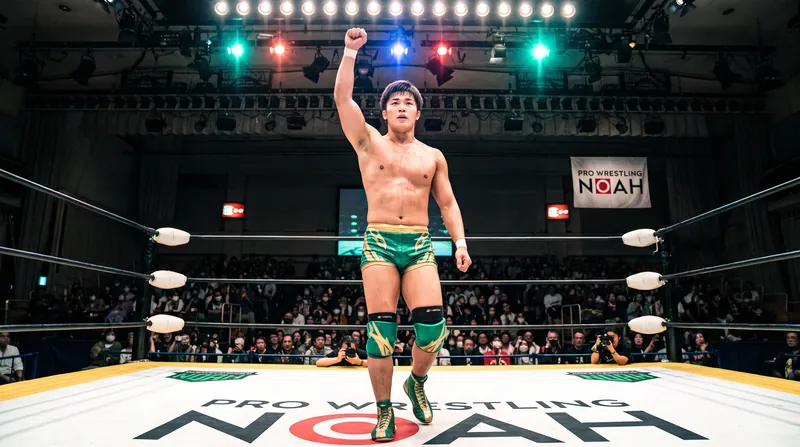
N-1 Victory Power Rankings: Kaito Kiyomiya Commands A Block While B Block Descends Into Chaos
5 sources
Standings
Asian Games Gymnastics Standings: Yeo Seojeong Tops Vault Qualifications as Medal Race Heats Up in Nagoya
5 sources
Every angle. Every day.
Get Sports stories with full source coverage and perspective breakdowns delivered to your inbox.