
Local Storage vs. Cloud Security Cameras: The 2026 Guide to Escaping Subscriptions
As subscription fatigue reshapes the smart home market, buyers are increasingly weighing the convenience of cloud-based Wi-Fi cameras against the long-term savings and privacy of local storage systems.
By Factlen Editorial Team
- Cloud Convenience Advocates
- Prioritize ease of setup, off-site backups, and advanced smart home integration.
- Local Privacy Purists
- Reject monthly subscriptions and demand complete sovereignty over their personal data.
- Professional Installers
- Emphasize 24/7 reliability, hardwired connections, and continuous recording.
What's not represented
- · Law Enforcement
- · Renters
Why this matters
Security camera subscriptions can add hundreds of dollars to the true cost of ownership over just a few years. Choosing the right storage architecture dictates your ongoing monthly expenses, determines who has access to your footage, and decides whether your cameras keep recording during an internet outage.
Key points
- Cloud security cameras offer easy installation and off-site backups but require monthly subscriptions that drastically increase the true cost of ownership.
- Local storage systems save footage to SD cards, indoor hubs, or NVRs, eliminating recurring fees and keeping data private.
- If a camera with an internal SD card is stolen, the footage is lost; indoor hubs solve this by storing the video safely inside the house.
- Power over Ethernet (PoE) systems use a single cable for power and data, avoiding Wi-Fi congestion and battery replacements.
- Unlike cloud-dependent cameras, local NVR systems continue to record 24/7 even if the home's internet connection goes down.
When shopping for a home security camera in 2026, the sticker price on the box is only half the story. The hardware has never been cheaper or more capable, with high-definition lenses, color night vision, and AI subject detection now standard on entry-level models. However, the true cost of ownership is increasingly hidden in the software, forcing buyers to look past the initial purchase and evaluate how the system will operate years down the line.[8]
As the smart home market matures, consumers are experiencing profound subscription fatigue. Major brands often gate their most useful features—including the fundamental ability to view past footage—behind monthly paywalls. A typical cloud storage plan runs between $5 and $15 per month, which can easily add up to hundreds of dollars over a few years, quietly eclipsing the initial cost of the cameras themselves.[4][7]
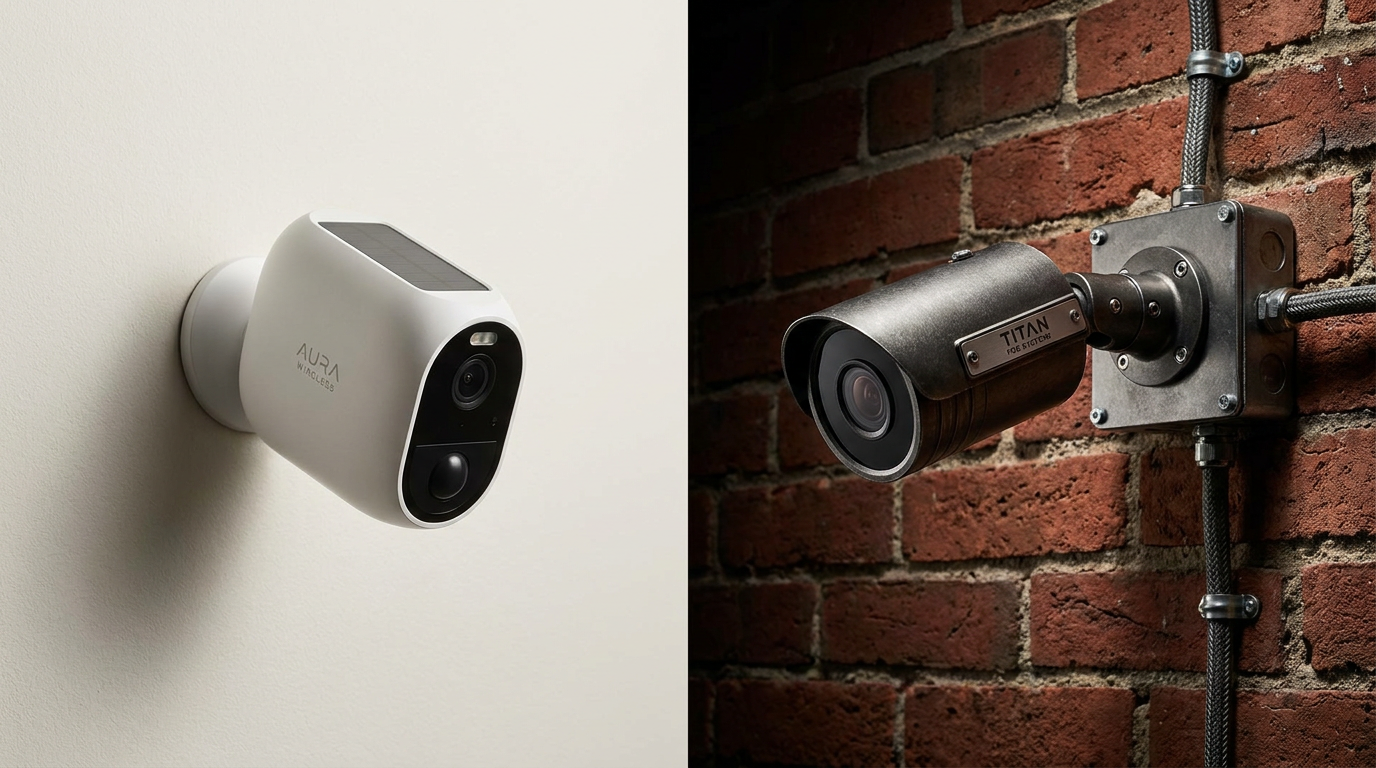
This financial reality has split the 2026 security market into two distinct architectural philosophies: cloud storage and local storage. Cloud-based systems, popularized by brands like Ring, Nest, and Arlo, prioritize ultimate convenience. They connect directly to a home's Wi-Fi network and beam footage to remote servers, allowing users to access their video feeds from anywhere in the world with minimal setup.[3][5]
The appeal of the cloud is undeniable for renters or those who want a plug-and-play experience. Because the footage is stored off-site, it remains safe even if a burglar smashes or steals the physical camera. Furthermore, cloud ecosystems often leverage powerful server-side processing to deliver advanced features like facial recognition and package detection without requiring heavy computing power on the camera itself.[3][8]

But the cloud comes with significant trade-offs beyond the recurring monthly fees. Privacy advocates point out that cloud-stored footage resides on servers controlled by the manufacturer. Under certain legal frameworks, such as the U.S. CLOUD Act, law enforcement can compel these providers to hand over stored data, sometimes without the camera owner's direct consent or knowledge.[4][5]
In response to subscription fatigue and privacy concerns, a massive resurgence in local storage solutions has defined the 2026 market. Brands like Eufy, Reolink, and Lorex have built robust ecosystems that keep footage entirely on the user's property, requiring zero monthly fees to access historical video.[1][2]
In response to subscription fatigue and privacy concerns, a massive resurgence in local storage solutions has defined the 2026 market.
The simplest entry point into local storage is the humble microSD card. Many budget-friendly Wi-Fi cameras now feature a built-in slot, allowing them to save motion-triggered clips directly to the device. While this eliminates subscriptions and keeps data private, it carries a glaring vulnerability: if an intruder steals the camera, the evidence disappears with it.[5][8]
To solve this, manufacturers have popularized the local hub model. Systems like the Eufy HomeBase act as a secure, centralized vault inside the house. The wireless cameras beam their footage to this indoor hub, ensuring that even if an outdoor camera is destroyed, the video record remains safely locked inside the home. This provides a strong balance of privacy, centralized management, and low ongoing costs.[1][5]

For homeowners who want professional-grade reliability, the gold standard remains the Power over Ethernet (PoE) system paired with a Network Video Recorder (NVR). Unlike Wi-Fi cameras that rely on a wall adapter or a battery, PoE cameras receive both power and data through a single Ethernet cable.[6][7]
This hardwired approach eliminates the biggest vulnerability of consumer smart cameras: Wi-Fi congestion. Wireless cameras must fight for bandwidth with smartphones, laptops, and streaming TVs, which can lead to dropped frames or reduced resolution. A PoE camera, by contrast, enjoys a dedicated data lane directly to the NVR, ensuring crystal-clear 4K footage without interruption.[6][8]
Crucially, PoE and NVR systems operate on a closed local circuit, making them immune to internet outages. If a neighborhood loses internet connectivity, cloud-dependent cameras immediately stop recording. A local NVR system simply keeps rolling, saving 24/7 continuous footage to its internal hard drive regardless of the outside network status.[4][7]

The storage capacity of these local systems is immense. While cloud plans often limit users to 30 or 60 days of motion-triggered clips, a standard 2-terabyte to 4-terabyte hard drive in an NVR can hold weeks of continuous, round-the-clock footage from multiple high-definition cameras without any recurring fees.[7][8]
Recognizing that no single architecture is perfect for every scenario, professional installers in 2026 increasingly recommend a hybrid approach. Homeowners are deploying hardwired PoE cameras to cover critical outdoor perimeters—like driveways and front doors—where 24/7 reliability is paramount. They then supplement the system with flexible, battery-powered Wi-Fi cameras for temporary indoor monitoring or hard-to-reach garden spots.[6][7]

Ultimately, the choice between cloud and local storage comes down to matching the technology to the living situation. Renters and those seeking the simplest possible setup will likely find the convenience of cloud subscriptions worth the monthly fee. But for property owners willing to invest slightly more upfront, local storage offers a durable path to escaping subscription fatigue while taking back control of their digital privacy.[5][7][8]
How we got here
Early 2010s
Hardwired CCTV systems dominate the market, requiring professional installation and complex DVR setups.
2015–2020
The rise of battery-powered Wi-Fi cameras makes DIY home security mainstream, heavily reliant on cloud subscriptions.
2022–2024
Subscription prices steadily increase across major brands, sparking consumer frustration and widespread subscription fatigue.
2026
A major market shift toward hybrid and local-first ecosystems occurs, with brands offering advanced AI features without monthly fees.
Viewpoints in depth
Cloud Convenience Advocates
Prioritize ease of setup, off-site backups, and advanced smart home integration.
This camp, largely made up of renters and smart home enthusiasts, argues that the monthly fee is a fair trade for peace of mind. They highlight that cloud footage is instantly backed up off-site, making it immune to local hardware theft, vandalism, or fire. Furthermore, they value the seamless integration with voice assistants and the server-side AI processing that filters out false alarms without requiring expensive computing hardware on the camera itself.
Local Privacy Purists
Reject monthly subscriptions and demand complete sovereignty over their personal data.
This perspective argues that paying a recurring fee to access your own security footage is an artificial tax created by manufacturers. Beyond the financial cost, they raise significant privacy concerns about streaming video of their homes to external servers. They advocate for local hubs and SD cards, ensuring that their data never leaves their property and cannot be accessed by third parties, hackers, or law enforcement without a physical warrant.
Professional Installers
Emphasize 24/7 reliability, hardwired connections, and continuous recording.
Security professionals view consumer Wi-Fi cameras as toys rather than true security tools. They argue that wireless signals are too easily disrupted by network congestion or deliberate jamming, and that battery-powered cameras often miss the first few seconds of an event while waking up from sleep mode. This camp insists on Power over Ethernet (PoE) systems that record 24/7 to a local NVR, ensuring that critical evidence is never lost to an internet outage or a dead battery.
What we don't know
- How future data privacy regulations might restrict law enforcement's ability to access cloud-stored security footage without a warrant.
- Whether major cloud camera brands will eventually offer hybrid local storage options to combat rising subscription fatigue.
- How the proliferation of AI-driven video compression will impact the storage requirements for 4K and 8K local recording systems.
Key terms
- Power over Ethernet (PoE)
- A technology that passes both electrical power and data safely along a single Ethernet cable to a device.
- Network Video Recorder (NVR)
- A specialized computer system that records video footage from IP cameras directly to a local hard drive.
- Local Storage
- Saving video footage to a physical device inside the home, such as an SD card or hard drive, rather than sending it over the internet.
- Cloud Storage
- A service where video footage is transmitted over the internet and saved on remote servers managed by the camera manufacturer.
- Continuous Recording
- A setting where a camera records video 24/7 without stopping, as opposed to only recording short clips when motion is detected.
Frequently asked
Do local storage cameras work without internet?
Yes. Cameras recording to a local SD card or NVR will continue to capture and save footage even if your home's internet connection drops.
Can I view local footage on my phone away from home?
Yes. Most modern local systems connect to your router, allowing you to securely stream your locally stored footage to a mobile app while you are away.
What happens if a thief steals a camera with an SD card?
If the footage is only saved on the camera's internal SD card, the video is lost with the camera. This is why many users prefer indoor hubs or NVRs that store the footage safely inside the house.
Are Wi-Fi cameras easy to hack?
Wi-Fi cameras are generally secure if you use strong passwords and two-factor authentication, but they are more vulnerable to network interception and Wi-Fi jamming than hardwired PoE cameras.
Sources
Source coverage
8 outlets
3 viewpoints surfaced








[1]CNETLocal Privacy Purists
Best Home Security Cameras Without Subscriptions in 2026
Read on CNET →[2]SafeWiseLocal Privacy Purists
Best security cameras without a subscription in 2026
Read on SafeWise →[3]Security.orgCloud Convenience Advocates
The Best Home Security Cameras of 2026
Read on Security.org →[4]ReolinkProfessional Installers
Cloud vs Local Storage: A Practical Comparison Guide
Read on Reolink →[5]EufyLocal Privacy Purists
Cloud vs Local Storage: A Practical Comparison Guide in 2026
Read on Eufy →[6]4CovrProfessional Installers
PoE vs WiFi Security Camera System Trade-offs
Read on 4Covr →[7]SmarketProfessional Installers
PoE Cameras vs Consumer WiFi Cameras: Which One Protects Your Home?
Read on Smarket →[8]Factlen Editorial Team
Synthesis by Factlen editorial team
Read on Factlen Editorial Team →


Every angle. Every day.
Get shopping stories with full source coverage and perspective breakdowns delivered to your inbox.