
Convertible Wooden vs. Traditional Plastic High Chairs: The 2026 Trade-Off Analysis
As parents increasingly prioritize ergonomics and sustainability, the high chair market has split between grow-with-me wooden models and convenient, foldable plastic seats.
By Factlen Editorial Team
- Ergonomics & Longevity Advocates
- Feeding specialists and parents who prioritize posture, core stability, and long-term value over cleanup convenience.
- Convenience & Budget Focus
- Caregivers who prioritize easy maintenance, portability, and lower upfront costs for the messy infant years.
- Sustainability & Safety Analysts
- Experts focused on the environmental lifecycle, material safety, and structural stability of baby gear.
What's not represented
- · Occupational Therapists
- · Apartment Dwellers with ultra-compact needs
Why this matters
A high chair is one of the few pieces of baby gear used multiple times a day for years. Choosing the right one dictates not only your daily cleanup routine but also your child's posture, feeding safety, and integration into family meals.
Key points
- The high chair market is divided between ergonomic, long-lasting wooden models and convenient, foldable plastic seats.
- Convertible wooden chairs prioritize the '90/90/90' feeding posture, using adjustable footrests to provide core stability.
- Traditional plastic chairs offer superior convenience with dishwasher-safe trays and compact folding mechanisms.
- Wooden models require a higher upfront investment but can last into adulthood, while plastic chairs are typically outgrown by age three.
- Safety engineers note that wooden chairs offer a lower center of gravity, making them more resistant to tipping.
For decades, the high chair was a purely functional, temporary piece of plastic baby gear. But as modern parents increasingly prioritize pediatric ergonomics, interior aesthetics, and sustainability, the market has fractured. In 2026, the registry debate largely boils down to two distinct philosophies: the Scandinavian-inspired convertible wooden high chair versus the traditional folding plastic model.[1][3]
This is not merely a choice of materials; it is a choice of feeding philosophy and household footprint. Convertible wooden chairs are designed to pull directly up to the family table and grow with the child into adulthood. Traditional plastic chairs operate as standalone feeding stations, prioritizing easy cleanup and the ability to fold away out of sight.[2][7]
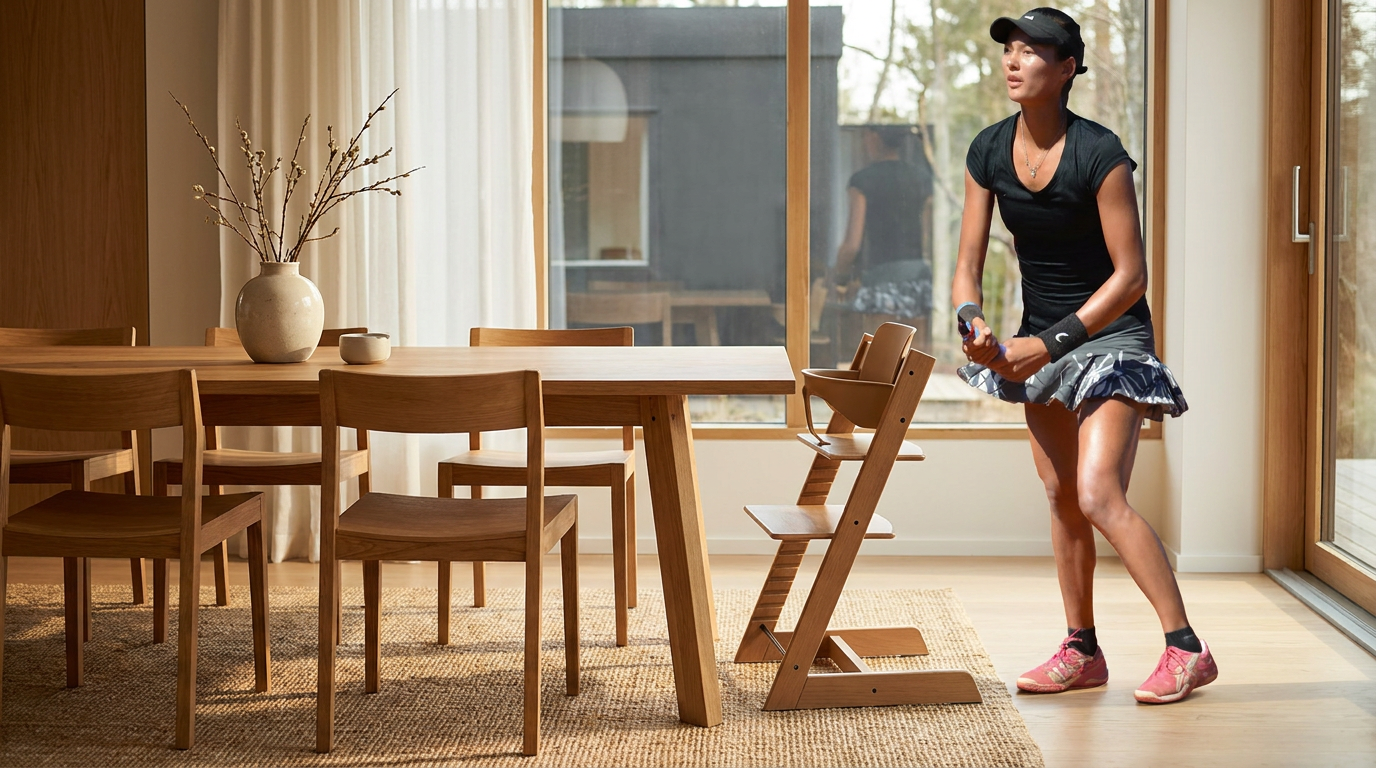
The case for convertible wooden high chairs—such as the iconic Stokke Tripp Trapp or the Abiie Beyond—centers heavily on pediatric ergonomics and product longevity. These chairs feature modular seat boards and footrests that slide along angled rails, allowing parents to customize the fit as the child grows.[2][4]
The clinical evidence strongly supports this adjustable wooden architecture. Feeding specialists advocate for the "90/90/90" posture: a 90-degree angle at the hips, knees, and ankles. When a child's feet are planted firmly on an adjustable wooden footrest rather than dangling in the air, they gain core stability. This stability allows them to focus on chewing and swallowing safely, rather than expending energy trying to balance their torso.[1][2]

However, the case against convertible wooden chairs is rooted in cost and rigidity. Premium wooden models often start well over $250, with essential accessories like baby bucket seats and trays sold separately. Furthermore, they are heavy, permanent pieces of furniture. They do not fold, making them cumbersome for small apartments or families who prefer to hide baby gear between meals.[3][7]
Conversely, the case for traditional plastic and folding high chairs—such as the Graco Blossom or Maxi-Cosi Minla—centers on ultimate convenience, affordability, and mess management. These models are engineered specifically for the chaotic reality of introducing solid foods to infants.[3][4]
These models are engineered specifically for the chaotic reality of introducing solid foods to infants.
The evidence favoring plastic models lies in their daily utility. They typically feature one-handed folding mechanisms, lightweight frames, and reclining seats for early bottle feeding. Cleanup is highly optimized; most plastic chairs include wipeable vinyl seat pads and snap-off trays that fit directly into a standard dishwasher, drastically reducing post-meal scrubbing time.[4][7]
The primary argument against traditional plastic chairs is their lack of ergonomic support and short lifespan. Most plastic models feature fixed footrests that are too low for infants and toddlers, resulting in dangling legs and poor posture. Additionally, because they are built specifically for the baby and toddler phases, they are typically outgrown by age three, forcing parents to purchase a separate booster seat.[1][7]

Safety and structural integrity also present distinct trade-offs. Safety engineers note that solid wooden chairs possess a higher base weight and a lower center of gravity, which significantly improves their resistance to tipping over when a toddler pushes back against a table. Plastic chairs, being hollow and lightweight, must rely on an exceptionally wide geometric leg footprint to achieve the same stability, which creates a tripping hazard in tight kitchens.[5]
Environmental impact and lifecycle value further divide the two categories. Wooden chairs crafted from sustainably sourced beech or oak are biodegradable and boast a lifespan that can exceed 15 years, often holding up well enough to be passed down to siblings or sold on the robust secondary market.[2][6]
In contrast, plastic high chairs are prone to material fatigue. The plastic joints and vinyl seat covers often crack or degrade after a few years of heavy use and exposure to cleaning chemicals. Because they are difficult to recycle and rarely survive multiple children, traditional plastic chairs frequently end up in landfills once the toddler years conclude.[5][6]

Ultimately, the convertible wooden high chair fits well when families have a dedicated dining space, prioritize ergonomic feeding posture, and view the purchase as a long-term furniture investment. It does not fit well for caregivers who need to frequently transport the chair, store it out of sight, or who are working with a strict upfront budget.[2][7]
The traditional plastic folding high chair fits well when parents value rapid, dishwasher-safe cleanup, need to fold the seat away in a pantry daily, or require a lightweight option to move between rooms. It does not fit well for families seeking a "buy it for life" aesthetic or those whose children struggle with seated core stability during meals.[3][7]
Viewpoints in depth
Ergonomics Advocates
Feeding specialists who prioritize posture and core stability over cleanup convenience.
This camp argues that the primary function of a high chair is not to contain mess, but to facilitate safe swallowing and fine motor development. They point to clinical evidence showing that a 90-degree angle at the hips, knees, and ankles provides the core stability necessary for a child to focus on chewing. Because traditional plastic chairs often lack adjustable footrests, this group strongly favors wooden models that allow flat-footed support.
Convenience-First Parents
Caregivers who prioritize easy maintenance, portability, and lower upfront costs.
For this viewpoint, the reality of feeding a toddler three times a day dictates that cleanup speed is the most critical feature. They argue that the crevices in wooden chairs trap food, making daily maintenance a chore. Instead, they champion plastic models with dishwasher-safe trays, wipeable vinyl seats, and one-handed folding mechanisms that allow the chair to be hidden away in a pantry when not in use.
Sustainability Proponents
Analysts focused on the environmental lifecycle and material safety of baby gear.
This group evaluates high chairs based on their long-term environmental footprint. They highlight that premium wooden chairs, often made from FSC-certified beech or oak, can last over 15 years and are highly sought after on the secondary market. In contrast, they criticize plastic high chairs for their short three-year lifespan, susceptibility to material fatigue, and ultimate destination in landfills, arguing that the 'buy it for life' model is both ecologically and economically superior.
What we don't know
- Whether the secondary resale market for premium wooden high chairs will remain as lucrative as new, lower-cost competitors enter the space.
- How upcoming innovations in bio-plastics might eventually bridge the gap between the sustainability of wood and the convenience of traditional plastic.
Key terms
- 90/90/90 Posture
- The ideal ergonomic seating position for feeding, where the child's hips, knees, and ankles are all bent at 90-degree angles.
- Convertible High Chair
- A modular seat designed to adjust its height and footrest as a child grows, eventually converting into a standard adult chair.
- Five-Point Harness
- A safety strap system that secures a child over both shoulders, around the waist, and between the legs to prevent standing or falling.
Frequently asked
Why do pediatricians recommend a 90-degree posture for feeding?
A 90-degree angle at the hips, knees, and ankles provides core stability. When a child's feet are supported rather than dangling, they can focus their energy on safely chewing and swallowing rather than balancing.
How long can a child use a convertible wooden high chair?
Most premium convertible wooden chairs are designed to hold up to 200 pounds or more. By adjusting the seat and footrest, they can be used from infancy through adolescence, and even as an adult dining chair.
Are plastic high chairs easier to clean than wooden ones?
Generally, yes. Plastic chairs often feature seamless wipeable surfaces and removable, dishwasher-safe trays. Wooden chairs have adjustment grooves and joints that can trap crumbs and require careful wiping to protect the finish.
Do wooden high chairs fold for storage?
Most convertible wooden high chairs do not fold. They are designed as permanent pieces of furniture to be pulled directly up to the dining table, whereas many plastic models feature one-handed folding mechanisms for easy storage.
Sources
Source coverage
7 outlets
3 viewpoints surfaced







[1]ForbesErgonomics & Longevity Advocates
Best High Chairs Of 2026, Tested By Parents
Read on Forbes →[2]Today's ParentErgonomics & Longevity Advocates
Stokke Tripp Trapp high chair review: Why it's worth the price
Read on Today's Parent →[3]BabylistConvenience & Budget Focus
Babylist's Best High Chairs of 2026
Read on Babylist →[4]Baby Gear LabConvenience & Budget Focus
Best High Chair Review
Read on Baby Gear Lab →[5]AH WindmillSustainability & Safety Analysts
Safety Comparison: Wood vs Plastic High Chairs
Read on AH Windmill →[6]AbiieSustainability & Safety Analysts
Wood vs. plastic high chairs: Which is more sustainable?
Read on Abiie →[7]Baby TrendConvenience & Budget Focus
Wooden High Chairs: The Pros and Cons
Read on Baby Trend →
Every angle. Every day.
Get shopping stories with full source coverage and perspective breakdowns delivered to your inbox.