
How to Retrofit an Older Home with a Modern Heat Pump
Upgrading an older home to an air-source heat pump can slash energy bills and emissions, but success requires understanding the technology's cold-weather capabilities and your home's existing infrastructure.
By Factlen Editorial Team
- Building Scientists
- Efficiency starts with the building envelope, not just the equipment.
- Decarbonization Advocates
- Electrifying older housing stock is an urgent climate necessity.
- HVAC Innovators
- Technological leaps have solved the historical limitations of heat pumps.
- Historic Homeowners
- Retrofits must preserve architectural charm while modernizing comfort.
What's not represented
- · Traditional Fossil Fuel Providers
- · Utility Grid Operators
Why this matters
Heating and cooling account for the largest portion of residential energy use. Transitioning older housing stock to high-efficiency electric heat pumps is one of the most effective ways for homeowners to lower utility bills, improve indoor comfort, and reduce their carbon footprint.
Key points
- Heat pumps transfer heat rather than generate it, making them up to 400% more efficient than traditional fossil fuel systems.
- Modern cold-climate heat pumps can maintain efficient heating capacity even when outdoor temperatures drop to −15°F.
- Homes without ductwork can utilize ductless mini-split systems to avoid invasive architectural changes.
- Older cast-iron radiators can be paired with new high-temperature heat pumps or integrated into a hybrid boiler system.
- Proper weatherization and insulation should always precede a heat pump installation to maximize efficiency and reduce equipment costs.
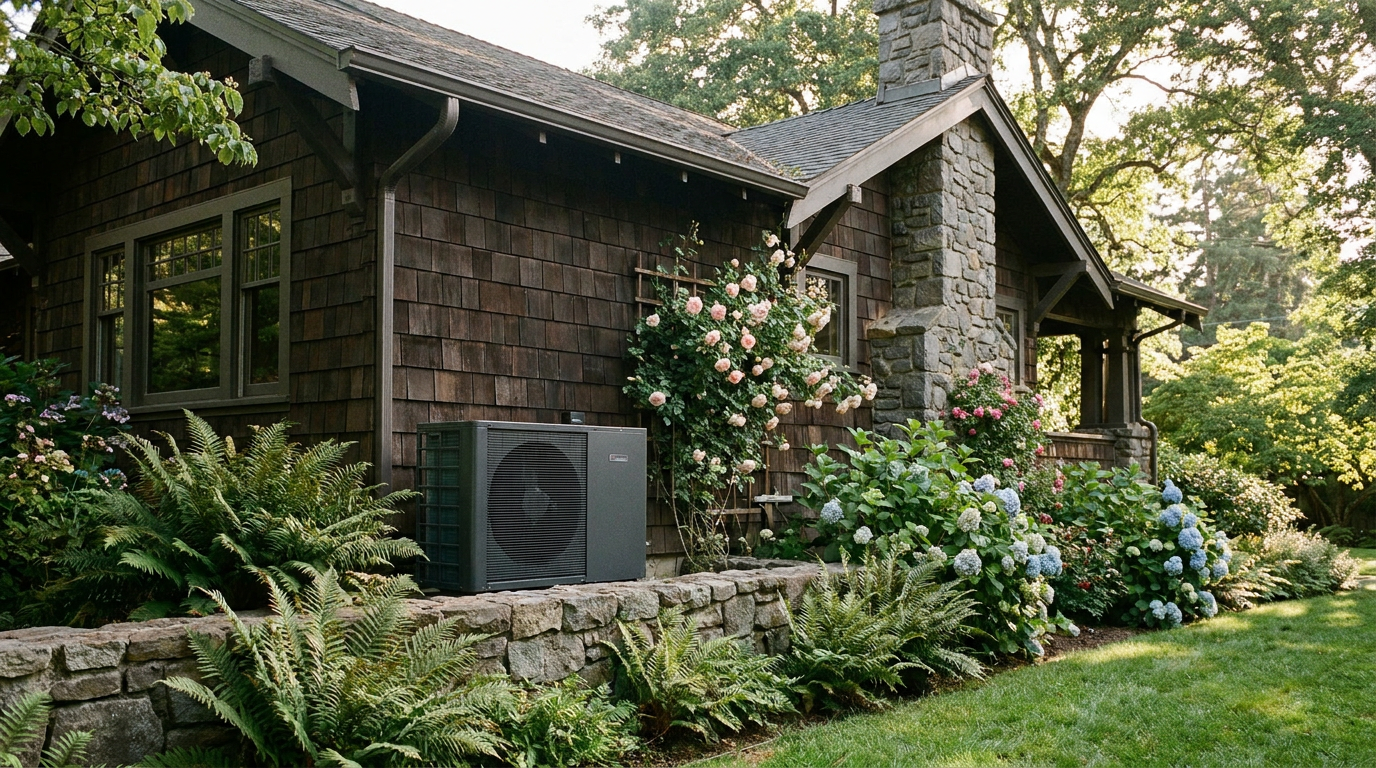
Air-source heat pumps are surging in popularity, fundamentally reshaping how we heat and cool our living spaces. In the United States alone, they now account for more than half of all residential heating equipment sales, outpacing traditional gas furnaces. However, while installing a heat pump in a new build is a straightforward process, retrofitting one into an older, historic home presents a unique set of engineering challenges. Older properties often feature drafty envelopes, lack central ductwork, and rely on aging cast-iron radiators designed for high-temperature fossil fuel boilers. Fortunately, rapid advancements in HVAC technology have made it entirely possible to bring 21st-century clean energy into century-old homes, provided homeowners understand the mechanics and plan their retrofits carefully.[2][7]
To understand why heat pumps are so revolutionary, it helps to look at how they operate. Unlike traditional furnaces or boilers that burn fossil fuels to generate heat, heat pumps simply move existing heat from one place to another. They utilize a refrigeration cycle—the exact same technology found in a standard kitchen refrigerator, but capable of running in reverse. A liquid refrigerant absorbs ambient thermal energy from the outside air, turning into a gas. A compressor then pressurizes this gas, raising its temperature significantly, before transferring that concentrated heat indoors.[2][4]
Because they transfer heat rather than create it, heat pumps operate at a Coefficient of Performance (COP) of 3 to 4. This means they produce 300% to 400% more energy than they consume in electricity, a stark contrast to the most efficient gas boilers, which max out around 90% to 95% efficiency. By eliminating the combustion process entirely, heat pumps not only slash energy waste but also remove the risk of indoor carbon monoxide leaks, providing a safer and more sustainable heating solution.[4][8]

Despite their efficiency, a persistent misconception continues to shadow the technology: the belief that heat pumps fail when temperatures drop below freezing. It is true that early generations of air-source heat pumps struggled in extreme cold, often requiring expensive electric resistance backup heaters to keep homes warm. However, modern cold-climate heat pumps (CCHPs) have been engineered specifically to conquer harsh winters. These advanced units utilize variable-speed, inverter-driven compressors that can dynamically ramp up their capacity when the outside temperature plummets, extracting the latent heat that exists in the air even on the most bitterly cold days.[1][6][8]
The performance of these modern cold-climate systems is not just theoretical; it has been rigorously proven in extreme environments. Extensive testing conducted by the Department of Energy and the National Renewable Energy Laboratory (NREL) has demonstrated that today's top-tier CCHPs can maintain 100% of their heating efficiency down to 5°F. Furthermore, many of these units continue to operate effectively at temperatures as low as −15°F, providing reliable warmth in climates ranging from Maine to Alaska. For homeowners in cold regions, the technology has definitively crossed the threshold from a mild-weather luxury to a robust, year-round heating solution.[1][3][6]

When retrofitting an older home, the first major hurdle is often the distribution system. Homes built before the advent of central air conditioning typically lack the extensive ductwork required for a standard central heat pump. Tearing open plaster walls and historic ceilings to install bulky metal ducts is usually cost-prohibitive and structurally invasive. The elegant solution to this problem is the ductless mini-split system. These systems feature a single outdoor compressor connected via small refrigerant lines to one or more indoor air-handling units mounted discreetly on walls, floors, or ceilings. Mini-splits bypass the need for ductwork entirely, allowing homeowners to introduce highly efficient heating and cooling into historic properties with minimal architectural disruption.[3][7]
When retrofitting an older home, the first major hurdle is often the distribution system.
For older homes equipped with existing hydronic systems—such as hot water baseboards or heavy cast-iron radiators—the retrofit challenge shifts from airflow to water temperature. Traditional radiators were originally sized and designed to operate with the exceptionally high flow temperatures produced by gas or oil boilers, typically ranging from 140°F to 160°F (60°C to 75°C). Standard air-source heat pumps, optimized for efficiency, generally output water at a much lower temperature, hovering around 130°F (55°C). If a standard heat pump is simply swapped in and connected to old radiators, the system may struggle to emit enough heat into the rooms during a deep winter freeze, leaving the house uncomfortably chilly.[7]
To bridge this temperature gap without ripping out a home's historic plumbing, energy experts often recommend one of two distinct pathways. The first is a hybrid, or 'bivalent,' heating system. In this setup, the new air-source heat pump is installed alongside the existing fossil-fuel boiler. The heat pump acts as the primary workhorse, efficiently handling the home's heating load for 80% to 90% of the winter season. The old boiler is retained strictly as a backup, programmed to automatically kick on only during the most extreme cold snaps when the heat pump's lower flow temperatures are insufficient. This phased approach allows homeowners to drastically reduce their carbon footprint and energy bills while deferring the cost of a complete system overhaul.[7]
The second pathway involves the deployment of emerging high-temperature heat pumps. Utilizing advanced, eco-friendly refrigerants like R290 (propane), these specialized units are capable of safely achieving the 165°F (75°C) flow temperatures required by older cast-iron radiators. Because they can match the thermal output of a traditional combustion boiler, high-temperature heat pumps allow for a direct, one-to-one replacement. Homeowners can completely disconnect from the gas grid and remove their old boilers without needing to upsize their radiators or alter their home's internal piping, making it a highly attractive option for heritage properties.[7]

Regardless of which equipment is chosen, building scientists universally emphasize that a successful retrofit must begin with the building envelope. Older homes are notoriously leaky, losing massive amounts of thermal energy through uninsulated attics, drafty windows, and unsealed basements. Attempting to heat a drafty house with a heat pump is akin to pouring water into a leaky bucket. Experts advocate for a 'fabric-first' approach: conducting a thorough energy audit, sealing air leaks, and upgrading insulation before ever sizing the new HVAC equipment.[2][4][7]
Proper weatherization directly impacts the performance and cost of the heat pump installation. By reducing the home's overall heat loss, installers can specify a smaller, less expensive heat pump unit. An oversized heat pump in a drafty home will frequently cycle on and off—a phenomenon known as short-cycling—which drastically reduces the system's efficiency and accelerates wear and tear on the compressor. Conversely, a properly sized unit in a well-insulated home will run continuously at a low, steady speed, maximizing its Coefficient of Performance and ensuring a consistent, comfortable indoor temperature.[2][4][7]
The financial economics of a heat pump retrofit depend heavily on the type of fuel being replaced, but the savings can be substantial. According to analysis by the Rocky Mountain Institute, single-family homes that switch from inefficient electric resistance heating to a modern heat pump can save an average of $1,530 per year on their utility bills. Over the 15-year lifespan of the equipment, those savings compound to nearly $23,000, rapidly paying back the initial investment.[5]

Similarly impressive savings are available for homeowners transitioning away from delivered fuels. Rewiring America estimates that households switching from expensive, price-volatile fuels like heating oil or propane can save roughly $1,000 annually. While the upfront installation costs of a comprehensive heat pump retrofit can be higher than simply replacing a broken furnace, a combination of federal tax credits, state-level rebates, and long-term energy savings often tips the financial scales heavily in favor of electrification.[1][2]
Retrofitting an older home with a modern air-source heat pump requires careful planning, technical expertise, and a holistic view of the property's energy profile. However, the technology has definitively evolved to meet the challenge. By pairing advanced cold-climate compressors and high-temperature refrigerants with targeted weatherization, historic homes can achieve 21st-century comfort, slash their utility bills, and play a vital role in the transition to a decarbonized future—all without sacrificing the architectural character that makes them unique.[2][7]
How we got here
Pre-2010s
Early air-source heat pumps struggle to provide adequate heat in sub-freezing temperatures, cementing the 'cold weather myth'.
2015–2020
Manufacturers introduce variable-speed inverter compressors, allowing heat pumps to maintain efficiency in extreme cold.
2021–2023
The Department of Energy's Cold-Climate Heat Pump Challenge proves modern units can operate effectively at −15°F.
2024–2026
High-temperature heat pumps utilizing R290 refrigerant enter the market, allowing older homes to keep their existing cast-iron radiators.
Viewpoints in depth
Building Scientists' view
Efficiency starts with the building envelope, not just the equipment.
Energy researchers and building scientists stress that retrofitting a heat pump into a drafty older home without addressing insulation is a missed opportunity. They argue for a 'fabric-first' approach: sealing air leaks and upgrading attic insulation before sizing the HVAC equipment. This reduces the home's overall heat loss, allowing installers to specify a smaller, less expensive heat pump that won't short-cycle, thereby maximizing the system's Coefficient of Performance (COP) and extending its lifespan.
HVAC Innovators' view
Technological leaps have solved the historical limitations of heat pumps.
Manufacturers and HVAC engineers focus on how advanced engineering has effectively eliminated the traditional barriers to electrification. By utilizing variable-speed inverter compressors and advanced refrigerants like R290 (propane), they point out that modern units can now extract heat at −15°F and deliver the 75°C flow temperatures required by century-old cast-iron radiators. For this camp, the transition is no longer a question of capability, but of consumer awareness and installer training.
Decarbonization Advocates' view
Electrifying older housing stock is an urgent climate necessity.
Environmental groups and energy policymakers view heat pump retrofits as a critical lever for reducing residential carbon emissions. Because heat pumps move heat rather than combust fossil fuels, they eliminate on-site emissions entirely. Advocates highlight that even when powered by a fossil-heavy electrical grid, the sheer 300% efficiency of a heat pump results in a massive net reduction in greenhouse gases, making the electrification of older homes a top policy priority.
What we don't know
- How quickly the electrical grid in older neighborhoods can adapt to the increased load of widespread residential electrification.
- Whether the upfront costs of high-temperature heat pumps will drop significantly as manufacturing scales up.
Key terms
- Coefficient of Performance (COP)
- A metric of efficiency measuring how many units of heat a system produces for every one unit of electricity it consumes.
- Cold-Climate Heat Pump (CCHP)
- An advanced heat pump designed with a variable-speed compressor to maintain high heating capacity in sub-freezing temperatures.
- Ductless Mini-Split
- A type of heat pump that delivers conditioned air directly into individual rooms via wall-mounted units, requiring no central ductwork.
- Bivalent System
- A hybrid heating setup where a heat pump handles the majority of the heating load, but an existing fossil-fuel boiler acts as a backup during extreme cold.
- Flow Temperature
- The temperature of the water leaving the heating system to circulate through radiators or underfloor heating.
Frequently asked
Do heat pumps work in freezing weather?
Yes. Modern cold-climate heat pumps use variable-speed compressors to extract heat from the air even when temperatures drop to −15°F.
Do I need to install ductwork in my older home?
No. Ductless mini-split systems use wall or ceiling-mounted air handlers connected directly to the outdoor unit, bypassing the need for ducts entirely.
Can a heat pump work with my old cast-iron radiators?
Yes, but it requires planning. You can use a hybrid system that keeps your old boiler for the coldest days, or install a newer high-temperature heat pump designed to output 75°C water.
Are heat pumps more expensive to run than gas?
It depends on local utility rates. While heat pumps are 3 to 4 times more efficient than gas boilers, electricity is often more expensive per unit than natural gas. However, they offer massive savings over heating oil, propane, or electric resistance heat.
Sources
Source coverage
8 outlets
4 viewpoints surfaced








[1]Rewiring AmericaDecarbonization Advocates
Heat Pumps in Cold Weather
Read on Rewiring America →[2]Department of EnergyDecarbonization Advocates
Pump Up Your Savings with Heat Pumps
Read on Department of Energy →[3]National Renewable Energy LaboratoryBuilding Scientists
Air-Source Heat Pumps in Cold Climates
Read on National Renewable Energy Laboratory →[4]Energy Saving TrustBuilding Scientists
Heat pumps: how they work, costs and savings
Read on Energy Saving Trust →[5]RMIBuilding Scientists
Lower Bills, Better Grids: Heat Pump Benefits
Read on RMI →[6]EnergySageDecarbonization Advocates
Do Heat Pumps Work In Cold Climates?
Read on EnergySage →[7]Factlen Editorial TeamHistoric Homeowners
Synthesis by Factlen editorial team
Read on Factlen Editorial Team →[8]TraneHVAC Innovators
At What Temperature Do Heat Pumps Stop Working?
Read on Trane →
Every angle. Every day.
Get home stories with full source coverage and perspective breakdowns delivered to your inbox.