
How to Maintain a Heat Pump for Maximum Efficiency and Lifespan
Heat pumps can achieve 300% to 400% efficiency by moving heat rather than creating it, but neglecting basic maintenance can erase those savings. A few simple DIY habits and an annual professional tune-up are all it takes to protect the investment.
By Factlen Editorial Team
- Energy Policy & Standards
- Focuses on the macro impact, grid efficiency, and strict technical codes for performance.
- Consumer & Homeowner Guidance
- Focuses on practical DIY steps, cost savings, and extending the lifespan of the unit.
- Editorial Synthesis
- Focuses on translating technical requirements into an accessible roadmap.
What's not represented
- · Renters who rely on landlords for system maintenance and filter changes
- · Technicians dealing with the phase-out of older refrigerants and the transition to A2L refrigerants
Why this matters
A well-maintained heat pump uses up to 25% less electricity than a neglected one, saving homeowners hundreds of dollars a year while significantly reducing their carbon footprint.
Key points
- Heat pumps transfer heat rather than generate it, allowing them to achieve 300% to 400% efficiency compared to traditional gas boilers.
- A neglected heat pump can consume 10% to 25% more electricity, erasing its financial and environmental benefits.
- Changing the indoor air filter every 1 to 3 months is the single most impactful DIY maintenance task a homeowner can perform.
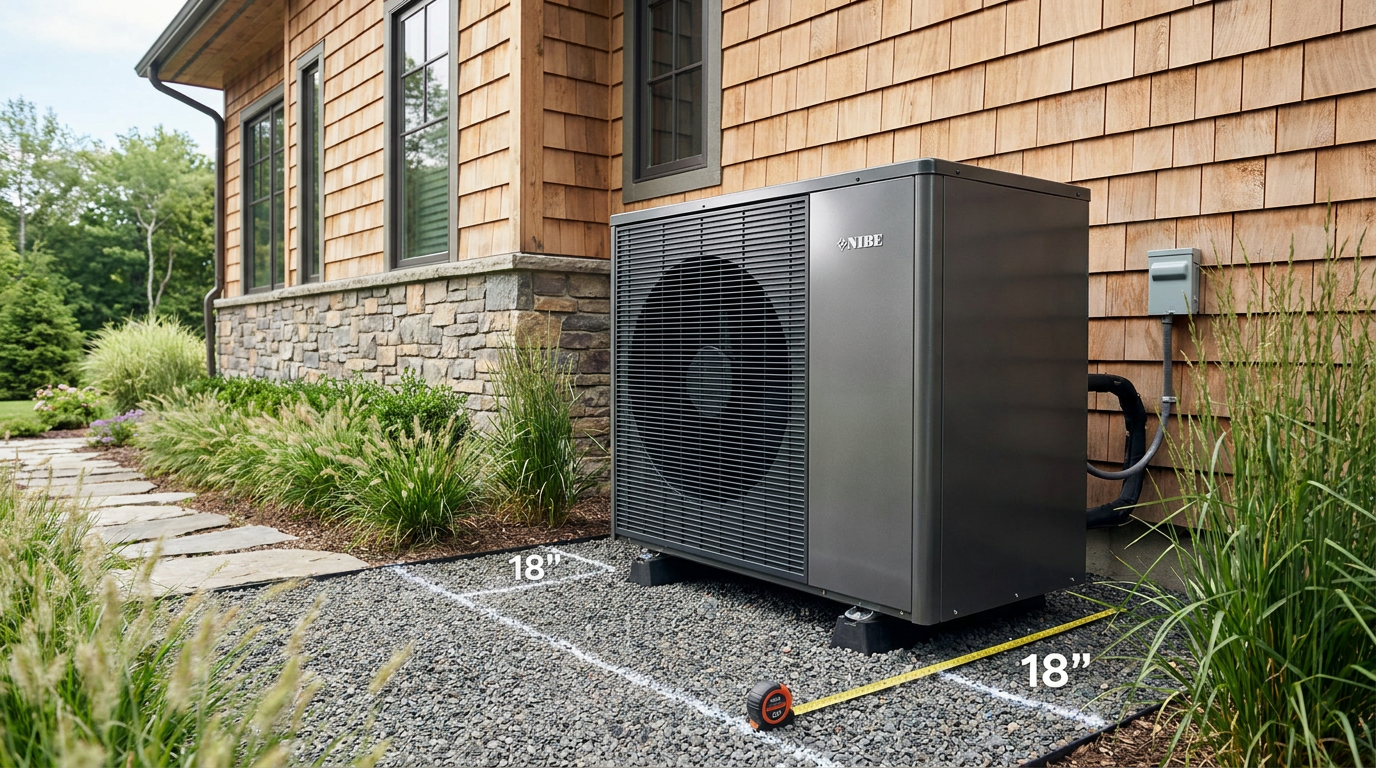
- The outdoor condenser unit requires at least 18 inches of clearance from vegetation, snow, and debris to maintain proper airflow.
- Drastic thermostat setbacks can trigger expensive auxiliary heat; it is more efficient to 'set it and forget it.'
- An annual professional tune-up is required to check the refrigerant charge, measure airflow, and inspect electrical components.
Heat pumps are replacing traditional furnaces and air conditioners at a record pace across the country. The core premise of the technology is simple but revolutionary: instead of burning fossil fuels to create heat, they use electricity and chemical refrigerants to move heat from one place to another. In the winter, they extract ambient heat from the outside air and pump it indoors; in the summer, the reversing valve flips the process, pulling heat out of the house and venting it outside.[1][5]
This heat-moving mechanism is what gives heat pumps their remarkable efficiency. While a high-end gas boiler might reach 90% to 95% efficiency—meaning some energy is always inevitably lost in the combustion process—a modern air-source heat pump can achieve 300% to 400% efficiency. For every single unit of electricity the system consumes, it can deliver three to four units of heat into the home, making it one of the most powerful tools available for decarbonizing residential energy use.[2][5]

However, that extraordinary efficiency is highly fragile. Because heat pumps rely on the precise, unobstructed flow of air and the exact pressurization of refrigerants, they are incredibly sensitive to neglect. According to the U.S. Department of Energy, a poorly maintained heat pump will consume 10% to 25% more energy than a well-maintained one. This energy penalty can entirely erase the financial and environmental benefits that prompted the homeowner to install the system in the first place.[1]
The single most impactful maintenance task a homeowner can perform is managing the indoor air filter. Heat pumps require massive volumes of air to pass over their indoor coils to distribute conditioned air throughout the home. When an air filter becomes clogged with dust, pet dander, or pollen, the system has to work exponentially harder to pull air through the barrier, driving up electricity usage and putting severe strain on the blower motor.[2][4]
Experts recommend checking the indoor air filter every month and replacing or cleaning it at least every three months. Upgrading to a pleated filter with a higher Minimum Efficiency Reporting Value (MERV) can significantly improve indoor air quality, but homeowners must ensure their specific system can handle the increased air resistance. Thicker filters provide better filtration but can sometimes restrict airflow if the HVAC cabinet was not explicitly designed to accommodate them.[1]

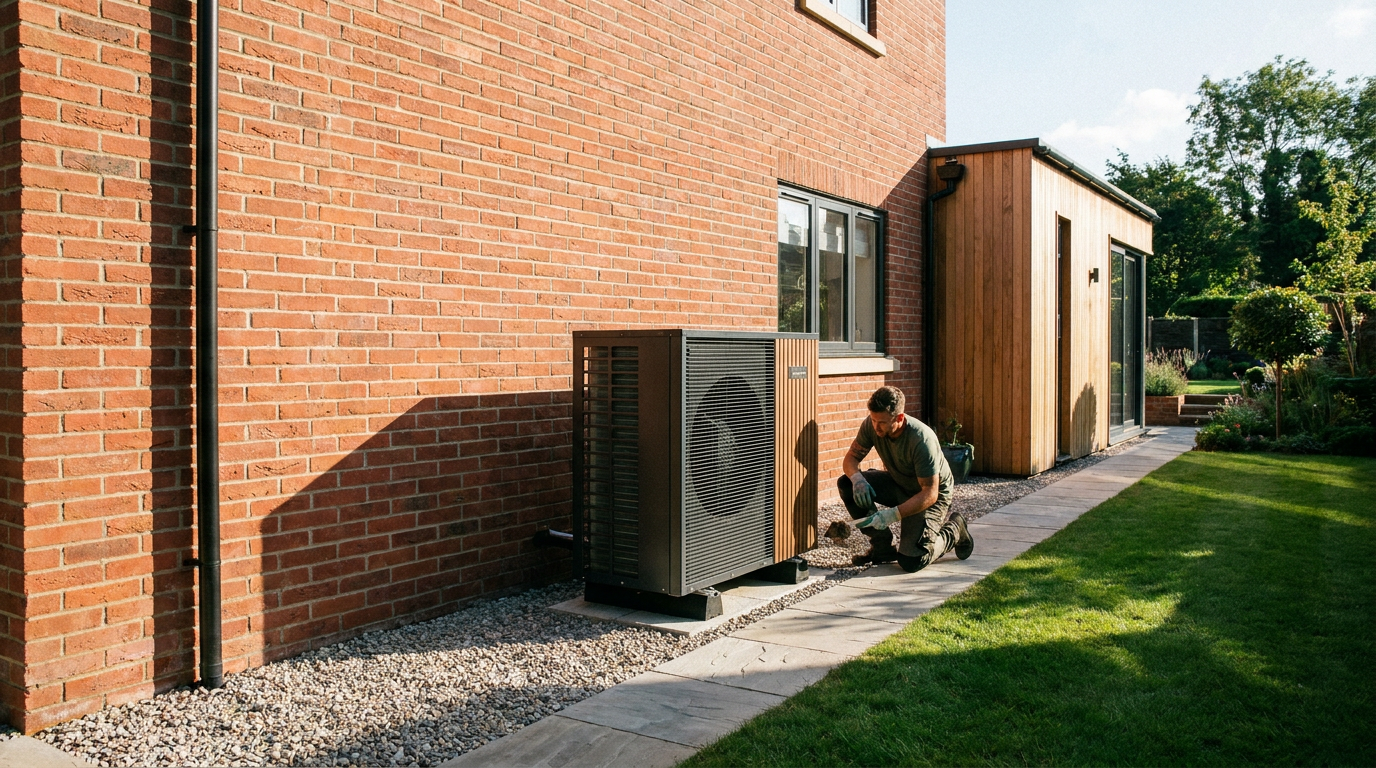
Outside the home, the condenser unit requires just as much attention as the indoor components. The outdoor unit is responsible for absorbing heat from the ambient air in the winter and releasing heat in the summer. To perform this heat exchange effectively, the unit needs a minimum of 18 inches of clear, unobstructed space on all sides to allow for proper airflow.[2][4]
Outside the home, the condenser unit requires just as much attention as the indoor components.
Over the course of a year, leaves, tall grass, snow, and general yard debris can easily choke the outdoor unit. Homeowners should routinely inspect the perimeter, trimming back vegetation and clearing away any accumulated debris. In the winter, while heat pumps are designed to melt light frost through an automatic defrost cycle, heavy snowdrifts or solid ice encasing the unit must be gently cleared away to maintain the necessary airflow.[2][4]
The delicate aluminum fins and copper coils on the outdoor unit also need to be kept clean. When dirt, grime, and pollen coat the coils, they act as a physical insulator, preventing the refrigerant inside from efficiently absorbing or releasing heat. Homeowners can gently wash the exterior coils with a garden hose a few times a year, being extremely careful not to bend the fragile fins with high water pressure.[1][2]

Beyond physical cleaning, daily thermostat habits play a massive role in a heat pump's overall efficiency. With a traditional gas furnace, homeowners are often taught to turn the temperature down significantly at night or when leaving the house to save energy. With a heat pump, this drastic "setback" strategy can actually end up costing the homeowner significantly more money.[1][4]
If a heat pump's thermostat is turned down and then suddenly turned back up by several degrees, the system may assume it cannot reach the target temperature fast enough using its efficient compressor alone. It will then trigger its "auxiliary" or backup heat—usually electric resistance strips. These strips are essentially giant toaster coils that consume massive amounts of electricity, instantly destroying the unit's efficiency. The golden rule for heat pumps is to "set it and forget it."[1][4]
Fan settings on the thermostat also matter. While leaving the indoor fan set to "on" continuously can help filter the air and balance room temperatures, it can degrade the heat pump's overall performance unless the system uses a high-efficiency, variable-speed motor. For most residential systems, leaving the fan set to "auto" ensures it only runs when the compressor is actively heating or cooling the air.[1]

While homeowners can easily handle filters and exterior clearance, the internal mechanics require a professional touch. Manufacturers and the U.S. Department of Energy strongly recommend an annual tune-up by a certified HVAC technician. This visit is critical for checking the system's refrigerant charge. If the refrigerant is even slightly overcharged or undercharged, the system's Coefficient of Performance (COP) plummets.[1][3]
During an annual service, technicians will also measure the system's airflow to ensure it meets strict industry standards, such as those set by the American Society of Heating, Refrigerating and Air-Conditioning Engineers (ASHRAE). They will inspect electrical terminals, lubricate motors, check for duct leaks, and ensure the thermostat is communicating correctly with the reversing valve, which switches the unit between heating and cooling modes.[1][3]
Ultimately, a heat pump is a significant financial investment, with an average lifespan of about 15 years for air-source models and up to 25 years for geothermal systems. By combining diligent monthly DIY habits with annual professional oversight, homeowners can ensure their system reaches its maximum lifespan while consistently delivering the 300% efficiency it was designed to achieve.[4][5]
How we got here
1970s
The energy crisis spurs initial interest in heat pump technology as an alternative to oil and gas heating.
2000s
Advances in variable-speed compressors allow heat pumps to operate efficiently in colder climates.
2022
The U.S. Inflation Reduction Act introduces significant tax credits for heat pump installations, accelerating adoption.
2025
Updated ASHRAE standards introduce stricter testing procedures for heat pump capacity and energy efficiency under controlled conditions.
Viewpoints in depth
Energy Policy & Standards
Focuses on the macro impact, grid efficiency, and strict technical codes for performance.
Organizations like the U.S. Department of Energy and ASHRAE view heat pump maintenance through the lens of national energy consumption and grid stability. Because space heating accounts for nearly a third of commercial and residential energy use, ensuring these systems operate at their rated Coefficient of Performance (COP) is critical for decarbonization goals. They emphasize strict adherence to airflow measurements, proper refrigerant handling, and building codes to prevent massive aggregate energy waste.
Consumer & Homeowner Guidance
Focuses on practical DIY steps, cost savings, and extending the lifespan of the unit.
Consumer advocacy groups and energy advisors prioritize the financial return on investment for the homeowner. Their guidance centers on the fact that a neglected heat pump can add 10% to 25% to a monthly utility bill. They emphasize accessible, low-cost interventions—like changing $15 air filters, clearing away snow, and avoiding drastic thermostat adjustments—as the best ways to protect a system that costs thousands of dollars to install.
Editorial Synthesis
Focuses on translating technical requirements into an accessible roadmap.
The Factlen Editorial Team views heat pump maintenance as a partnership between the homeowner and the professional technician. While the underlying thermodynamic principles and ASHRAE standards are highly complex, the day-to-day operation is remarkably simple. By demystifying the technology and explaining why certain habits matter—such as how a dirty coil acts as an insulator—homeowners are empowered to take control of their energy usage and comfort.
What we don't know
- How future extreme weather events and shifting climate zones will impact the long-term efficiency averages of air-source heat pumps.
- The exact lifespan impact of using thicker, high-MERV filters on older blower motors not explicitly designed for them.
Key terms
- Coefficient of Performance (COP)
- A standard measure of a heat pump's efficiency, calculated by dividing the heat output by the electrical energy input.
- Air-Source Heat Pump
- A system that transfers heat between the inside of a building and the outside air, providing both heating in the winter and cooling in the summer.
- MERV Rating
- Minimum Efficiency Reporting Value, a scale that rates the effectiveness of air filters at trapping airborne particles.
- Auxiliary Heat
- A backup heating system, often electric resistance strips, that activates when the heat pump cannot reach the target temperature quickly enough on its own.
- Refrigerant Charge
- The exact amount of chemical refrigerant inside the system, which must be precisely calibrated for the heat pump to absorb and release heat efficiently.
Frequently asked
How often should I change my heat pump filter?
You should check your filter every month and replace or clean it at least every three months. Homes with pets, high dust, or thin filters may need more frequent changes.
Why shouldn't I turn my heat pump down at night?
Drastic temperature setbacks can force the heat pump to use its 'auxiliary' or backup electric resistance heat to recover the temperature quickly. This backup heat consumes significantly more electricity and erases your energy savings.
Do I need to cover my heat pump in the winter?
No, you should never cover a heat pump that is actively running, as it needs massive amounts of airflow to extract heat from the outside air. However, you should clear away heavy snowdrifts or ice that block the sides of the unit.
What is a good COP rating?
The Coefficient of Performance (COP) measures efficiency. A COP of 3.0 means the unit produces three units of heat for every one unit of electricity it consumes. Most modern air-source heat pumps have a COP between 2.5 and 4.5.
Sources
Source coverage
5 outlets
3 viewpoints surfaced





[1]U.S. Department of EnergyEnergy Policy & Standards
Operating and Maintaining Your Heat Pump
Read on U.S. Department of Energy →[2]EnergySageConsumer & Homeowner Guidance
A little heat pump maintenance goes a long way
Read on EnergySage →[3]ASHRAEEnergy Policy & Standards
Codes and Standards for Heat Pump Efficiency
Read on ASHRAE →[4]PalmettoConsumer & Homeowner Guidance
Heat Pump Maintenance Checklist
Read on Palmetto →[5]Factlen Editorial TeamEditorial Synthesis
Synthesis by Factlen editorial team
Read on Factlen Editorial Team →

More in home
See all 33 stories →HVAC Tech
How to Optimize Your Heat Pump for Maximum Efficiency and Lower Bills
8 sources
Home Electrification
The Economics and Mechanics of the Zero-Emission Home Retrofit
6 sources
Appliance Tech
How Induction Cooking Works: The Science and Stakes Behind the Kitchen Transition
8 sources

Neuroaesthetics
The Science of the 'Sensory Sanctuary': How Interior Design Literally Rewires Your Brain
6 sources

Every angle. Every day.
Get home stories with full source coverage and perspective breakdowns delivered to your inbox.