
The Economics and Mechanics of the Zero-Emission Home Retrofit
As federal rebates roll out and indoor air quality concerns mount, millions of households are transitioning from gas appliances to heat pumps and induction stoves. Here is how the math, the science, and the grid impacts of home electrification actually work.
By Factlen Editorial Team

- Electrification Advocates
- Argue that treating homes as active energy infrastructure through heat pumps and solar saves consumers money while easing grid strain.
- Public Health Researchers
- Focus on the immediate indoor air quality benefits of electrification, particularly eliminating NO2 emissions to prevent respiratory illnesses.
- Energy Regulators & Utilities
- Emphasize structured rollouts, weatherization prerequisites, and managing grid load against rising macroeconomic power demand.
What's not represented
- · Legacy Gas Utilities
- · Independent HVAC Contractors
Why this matters
Upgrading to electric appliances fundamentally alters a home's operating costs and eliminates indoor respiratory pollutants. Understanding the sequence of weatherization, the available federal rebates, and the underlying technology is essential for homeowners planning their next major renovation.
Key points
- Millions of households are replacing legacy gas appliances with high-efficiency electric heat pumps and induction stoves.
- Studies show that switching from gas to induction cooking eliminates dangerous indoor spikes of nitrogen dioxide.
- Heat pumps operate at up to 300 percent efficiency by moving existing heat rather than burning fuel to create it.
- Federal guidelines now require states to prioritize home weatherization before granting heat pump rebates.
- Widespread home electrification could free up enough grid capacity to offset the rising energy demands of AI data centers.
For decades, the American home has been a passive consumer of energy, quietly burning fossil fuels in the basement and the kitchen. But a fundamental shift in residential engineering is currently rewriting the blueprint of domestic life. Driven by a convergence of public health research, climate policy, and advances in thermodynamic technology, millions of households are undergoing "whole-home electrification." This transition replaces legacy combustion appliances—gas furnaces, water heaters, and stoves—with high-efficiency electric alternatives. The shift is not merely a swap of hardware; it represents a transformation of the home into an active node on the electrical grid.[6]
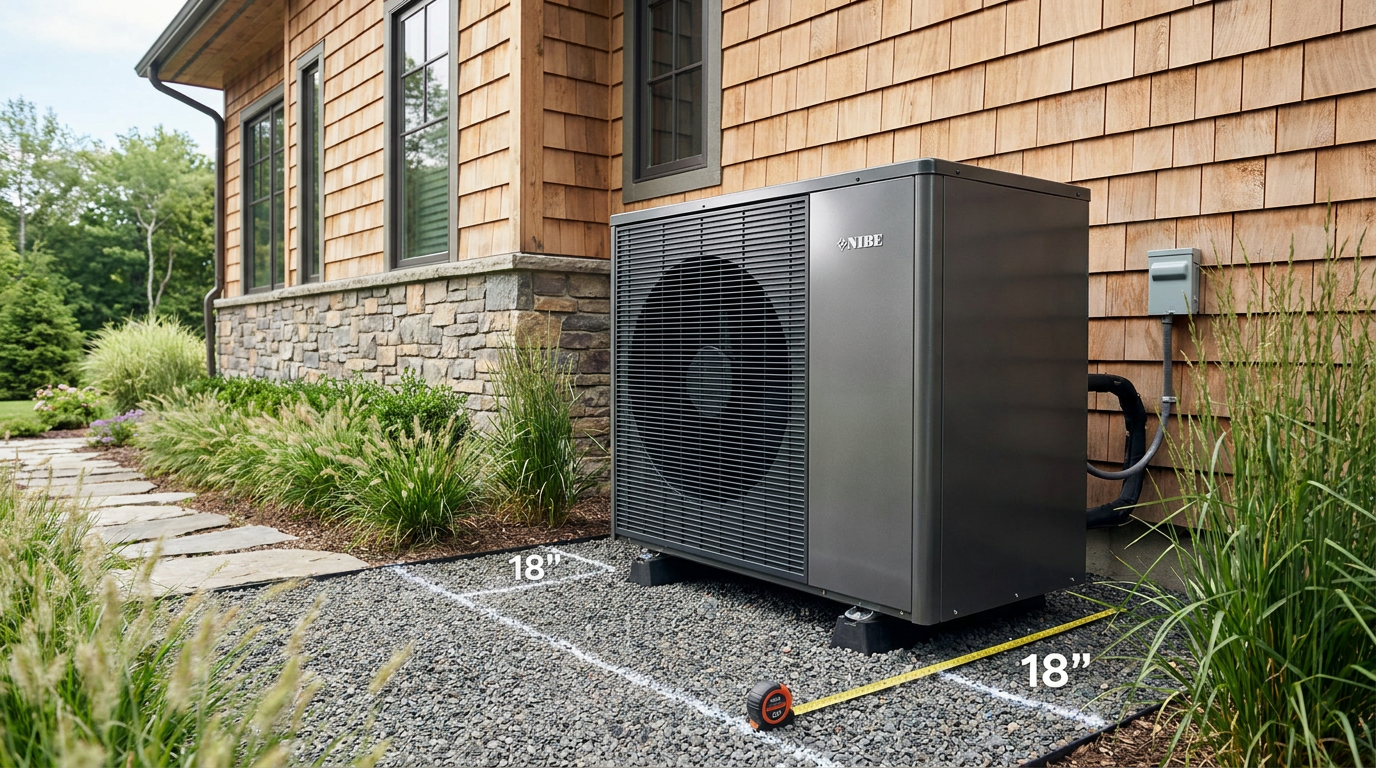
The mechanical pillars of this transition are the air-source heat pump and the magnetic induction stove. Unlike traditional electric resistance heaters that generate heat by running current through a wire, heat pumps operate like reversible refrigerators. They use refrigerants to absorb ambient heat from the outside air—even in freezing temperatures—and compress it to warm the indoors. In the kitchen, induction stoves abandon both open flames and glowing coils, instead using electromagnetic fields to directly heat the iron or steel molecules in the cookware. Together, these technologies eliminate the need for residential gas lines entirely.[6]
While carbon emissions often dominate the policy conversation, the most immediate catalyst for many homeowners is indoor air quality. A growing body of scientific literature has linked the combustion of natural gas in residential kitchens to elevated levels of respiratory irritants. Scientists have long established that gas stoves emit nitrogen dioxide, carbon monoxide, and formaldehyde directly into the living space, often bypassing outdoor air quality standards because the Environmental Protection Agency does not regulate indoor residential air.[4]
The stark reality of these emissions was quantified in a landmark pilot study conducted by Columbia University’s Mailman School of Public Health and the nonprofit WE ACT for Environmental Justice. Researchers monitored twenty low-income households in a Bronx public housing complex, replacing the gas stoves in half of the apartments with electric induction models. The study provided a rare, controlled look at how cooking technology directly impacts the air families breathe in enclosed, poorly ventilated spaces.[2][4]
The data revealed a dramatic divergence in air quality. In homes cooking with gas, baseline nitrogen dioxide levels spiked to an average of 197 parts per billion during meal preparation—nearly double the EPA’s outdoor safety threshold of 100 parts per billion. In contrast, homes equipped with induction stoves saw negligible changes, with nitrogen dioxide levels hovering around a harmless 14 parts per billion. Over the course of the monitoring period, the households that switched to induction experienced a 56 percent reduction in daily nitrogen dioxide exposure, a critical metric for mitigating childhood asthma risks.[2][4]

Beyond the health benefits, the physics of electrification offer a massive leap in energy efficiency. Because heat pumps move existing heat rather than creating it from scratch, they can operate at efficiencies of 300 percent or more. For every unit of electrical energy consumed, a modern heat pump can deliver three units of thermal energy into the home. This thermodynamic advantage allows electric motors to perform the same heating and cooling tasks using a fraction of the total energy required by the most advanced condensing gas furnaces.[6]
However, the economics of retrofitting an existing home present a steep initial barrier. Ripping out gas infrastructure, upgrading electrical panels to handle higher amperages, and installing new heat pump compressors requires significant upfront capital. Depending on the region and the size of the property, a whole-home electrification project can cost anywhere from $10,000 to over $30,000 before incentives are applied. For the vast majority of households, these capital requirements put the transition out of reach without structural financial support.[1]
However, the economics of retrofitting an existing home present a steep initial barrier.
The long-term financial picture, however, is highly favorable. A May 2026 policy blueprint released by the electrification advocacy group Rewiring America modeled the lifetime economics of these upgrades. The report found that if whole-home electrification is paired with rooftop solar and battery storage, 96 percent of eligible households would see lower energy bills. Over the lifespan of the equipment, these combined upgrades could deliver an average of $26,000 in net savings per home, insulating families from the volatility of global fossil fuel markets.[1][5]

Unlocking those savings requires addressing the "soft costs" that currently plague the American installation market. Permitting delays, complex local inspections, and utility interconnection fees account for more than half the price of installing residential solar and storage in the United States. Streamlining these bureaucratic hurdles is essential to bringing the total project costs down to a level where middle- and low-income families can participate in the transition without relying entirely on massive subsidies.[1][5]
The push for residential electrification is also colliding with a macroeconomic challenge: the explosive growth of artificial intelligence and data centers. Utilities across the country are facing record load growth, prompting requests to spend over $1.4 trillion by 2030 to expand centralized power generation. If approved, the costs of these new gas plants and transmission lines will inevitably be passed down to everyday ratepayers, driving up monthly utility bills regardless of how much energy a household consumes.[5]
Electrifying homes could serve as a decentralized shock absorber for this grid strain. Rewiring America's analysis suggests that treating households as energy infrastructure—specifically by subsidizing heat pumps and home batteries—could free up massive amounts of grid capacity. By reducing peak residential demand, distributed home energy upgrades could offset 100 percent of the projected electricity demand growth from AI data centers through 2029, achieving this at a cost comparable to building new centralized gas generation.[5]
To bridge the upfront cost gap, the federal government is currently rolling out $8.8 billion in state-administered electrification rebates authorized by the Inflation Reduction Act. These funds are divided into two primary streams: the Home Owner Managing Energy Savings program, which rewards whole-home efficiency improvements, and the High-Efficiency Electric Home Rebate program, which provides point-of-sale discounts of up to $14,000 for low- and moderate-income households purchasing electric appliances.[3]
The deployment of these funds is highly regulated to ensure maximum environmental impact. In June 2026, the Department of Energy issued updated guidance to state energy offices managing the rebate programs. A major provision explicitly prohibits states from using federal funds to incentivize consumers to switch from one fossil fuel system to another, ensuring the money strictly accelerates the transition to electric heat pumps and induction technology.[3]
Crucially, the updated federal guidance also requires states to prioritize weatherization before granting rebates for new heating and cooling equipment. Installing a high-capacity heat pump in a drafty, uninsulated house is an inefficient use of resources. By mandating air sealing and insulation upgrades first, homes can retain thermal energy longer, allowing contractors to install smaller, less expensive heat pump units that draw less power from the grid during winter peaks.[3][6]

As the transition accelerates, policymakers face a looming equity challenge. If affluent homeowners are the only ones who can afford to disconnect from the gas grid, the fixed costs of maintaining legacy pipeline infrastructure will fall on a shrinking, increasingly lower-income customer base. Ensuring that renters and low-income families have access to induction stoves and heat pumps is not just an environmental imperative, but a necessary step to prevent a regressive utility death spiral.[2][4]
Ultimately, the zero-emission home retrofit represents a fundamental redefinition of residential living. By swapping combustion for electromagnetism and thermodynamics, households are securing cleaner indoor air, lowering their long-term operating costs, and providing critical flexibility to a strained electrical grid. The American home is no longer just a place to consume power; it is becoming the foundation of the next-generation energy system.[1][6]
How we got here
August 2022
The Inflation Reduction Act is signed, allocating $8.8 billion for state-administered home electrification rebates.
January 2023
A pilot study in the Bronx demonstrates a 56 percent reduction in daily NO2 exposure when public housing units switch to induction stoves.
May 2026
Rewiring America releases a blueprint showing how home electrification could offset rising data center energy demand.
June 2026
The Department of Energy issues updated guidance requiring states to prioritize weatherization before granting heat pump rebates.
Viewpoints in depth
Electrification Advocates
Argue that treating homes as active energy infrastructure through heat pumps and solar saves consumers money while easing grid strain.
Advocacy groups like Rewiring America view the residential home not as a passive consumer of electricity, but as a critical node in a decentralized power grid. They argue that the upfront capital costs of electrification are dwarfed by the long-term macroeconomic benefits. By pairing heat pumps with rooftop solar and home batteries, households can insulate themselves from the price volatility of global fossil fuel markets while simultaneously reducing peak demand on the broader electrical grid. This decentralized approach, they argue, is a more cost-effective way to handle the surging power demands of AI data centers than building new centralized gas plants.
Public Health Researchers
Focus on the immediate indoor air quality benefits of electrification, particularly eliminating NO2 emissions to prevent respiratory illnesses.
For the medical and public health communities, the transition away from gas appliances is primarily an intervention against respiratory disease. Researchers point to decades of data showing that indoor combustion of natural gas releases nitrogen dioxide, carbon monoxide, and formaldehyde directly into living spaces. Because the EPA does not regulate indoor residential air quality, millions of families unknowingly expose themselves to pollution levels that would be illegal outdoors. Public health advocates argue that replacing gas stoves with induction technology is one of the most immediate and effective ways to reduce the incidence of childhood asthma, particularly in low-income housing where ventilation is often poor.
Energy Regulators & Utilities
Emphasize structured rollouts, weatherization prerequisites, and managing grid load against rising macroeconomic power demand.
State energy offices and federal regulators are tasked with managing the logistics and the grid impacts of the electrification wave. Their primary concern is ensuring that the billions of dollars in federal rebates are deployed efficiently. This is why the Department of Energy recently mandated that homes undergo weatherization—adding insulation and sealing leaks—before receiving subsidies for heat pumps. Regulators warn that installing high-capacity electric heating in poorly insulated homes will unnecessarily strain the winter grid. Furthermore, utility commissions are grappling with the equity challenge of managing the gradual decommissioning of legacy gas pipelines without leaving low-income ratepayers to foot the bill.
What we don't know
- Exactly when each individual state will finalize and launch their specific IRA rebate programs for consumers.
- How legacy gas utilities will manage the financial transition of their infrastructure as more affluent customers disconnect from the gas grid.
Key terms
- Air-Source Heat Pump
- A highly efficient HVAC system that transfers heat between the inside of a home and the outside air, providing both heating and cooling without burning fuel.
- Induction Stove
- A cooktop that uses electromagnetic fields to directly heat magnetic pots and pans, rather than using a gas flame or a radiant electric coil.
- Nitrogen Dioxide (NO2)
- A gaseous air pollutant produced by burning fossil fuels, which has been strongly linked to respiratory issues and the development of childhood asthma.
- Weatherization
- The practice of protecting a building's interior from the elements, primarily by adding insulation and sealing air leaks to improve overall energy efficiency.
- Soft Costs
- The non-hardware expenses associated with an installation project, including permitting, inspection, and utility interconnection fees.
Frequently asked
Do heat pumps work in cold climates?
Yes. Modern cold-climate heat pumps use advanced refrigerants to extract heat from the outside air even when temperatures drop well below freezing, though proper home insulation is required for optimal performance.
Will an induction stove work with my current pots and pans?
Induction requires magnetic cookware. Cast iron and most stainless steel work perfectly, but aluminum, copper, or glass pans will not heat up on an induction surface.
How much does a heat pump installation cost?
Costs vary widely based on region and home size, typically ranging from $10,000 to $30,000 before federal, state, and utility incentives are applied.
What is weatherization and why is it required?
Weatherization involves upgrading a building's envelope through insulation and air sealing. It is required by new federal guidelines because a well-insulated home allows for a smaller, more efficient heat pump.
Sources
Source coverage
6 outlets
3 viewpoints surfaced






[1]Rewiring AmericaElectrification Advocates
Homegrown Energy: A policy blueprint for energy affordability
Read on Rewiring America →[2]Columbia UniversityPublic Health Researchers
Switching from Gas to Electric Stoves Cuts Indoor Air Pollution
Read on Columbia University →[3]Department of EnergyEnergy Regulators & Utilities
Revised DOE Guidance for IRA Heat Pump Rebates
Read on Department of Energy →[4]Inside Climate NewsPublic Health Researchers
Indoor Pollutant Concentrations Are Significantly Lower in Homes Without a Gas Stove, Nonprofit Finds
Read on Inside Climate News →[5]Latitude MediaEnergy Regulators & Utilities
How home electrification could bolster the grid — and save households money
Read on Latitude Media →[6]Factlen Editorial TeamElectrification Advocates
Synthesis by Factlen editorial team
Read on Factlen Editorial Team →

More in home
See all 33 stories →HVAC Tech
How to Optimize Your Heat Pump for Maximum Efficiency and Lower Bills
8 sources
Appliance Tech
How Induction Cooking Works: The Science and Stakes Behind the Kitchen Transition
8 sources

Neuroaesthetics
The Science of the 'Sensory Sanctuary': How Interior Design Literally Rewires Your Brain
6 sources

Neuroaesthetics
The Science of a Happy Home: How Neuroaesthetics is Rewiring Interior Design
7 sources

Every angle. Every day.
Get home stories with full source coverage and perspective breakdowns delivered to your inbox.