
How Solid-State Batteries Are Rewriting the Rules of Electric Vehicles
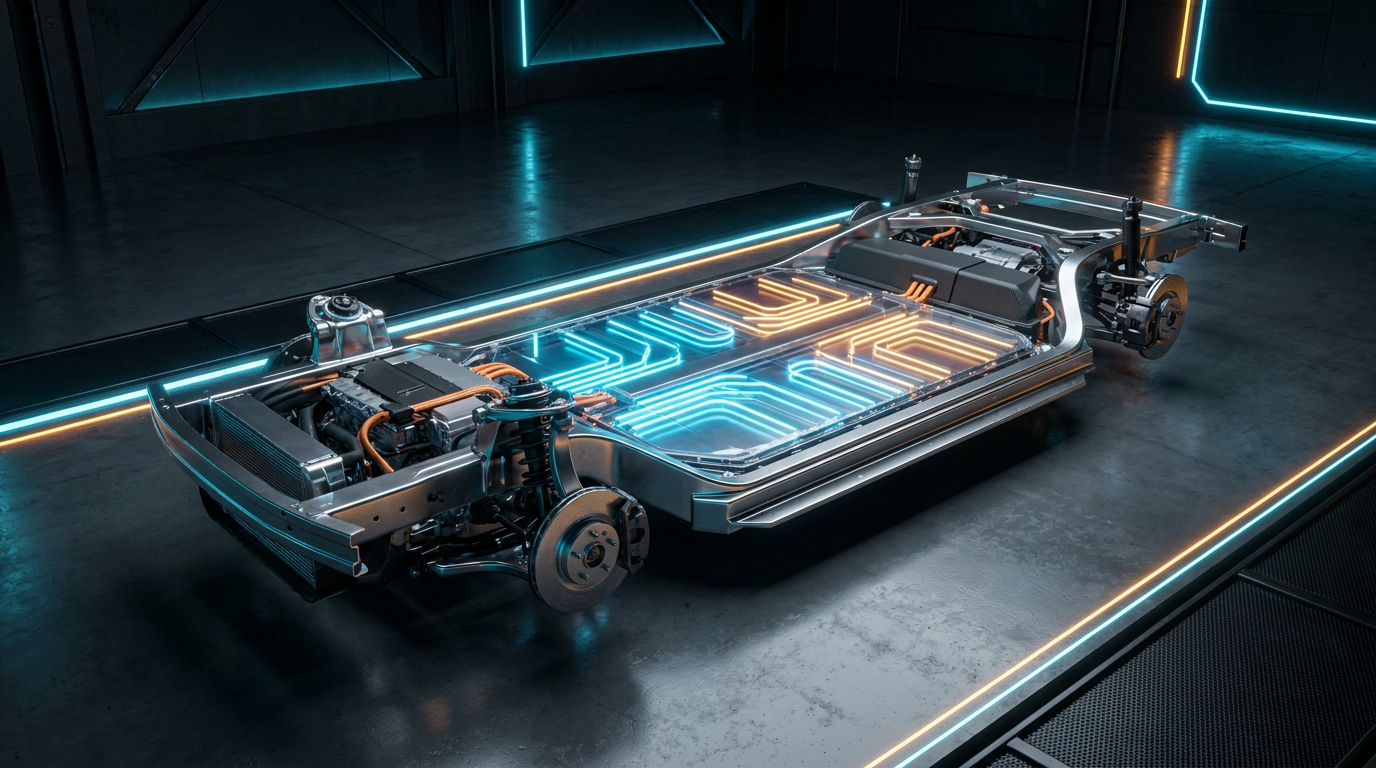
Long considered the 'holy grail' of energy storage, solid-state batteries are finally moving from the laboratory to production lines. By replacing flammable liquids with solid materials, the technology promises to double EV range, slash charging times, and eliminate fire risks.
By Factlen Editorial Team
- Automakers & Innovators
- Focused on the transformative performance metrics and rapid commercialization timelines.
- Manufacturing Analysts
- Emphasizing the steep cost curves, supply chain hurdles, and scaling challenges.
- Safety Advocates
- Prioritizing the elimination of fire risks and thermal runaway in next-generation vehicles.
What's not represented
- · Raw Material Miners
- · Independent Repair Shops
Why this matters
Solid-state technology solves the biggest pain points of electric vehicle ownership: range anxiety, long charging stops, and battery fire risks. As these batteries hit the market, they will make EVs lighter, safer, and capable of driving across countries on a single, rapid charge.
Key points
- Solid-state batteries replace flammable liquid electrolytes with solid materials like ceramics or sulfides.
- The technology enables the use of pure lithium metal anodes, drastically increasing energy density.
- Automakers project the batteries will deliver over 600 miles of range and 10-minute charging times.
- Major manufacturers like Toyota, Nissan, and QuantumScape are targeting commercial EV launches between 2027 and 2028.
- Initial rollouts will be limited to premium vehicles due to high early manufacturing costs.
For nearly three decades, the lithium-ion battery has powered a quiet revolution, enabling everything from the smartphone in your pocket to the electric vehicles on the highway. But despite thousands of incremental upgrades, the traditional liquid-based chemistry has hit a stubborn physical ceiling. Range anxiety, heavy vehicle weights, and frustrating charging bottlenecks have constrained the global transition to electric mobility. Now, a fundamental architectural shift known as the solid-state battery is moving rapidly from laboratory hype to industrial reality. This technology represents the most significant leap in energy storage in a generation, promising to solve the EV industry's most persistent pain points in a single stroke.[5]
The premise of this breakthrough is deceptively simple: replace the liquid electrolyte sloshing inside the battery with a rigid, solid material. Yet this single substitution unlocks a cascading series of engineering benefits that automakers have chased for years. In 2026, major industry players like Volkswagen-backed QuantumScape, automotive giant Toyota, and China's Greater Bay Technology (GBT) are officially rolling prototype cells off their pilot production lines. These milestones signal the beginning of the end for the liquid-battery era, transitioning the conversation from theoretical physics to tangible manufacturing. The race is no longer about proving the chemistry works; it is about scaling it for the masses.[1][2]
To truly understand the magnitude of this breakthrough, one must first look at the inherent limitations of current battery technology. In a standard lithium-ion cell, lithium ions swim back and forth between a cathode and an anode through a liquid organic solvent. While this liquid is highly effective at conducting ions, it is also inherently flammable and chemically volatile. If the battery casing is pierced in a severe accident, short-circuited, or subjected to extreme heat, the liquid can ignite, triggering a dangerous and notoriously difficult-to-extinguish chain reaction known as thermal runaway.[4][6]
Furthermore, accommodating this volatile liquid architecture requires heavy, bulky safety casings and a massive graphite anode just to house the lithium ions safely during the charging cycle. Solid-state batteries discard the liquid solvent entirely, replacing it with a solid conductive material—typically a specialized ceramic, a polymer, or a sulfide-based glass. Because there is no fluid to leak or catch fire, there is absolutely no need for the traditional plastic separator membrane that keeps the positive and negative sides of a liquid battery from touching and shorting out.[6][7]

This solid barrier acts as an impenetrable, internal fireproof wall. Without the presence of flammable organic solvents, solid-state batteries can operate safely at internal temperatures up to 80 degrees Celsius, whereas traditional lithium-ion cells begin to degrade rapidly and pose severe safety risks once they cross the 50-degree threshold. Recent tests of advanced A-sample cells have successfully passed brutal safety evaluations, including needle penetration, extrusion, and thermal shock tests, all without catching fire or exploding. This inherent stability fundamentally changes how vehicles can be designed and packaged.[1][6]
But while safety is a massive selling point, the true prize for automakers is the leap in energy density. Because the solid electrolyte is so mechanically robust, engineers can completely remove the bulky, heavy graphite anode used in liquid batteries and replace it with a pure lithium metal anode. Lithium metal is incredibly light and stores vastly more energy, allowing the battery to hold dramatically more power in the exact same physical footprint. This is the key that unlocks the enormous performance jump the industry has been dreaming about.[4][7]
The resulting numbers represent a generational leap in capability. Current top-tier lithium-ion batteries typically max out around 250 to 300 watt-hours per kilogram. Solid-state designs, however, are targeting 400 to 500 Wh/kg, with some theoretical models pushing even higher. For the everyday driver, this means an electric vehicle that currently travels 400 kilometers on a single charge could suddenly exceed 700 to 800 kilometers (roughly 430 to 500 miles) without adding a single pound of weight to the chassis, effectively making range anxiety a relic of the past.[1][4]
The resulting numbers represent a generational leap in capability.
Charging speeds are equally transformative, addressing the second major hurdle to EV adoption. Because the solid design naturally resists overheating and internal shorting, it can safely accept massive amounts of electrical current without degrading the cell. Automakers like Toyota are projecting that their upcoming sulfide-based solid-state batteries will be capable of charging from 10 percent to 80 percent capacity in just 10 to 15 minutes. This brings the electric vehicle charging experience remarkably close to the convenience and speed of filling a traditional internal combustion engine at a gas station.[3][5]

Despite the immense promise and recent milestones, the transition to solid-state technology is not without profound engineering hurdles. When you replace a liquid with a solid, you trade chemical instability for intense mechanical complexity. During normal operation, as lithium ions move in and out of the electrodes, the battery materials physically expand and contract—a microscopic process that battery engineers refer to as "breathing." In a liquid battery, the fluid simply flows around these expanding particles without issue.[4]
In a solid-state battery, however, keeping two rigid solid materials in intimate contact while they swell and shrink thousands of times is a massive physical challenge. If the solid electrolyte and the electrode lose contact even slightly, internal electrical resistance spikes, and the battery's performance plummets. Solving this "interfacial stability" problem has been the primary bottleneck of the last decade, requiring intense innovation in material science and cell compression techniques to ensure the battery can survive thousands of charge cycles.[4]
Manufacturing presents another incredibly steep climb for the industry. Building solid-state cells requires entirely new factory equipment, pristine cleanroom environments, and complex processes for handling highly moisture-sensitive materials like sulfides. Industry analysts note that while the technology is now proven to work in the laboratory and in pilot programs, achieving economies of scale will be crucial. The initial production costs are exorbitant, and scaling up roll-to-roll manufacturing to produce millions of flawless cells per year remains a daunting logistical and financial challenge.[2][3]

Nevertheless, the commercialization timeline is accelerating rapidly as billions of dollars pour into the sector. In early 2026, companies like GBT announced that their first A-sample all-solid-state cells had successfully rolled off the line, targeting mass-producible gigawatt-hour-level capacity. Meanwhile, QuantumScape is preparing its advanced B-sample cells for rigorous field testing in actual passenger vehicles, moving the technology out of the controlled laboratory environment and onto real-world roads to validate long-term durability and performance.[1]
The global automotive giants are aggressively aligning their supply chains for a late-decade rollout. Toyota, in partnership with energy firm Idemitsu, is scaling up its sulfide electrolyte production facilities, aiming to launch its first solid-state electric vehicles between 2027 and 2028. Competitors including Nissan, BYD, and Mercedes-Benz have staked out similar timelines for their own commercial debuts, sparking a massive international race to be the first to deliver the technology to consumers. The sheer volume of capital being deployed suggests that the 2027 window is a hard target rather than a mere aspiration.[1][3]

When these next-generation vehicles finally hit the showroom floors, they will certainly not be cheap. Experts and market analysts project that solid-state batteries will initially be reserved exclusively for premium, high-performance electric vehicles where affluent buyers can absorb the steep technological premium. Mid-range and entry-level EVs will likely continue relying on advanced lithium-ion and increasingly cheaper sodium-ion chemistries for the foreseeable future. It will likely take several years of production optimization and supply chain maturation before solid-state technology trickles down to the everyday mass market.[2]
Ultimately, the arrival of the solid-state battery marks the true maturation of the electric vehicle industry. By solving the fundamental compromises of liquid chemistry, the automotive world is unlocking a future where EVs are lighter, vastly safer, and capable of driving across entire countries on a single, rapid charge. The theoretical laboratory phase is officially ending; the global manufacturing race has begun, and the rules of electric mobility are about to be permanently rewritten. For consumers, the promise of a zero-emission vehicle without the traditional compromises of range and charging time is finally within reach.[5]
How we got here
2022-2024
Automakers and startups achieve major lab breakthroughs, proving the viability of solid electrolytes and lithium-metal anodes.
2025
Companies like QuantumScape begin delivering B-sample prototype cells to automotive partners for early testing.
Early 2026
Manufacturers like GBT successfully roll A-sample all-solid-state cells off pilot production lines.
2027-2028
Toyota, Nissan, and BYD target the launch of their first commercial EVs equipped with solid-state batteries.
2030+
Economies of scale are expected to bring solid-state technology out of the luxury segment and into mass-market vehicles.
Viewpoints in depth
Automakers & Innovators
Focused on the transformative performance metrics and rapid commercialization timelines.
For the companies developing the technology, solid-state batteries represent the ultimate competitive advantage. Automakers and startups argue that the technology is ready to move out of the lab, pointing to successful A-sample tests that prove the cells can survive extreme abuse without catching fire. They emphasize the massive performance gains—such as 600-plus mile ranges and 10-minute charge times—as the key to finally winning over consumers who are hesitant to abandon internal combustion engines.
Manufacturing Analysts
Emphasizing the steep cost curves, supply chain hurdles, and scaling challenges.
Industry analysts and supply chain experts offer a more measured perspective. While they acknowledge the chemical breakthroughs, they argue that the physics of mass production will keep prices artificially high for years. Handling moisture-sensitive sulfides and maintaining the intense compression required for interfacial stability demands entirely new factory architectures. Consequently, they predict that solid-state technology will remain a luxury-only feature until the 2030s, when economies of scale finally begin to drive down the exorbitant initial manufacturing costs.
Safety Advocates
Prioritizing the elimination of fire risks and thermal runaway in next-generation vehicles.
For safety regulators and consumer advocates, the primary value of solid-state technology has nothing to do with range or charging speed. Their focus is entirely on the elimination of the flammable liquid electrolyte. By removing the volatile organic solvents that cause thermal runaway in traditional lithium-ion cells, solid-state batteries fundamentally change the risk profile of electric vehicles. Advocates argue this inherent stability will make EVs vastly safer in severe collisions and extreme weather conditions.
What we don't know
- Exactly how quickly manufacturing costs will fall to make the technology viable for budget-friendly EVs.
- Which specific solid material (sulfide, polymer, or ceramic) will ultimately dominate the global market standard.
- How the batteries will perform over a decade of real-world wear and tear outside of controlled laboratory conditions.
Key terms
- Electrolyte
- The medium inside a battery that allows ions to flow between the anode and cathode during charging and discharging.
- Anode
- The negative electrode of a battery. In solid-state designs, heavy graphite anodes are often replaced with pure, lightweight lithium metal.
- Energy Density
- The amount of energy a battery can store relative to its weight or size, typically measured in watt-hours per kilogram (Wh/kg).
- Thermal Runaway
- A dangerous chain reaction where a battery overheats uncontrollably, often leading to a fire or explosion in liquid-based cells.
- Interfacial Stability
- The engineering challenge of keeping the solid electrolyte and the electrodes in constant physical contact as the battery expands and shrinks.
Frequently asked
What makes a solid-state battery different from current EV batteries?
Current lithium-ion batteries use a liquid chemical solvent to move ions. Solid-state batteries replace this liquid with a solid material, like ceramic or sulfide glass.
Will solid-state batteries catch fire?
They are vastly safer. Because they eliminate the flammable liquid electrolyte, they are highly resistant to catching fire, even if punctured or overheated.
When will I be able to buy a car with a solid-state battery?
Major automakers like Toyota and Nissan are targeting 2027 to 2028 for their first commercial releases, though they will likely debut in expensive premium models first.
Why are they taking so long to develop?
While the chemistry works in a lab, manufacturing them at scale is difficult. Engineers have struggled to keep the solid materials from cracking or losing contact as the battery naturally expands and contracts during use.
Sources
Source coverage
7 outlets
3 viewpoints surfaced







[1]ElectrekAutomakers & Innovators
China ramps up solid-state EV battery production
Read on Electrek →[2]CleanTechnicaManufacturing Analysts
Solid-State Battery Milestones Appear Encouraging For Near Future
Read on CleanTechnica →[3]Fortune Business InsightsAutomakers & Innovators
EV Solid-State Battery Market Size, Share & Industry Analysis
Read on Fortune Business Insights →[4]MediumManufacturing Analysts
The Physics of Solid-State Batteries, Explained
Read on Medium →[5]NRMASafety Advocates
What is a solid-state battery?
Read on NRMA →[6]EV Infrastructure NewsSafety Advocates
Solid-state batteries explained
Read on EV Infrastructure News →[7]Flash BatterySafety Advocates
What are solid-state batteries and how do they work
Read on Flash Battery →

Every angle. Every day.
Get automotive stories with full source coverage and perspective breakdowns delivered to your inbox.