
How Lab-Grown and Beanless Coffee Could Save the Morning Routine
As climate change threatens traditional coffee crops, food-tech startups are using upcycled ingredients and bioreactors to brew the world's favorite beverage without the bean.
By Factlen Editorial Team
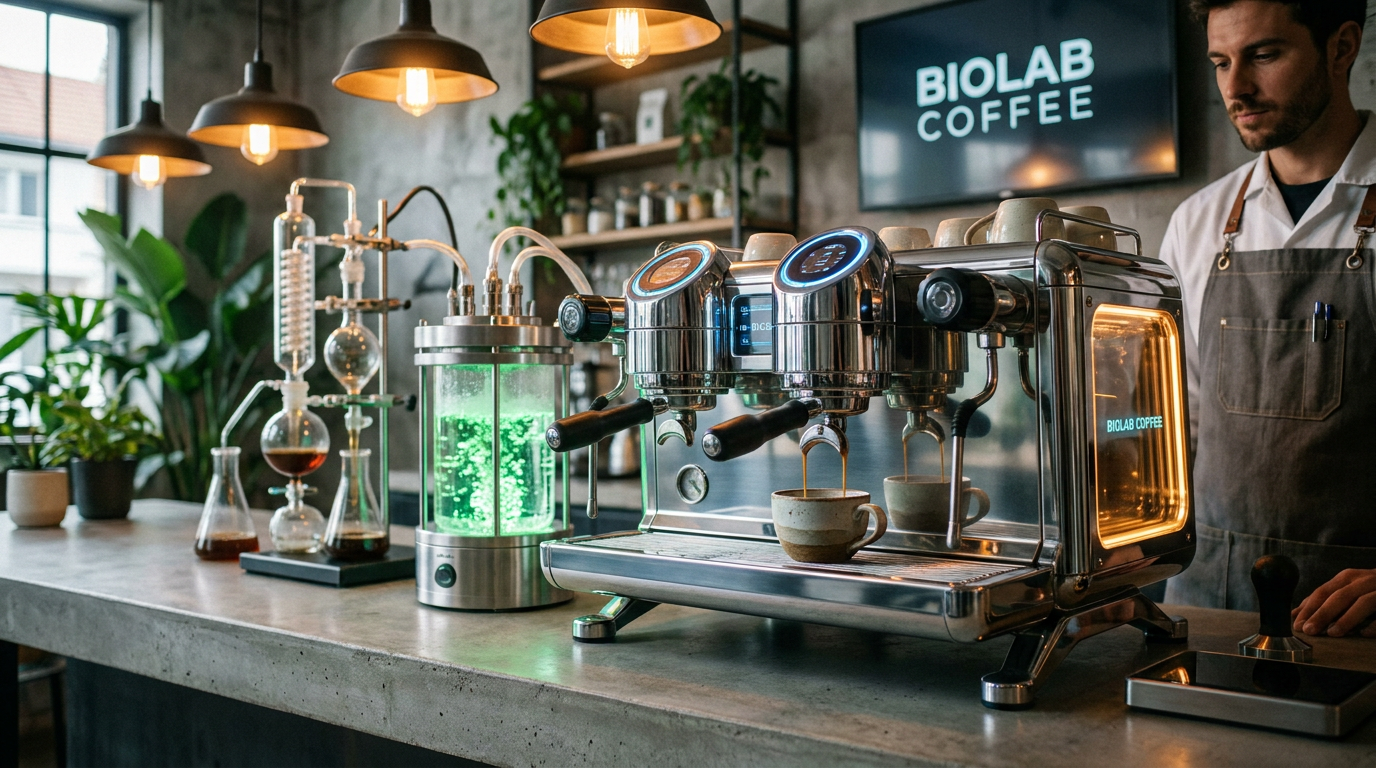
- Food Tech Innovators
- Startups argue that decoupling coffee from traditional agriculture is the only way to meet global demand sustainably.
- Traditional Coffee Industry
- Farming advocates warn that a shift to lab-grown alternatives could devastate millions of vulnerable livelihoods.
- Consumer Skeptics
- Some consumers and nutritionists are wary of replacing a natural plant product with highly engineered alternatives.
What's not represented
- · Indigenous farming communities in the Bean Belt
- · Independent specialty coffee roasters
Why this matters
With climate change threatening to halve the world's coffee-growing land by 2050, the morning ritual of billions is at risk of becoming an expensive luxury. Beanless coffee offers a radical, climate-resilient solution that could stabilize prices and halt deforestation, though it threatens to disrupt the livelihoods of millions of traditional farmers.
Key points
- Climate change and extreme weather are severely threatening global coffee yields, with suitable farming land projected to halve by 2050.
- Food-tech startups are developing 'beanless' coffee using upcycled ingredients, precision fermentation, and cellular agriculture.
- Molecular coffee maps and recreates coffee's flavor compounds using sustainable ingredients like date seeds and chicory root.
- Lab-grown coffee cultivates actual coffee plant cells in bioreactors, producing a harvest every month instead of annually.
- While these technologies offer massive reductions in carbon emissions, they pose a severe economic threat to the 12.5 million traditional coffee farmers.
The morning ritual of millions is quietly colliding with a planetary crisis. For decades, the global supply of coffee has relied on a delicate band of tropical climates known as the Bean Belt. But that band is fraying. In late 2024 and into 2025, Brazil—which produces nearly 40% of the world's coffee—suffered its worst drought in 70 years, slashing its 2025 yields by an estimated 12%. As extreme weather becomes the baseline, the agricultural realities of the world's favorite stimulant are forcing a radical rethink of how it is produced.[5]
The long-term forecast for traditional coffee cultivation is stark. Agronomists estimate that by 2050, the amount of land suitable for growing Arabica and Robusta beans could shrink by as much as 50%. Furthermore, 60% of all known wild coffee species are currently classified as endangered. As rising temperatures push farmers to higher altitudes, the industry is driving deforestation in previously untouched biodiverse regions, compounding the crop's already massive environmental footprint.[1][2][3]
In response, a rapidly growing sector of food-technology startups is attempting to decouple the beverage from the bean entirely. Dubbed "beanless coffee," this emerging category aims to replicate the exact taste, aroma, and chemical profile of traditional coffee without requiring a single coffee plant. By leveraging advanced food science, these companies are promising a brew that is immune to climate shocks and free from the deforestation associated with conventional agriculture.[1][6][8]
The most immediate approach to beanless coffee relies on molecular mapping and upcycled ingredients. Scientists have identified the roughly 800 distinct volatile compounds that give roasted coffee its complex flavor profile. Startups like Seattle-based Atomo Coffee and Voyage Foods use this chemical blueprint to reconstruct the beverage using alternative plant sources. By roasting and brewing ingredients like date seeds, chicory root, millet, and chickpeas, they can mimic the sensory experience of a morning cup.[1][3][5]

This molecular method boasts dramatic environmental benefits. Atomo, which raised $7.8 million in Series B funding in January 2025 to expand internationally, claims its beanless grounds generate 83% fewer carbon emissions and require 70% less farmland than conventional coffee. Because the ingredients are often agricultural byproducts—like date pits rescued from commercial farming—the process actively reduces food waste while entirely avoiding the tropical deforestation linked to the traditional coffee trade.[1][8]
A second, more technologically complex pathway involves precision fermentation. This technique uses specialized microorganisms, such as yeast or bacteria, to metabolize raw ingredients and excrete specific flavor compounds. San Francisco-based Minus Coffee and European startups like Northern Wonder utilize fermentation to transform roots and legumes into a convincing coffee base. The process requires a fraction of the water and land used by traditional farming, and the resulting liquid can be cold-brewed or dried into grounds.[2][3][7]
Fermentation also allows for unprecedented control over the final product. Companies can dial specific flavor notes up or down, and precisely calibrate the caffeine content by adding natural extracts from green tea or synthetic caffeine. In blind taste tests conducted with Purdue University, one fermentation-based brand saw 60% of consumers prefer its beanless brew over a premium conventional coffee.[3][5]
Fermentation also allows for unprecedented control over the final product.
To ease consumers into the concept, some companies are pioneering "hybrid" approaches. In early 2026, Belgian food-tech startup Koppie completed industrial-scale trials of a product that blends conventional coffee beans with a fermented legume alternative. This hybrid model aims to lower the retail price and reduce the overall climate impact of the bag, while preserving the authentic mouthfeel and roasting characteristics that purists demand.[2]

The most futuristic frontier of the beanless revolution, however, is cellular agriculture—often referred to as lab-grown coffee. Rather than mimicking the bean with other plants, this method cultivates actual Coffea arabica cells in a laboratory setting. Researchers take a small sample from a living coffee plant and place the cells in a bioreactor, a controlled vessel filled with a nutrient-rich medium of sugars and minerals.[4][9]
The Finnish research institute VTT has been a pioneer in this space, successfully publishing a complete recipe for cell-cultured coffee. Inside the bioreactor, the plant cells multiply rapidly, producing a thick biomass that is harvested, freeze-dried, and roasted exactly like green coffee beans. The efficiency gains are staggering: while a traditional coffee tree yields one or two harvests a year, a bioreactor can produce a new batch of coffee every single month, regardless of the weather outside.[4][7]
Sensory panels evaluating lab-grown coffee have found it remarkably close to the real thing. Trained taste-testers noted that the cellular brew exhibited identical levels of bitterness and sourness, though it occasionally carried more pronounced smokey or burnt-sugar aromas depending on the roasting profile. Because the cells are genuine coffee, the resulting powder behaves identically in a filter, French press, or espresso machine.[4]
Despite the technological triumphs, the beanless coffee industry faces significant hurdles in consumer psychology. The alternative protein market has recently struggled as shoppers increasingly scrutinize "ultra-processed" foods. Convincing the public that a beverage fermented from chickpeas or grown in a steel vat is a wholesome addition to their morning routine will require transparent marketing and flawless execution on taste.[6][7]

There is also a profound socioeconomic dilemma at the heart of the beanless transition. The global coffee trade supports an estimated 12.5 million farmers, the vast majority of whom operate smallholder plots in developing nations. Approximately 80% of these farmers already live below the poverty line, vulnerable to the volatile commodity pricing of the global market.[3]
If Western consumers shift en masse to lab-grown or upcycled alternatives produced in domestic factories, the economic fallout for traditional coffee-growing regions could be catastrophic. Critics argue that while beanless coffee solves an environmental problem, it risks abandoning the vulnerable agricultural communities that have fueled the global economy for centuries.[3][6]
Proponents of the technology counter that beanless coffee is not designed to eradicate traditional farming, but to act as a necessary pressure valve. As global demand for coffee continues to rise year over year, the shrinking Bean Belt simply cannot produce enough supply without triggering massive deforestation. By absorbing a portion of the market demand, alternative coffees could theoretically allow traditional farmers to focus on high-quality, shade-grown, organic beans that command a premium price.[1][2][3][6][7]

Ultimately, the definition of coffee is expanding out of sheer necessity. Whether brewed from upcycled date seeds, fermented legumes, or cells cultivated in a bioreactor, the next generation of morning energy will look fundamentally different from the last. As climate change rewrites the rules of global agriculture, the survival of the world's favorite ritual may depend on embracing the science that can brew it without the bean.[1][4][6]
How we got here
2021
Finnish research institute VTT successfully produces the first cell-cultured coffee in a laboratory bioreactor.
2023
VTT publishes its complete cell-cultured coffee recipe and sensory profile in a peer-reviewed agricultural journal.
2024
Cocoa and coffee prices hit record highs due to extreme weather, accelerating investment in alternative crop startups.
Jan 2025
Seattle-based Atomo Coffee raises $7.8 million to expand its beanless coffee blends into international markets.
Feb 2026
Belgian startup Koppie completes industrial-scale production trials for its hybrid fermented-legume coffee.
Viewpoints in depth
Food Tech Innovators
Startups argue that decoupling coffee from traditional agriculture is the only way to meet global demand sustainably.
Companies pioneering molecular and lab-grown coffee view traditional cultivation as an environmental liability. They point to the massive carbon footprint of shipping beans globally and the deforestation driven by farmers seeking cooler altitudes. For these innovators, technology offers a way to preserve the cultural ritual of coffee while dramatically reducing water usage, land requirements, and greenhouse gas emissions.
Traditional Coffee Industry
Farming advocates warn that a shift to lab-grown alternatives could devastate millions of vulnerable livelihoods.
The global coffee trade supports over 12 million smallholder farmers, many of whom live near the poverty line. Industry advocates argue that replacing their cash crop with bioreactor-produced powders threatens to collapse entire regional economies in the Global South. Rather than abandoning the bean, they advocate for investing in climate-resilient crop varieties, regenerative agroforestry, and fair-trade pricing that pays farmers enough to implement sustainable practices.
Consumer Skeptics
Some consumers and nutritionists are wary of replacing a natural plant product with highly engineered alternatives.
As the backlash against 'ultra-processed' plant-based meats has shown, consumers are increasingly skeptical of heavily engineered foods. Skeptics question the long-term health implications of consuming fermented legume extracts or lab-grown cells daily. They argue that the complex matrix of antioxidants and beneficial compounds found in naturally grown coffee cannot be perfectly replicated in a laboratory setting.
What we don't know
- Whether consumers will widely accept 'ultra-processed' or lab-grown coffee as a daily replacement for the natural bean.
- The exact long-term economic impact on the 12.5 million farmers currently reliant on the global coffee trade.
- If cellular agriculture can be scaled up cost-effectively enough to compete with the price of conventional coffee.
Key terms
- Precision Fermentation
- A process that uses genetically engineered microorganisms, like yeast or bacteria, to produce specific complex organic molecules, such as flavor compounds.
- Cellular Agriculture
- The production of agricultural products directly from cell cultures in a bioreactor, rather than harvesting them from plants or animals in nature.
- Upcycling
- The practice of transforming agricultural by-products or waste materials, like date pits, into new products of higher environmental value.
- Bioreactor
- A manufactured vessel that supports a biologically active environment, used to grow plant cells or microorganisms under highly controlled conditions.
Frequently asked
Does beanless coffee contain caffeine?
Yes, many beanless coffees add natural caffeine extracted from green tea or use synthetic caffeine, allowing them to match or even customize the caffeine content of traditional coffee.
Is lab-grown coffee genetically modified?
The coffee cells grown in cellular agriculture are typically identical to natural coffee cells. However, precision fermentation often uses genetically modified microbes to produce specific flavor compounds, though the microbes themselves are filtered out of the final product.
Will beanless coffee put farmers out of work?
This is a major concern. While startups argue their products will supplement rather than replace traditional coffee as global demand outstrips supply, a massive shift could economically devastate the 12.5 million farmers reliant on the crop.
Can you brew beanless coffee at home?
Yes, companies like Atomo sell grounds that can be brewed in standard equipment like a French press, pour-over, or drip machine, just like conventional coffee.
Sources
Source coverage
9 outlets
3 viewpoints surfaced









[1]Perfect Daily GrindTraditional Coffee Industry
What is beanless coffee? The rise of sustainable alternatives
Read on Perfect Daily Grind →[2]Green QueenConsumer Skeptics
Belgian food tech startup Koppie secures funding for hybrid beanless coffee
Read on Green Queen →[3]Forward FoodingTraditional Coffee Industry
The Future of Coffee: Innovative Alternatives and Sustainability
Read on Forward Fooding →[4]FoodNavigator-USAFood Tech Innovators
VTT researchers publish cell-cultured coffee recipe
Read on FoodNavigator-USA →[5]Climate Tech DistilleryTraditional Coffee Industry
Alternative crops: The startups replacing coffee and cocoa
Read on Climate Tech Distillery →[6]Factlen Editorial TeamConsumer Skeptics
Synthesis by Factlen editorial team
Read on Factlen Editorial Team →[7]Foodservice FootprintFood Tech Innovators
Precision fermentation and the future of commodities
Read on Foodservice Footprint →[8]Atomo CoffeeFood Tech Innovators
Atomo Coffee: The World's First Beanless Coffee
Read on Atomo Coffee →[9]WikipediaConsumer Skeptics
Cellular agriculture
Read on Wikipedia →

Every angle. Every day.
Get food drink stories with full source coverage and perspective breakdowns delivered to your inbox.