
Apple Unveils iOS 27: A Rebuilt Siri AI, Visual Intelligence, and Major Performance Leaps
Apple's iOS 27 introduces a completely overhauled Siri powered by Google Gemini, alongside new camera-based AI tools and significant system speed improvements.
By Factlen Editorial Team
- Mainstream Reviewers
- Praise the update for finally making Siri a genuinely useful, conversational assistant that improves daily workflows.
- Developer Community
- Focus on the architectural shifts, such as the Gemini model integration and the new App Intents framework that allows Siri to control third-party apps.
- Tech Skeptics & Privacy Analysts
- Highlight the aggressive hardware gating that forces device upgrades, and express caution over iCloud backups of personal context data.
What's not represented
- · Android users comparing the new Siri AI to existing Google Assistant and Gemini features on Pixel devices.
- · Regulatory bodies in the EU and China, where Apple Intelligence features are currently delayed or restricted.
Why this matters
After years of lagging behind competitors, Apple's iOS 27 fundamentally changes how users interact with their iPhones. The update turns Siri into a genuinely capable, context-aware assistant that can automate daily tasks, read your screen, and analyze the physical world through your camera.
Key points
- iOS 27 introduces a rebuilt Siri AI powered by a 1.2-trillion-parameter Google Gemini model.
- Siri now features on-screen awareness and can take actions across multiple apps.
- Visual Intelligence allows the camera to split bills, read laundry labels, and analyze nutrition.
- The update brings a 30% increase in app launch speeds and 80% faster AirDrop transfers.
- Advanced AI features require an iPhone 15 Pro or newer, with peak models needing 12GB of RAM.
Apple's Worldwide Developers Conference (WWDC) has delivered the software update iPhone users have been anticipating for years. iOS 27 is officially in developer beta, bringing a completely rebuilt, genuinely intelligent voice assistant that promises to redefine the Apple ecosystem.[1][2][3]
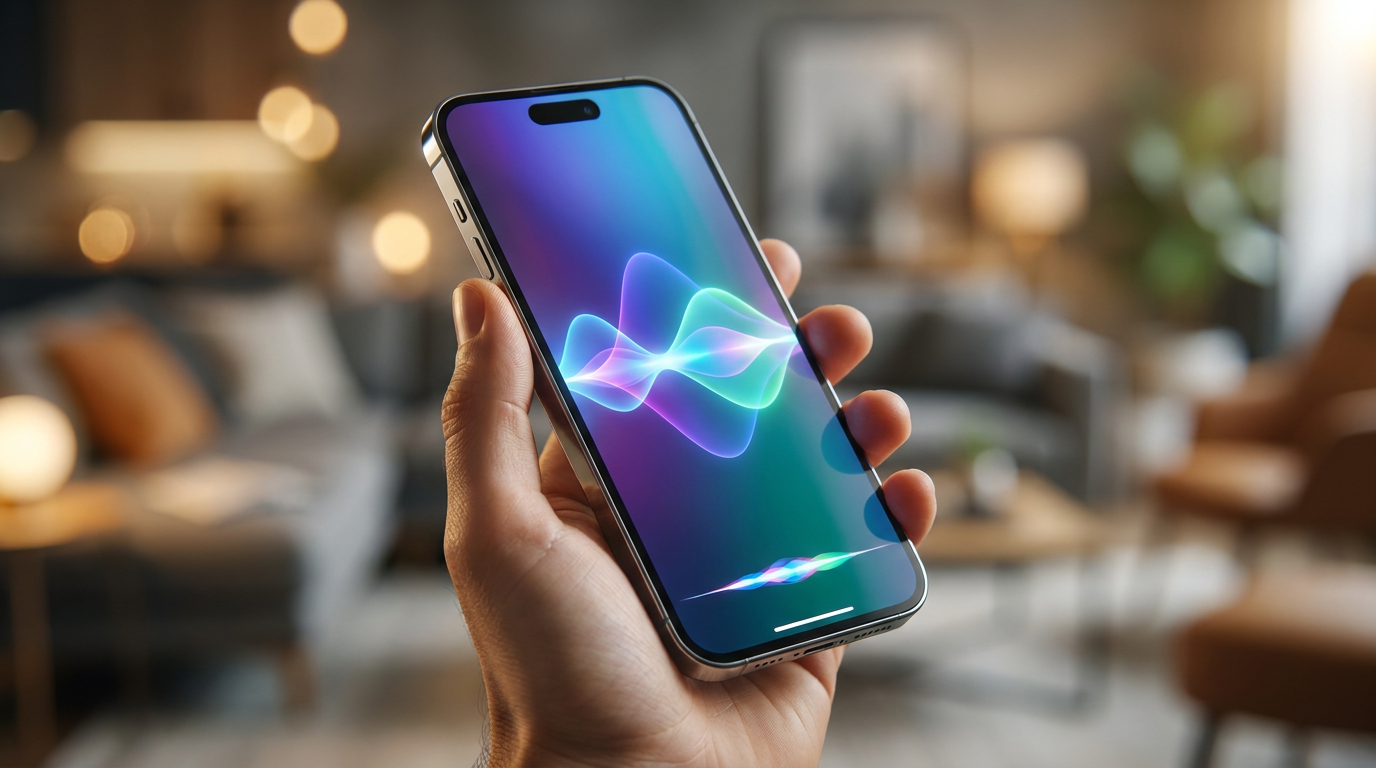
The centerpiece of the update is "Siri AI," a massive architectural overhaul powered by a custom 1.2-trillion-parameter Google Gemini foundation model. The familiar glowing orb at the bottom of the screen is gone, replaced by a translucent, edge-to-edge screen animation that pulses to indicate Siri is actively listening and processing complex requests.[2][7][8]
Unlike previous iterations that frequently defaulted to fetching web links, the new Siri AI features "on-screen awareness." The assistant can read what is currently displayed on the user's screen and take direct action—such as extracting an address from a text message to update a contact card, or summarizing a lengthy email thread with a single voice command.[1][5][7]
Siri AI also builds a "personal context index" by securely scanning the user's photos, messages, and calendar entries. This deep integration allows for multi-step, conversational queries like, "When does my mother's flight land, and how long will it take me to drive to the airport from my current meeting location?"[2][7]

Beyond voice commands, Apple has woven generative AI directly into the iPhone's camera through an upgraded "Visual Intelligence" system. Now accessible via a dedicated "Siri Mode" inside the native Camera app, this feature effectively turns the smartphone lens into a real-time, multimodal search engine.[2][4]
Users can point their camera at a restaurant receipt to have Siri instantly calculate and split the bill among contacts. The system can also scan a clothing care label to provide plain-English washing instructions, or frame a plate of food to generate an estimated nutritional breakdown and check for allergens.[2][5]
The Photos app is receiving a significant generative AI boost as well. While the "Clean Up" tool for removing background objects returns, iOS 27 introduces "Expand" and "Reframe." These new tools use artificial intelligence to seamlessly enlarge a photo's crop or alter its composition by generating missing background details that match the original lighting and texture.[4][5][6]
The Photos app is receiving a significant generative AI boost as well.
Under the hood, iOS 27 is not just about artificial intelligence; it is a major performance refinement. Apple claims that a new CPU scheduler allows applications to launch up to 30 percent faster, while AirDrop file transfers have been optimized to complete 80 percent quicker than on iOS 26.[8][9]

Quality-of-life improvements are scattered throughout the operating system. The native Passwords app can now agentically log into supported websites to automatically change weak or compromised passwords on the user's behalf, and a new custom equalizer in the AirPods settings gives listeners fine-grained control over their audio profiles.[4][9]
Apple has also refined its controversial "Liquid Glass" design language introduced last year. iOS 27 adds a precision slider in the system settings that lets users manually adjust the transparency and tint of the interface, addressing readability complaints from the previous software cycle.[4][9]
However, the sweeping AI upgrades come with strict hardware limitations. While the base iOS 27 operating system will install on devices as old as the iPhone 11, the advanced Apple Intelligence features require the processing power of at least an iPhone 15 Pro or newer.[2][8]
Furthermore, the absolute most capable on-device Siri models—which rely on 12GB of RAM to process complex generative tasks locally—are reportedly locked behind the upcoming iPhone 17 Pro and the rumored iPhone Air, turning slightly older flagship phones into legacy hardware for peak AI performance.[9]

Privacy remains a cornerstone of Apple's pitch, with most Siri AI processing happening locally on the device or via Apple's encrypted Private Cloud Compute servers. Yet, security analysts note that the personal context index is backed up to iCloud, creating a potential exposure point if a user's account is compromised.[5][7]
For queries that exceed Apple's native models, Siri AI can still hand off tasks to ChatGPT-5. While this requires a one-time user consent prompt, privacy advocates warn that users might blindly accept the routing pattern without realizing their data is leaving Apple's strict privacy ecosystem for subsequent requests.[7]
How we got here
June 2024
Apple first announces Apple Intelligence, promising a smarter, more capable Siri.
June 8, 2026
Apple officially unveils iOS 27 and the fully rebuilt Siri AI at WWDC 2026.
July 2026
Apple is scheduled to release the first public beta of iOS 27.
September 2026
iOS 27 is expected to launch globally alongside the iPhone 17 lineup.
Viewpoints in depth
Mainstream Reviewers
Tech reviewers praise the update for finally delivering the smart assistant Apple promised years ago.
For everyday users and mainstream tech critics, iOS 27 is viewed as a massive success that closes the gap between Apple and its AI competitors. Reviewers highlight Siri's new ability to maintain conversational context and understand on-screen information as a game-changer for daily workflows. The addition of Visual Intelligence—which turns the camera into a practical tool for splitting bills or reading labels—is seen as a highly accessible way to bring AI into the physical world without requiring users to type complex prompts.
Developer Community
Software builders are focused on the architectural shifts required to integrate with the new Siri.
Developers are looking past the consumer-facing features to analyze the underlying architecture of iOS 27. The shift to a custom Google Gemini model and the mandatory adoption of the 'App Intents' framework means third-party apps must be updated to allow Siri to control them. While this requires significant engineering work, developers acknowledge that it finally provides a robust, system-level way for their applications to interact seamlessly with Apple's voice assistant.
Tech Skeptics & Privacy Analysts
Analysts express concern over aggressive hardware gating and the nuances of Apple's cloud privacy.
While Apple heavily markets its privacy-first approach, security analysts point out that Siri's 'personal context index'—which scans private messages and photos—is backed up to iCloud, potentially exposing sensitive data if an account is breached. Furthermore, tech skeptics criticize the steep hardware requirements. By locking the most advanced on-device AI models behind devices with 12GB of RAM, Apple is effectively turning relatively new flagship phones into legacy hardware, forcing users into an expensive upgrade cycle to access the software's full potential.
What we don't know
- Whether the 'peak' on-device Siri models will be strictly limited to the iPhone 17 Pro, or if Apple will expand compatibility.
- How reliably Siri's on-screen awareness will function with complex, non-standard third-party applications.
- The exact pricing and structure of Apple One tiers required to unlock higher daily limits for generative AI features.
Key terms
- Apple Intelligence
- Apple's overarching suite of generative AI features integrated deeply into iOS, macOS, and iPadOS.
- Visual Intelligence
- A multimodal AI feature that analyzes the physical world through the iPhone's camera to provide context and take actions.
- App Intents
- A developer framework that allows Siri to trigger specific, multi-step actions deep inside third-party applications.
- Private Cloud Compute
- Apple's secure, encrypted server infrastructure designed to process complex AI requests without logging or retaining user data.
- Liquid Glass
- Apple's translucent design language for the iOS interface, which now includes user-adjustable transparency sliders.
Frequently asked
When will iOS 27 be released to the public?
iOS 27 is expected to launch publicly in September 2026, alongside the new iPhone 17 hardware lineup. A public beta will be available in July.
Will my older iPhone get the new Siri AI?
While iOS 27 can be installed on devices as old as the iPhone 11, the advanced Apple Intelligence and Siri AI features require an iPhone 15 Pro or newer.
Does the new Siri still use ChatGPT?
Yes. For highly complex queries that exceed Apple's on-device models, Siri can route requests to ChatGPT-5, though this requires explicit user consent.
What is Visual Intelligence?
Visual Intelligence is a camera-based AI tool that lets users point their phone at real-world objects to get information, such as translating signs, splitting bills, or identifying plants.
Sources
Source coverage
9 outlets
3 viewpoints surfaced









[1]WiredMainstream Reviewers
Siri AI Hands On: A Smart, Helpful Assistant
Read on Wired →[2]MacRumorsDeveloper Community
Siri AI in iOS 27: Features, Requirements, and How It Works
Read on MacRumors →[3]MashableMainstream Reviewers
iOS 27 means it's time to be excited for Siri… again
Read on Mashable →[4]TechRadarMainstream Reviewers
The 7 biggest new features coming to your iPhone in iOS 27
Read on TechRadar →[5]BGRMainstream Reviewers
All Apple Intelligence Features Coming In iOS 27
Read on BGR →[6]9to5MacTech Skeptics & Privacy Analysts
Apple One is getting better in iOS 27, here's what's new
Read on 9to5Mac →[7]AI Empire MediaTech Skeptics & Privacy Analysts
Siri AI 2026: The Unfiltered Breakdown
Read on AI Empire Media →[8]LushbinaryDeveloper Community
WWDC 2026: Everything Apple Announced for Developers
Read on Lushbinary →[9]MediumTech Skeptics & Privacy Analysts
The Skeptical QA Read: Looking Closer at the Fine Print
Read on Medium →

Every angle. Every day.
Get technology stories with full source coverage and perspective breakdowns delivered to your inbox.