
Community Land Trusts Hit Major Milestones in 2026 as Cities Rethink Affordable Housing
From New York to Los Angeles, community land trusts are securing unprecedented funding and acquiring commercial properties to permanently shield neighborhoods from speculative real estate markets.
By Factlen Editorial Team
- Community Housing Advocates
- Argue that removing land from the speculative market is the only permanent way to build neighborhood power.
- Municipal Planners
- View CLTs as a highly efficient use of public housing funds.
- Institutional Backers
- Focus on the financial viability and scalable impact of the model, viewing CLTs as a secure, long-term investment.
What's not represented
- · Existing homeowners in gentrifying neighborhoods who might oppose the development of subsidized housing nearby.
- · Commercial real estate investors who are outbid by CLTs for valuable urban parcels.
Why this matters
As housing affordability reaches crisis levels nationwide, the community land trust model offers a proven mechanism to lock in permanent affordability, allowing working-class families to build equity without being priced out of their own neighborhoods.
Key points
- Community Land Trusts (CLTs) are seeing unprecedented growth and institutional funding in 2026.
- The East New York CLT is purchasing a $2.3 million commercial property, marking a historic first for New York City.
- Los Angeles County is investing $15 million to help local trusts acquire and preserve affordable rental properties.
- Baltimore has allocated $8 million from its Affordable Housing Trust Fund specifically for CLT-sponsored homeownership.
- The model ensures permanent affordability by retaining community ownership of the land while residents purchase the homes.
In a real estate market increasingly defined by soaring costs, high interest rates, and speculative buying, a radically different model of property ownership is quietly gaining unprecedented momentum. Across the United States, Community Land Trusts (CLTs) are hitting historic milestones in the summer of 2026, transitioning from a niche housing experiment into a heavily funded, mainstream strategy for neighborhood preservation. For decades, the primary response to the housing crisis has been to offer temporary subsidies or tax credits that eventually expire, returning affordable units to market rates. The CLT model flips this paradigm by permanently removing land from the speculative market, ensuring that homes remain affordable not just for the first buyer, but for every subsequent generation. As housing affordability reaches crisis levels nationwide, this dual promise of individual equity and permanent community stability is attracting massive investments from municipal governments, philanthropic organizations, and major financial institutions.[7]
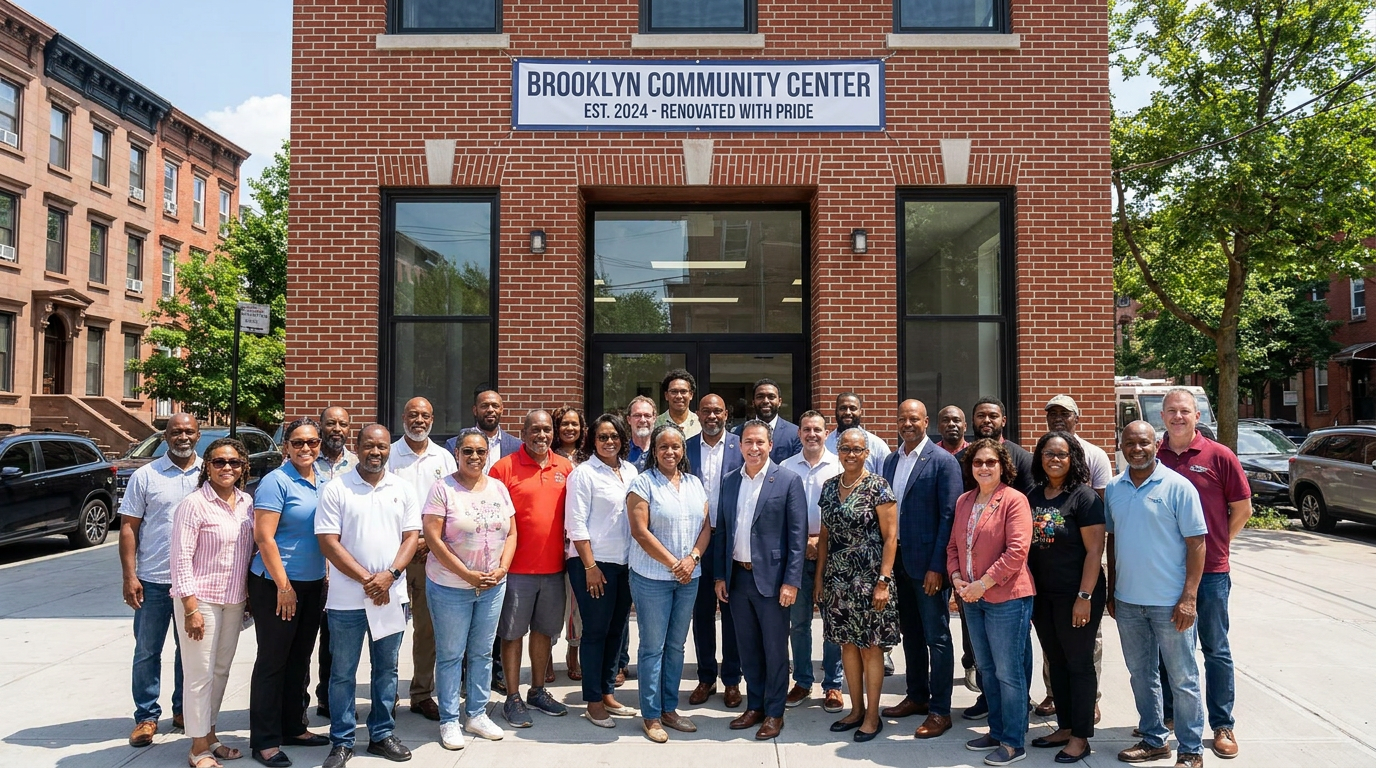
The shift is perhaps most visible in New York City, where the East New York Community Land Trust is finalizing the purchase of a $2.3 million commercial property directly off the private market. The vacant, two-story brick building will be transformed into the "East Brooklyn Liberation Center," providing permanently affordable office space for local businesses, nonprofits, and worker cooperatives. It marks the first time in city history that a CLT has acquired a standalone commercial property, signaling a major expansion of the model from residential housing into broader community wealth-building. For the working-class neighborhoods of East New York and Brownsville, which are facing a rising affordability crisis and a wave of gentrification approaching from the west, the acquisition is a critical defensive maneuver. By taking ownership of commercial real estate, the trust is ensuring that local enterprises won't be displaced by skyrocketing commercial rents.[1]
The underlying mechanism of a Community Land Trust is elegantly simple, yet profoundly disruptive to traditional real estate norms. A nonprofit trust, governed by a board of community residents and public representatives, acquires and retains permanent ownership of the land. Meanwhile, low- to moderate-income residents purchase the homes built on top of that land. By removing the cost of the land from the overall purchase price, the homes become instantly and significantly more affordable. When a homeowner eventually decides to move, a built-in shared-equity formula caps the resale price. This ensures the home remains affordable for the next income-qualified buyer, while still allowing the seller to build modest wealth and recover their initial investment. It is a system designed to balance the individual's need for wealth creation with the community's need for long-term stability.[7]

This dual promise of individual equity and permanent community affordability is increasingly attracting major institutional backing. In Texas, the Fort Worth Community Land Trust recently celebrated a major milestone by welcoming its first official homeowner, a single mother and banking professional who purchased a newly developed home in the Morningside neighborhood. The milestone coincided with a $1.1 million grant from JPMorganChase to help the trust expand its operational capacity. The philanthropic funding will support community-based builders and nonprofit developers engaged in infill housing development, which involves rebuilding or rehabilitating deteriorated housing stock in established neighborhoods. For families living paycheck to paycheck, the combination of permanently affordable pricing and institutional down payment assistance provides a critical entry point into a housing market that has otherwise locked them out.[3]
This dual promise of individual equity and permanent community affordability is increasingly attracting major institutional backing.
Municipal governments are also throwing their financial weight behind the model, recognizing that CLTs offer a far better return on investment for public housing dollars. The Baltimore City Department of Housing & Community Development has opened up to $8 million from its Affordable Housing Trust Fund specifically reserved for CLT-sponsored homeownership projects. Furthermore, Baltimore has launched a Buyer's Choice Subsidy Program that provides up to $120,000 in down payment and closing cost assistance for eligible families purchasing through a registered CLT. Because the CLT's resale formula ensures the home remains affordable in perpetuity, the city's initial subsidy is never lost to the private market. Instead, it remains locked into the property, serving generation after generation of low-income Baltimore families without requiring continuous cash injections from the city budget.[4]

On the West Coast, the Los Angeles County Affordable Housing Solutions Agency (LACAHSA) is rolling out a massive $15 million investment program in the summer of 2026. The funding is specifically designed to advance the mission of Community Land Trusts and preserve Naturally Occurring Affordable Housing across the sprawling county. Through a series of public listening sessions and stakeholder engagements, LACAHSA has designed a funding framework that empowers local trusts to acquire existing rental properties and transition them into community ownership. In one of the nation's most expensive and volatile rental markets, this strategy creates a permanent bulwark against displacement, ensuring that essential workers, artists, and long-time residents can remain in their neighborhoods even as surrounding property values soar.[5]
The movement is not confined to dense urban centers; rural communities are also adopting the model to solve their unique housing challenges. In New England, the Affordable Housing, Education and Development (AHEAD) organization recently launched the New Hampshire Rural Community Land Trust. The initiative targets Coos, Grafton, and Carroll counties, acquiring parcels of land to build permanent, affordable single-family starter homes. Rural areas often struggle with an aging housing stock and a lack of new construction, which drives up prices and forces young families to leave the region. By creating a pipeline of affordable, community-owned homes, the rural CLT aims to bolster the local workforce, generate new tax revenues for municipalities, and provide retiring seniors with viable options to downsize without having to abandon their hometowns.[2]

National housing advocates and financial institutions view this 2026 surge as a critical tipping point for the movement. The National Housing Trust (NHT), which assumed stewardship of the pioneering Institute for Community Economics in 2008, has deployed over $13 million in project-level and enterprise loans to CLTs since 2024 alone. Organizations like NHT increasingly recognize Community Land Trusts not just as a temporary patch for a broken system, but as an enduring, structural solution to the systemic housing crisis. By providing the necessary capital to scale these operations, national lenders are helping local trusts transition from managing a handful of properties to stewarding hundreds of homes, fundamentally altering the real estate landscape in their respective cities.[6]
For decades, the American housing market has treated homes primarily as speculative financial assets, prioritizing maximum profit over community stability. The rapid expansion and historic milestones of Community Land Trusts in 2026 represent a powerful, proven counter-narrative. By decoupling the ownership of land from the ownership of the structure, and by legally mandating permanent affordability, CLTs are proving that it is possible to decommodify housing. As more cities, banks, and rural coalitions embrace the model, the movement is offering a tangible blueprint for a future where working-class families have the fundamental right to remain in the neighborhoods they have spent generations building.[7]
How we got here
1969
The first rural Community Land Trust, New Communities Inc., is founded in Georgia by civil rights leaders to secure land for Black farmers.
1980s
The CLT model adapts to urban environments, focusing on combating displacement and gentrification in cities.
2008
The National Housing Trust assumes stewardship of the Institute for Community Economics, expanding financial support for CLTs.
2024
The East New York CLT becomes the first in NYC to buy a multifamily apartment building off the private market.
June 2026
East New York CLT finalizes the purchase of a commercial property, while cities like Los Angeles and Baltimore announce multi-million dollar funding rounds for CLT expansion.
Viewpoints in depth
Community Housing Advocates
Argue that removing land from the speculative market is the only permanent way to build neighborhood power.
Advocates emphasize that traditional affordable housing subsidies often expire after 15 to 30 years, returning units to market rates and displacing residents. In contrast, CLTs lock in affordability forever. By taking ownership of both residential and commercial properties, they argue that communities can defend themselves against gentrification, ensuring that local businesses and working-class families are not priced out by speculative real estate investors.
Municipal Planners
View CLTs as a highly efficient use of public housing funds.
City officials and urban planners increasingly favor the CLT model because the initial public subsidy is retained in the land rather than given to a single buyer. This means the investment serves generation after generation of low-income families without requiring continuous cash injections from the city budget. Planners see this as a sustainable, long-term strategy to maintain economic diversity in rapidly appreciating urban centers.
Institutional Backers
Focus on the financial viability and scalable impact of the model.
Major banks and national housing funds view CLTs as a secure, long-term investment for philanthropic and public capital. While they acknowledge the social value of the model, they also recognize that acquiring land in high-demand urban markets requires massive upfront capital. Consequently, institutional backers are focused on providing the enterprise-level loans and capacity-building grants necessary to help local trusts transition from managing a handful of properties to stewarding large-scale portfolios.
What we don't know
- It remains unclear if CLTs can scale rapidly enough to make a macroeconomic dent in the national housing shortage without continuous government subsidies.
- How traditional mortgage lenders will adapt their underwriting standards to accommodate the unique shared-equity structure of CLT homes on a mass scale.
Key terms
- Community Land Trust (CLT)
- A nonprofit, community-based organization designed to ensure community stewardship of land and permanent housing affordability.
- Shared Equity Homeownership
- A housing model where the cost of a home is subsidized, and in return, the homeowner agrees to restrict the resale price to keep it affordable for future buyers.
- Naturally Occurring Affordable Housing (NOAH)
- Residential properties that are affordable to low- and moderate-income households without government subsidies, often due to age or condition.
- Area Median Income (AMI)
- The midpoint of a region's income distribution, used by housing agencies to determine eligibility for affordable housing programs.
Frequently asked
What is a Community Land Trust (CLT)?
A nonprofit organization that buys and holds land permanently, allowing residents to purchase the homes on that land at a significantly reduced price.
How do CLT homeowners build wealth?
Homeowners build equity by paying down their mortgage over time. When they sell, a formula ensures they get back their investment plus a capped percentage of the home's increased value.
Can anyone buy a CLT home?
Most CLTs have income requirements, typically targeting low- to moderate-income families who are priced out of the traditional real estate market.
What happens if a CLT homeowner wants to sell?
They must sell the home back to the trust or to another income-qualified buyer at a restricted price, ensuring the home remains affordable for the next family.
Sources
Source coverage
7 outlets
3 viewpoints surfaced







[1]New Economy ProjectCommunity Housing Advocates
A Community Land Trust Is Purchasing Commercial Property in NYC for the First Time
Read on New Economy Project →[2]Business NH MagazineMunicipal Planners
To Increase Affordable Housing, AHEAD Launches Rural Community Land Trust
Read on Business NH Magazine →[3]JPMorganChaseInstitutional Backers
Fort Worth Community Land Trust celebrates first homeowner, expands access to affordable homeownership
Read on JPMorganChase →[4]Baltimore City DHCDMunicipal Planners
Affordable Housing Trust Fund - AHTF
Read on Baltimore City DHCD →[5]Los Angeles County Affordable Housing Solutions Agency (LACAHSA)Municipal Planners
Community Land Trust / NOAH
Read on Los Angeles County Affordable Housing Solutions Agency (LACAHSA) →[6]National Housing TrustInstitutional Backers
The Roots of the Community Land Trust Movement
Read on National Housing Trust →[7]Factlen Editorial TeamCommunity Housing Advocates
Synthesis by Factlen editorial team
Read on Factlen Editorial Team →

Every angle. Every day.
Get community stories with full source coverage and perspective breakdowns delivered to your inbox.