
The 2026 Guide to Home Batteries: Costs, Chemistry, and Installation
As extreme weather and peak electricity rates drive demand, home batteries have shifted from luxury tech to essential infrastructure. Here is how the latest systems work, what they actually cost to install, and why battery chemistry matters.
By Factlen Editorial Team
- Resilience Seekers
- Homeowners prioritizing backup power during grid failures and extreme weather events.
- Financial Optimizers
- Buyers focused on Time-of-Use arbitrage, solar self-consumption, and achieving a rapid return on investment.
- Supply Chain Analysts
- Industry experts tracking how hardware price drops are being offset by installation labor and international tariffs.
What's not represented
- · Renters unable to modify their electrical panels
- · Utility companies managing decentralized grid loads
Why this matters
With utility rates climbing and grid instability increasing, a home battery can secure your household's power and lower monthly bills. Understanding the hidden installation costs and new tariff impacts is crucial before making a five-figure investment.
Key points
- Lithium Iron Phosphate (LiFePO4) has become the standard battery chemistry in 2026, offering superior safety and a 15-to-20-year lifespan.
- A standard 10kWh system costs between $10,000 and $16,000 fully installed, with labor and panel upgrades accounting for nearly half the price.
- New 2026 US import tariffs on Chinese-origin batteries have added up to 82% in combined duties, offsetting recent drops in raw hardware costs.
- Home batteries provide financial returns by charging during cheap off-peak hours and discharging during expensive evening peak rates.
In 2026, the residential energy landscape has fundamentally shifted. Gone are the days when a home battery was merely a luxury item for early tech adopters, wealthy enthusiasts, or off-grid preppers bracing for the apocalypse. Driven by wildly fluctuating utility rates, increasingly frequent extreme weather events that knock out regional power, and the widespread mainstream adoption of rooftop solar panels, home energy storage has rapidly transitioned into essential household infrastructure. For many prospective buyers, the question is no longer whether they need a battery, but rather how to navigate the complex web of hardware choices, installation hurdles, and hidden costs.[1][7]
At its core, a home battery system performs a simple but transformative task: it captures and stores electrical energy for later use, effectively turning a house into its own micro-grid. The system integrates directly with a home's main electrical panel, acting as a silent sentinel. When the municipal grid fails, or when utility electricity prices spike to punitive levels, the battery seamlessly takes over. Within milliseconds, it begins delivering its stored power to keep the lights on, the Wi-Fi running, and the food in the refrigerator from spoiling, all without the noise or exhaust of a traditional gas-powered generator.[1][6]
The internal mechanics of these systems rely on a few critical components working in perfect synchronization. The battery cells themselves store energy in a chemical form as direct current (DC). However, because standard household appliances and wall outlets require alternating current (AC), an integrated inverter acts as the system's vital translator, converting the DC power into usable AC electricity. Overseeing this entire operation is a sophisticated battery management system—a built-in computer that constantly monitors charge levels, internal temperatures, and power flow to maximize both the lifespan of the cells and the safety of the home.[6][7]

The most significant technological leap in the 2026 market is the near-universal shift in underlying battery chemistry. For years, the energy storage industry relied heavily on Nickel Manganese Cobalt (NMC) batteries—the exact same energy-dense, lightweight cells used to power early electric vehicles where weight is a primary concern. Today, however, Lithium Iron Phosphate (LiFePO4 or LFP) has decisively won the residential storage war, becoming the gold standard for nearly every major manufacturer producing stationary home batteries. Because a battery mounted to a garage wall does not need to be ultra-lightweight, engineers have prioritized stability and endurance over pure energy density.[3][7]
The triumph of LiFePO4 comes down to two non-negotiable factors for homeowners: safety and extreme longevity. Unlike older NMC cells, LFP batteries are virtually immune to thermal runaway—the dangerous chain reaction that can cause lithium batteries to catch fire. This makes them dramatically safer to mount inside a hot garage or on a home's sun-baked exterior. Furthermore, modern LFP batteries are remarkably durable, typically rated for over 6,000 full charge-and-discharge cycles. Even if a household completely drains and recharges the battery every single day, the unit will easily provide 15 to 20 years of reliable service before its total capacity degrades to 80 percent.[3][6]
Homeowners typically invest in these expensive systems for two distinct, sometimes overlapping reasons. The first and most visceral driver is resilience. In regions increasingly plagued by grid instability, rolling summer blackouts, or severe seasonal storms that tear down transmission lines, a battery provides immediate, silent backup power. A standard 10 to 13.5 kilowatt-hour (kWh) system can comfortably run a home's essential circuits—such as the refrigerator, internet router, critical medical devices, and primary lighting—for 12 to 24 hours during a standard outage. For families living in hurricane zones or areas prone to winter grid failures, this capability transforms a dangerous emergency into a minor inconvenience.[4][6]
However, buyers expecting to run their entire lives normally during a multi-day blackout often face a harsh reality check regarding capacity. High-draw appliances like central air conditioning units, electric ovens, clothes dryers, and heat pumps require massive surges of power that a single battery simply cannot provide. Powering a whole home without compromise through a multi-day outage requires a stacked, multi-battery setup capable of delivering high peak output. These heavy-duty configurations can quickly push the total hardware and installation costs well past the $25,000 mark, forcing most buyers to compromise by wiring only their most critical rooms to the backup system.[3][4]
However, buyers expecting to run their entire lives normally during a multi-day blackout often face a harsh reality check regarding capacity.
The second major use case driving adoption is financial optimization, specifically through a practice known as Time-of-Use (TOU) arbitrage. Across the globe, many utility companies now charge significantly higher rates during peak evening hours when residential demand surges as people return from work. A smart home battery can automatically charge itself overnight when grid power is abundant and cheap—or during the afternoon using free energy generated by rooftop solar panels. It then discharges that stored power to run the house during the expensive 5:00 PM to 9:00 PM window, effectively shielding the homeowner from the utility's highest prices.[1][6]
This daily cycle of charging low and discharging high is where the financial return on investment (ROI) actually materializes. By systematically dodging peak utility rates, homeowners can drastically slash their monthly electricity bills. For a home already equipped with solar panels, a properly sized battery system typically pays for itself in five to ten years through these accumulated savings. For standalone batteries that rely purely on grid arbitrage without the benefit of free solar generation, the payback period stretches longer, usually landing closer to 10 to 15 years depending on local electricity rates.[1][5]
Despite the clear long-term savings and resilience benefits, the upfront costs in 2026 remain a formidable hurdle for mass adoption. Thanks to massive scaling in global manufacturing, the raw price of lithium-ion battery packs has plummeted to a historic low of roughly $139 per kWh. Yet, consumers are rarely seeing those savings reflected on their final invoices. The total price tag for a fully installed, standard 10 to 13.5 kWh home battery system still ranges stubbornly between $10,000 and $16,000, leaving many buyers wondering where their money is actually going.[2][4]

The massive gap between raw hardware costs and the final consumer invoice is driven entirely by the complex realities of residential electrical work. The physical battery box and its internal cells account for only about half of the total project budget. The remaining thousands of dollars are consumed by unavoidable soft costs: specialized licensed labor, municipal permitting fees, and expensive heavy-gauge copper wiring. Electricians must spend hours on-site drilling through walls, bending protective metal conduit, and integrating the new system safely into the home's existing electrical grid without violating strict local fire codes.[4][5]
Furthermore, modern energy technology frequently clashes with aging residential infrastructure. If a home's existing electrical breaker box is outdated, rusty, or already operating at its maximum capacity, installers will mandate a full panel upgrade before they even touch the battery. This necessary safety measure is not a minor undertaking; replacing a main electrical panel requires coordinating with the local utility to temporarily cut power to the house, and it can easily add an unexpected $1,500 to $3,000 to the total cost of the project.[4][7]
In the United States, a new layer of financial complexity has emerged in 2026 due to aggressive international trade policies. A stacked series of import tariffs on Chinese-origin lithium-ion batteries has resulted in a staggering combined duty rate of roughly 60 to 82 percent. Because China dominates the global battery supply chain, these tariffs affect a vast majority of the systems on the market. For buyers navigating traditional supply chains, these new duties are adding thousands of dollars to the final installation cost, effectively swallowing the savings generated by cheaper global hardware manufacturing.[2][7]

The European market, insulated from these specific US tariffs, faces entirely different dynamics. In the United Kingdom, for instance, the government has implemented a zero-percent Value Added Tax (VAT) on battery storage installations until 2027, significantly lowering the barrier to entry for average homeowners. European consumers are also heavily embracing modular systems from brands like BYD, Pylontech, and WattCycle. These modular designs allow homeowners to start with a smaller, cheaper capacity—such as a 5 kWh unit—and physically stack additional battery modules later as their budget allows or their energy needs grow.[5][7]
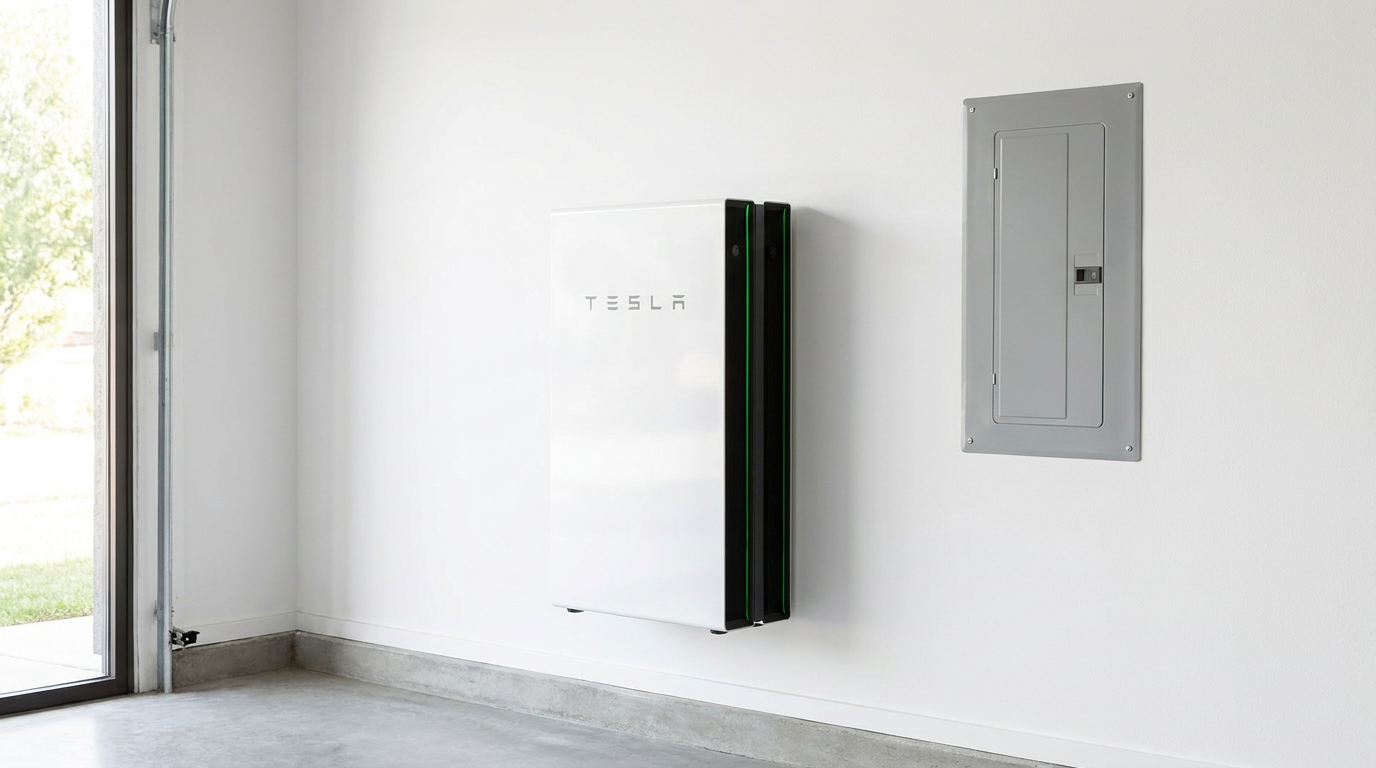
Meanwhile, premium, all-in-one brands continue to dominate the high end of the global market. The Tesla Powerwall 3 remains the industry standard for seamless aesthetic integration, featuring a built-in solar inverter that simplifies the installation process and reduces the number of bulky gray boxes hanging on a garage wall. Competitors like Enphase and Sonnen counter with highly optimized micro-storage architectures and sophisticated virtual power plant software, which allows homeowners to automatically sell their stored energy back to the grid during extreme demand spikes, turning the battery into a revenue-generating asset.[3][5]

Ultimately, the decision to install a home battery in 2026 requires homeowners to carefully balance severe upfront sticker shock against the promise of long-term energy security. As the traditional power grid becomes increasingly decentralized and utility rates continue their relentless upward climb, the calculus is shifting. The home battery is rapidly evolving from a niche green-tech accessory into a fundamental pillar of the modern, resilient household—one that offers the ultimate luxury of keeping the lights on when the rest of the neighborhood goes dark.[1][7]
How we got here
2015
Tesla launches the original Powerwall, mainstreaming the concept of residential energy storage.
2024
Lithium Iron Phosphate (LiFePO4) overtakes NMC as the dominant chemistry for home batteries due to safety and longevity.
2025
Global lithium-ion battery pack prices hit a record low of $139 per kWh.
Jan 2026
New US tariffs on Chinese-origin batteries take effect, adding up to 82% in combined duties.
Viewpoints in depth
Resilience Seekers
Homeowners prioritizing backup power during grid failures and extreme weather events.
For this camp, the primary metric of success is uninterrupted power during a crisis. They view the home battery as a modern alternative to the noisy, maintenance-heavy gas generator. Their focus is on isolating 'essential loads'—ensuring that medical devices, refrigerators, and communication tools remain online during multi-day outages caused by hurricanes, wildfires, or rolling blackouts. To these buyers, the high upfront cost is an insurance policy against the increasing unreliability of the aging electrical grid.
Financial Optimizers
Buyers focused on Time-of-Use arbitrage, solar self-consumption, and achieving a rapid return on investment.
This perspective treats the home battery strictly as a financial asset. Rather than hoarding power for a rare blackout, these users cycle their batteries daily. By storing free solar energy during the afternoon or pulling cheap power from the grid at 3:00 AM, they can power their homes during the 5:00 PM to 9:00 PM window when utility rates skyrocket. Their primary concerns are software intelligence, round-trip efficiency, and ensuring the system pays for itself within a five-to-ten-year window.
Supply Chain Analysts
Industry experts tracking how hardware price drops are being offset by installation labor and international tariffs.
Market analysts point out a frustrating paradox in the 2026 energy storage landscape: while the raw cost of lithium-ion cells has plummeted to historic lows, consumers are rarely seeing those savings. This camp highlights how a shortage of licensed electricians, the necessity of expensive home panel upgrades, and aggressive new import tariffs have artificially inflated the final installed price. They argue that until installation soft costs are streamlined, home batteries will remain financially out of reach for middle-income households.
What we don't know
- How long the 60-82% US import tariffs on Chinese-origin batteries will remain in effect under future trade policies.
- Whether utility companies will continue to offer favorable net-metering and Time-of-Use rates as more households defect from the traditional grid.
- How quickly solid-state battery technology will scale to challenge LiFePO4 in the residential storage market.
Key terms
- LiFePO4 (Lithium Iron Phosphate)
- A highly stable battery chemistry that offers thousands of charge cycles without the risk of thermal runaway.
- Inverter
- The critical component that converts the direct current (DC) power stored in the battery into the alternating current (AC) used by household appliances.
- Time-of-Use (TOU) Rates
- Utility pricing structures where electricity costs more during peak evening hours and less during the day or night.
- Essential Loads Panel
- A secondary electrical sub-panel that isolates critical circuits (like the fridge and lights) to be powered during a blackout.
Frequently asked
Can a home battery run my central air conditioner?
Usually not on a standard 10kWh system. Running a central A/C requires a massive surge of power, which typically necessitates a multi-battery setup costing upwards of $25,000.
Do I need solar panels to use a home battery?
No. While they pair perfectly with solar, standalone batteries can charge directly from the grid during cheap off-peak hours and discharge during expensive peak hours to save money.
How long will a modern home battery last?
Today's LiFePO4 batteries are rated for over 6,000 charge cycles. Even with daily cycling, they are designed to last 15 to 20 years before significant capacity degradation.
Sources
Source coverage
7 outlets
3 viewpoints surfaced







[1]WiredFinancial Optimizers
Home Batteries: How They're Installed and How Much They Cost
Read on Wired →[2]JM BatteriesSupply Chain Analysts
The 2026 Tariff Reality: Chinese-Origin Home Batteries
Read on JM Batteries →[3]HDX EnergySupply Chain Analysts
The Criteria: How We Ranked the Best Systems for 2026
Read on HDX Energy →[4]AnkerSupply Chain Analysts
2026 Home Battery Installation Costs
Read on Anker →[5]Renewables ExcellenceFinancial Optimizers
The Ultimate Guide to Battery Storage Installation Costs in the UK - 2026
Read on Renewables Excellence →[6]PowerOutage.usResilience Seekers
The Complete Home Battery Backup Guide
Read on PowerOutage.us →[7]Factlen Editorial TeamSupply Chain Analysts
Synthesis by Factlen editorial team
Read on Factlen Editorial Team →



Every angle. Every day.
Get technology stories with full source coverage and perspective breakdowns delivered to your inbox.