
How Comic Books Are Transforming Healthcare and Patient Empathy
The growing field of 'graphic medicine' is replacing dense clinical pamphlets with sequential art, helping patients understand complex diagnoses and teaching doctors vital empathy skills.
By Factlen Editorial Team
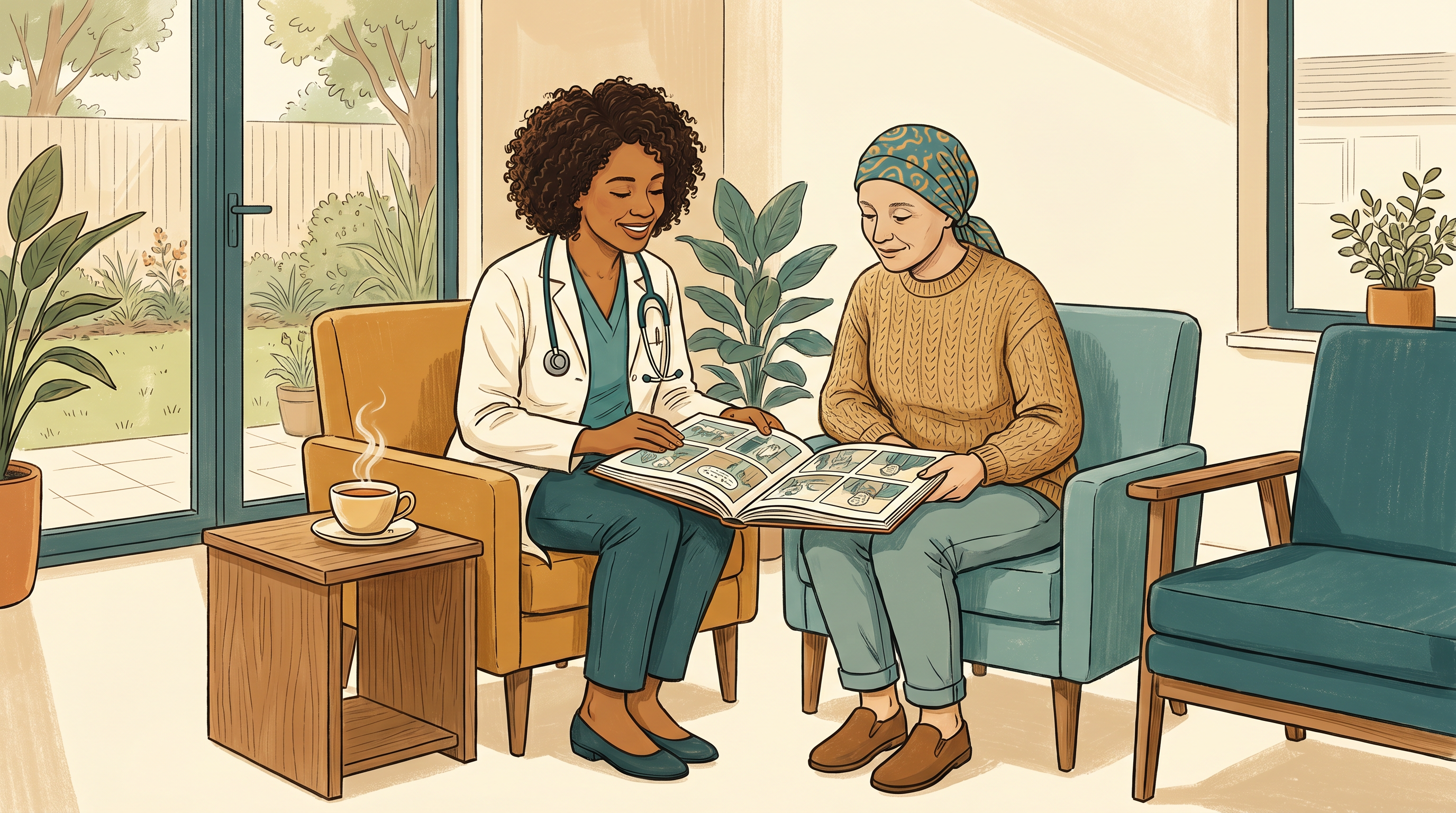
- Medical Educators
- Focus on using comics to teach empathy, communication, and reflective practice to future doctors.
- Patient Advocates
- Value graphic memoirs for destigmatizing illness, validating lived experiences, and building community.
- Public Health Communicators
- Emphasize comics as a highly effective tool to bypass language barriers and improve general health literacy.
What's not represented
- · Health Insurance Providers
- · Hospital Administrators
Why this matters
Navigating the healthcare system is often terrifying and confusing due to dense medical jargon. By utilizing visual storytelling, graphic medicine breaks down literacy barriers, ensuring patients actually understand their care while helping doctors connect with the human side of illness.
Key points
- Graphic medicine uses comic books and sequential art to communicate complex healthcare information.
- Visual narratives bypass the cognitive overload patients often experience when handed dense medical pamphlets.
- The medium helps bridge a critical health literacy gap affecting millions of adults globally.
- Patient-created 'pathographies' provide emotional validation and community for those navigating chronic illness.
- Medical schools are increasingly using comics to teach empathy and reflective practice to future doctors.
Medical diagnoses often arrive in a blur of clinical jargon, accompanied by dense, text-heavy pamphlets that leave patients more overwhelmed than informed. For decades, the standard approach to health communication relied on the assumption that more text meant better understanding. But a growing movement at the intersection of art and science is proving otherwise.[6]
"Graphic medicine" is the use of comic books and graphic novels to communicate about healthcare, illness, and the human body. Coined in 2010 by physician and artist Dr. Ian Williams, the term encompasses everything from public health infographics to deeply personal memoirs about chronic illness.[3][6]
Today, graphic medicine is moving from the fringes of indie publishing into the mainstream of medical education and patient care. Major institutions, including the National Library of Medicine, have dedicated exhibitions and archives to the medium, recognizing its unique ability to bridge the gap between clinical detachment and human experience.[1]
The core mechanism behind graphic medicine’s success lies in how the human brain processes information. According to cognitive psychology's dual-coding theory, combining text with sequential art allows the brain to process and retain information through two distinct channels simultaneously.[2][6]

When a patient is handed a traditional medical brochure about diabetes or heart disease, the stress of their diagnosis often impairs their reading comprehension. Comics bypass this cognitive overload. By using visual metaphors—such as depicting a migraine as a physical monster or a malfunctioning immune system as a confused army—comics make invisible pain visible and complex biology intuitive.[5]
This visual approach is particularly crucial for addressing the health literacy crisis. In the United States alone, an estimated 130 million adults struggle with proficient health literacy, making it difficult for them to follow prescription instructions or understand preventative care.[6]
Public health officials are increasingly turning to comics to cross these literacy and language barriers. Because sequential art relies heavily on visual context, it can communicate critical health warnings, vaccination procedures, or hygiene practices to diverse populations with minimal translation required.[2]
Public health officials are increasingly turning to comics to cross these literacy and language barriers.
But graphic medicine is not just about doctors explaining things to patients; it is equally about patients explaining their lived realities to the medical establishment. "Pathographies"—autobiographical comics about illness—have become a vital genre within the movement.[3][4]

These graphic memoirs offer unfiltered windows into the daily realities of living with conditions like cancer, depression, or Alzheimer's disease. For newly diagnosed patients, reading a comic by someone who has navigated the same terrifying journey provides a profound sense of community and validation that clinical texts simply cannot offer.[5]
The impact of these narratives extends directly into the classroom. Medical schools across the globe, including programs at Penn State and Northwestern University, have integrated graphic medicine into their medical humanities curricula.[4]
Medical educators use these comics to teach empathy. By reading a patient's visual narrative, medical students are forced to step outside the diagnostic framework and see the illness from the perspective of the person experiencing it. It reminds future doctors that they are treating human beings, not just biological puzzles.[2][5]
Furthermore, some medical programs now require students to draw their own comics. This exercise is not about artistic skill, but about reflection. Drawing forces students to process the emotional trauma of clinical rotations, confront their own biases, and communicate more clearly.[2][6]

Despite its proven benefits, the integration of graphic medicine into standard care faces hurdles. Traditional medical establishments can sometimes be dismissive of the medium, viewing comic books as inherently juvenile or lacking the necessary clinical rigor for serious healthcare environments.[1][5]
There is also the challenge of funding and distribution. While peer-reviewed medical journals have established pipelines for research, compensating artists to create high-quality, medically accurate comics requires new funding models and interdisciplinary collaboration between healthcare providers and illustrators.[3][6]
Yet, the momentum is undeniable. As the healthcare industry increasingly recognizes the importance of patient-centered care and narrative medicine, the humble comic book is proving to be one of the most sophisticated tools available.[5][6]
By translating the sterile language of medicine into the universal language of sequential art, graphic medicine is doing more than just explaining diagnoses. It is restoring a vital sense of humanity, empathy, and connection to the healing process.[6]

How we got here
2000
Publication of 'Mom's Cancer' by Brian Fies, a pioneering webcomic about family illness that demonstrated the power of the medium.
2010
Dr. Ian Williams officially coins the term 'Graphic Medicine' and launches the central community website for the movement.
2015
Penn State University Press launches its dedicated Graphic Medicine book series, formalizing academic publishing in the space.
2018
The National Library of Medicine opens a nationwide traveling exhibition celebrating the history and impact of the medium.
2024
Major medical journals increasingly publish peer-reviewed studies validating the efficacy of visual health narratives in clinical settings.
Viewpoints in depth
The Patient Perspective
Using autobiographical comics to reclaim the narrative of illness.
For patients, the clinical environment often strips away their individuality, reducing them to a chart or a diagnosis. Graphic memoirs, or 'pathographies,' allow patients to reclaim their stories. By drawing their experiences, they can visually articulate the invisible pain, isolation, and absurdity of navigating chronic illness. Patient advocates argue that these books are just as essential as medical texts, providing newly diagnosed individuals with a roadmap of the emotional journey ahead and proving they are not alone.
The Medical Educator Perspective
Training doctors to see the human being behind the diagnosis.
Medical training is traditionally rigorous, objective, and emotionally detached—qualities necessary for clinical triage but detrimental to bedside manner. Educators championing graphic medicine use comics to force a perspective shift. When a medical student reads a comic from a patient's point of view, they must engage with the narrative emotionally rather than just diagnostically. Furthermore, having students draw their own clinical experiences provides a safe, reflective outlet for the secondary trauma and burnout that frequently plague healthcare professionals.
The Public Health Perspective
Bridging the health literacy gap through accessible visual communication.
Public health officials face the daunting task of communicating complex, life-saving information to populations with varying levels of literacy, language proficiency, and trust in medical institutions. From this viewpoint, graphic medicine is a utilitarian breakthrough. Sequential art provides immediate visual context, making instructions for managing diabetes, understanding vaccines, or recognizing stroke symptoms universally legible. Advocates in this camp focus on the measurable outcomes: better patient compliance, fewer hospital readmissions, and a more informed public.
What we don't know
- How quickly traditional, conservative medical institutions will fully adopt graphic medicine into standard care protocols.
- The long-term funding models required to consistently pair medical experts with professional illustrators for public health campaigns.
- Whether digital-first scrolling comics will eventually replace printed graphic medicine materials in clinical settings.
Key terms
- Graphic Medicine
- The intersection of the medium of comics and the discourse of healthcare, used for education, patient care, and personal reflection.
- Pathography
- An autobiographical narrative or graphic memoir detailing a person's lived experience with illness or disability.
- Health Literacy
- The degree to which individuals have the capacity to obtain, process, and understand basic health information needed to make appropriate health decisions.
- Dual-Coding Theory
- A cognitive theory suggesting that the brain processes visual and verbal information through separate, complementary channels, improving memory retention.
- Sequential Art
- An art form that uses images deployed in a specific order for the purpose of graphic storytelling, most commonly seen in comic books.
Frequently asked
Are graphic medicine comics meant for children or adults?
Both. While some are designed to help children understand procedures, many graphic medicine books are complex memoirs or clinical guides aimed entirely at adults and medical professionals.
Do doctors actually prescribe comic books?
Yes. Some physicians use 'comic prescriptions,' recommending specific graphic memoirs to newly diagnosed patients to help them process their condition emotionally.
Can comics really improve medical outcomes?
Studies suggest that visual aids significantly improve patient retention of discharge instructions and medication protocols, which directly correlates with better health outcomes.
Do I need to be an artist to benefit from drawing medical comics?
No. In medical education, the act of drawing is used as a reflective exercise to process trauma and bias; stick figures and simple sketches are perfectly acceptable.
Sources
Source coverage
6 outlets
3 viewpoints surfaced





[1]National Library of MedicinePublic Health Communicators
Graphic Medicine: Ill-Conceived and Well-Drawn!
Read on National Library of Medicine →[2]JAMA NetworkMedical Educators
The Uses of Comics in Medical Education and Patient Care
Read on JAMA Network →[3]GraphicMedicine.orgPatient Advocates
The Graphic Medicine Manifesto and Community
Read on GraphicMedicine.org →[4]Penn State University PressPatient Advocates
Graphic Medicine Book Series
Read on Penn State University Press →[5]The LancetMedical Educators
Graphic medicine: comics as medical narrative
Read on The Lancet →[6]Factlen Editorial TeamPublic Health Communicators
Synthesis by Factlen editorial team
Read on Factlen Editorial Team →

More in entertainment
See all 22 stories →Handheld PCs
Steam Deck OLED vs. ASUS ROG Ally X: The Premium Handheld PC Comparison
6 sources

AI Filmmaking
How AI Visual Effects Are Giving Indie Filmmakers Hollywood-Level Capabilities
8 sources

EGOT History
The EGOT Explained: How Four Awards Became Entertainment's Ultimate Crown
8 sources

2026 Tony Awards
79th Tony Awards Celebrate Broadway's Best as 'Death of a Salesman' and 'Schmigadoon!' Take Top Honors
8 sources

Every angle. Every day.
Get entertainment stories with full source coverage and perspective breakdowns delivered to your inbox.