
House Passes KIDS Act, Mandating Age Verification and Audits for Chatbots Interacting With Minors
The U.S. House of Representatives has passed a sweeping legislative package aimed at regulating how artificial intelligence chatbots interact with children. The bill introduces mandatory age verification, independent audits, and strict disclosure requirements for AI companions.

- Child Safety Advocates
- Argue that strict federal mandates and age verification are necessary to protect minors from the psychological harms of unregulated AI companions.
- Digital Privacy Defenders
- Warn that mandatory age verification threatens the privacy and free speech rights of all internet users by requiring sensitive data collection.
- Technology Industry
- Express concern over the technical feasibility of compliance and the fragmented landscape of conflicting state and federal regulations.
- Editorial Synthesis
- Analyzes the legislative mechanisms and the tension between child safety and digital privacy.
Fast facts
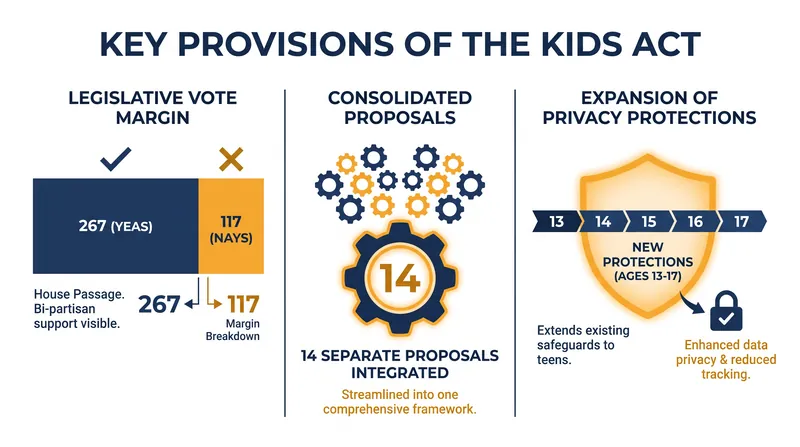
- The House passed the KIDS Act 267-117, consolidating 14 digital safety proposals.
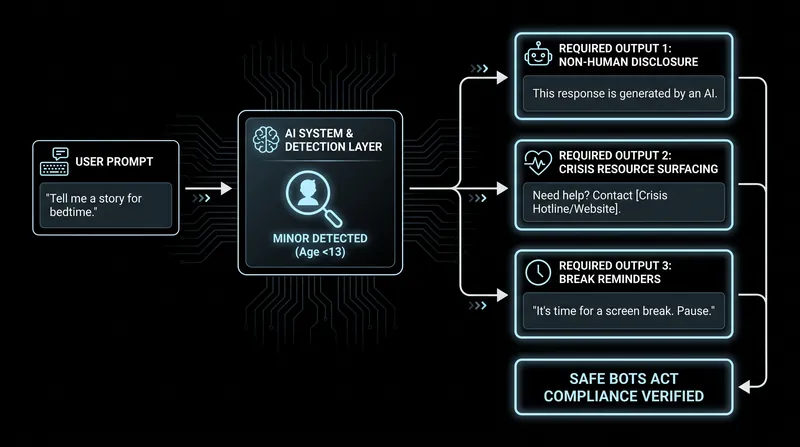
- AI chatbots must disclose they are not human when interacting with minors.
- Platforms face mandatory independent annual audits to ensure compliance.
- Chatbots must surface crisis resources if a minor expresses suicidal ideation.
- Privacy advocates warn age verification mandates threaten data security for all users.
- The Senate advanced parallel legislation, setting up complex reconciliation negotiations.
Why this matters
As AI companions become increasingly sophisticated and accessible, this legislation represents the first comprehensive federal attempt to establish legal boundaries around how synthetic entities can interact with children. If enacted, it will force major tech companies to fundamentally redesign their AI platforms to verify user ages and monitor for psychological harms.
How we got here
March 2026
The KIDS Act is introduced in the House Committee on Energy and Commerce, consolidating multiple digital safety bills.
June 22, 2026
House leaders announce a bipartisan agreement on a revised version of the KIDS Act.
June 29, 2026
The House passes the KIDS Act by a 267-117 vote.
August 5, 2026
The Senate Commerce Committee advances its own slate of youth online safety bills, including the CHATBOT Act.
For parents navigating the digital frontier, the question of who—or what—is talking to their children has become a daily anxiety. As artificial intelligence chatbots increasingly simulate companionship, offer advice, and mimic human empathy, the regulatory landscape has struggled to keep pace with the technology's integration into adolescent life. The stakes are no longer just about screen time, but about the psychological impact of synthetic relationships on developing minds.[8]
That landscape shifted significantly when the U.S. House of Representatives passed the Kids Internet and Digital Safety (KIDS) Act (H.R. 7757) by a bipartisan 267-117 vote. The sweeping omnibus package consolidates 14 distinct legislative proposals into a single framework aimed at establishing baseline federal protections for minors online.[1][2]
The legislation emerges from years of stalled congressional efforts to update the Children's Online Privacy Protection Act (COPPA), which was originally drafted in 1998—long before the advent of generative AI. By raising the protected age threshold to 17, the new framework acknowledges that teenagers are uniquely vulnerable to algorithmic manipulation and synthetic social interactions.[1][3]
A central pillar of the legislation targets generative AI through the SAFE Bots Act provisions. The bill mandates that chatbot providers interacting with users they know—or should know—are minors must clearly disclose that the system is not a human being.[1][4]
Furthermore, these AI systems are strictly prohibited from misrepresenting themselves as licensed medical or mental health professionals. This addresses a growing trend where adolescents turn to AI companions for therapy or medical advice, often receiving hallucinated or dangerous guidance without human oversight.[1][2]
The legislation requires platforms to implement structural safeguards, including mandatory independent annual audits to ensure compliance with the new safety standards. When a minor's prompts indicate suicidal ideation or self-harm, the AI must be programmed to surface appropriate crisis resources rather than attempting to counsel the user directly.[3][4]
The legislation requires platforms to implement structural safeguards, including mandatory independent annual audits to ensure compliance with the new safety standards.
The systems must also maintain policies to encourage breaks after prolonged interaction, targeting the addictive nature of endless AI conversations. Additionally, developers are required to actively mitigate risks associated with sexual exploitation, ensuring that chatbots cannot be manipulated into generating explicit content for minors.[2][4]
The most heavily contested mechanism in the package involves age verification. While the chatbot-specific provisions allow platforms to infer a user's age from context, the broader KIDS Act incorporates the SCREEN Act, which mandates commercially available age-verification technology for platforms hosting significant amounts of adult content.[4][5]
Proponents argue that without strict age verification, any safety guardrails are effectively meaningless, as minors can simply lie about their birth year to access unrestricted AI models. They point to the success of similar state-level laws in reducing youth access to harmful content as evidence that technical barriers work.[7][8]
Conversely, digital rights organizations note that current verification technologies often fail to protect user privacy. They argue that forcing platforms to collect government IDs or biometric data creates massive honeypots of sensitive identity data, exposing adult users to data breaches while being easily bypassed by tech-savvy teenagers using virtual private networks.[2][4]
Following the House passage, the Senate Commerce Committee advanced a parallel slate of bills on August 5, 2026, including the CHATBOT Act and the Youth AI Privacy Act. The Senate's approach signals a willingness to go even further in regulating synthetic interactions.[6]
The Senate's CHATBOT Act mandates family accounts and explicit parental consent before a teenager can create an account, setting up a complex reconciliation process between the two chambers. This opt-in requirement represents a much higher friction barrier than the House's safe-by-default approach.[6][8]
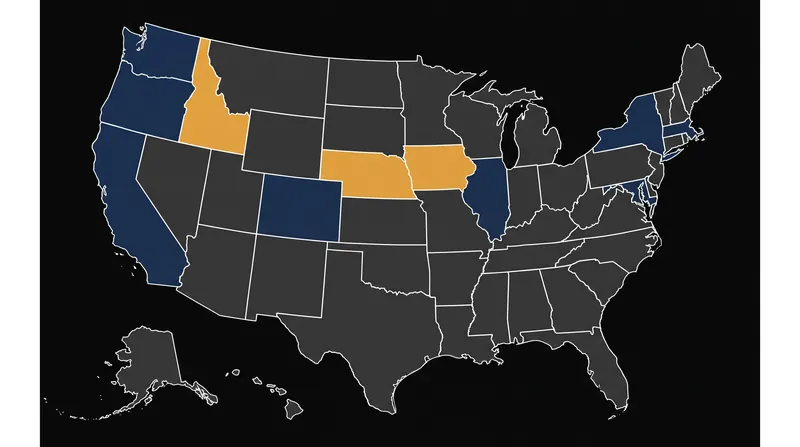
What remains uncertain is how these federal mandates will interact with a growing patchwork of state laws. With states like California, Idaho, and Nebraska advancing their own AI transparency and age-verification requirements, tech companies face the prospect of engineering compliance systems that satisfy both federal baseline rules and stricter state-level duties of care.[7]
The ultimate efficacy of the KIDS Act will depend heavily on the Federal Trade Commission's rulemaking process and the inevitable First Amendment challenges that will follow its enactment. Until then, the burden of navigating the synthetic social landscape remains squarely on the shoulders of parents and educators.[5][8]
Viewpoints in depth
Child Safety Advocates
Advocates emphasize the urgent need for structural guardrails on AI companions.
Proponents of the KIDS Act argue that the tech industry has repeatedly failed to self-regulate when it comes to youth safety. By mandating independent audits and requiring chatbots to surface crisis resources, advocates believe the legislation shifts the burden of safety from parents to the platforms themselves. They point to instances where AI companions have encouraged self-harm or simulated inappropriate relationships as evidence that generative AI poses unique psychological risks to developing minds.
Digital Privacy Defenders
Privacy organizations warn that age verification creates new vulnerabilities.
Digital rights groups like the Electronic Frontier Foundation and Public Knowledge argue that the mechanisms required to enforce the KIDS Act—specifically age verification—fundamentally compromise internet privacy. They contend that forcing platforms to verify the age of every user effectively ends anonymous web browsing and creates massive honeypots of sensitive identity data. Furthermore, they warn that these requirements could chill free expression and cut off vulnerable youth from essential support resources.
Key terms
- Age Verification
- Technological methods used by online platforms to confirm a user's age, often requiring government ID or biometric analysis.
- Duty of Care
- A legal obligation requiring companies to design their products in a way that prevents foreseeable harm to users.
- Generative AI
- Artificial intelligence systems capable of creating text, images, or other media in response to user prompts.
- SAFE Bots Act
- A provision within the KIDS Act specifically targeting the disclosure and safety requirements for AI chatbots interacting with minors.
What we don’t know
- How the Senate will reconcile its stricter parental consent requirements in the CHATBOT Act with the House-passed KIDS Act.
- Whether the mandated age-verification technologies can withstand inevitable First Amendment legal challenges.
- How platforms will technically implement the requirement to 'infer' a user's age without explicitly collecting identification data.
Sources
Source coverage
8 outlets
4 viewpoints surfaced







[1]PillsburyChild Safety Advocates
House Passes Bipartisan KIDS Act Package, Setting Up Senate Debate on Youth Privacy, Platform Design and AI Chatbot Safety
Read on Pillsbury →[2]IAPPDigital Privacy Defenders
US House passes the KIDS Act
Read on IAPP →[3]EducauseChild Safety Advocates
House Passes KIDS Act
Read on Educause →[4]Public KnowledgeDigital Privacy Defenders
Public Knowledge Comments on House Passage of KIDS Act
Read on Public Knowledge →[5]Crowell & MoringTechnology Industry
What You Need to Know: The Revised KIDS Act
Read on Crowell & Moring →[6]U.S. Senate Committee on CommerceChild Safety Advocates
Senate Committee Advances Kids Online Safety Measures
Read on U.S. Senate Committee on Commerce →[7]Mayer BrownTechnology Industry
Age Verification as a Core Requirement in New State and Federal Laws
Read on Mayer Brown →[8]Factlen Editorial TeamEditorial Synthesis
Synthesis by Factlen editorial team
Read on Factlen Editorial Team →
Comments
Every angle. Every day.
Get ai stories with full source coverage and perspective breakdowns delivered to your inbox.