
Global Volleyball Injury Report: Nikolov and Ishikawa Cleared for VNL, While China Navigates Wu Mengjie's Absence
Major international volleyball stars Simeon Nikolov and Yuki Ishikawa have successfully rehabilitated from club-season injury scares to lead their nations in the 2026 VNL. Meanwhile, China's women's team faces a tactical reshuffle after losing top scorer Wu Mengjie to knee surgery.
By Factlen Editorial Team
- National Team Medical Staffs
- Advocating for aggressive load management to combat the grueling 12-month volleyball calendar.
- Domestic Club Leadership
- Frustrated by the injury risks posed by overlapping international and club commitments.
- Developmental Prospects
- Viewing starter injuries as crucial opportunities to secure permanent roster spots.
What's not represented
- · The athletes themselves, who often face immense psychological pressure to rush their rehabilitation timelines.
- · FIVB scheduling officials balancing the commercial need for more matches against player health data.
Why this matters
In the hyper-specialized sport of modern volleyball, the loss of a primary setter or a terminal outside hitter completely alters a team's tactical ceiling. The successful rehabilitation of these franchise players preserves the competitive balance of the 2026 VNL, while showcasing how advanced load management is extending athletic primes.
Key points
- Bulgarian setter Simeon Nikolov has been fully cleared for VNL 2026 after suffering a severe pectoralis strain in April.
- Japanese captain Yuki Ishikawa has successfully rehabilitated a February knee sprain and returned to international play.
- China's leading attacker Wu Mengjie will miss the entire VNL tournament to undergo knee surgery.
- LOVB Houston successfully navigated a neck injury to Olympic setter Micah Hancock by leaning on backup Kaisa Alanko.
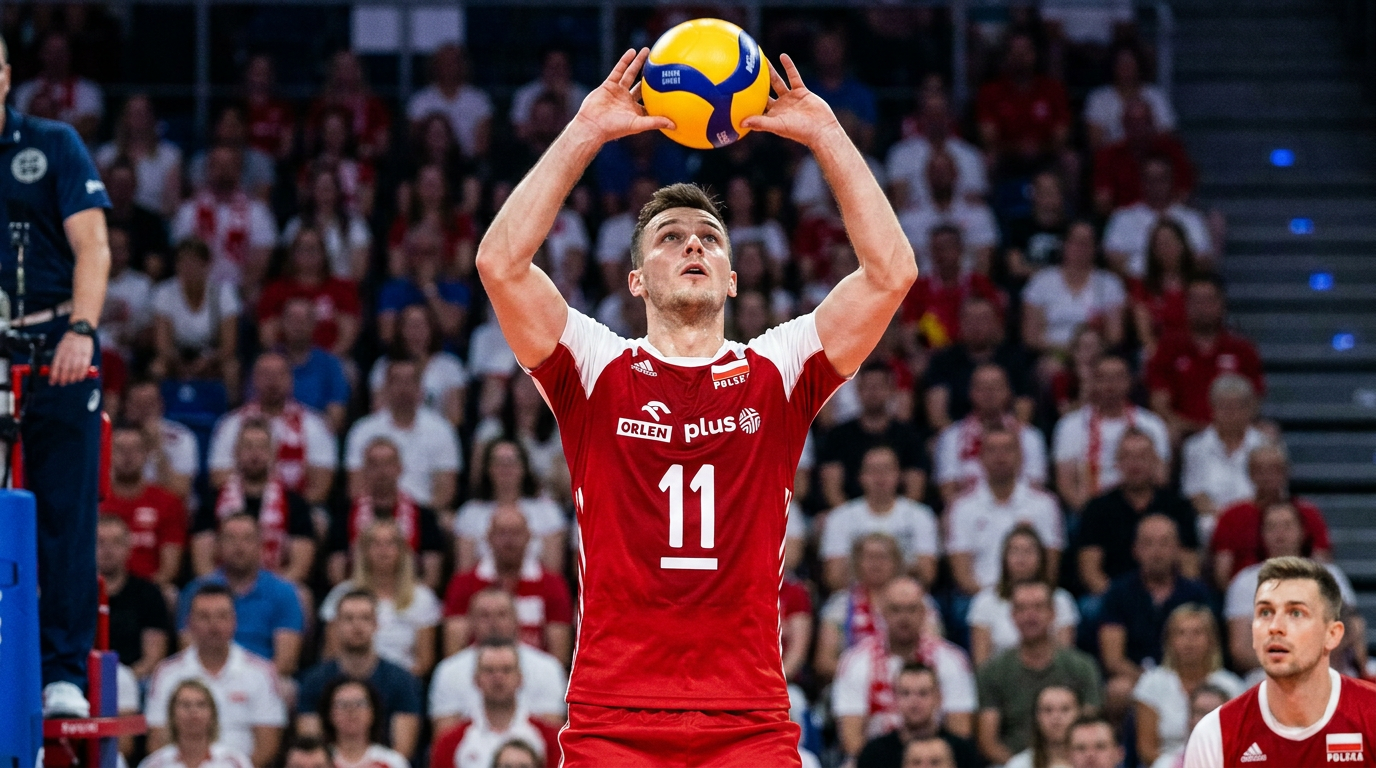
The modern professional volleyball calendar is a relentless twelve-month grind, seamlessly bridging domestic club seasons with grueling international tournaments. As the 2026 Volleyball Nations League (VNL) and the inaugural League One Volleyball (LOVB) seasons hit their strides in June, medical staffs are working overtime to keep the sport's premier talents on the floor. For fans and federations alike, the line between a minor tweak and a season-ending rupture dictates the balance of power on the world stage. Fortunately, proactive load management and advanced rehabilitation protocols are successfully returning several of the sport's brightest stars to the court just in time for the summer's biggest matches.[3]
For fans of the Bulgarian men's national team, the spring brought a collective holding of breath. During the Russian SuperLega bronze medal series on April 22, 19-year-old prodigy setter Simeon Nikolov collapsed clutching his upper body. He was forced to leave the court at a critical 15-14 juncture in the third set against Zenit St. Petersburg. The immediate optics were grim, and Lokomotiv Novosibirsk head coach Plamen Konstantinov openly expressed fears of a severe muscle rupture, a diagnosis that would have sidelined the young maestro for the entire international summer.[1]
However, advanced imaging and a tense 48-hour waiting period revealed a much more manageable diagnosis. Former Bulgarian national team captain Vlado Nikolov—Simeon's father—publicly confirmed that the injury was "the lesser evil." The official diagnosis was a strain of the pectoralis major muscle, compounded by a severe protective spasm in the latissimus dorsi. The localized cramping was a stark, painful reminder of the physical toll of playing over 70 matches in a single calendar year, a grueling stretch that saw the teenager transition directly from the NCAA to the Russian SuperLega and international play.[2]

Following a targeted, conservative rehabilitation program, Nikolov has been fully cleared for action. He was officially named to Bulgaria's 30-player VNL roster in late May, reuniting with his brother Aleksandar to lead the "Lions." His rapid return preserves Bulgaria's dynamic offensive rhythm and keeps their hopes of a Final 8 berth alive, proving that immediate medical intervention and rest can successfully defuse a potential crisis.[3]
A similar sigh of relief echoed through the Japanese camp regarding their talismanic captain, Yuki Ishikawa. During a February SuperLega clash for Sir Susa Scai Perugia against Padua, the dynamic outside hitter landed awkwardly after a first-set attack, suffering a right knee sprain. Perugia's medical staff, led by Dr. Giuseppe Sabatino, immediately pulled Ishikawa from the rotation to prevent any structural damage to the joint. The conservative load-management approach paid massive dividends for both club and country.[7]

A similar sigh of relief echoed through the Japanese camp regarding their talismanic captain, Yuki Ishikawa.
Ishikawa has made a full recovery and is back anchoring Japan's high-flying offense in the VNL. Reunited with Yuji Nishida and Ran Takahashi, Ishikawa's healthy presence ensures that Japan remains one of the most lethal and technically sound rosters in the tournament. His seamless transition back to the international stage underscores the effectiveness of modern joint rehabilitation, allowing elite jumpers to regain their explosive verticals without lingering hesitation.[3][7]
However, not every national team escaped the grueling club season unscathed. The Chinese women's national team is currently navigating a severe injury crisis that has completely reshaped their VNL strategy. Head coach Zhao Yong confirmed that 23-year-old rising star Wu Mengjie—who led China with an average of 18.92 points per match during the 2025 VNL—suffered a severe knee injury during a high-intensity training camp. After consulting with orthopedic specialists, Wu was ruled out for the entirety of the tournament and is scheduled for surgery.[4][5]

Wu's absence is compounded by the ongoing rehabilitation of fellow key outside hitter Li Yingying, who sustained a right ankle injury during the Chinese domestic league playoffs. The dual losses have prompted public scrutiny over the national team's grueling training regimens, while forcing Coach Zhao to fast-track young prospects like Zhou Yetong into the international spotlight. China is now leaning heavily on overseas-based veterans like Gong Xiangyu to stabilize the roster, turning the 2026 VNL into a developmental crucible rather than a pure medal hunt.[4][5]
Meanwhile, in the United States, League One Volleyball (LOVB) is proving that a team's depth is just as vital as its starting six. LOVB Houston faced an early-season test when Olympic gold medalist setter Micah Hancock was sidelined with a nagging neck injury. Rather than faltering, Houston turned to Finnish national team setter Kaisa Alanko. Alanko stepped in seamlessly to orchestrate the offense, distributing the ball effectively to opposite Jordan Thompson and keeping Houston firmly in the playoff hunt. Hancock has since returned to the rotation, giving Houston a formidable two-setter dynamic as they push toward the postseason.[6]

As the summer of 2026 unfolds, the narrative across global volleyball is clear: championships are no longer won solely by the hardest hitters, but by the deepest rosters and the most proactive medical teams. The razor-thin margin between a minor strain and a season-ending tear continues to dictate the balance of power on the world stage. For players like Nikolov and Ishikawa, dodging the injury bullet means another chance at international glory, while backups worldwide continue to prove they are ready when called upon.[2][3]
How we got here
February 2026
Yuki Ishikawa suffers a right knee sprain during a SuperLega match for Sir Susa Scai Perugia.
April 22, 2026
Simeon Nikolov leaves the Russian SuperLega bronze medal series with a severe upper-body muscle spasm.
May 25, 2026
China announces leading scorer Wu Mengjie will miss the VNL to undergo knee surgery.
June 2026
Nikolov and Ishikawa are officially cleared and return to the court for the Volleyball Nations League.
Viewpoints in depth
National Team Medical Staffs
Focused on the necessity of load management and proactive recovery.
For international medical teams, the primary adversary is no longer acute trauma, but chronic overuse. With top-tier athletes playing upwards of 70 matches a year across domestic leagues, continental cups, and the VNL, medical staffs advocate for aggressive load management. They argue that pulling a player at the first sign of a muscle spasm—as seen with Nikolov and Ishikawa—is the only sustainable way to prevent minor strains from becoming surgical tears.
Club Coaches and Managers
Concerned with the physical toll the year-round calendar takes on their investments.
Domestic club coaches often bear the brunt of the international calendar's physical toll. When players return from the VNL or Olympics fatigued or injured, clubs lose their star investments for crucial domestic matches. Coaches emphasize the need for a more streamlined global calendar, arguing that the current system forces young prodigies to play through dangerous levels of exhaustion just to satisfy both club and country obligations.
Next-Up Reserves
Viewing injury absences as critical windows to prove their international viability.
For backup setters and rotational hitters, a starter's injury is a rare, high-stakes audition. Players like LOVB Houston's Kaisa Alanko or China's Zhou Yetong recognize that these windows dictate their future contract values and national team standing. Their perspective highlights the immense pressure to perform immediately without the benefit of starter-level practice reps, turning a team crisis into a personal proving ground.
What we don't know
- Whether Wu Mengjie will fully recover her explosive jumping ability post-surgery.
- How the FIVB might adjust the global calendar to reduce the 70+ match burden on elite players.
Key terms
- Pectoralis Major Strain
- A tear or severe stretching of the large muscle of the chest, often caused by the explosive arm swing required in volleyball serving and attacking.
- Load Management
- The deliberate monitoring and restriction of an athlete's playing time and practice intensity to prevent overuse injuries.
- SuperLega
- The top tier of professional men's volleyball in Italy, widely considered one of the most physically demanding domestic leagues in the world.
- Volleyball Nations League (VNL)
- An annual premier international volleyball tournament contested by the top 16 senior national teams in the world.
Frequently asked
Is Simeon Nikolov playing in the 2026 VNL?
Yes. Despite a severe muscle spasm and pectoralis strain in April, Nikolov has been fully cleared and is on Bulgaria's 30-player roster.
Why is Wu Mengjie missing the VNL?
China's top scorer suffered a knee injury during a high-intensity training camp and requires surgery, ruling her out for the entire tournament.
Did Yuki Ishikawa recover from his knee injury?
Yes. Ishikawa recovered from a right knee sprain suffered in February and has returned to captain the Japanese national team.
Sources
Source coverage
7 outlets
3 viewpoints surfaced






[1]VolleyWeekDomestic Club Leadership
Zenit tied the bronze series after a comeback from 0:2, Nikolov was injured
Read on VolleyWeek →Vlado Nikolov to Volleyweek.bg: The situation with Moni is 'the lesser evil' – it's a strain
Read on VolleyWeek →[3]Volleyball WorldNational Team Medical Staffs
30-player team lists now available on the competition website
Read on Volleyball World →[4]XinhuaNational Team Medical Staffs
China's star spiker Wu to miss VNL with knee injury
Read on Xinhua →[5]South China Morning PostDevelopmental Prospects
China women's volleyball team hit by injuries as key players pull out of Nations League
Read on South China Morning Post →[6]League One VolleyballDevelopmental Prospects
LOVB Pro Begins Second Half of 2026 Season
Read on League One Volleyball →[7]Lega Pallavolo Serie ADomestic Club Leadership
SuperLega Injury Updates: Yuki Ishikawa
Read on Lega Pallavolo Serie A →
More in sports
See all 13 stories →NCAA Policy
How the NCAA's Proposed 2027 Calendar Overhaul Will Reshape College Football
7 sources
Injury
June 2026 Aquatics Injury Desk: Urlando, Williamson, and Crooks Headline Major Summer Comebacks
6 sources
Standings
The Race to Beijing: Global Qualification Standings Heat Up for the 2026 Short Course World Championships
6 sources
Injury
Treesa Jolly and Gayatri Gopichand Battle to US Open Second Round in Triumphant Injury Comeback
5 sources
Every angle. Every day.
Get sports stories with full source coverage and perspective breakdowns delivered to your inbox.