
Global Energy Investment Hits $3.4 Trillion as Capital Rotates from Oil to Grids and Gas
The IEA's 2026 investment report reveals a bifurcating energy system, with clean energy and grid spending reaching $2.2 trillion while natural gas investment hits a decade high.
By Aarav Khanna

- Transition Optimists
- Focus on the structural two-to-one capital advantage of clean energy and the rapid scale of grid investments.
- Energy Security Advocates
- Emphasize the necessity of the $330 billion LNG buildout to insulate economies from geopolitical shocks and maritime chokepoints.
- Market Pragmatists
- Highlight the persistence of coal in China and the physical bottlenecks of inflation and AI-driven grid strain.
The competing cases
The Transition Optimists' View
Capital markets have permanently shifted toward electrification.
This camp argues that the two-to-one investment ratio favoring clean energy represents a point of no return. By pointing to the $550 billion flowing into grids and the $100 billion into battery storage, they contend that the financial architecture of the global economy has already priced in decarbonization. In this view, the decline in long-cycle oil megaprojects is evidence that major capital allocators view traditional fossil fuels as a terminal risk, preferring the predictable, technology-driven cost curves of solar and storage.
The Energy Security Advocates' View
Fossil fuels remain the necessary backstop against geopolitical volatility.
For security-focused analysts and importing nations, the decade-high $330 billion investment in natural gas is the most critical data point in the IEA report. They argue that the ongoing disruptions in the Strait of Hormuz and the Middle East prove that the global economy cannot yet survive on intermittent renewables alone. This perspective views the massive buildout of US and Qatari LNG not as a step backward for climate goals, but as a mandatory insurance policy that provides the baseload stability required to keep the lights on while the grid transitions.
The Market Pragmatists' View
The transition is uneven, inflationary, and constrained by physical realities.
Pragmatists focus on the limits of the headline numbers. They highlight that a significant portion of the $3.4 trillion is being eaten by supply chain inflation, meaning less actual steel in the ground. Furthermore, they point to China's $180 billion coal investment and the sudden, massive power demands of AI data centers in the US as evidence that the transition is messy and non-linear. From this viewpoint, the global grid is simply not expanding fast enough to handle both the electrification of everything and the computing demands of the next decade.
What’s at stake
The allocation of $3.4 trillion in capital dictates the physical reality of the next decade. This data proves that while the transition to clean energy is financially locked in, the world is simultaneously building a massive natural gas safety net to ensure grid stability.
The prevailing assumption in global markets is that geopolitical instability, supply chain shocks, and high interest rates have forced a broad retreat to traditional fossil fuels. The actual capital flows reveal a significantly more complex reality. According to the International Energy Agency’s 2026 World Energy Investment report, the global energy system is not reverting to the 20th-century mean—it is fundamentally bifurcating. Total energy investment is projected to reach a record $3.4 trillion this year, but the allocation of those funds contradicts the narrative of a sweeping fossil-fuel resurgence. Instead, the data shows a system that is aggressively financing electrification while selectively reinforcing specific fossil infrastructures to guarantee near-term security.[1][4]
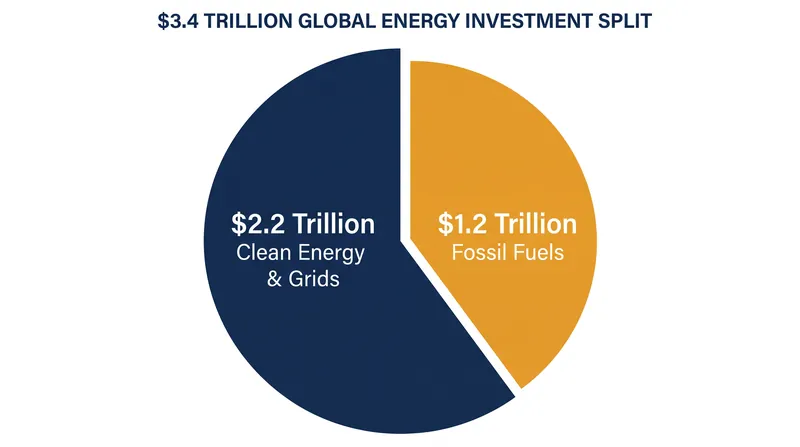
The primary claim established by the IEA data is that clean energy investment continues to outpace fossil fuels by a nearly two-to-one margin. Of the $3.4 trillion total, approximately $2.2 trillion is flowing directly into renewables, nuclear power, electricity grids, energy storage, and end-use electrification. The remaining $1.2 trillion is allocated to oil, natural gas, and coal. This ratio has remained remarkably resilient despite severe supply chain inflation and higher borrowing costs over the past two years. This persistence suggests a structural shift in how capital markets view long-term energy infrastructure, treating clean energy not as a policy-driven alternative, but as the baseline for future industrial growth.[1][2]
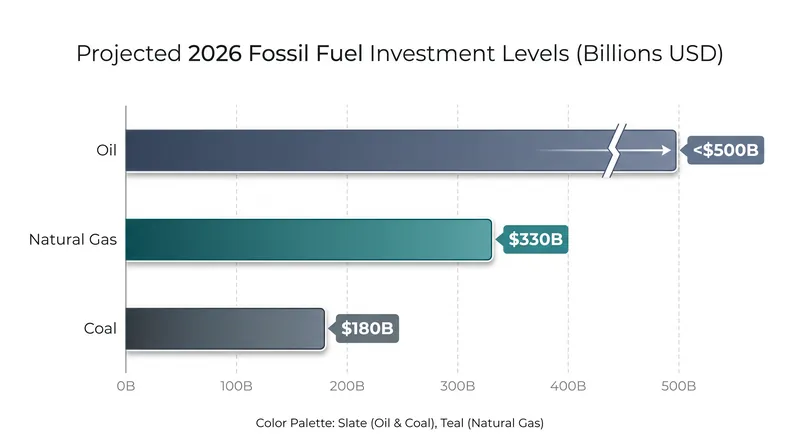
Within the fossil fuel ledger, the data shows a stark and growing divergence between oil and natural gas. Upstream oil investment is projected to fall below $500 billion in 2026, marking the third consecutive year of capital decline. This contraction is occurring despite elevated crude prices and strong profit margins for major producers. The pullback is driven by industry uncertainty over long-term demand trajectories, persistent supply chain bottlenecks, and tighter availability of offshore drilling rigs. Capital markets are increasingly demanding faster returns and higher dividends, making multi-decade oil megaprojects exceedingly difficult to finance in the current environment.[1][3]
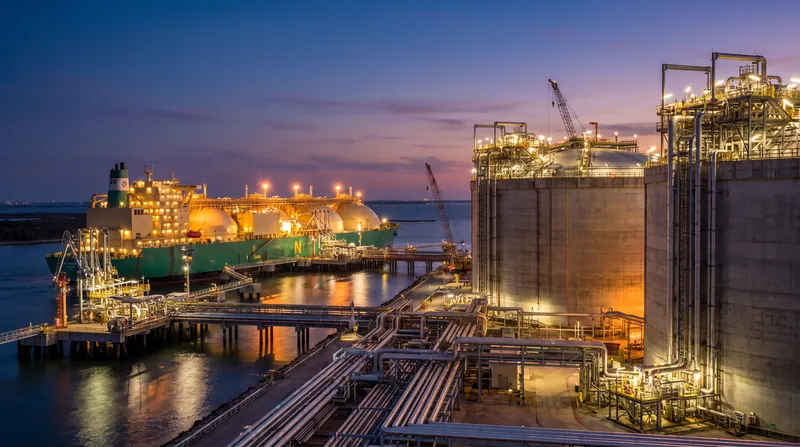
Conversely, natural gas is attracting capital at a pace not seen in recent history. Investment in gas infrastructure is forecast to reach $330 billion this year, representing the highest level in a decade. This surge is heavily concentrated in liquefied natural gas (LNG) export projects, primarily located in the United States and Qatar, which are racing to supply European and Asian markets. The evidence suggests that global markets are increasingly treating natural gas as both a necessary transition fuel and a critical baseload backstop to balance the intermittency of rapidly expanding renewable generation.[1][3]
The data also highlights the deeply uneven and geographically concentrated nature of the energy transition. Coal investment is projected to rise to $180 billion in 2026, reaching its highest level since 2012. However, this is not indicative of a global coal renaissance; nearly 70 percent of all coal spending is occurring within China. This intense concentration underscores a dual strategy in the world's largest energy market: aggressively deploying world-leading volumes of solar and wind, while simultaneously building out massive coal capacity to ensure grid stability and protect industrial energy security against supply shocks.[1][3][6]
The data also highlights the deeply uneven and geographically concentrated nature of the energy transition.
Beyond generation, the most significant structural shift in the 2026 data is the absolute dominance of electricity-related spending. Investment in electricity supply and infrastructure is expected to approach $1.6 trillion this year. When end-use electrification—such as residential heat pumps, electric vehicles, and electrified industrial processes—is included, that figure rises to nearly $2 trillion. The global energy economy is fundamentally becoming an electricity economy, shifting the primary systemic bottleneck from the extraction of liquid fuels to the transmission and distribution of electrons.[1][3][7]
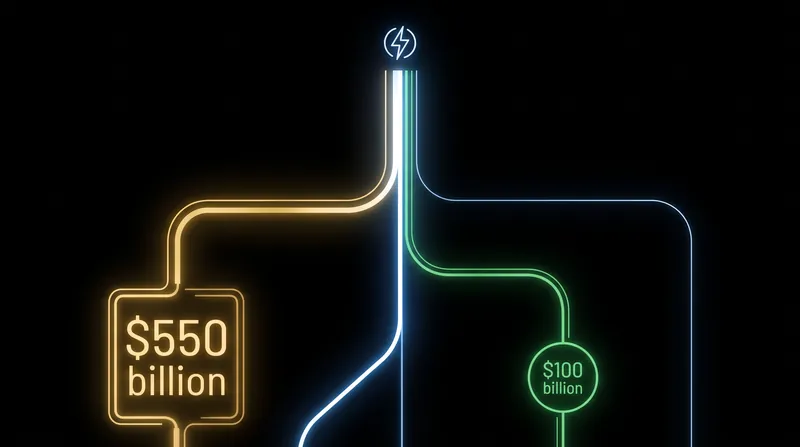
Grid infrastructure is finally beginning to attract the massive capital required to support this systemic shift. Spending on electricity grids is projected to reach $550 billion in 2026, representing a nearly 20 percent year-on-year increase. Simultaneously, investment in utility-scale battery storage is expected to surpass $100 billion. However, the IEA explicitly notes that grid expansion is still struggling to keep pace with the rapid deployment of renewable generation. This lag is creating severe interconnection queues that threaten to delay clean energy deployment across advanced economies.[1][3][5]
A new and highly disruptive variable in the 2026 dataset is the acute impact of artificial intelligence and hyperscale data centers on power demand. Orders for gas-fired power plants reached a 25-year high recently, driven in large part by the need to power these massive computing facilities. In the United States, the rapid expansion of data centers is becoming a primary driver of grid investment, forcing utilities to revise their load forecasts and capital expenditure plans sharply upward to accommodate continuous, high-density power requirements.[3][5][6]
Geopolitics remains a powerful accelerant for these capital shifts, rather than a deterrent. The ongoing conflict in the Middle East and persistent disruptions to shipping routes through the Strait of Hormuz have elevated energy security to the absolute top of the global policy agenda. Rather than driving a return to imported oil, these shocks are prompting energy-importing nations across Asia and Europe to invest heavily in domestically available sources. Capital is flowing into solar, nuclear power, and efficiency measures specifically to insulate domestic economies from maritime chokepoints and volatile global commodity markets.[1][4][5]
Limits of the evidence: While the $3.4 trillion headline figure represents a nominal record, the IEA data relies heavily on announced corporate capital expenditures and first-quarter tracking. It is crucial to note that persistent inflation and higher financing costs mean a dollar invested in 2026 buys significantly less physical infrastructure than it did in 2020. The real-world deployment of steel, silicon, and copper may not be growing as rapidly as the financial figures suggest, introducing a layer of transparent uncertainty into the actual physical pace of the transition.[1][6]
Furthermore, the investment landscape remains highly stratified by geography, revealing a transition that is leaving much of the world behind. China, the United States, and the European Union continue to attract the vast majority of clean-energy capital. In stark contrast, emerging and developing economies face persistent barriers, including prohibitive sovereign financing costs and limited access to affordable capital. Until these structural financial barriers are addressed, the global transition will remain deeply asymmetric, with advanced economies electrifying rapidly while developing nations are forced to rely on legacy fuels.[1][4]
Ultimately, the 2026 investment data reveals a global system that is optimizing for two critical variables simultaneously: long-term decarbonization and immediate energy security. The record capital flowing into grids, solar arrays, and LNG facilities—paired with the structural decline in long-cycle oil spending—demonstrates that markets are pricing in a fundamentally electrified future. Even as they hedge against near-term geopolitical volatility with targeted fossil fuel investments, the overarching trajectory of global capital has decisively shifted.[1][2][6]
Key takeaways
- Global energy investment is projected to reach a record $3.4 trillion in 2026, with clean energy outstripping fossil fuels by a two-to-one margin.
- Upstream oil investment is falling for the third consecutive year, dropping below $500 billion due to demand uncertainty and capital discipline.
- Natural gas investment has surged to a decade high of $330 billion, driven heavily by LNG export projects in the US and Qatar.
- Electricity grid spending is up 20% to $550 billion, though it still struggles to keep pace with new generation and AI data center demand.
- Geopolitical tensions in the Middle East are accelerating investments in domestic energy security, including renewables and nuclear power.
Unsettled ground
- How much of the $3.4 trillion nominal investment increase is being absorbed by supply chain inflation rather than resulting in new physical infrastructure.
- Whether the surge in natural gas investment will result in stranded assets if renewable deployment and battery storage scale faster than projected.
- How the massive power requirements of next-generation AI data centers will ultimately alter long-term grid planning and baseload generation needs.
- $3.4 trillion
- Total global energy investment projected for 2026
- $2.2 trillion
- Capital allocated to clean energy and grids
- $330 billion
- Natural gas investment (decade high)
- $550 billion
- Spending on electricity grids (up 20% YoY)
- $180 billion
- Coal investment, with 70% concentrated in China
Background
2020
Global energy investment slumps during the pandemic, marking a baseline low for upstream oil and gas spending.
2022
Russia's invasion of Ukraine triggers a global energy crisis, accelerating European investments in LNG infrastructure and renewables.
2024
Clean energy investment officially crosses the $2 trillion threshold, establishing a durable two-to-one lead over fossil fuels.
2025
Orders for gas-fired power plants reach a 25-year high, driven by the sudden grid demands of hyperscale AI data centers.
June 2026
The IEA projects total energy investment will hit $3.4 trillion, with natural gas spending reaching a decade high while oil declines.
Terms in play
- Upstream Investment
- Capital spent on the exploration and production phases of the oil and natural gas industry, such as drilling and extracting resources.
- Liquefied Natural Gas (LNG)
- Natural gas that has been cooled to a liquid state for easier and safer storage and transport across oceans.
- End-Use Electrification
- The transition of systems that traditionally used fossil fuels—like heating and vehicles—to run on electricity.
- Baseload Power
- The minimum amount of electric power needed to be supplied to the electrical grid at any given time, traditionally provided by coal, gas, or nuclear plants.
Sources
Source coverage
7 outlets
3 viewpoints surfaced







[1]International Energy AgencyMarket Pragmatists
World Energy Investment 2026
Read on International Energy Agency →[2]ForbesTransition Optimists
Clean Energy Now Attracts Twice The Investment Of Fossil Fuels
Read on Forbes →[3]CE Energy NewsTransition Optimists
IEA: Current energy crisis to have lasting impact on investment priorities
Read on CE Energy News →[4]Fast Company Middle EastEnergy Security Advocates
Global energy investment set to reach record $3.4 trillion in 2026
Read on Fast Company Middle East →[5]Energetica IndiaEnergy Security Advocates
IEA Projects USD 3.4 Trillion Energy Investment in 2026 Amid Middle East Crisis
Read on Energetica India →[6]Energy News BeatMarket Pragmatists
IEA World Energy Investment 2026: Capital Flows and Energy Security
Read on Energy News Beat →[7]Heat Pumping TechnologiesTransition Optimists
IEA World Energy Investment 2026 highlights electrification growth
Read on Heat Pumping Technologies →
Comments


Every angle. Every day.
Get energy stories with full source coverage and perspective breakdowns delivered to your inbox.