
Fifth Circuit Upholds Medicare Drug Price Negotiation Program Against PhRMA Challenge
A federal appeals court has rejected the pharmaceutical industry's constitutional challenge to the Medicare drug price negotiation program, ruling that the escalating excise tax used to enforce compliance is lawful.
By Anaya Sharma

Share this story
A tax penalty that scales to 1,900 percent of a drug's post-tax revenue will remain the federal government's enforcement mechanism for Medicare price negotiations, after a federal appeals court rejected a constitutional challenge from the pharmaceutical industry's largest trade group.[1][2]
In an opinion filed on August 26, 2026, a three-judge panel of the U.S. Court of Appeals for the Fifth Circuit affirmed a lower court's dismissal of a lawsuit brought by the Pharmaceutical Research and Manufacturers of America (PhRMA), the National Infusion Center Association, and the Global Colon Cancer Association.
The plaintiffs had sued Department of Health and Human Services Secretary Robert F. Kennedy Jr. and Centers for Medicare and Medicaid Services Administrator Mehmet Oz, arguing the program violated the nondelegation doctrine, the Eighth Amendment's Excessive Fines Clause, and the Fifth Amendment's Due Process Clause.[2][4]
The court rejected all three arguments, centering its decision on the premise that pharmaceutical companies are not compelled to participate in the program. Writing for the panel, Judge Leslie Southwick stated that "manufacturers lack a protected property interest in selling to Medicare beneficiaries at a preferred price because participation in Medicare—and by extension the negotiation program—is voluntary."[4]
At the core of the industry's challenge was the excise tax created by the Inflation Reduction Act of 2022 to secure manufacturer participation. The statute expresses the tax rate as a percentage of the total sale price, beginning at 65 percent and climbing to 95 percent after 271 days.[1][2]
Expressed as a share of the post-tax amount the manufacturer actually keeps, the penalty translates to a rate starting at 186 percent and reaching 1,900 percent. The Internal Revenue Service calculates that on a $100 sale subject to the maximum penalty, $65 goes to the tax and $35 remains as the price of the drug.
The Fifth Circuit held that this structure does not constitute an "excessive fine" because it lacks any connection to criminal conduct, noting that manufacturers become subject to the tax through lawful choices concerning sales reimbursed by Medicare.[1][2]
The ruling preserves the statutory timeline for the negotiation program, which targets drugs that rank among the top 50 by Medicare expenditures, have no generic competitors, and have been on the market for more than seven years. The law mandates the selection of 10 drugs for 2026, 15 for 2027 and 2028, and 20 for 2029 and subsequent years.[2]
The legislation sets strict ceilings on the negotiated prices, capped as a share of a baseline average manufacturer price. The ceiling is set at 40 percent for drugs approved more than 16 years earlier, 65 percent for drugs approved between 12 and 16 years earlier, and 75 percent for all other eligible medications.[2]
The Fifth Circuit's decision aligns with previous rulings from the Second, Third, and Sixth Circuits, which have consistently upheld the program against similar challenges from individual drugmakers and the U.S. Chamber of Commerce. The U.S. Supreme Court previously declined to review two related cases in May 2026.[2][4]
Consumer advocacy groups, which filed amicus briefs in support of the government, characterized the ruling as a definitive legal settlement. "Medicare drug price negotiation is here to stay," said Peter Maybarduk, Access to Medicines director for Public Citizen. "Every court to consider the drug makers' challenges have agreed that the negotiation program is lawful."[3]
The decision clears the path for the first three cycles of Medicare drug price negotiations to proceed without judicial interruption, cementing maximum fair prices that will take effect from 2026 through 2028. For manufacturers of high-cost therapies, the ruling signals that the current pricing framework will remain intact unless altered by future congressional action.[2]
Key points
- The Fifth Circuit upheld the Medicare drug price negotiation program, rejecting a constitutional challenge from the pharmaceutical industry.
- The court ruled that the program's excise tax, which can reach 1,900 percent of post-tax revenue, does not violate the Eighth Amendment.
- Judges determined that drugmakers have no protected property interest in preferred pricing because Medicare participation is voluntary.
- The decision aligns with rulings from the Second, Third, and Sixth Circuits, clearing the way for negotiations through 2028.
How we got here
August 2022
Congress passes the Inflation Reduction Act, authorizing Medicare to negotiate prices for certain high-cost drugs.
2023
PhRMA and allied groups file a lawsuit in the Western District of Texas challenging the program's constitutionality.
May 2026
The U.S. Supreme Court declines to review two related cases challenging the negotiation program.
August 26, 2026
The Fifth Circuit Court of Appeals affirms the lower court's dismissal of PhRMA's lawsuit.
- Legal & Policy Analysts
- Appellate courts have consistently ruled that Medicare is a voluntary market, not a coercive one.
- Healthcare Industry Observers
- Drugmakers argue the excise tax is a punitive measure designed to force compliance.
- Consumer Advocates
- Advocacy groups view the program as a necessary correction to unchecked pricing power.
Perspectives this story doesn't cover
- Independent Pharmacies
- Medicare Beneficiaries
Sources
Source coverage
4 outlets
3 viewpoints surfaced


- [1]Thomson ReutersLegal & Policy Analysts
5th Circuit upholds IRA drug pricing program, excise tax
Read on Thomson Reuters → - [2]Syenza NewsLegal & Policy Analysts
Fifth Circuit Upholds Medicare Drug Price Negotiation Program
Read on Syenza News → - [3]Public CitizenConsumer Advocates
PhRMA Loses Again: Fifth Circuit Upholds Medicare Drug Price Negotiation Program
Read on Public Citizen → - [4]Becker's Hospital ReviewHealthcare Industry Observers
Court rejects PhRMA's challenge to Medicare drug price negotiations
Read on Becker's Hospital Review →

More in Law & Justice
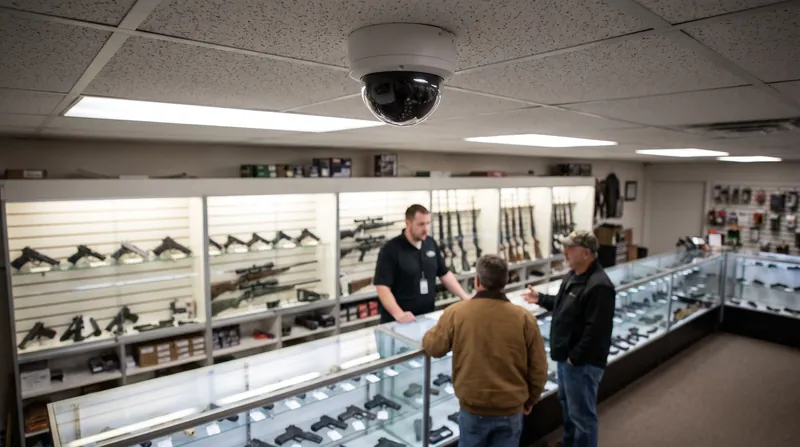
See all →Retail Surveillance
Ninth Circuit Upholds California Law Requiring 24/7 Audio and Video Surveillance at Gun Stores
5 sources
False Claims Act
Eleventh Circuit Rejects Appointments Clause Challenge to False Claims Act Whistleblower Provision
7 sources
Public Records
Appeals Court Rules Fourth Amendment Cannot Block Public Access to Police Investigation Records
3 sources
Immigration Detention
Federal Appeals Court Upholds Due Process Right to Bond Hearings, Rejecting Mandatory Detention Policy
3 sources
Comments
Every angle. Every day.
Get Law & Justice stories with full source coverage and perspective breakdowns, free every day.