
Europe's Night Train Network Expands in 2026 With Next-Gen Cabins and Citizen-Funded Routes
A wave of new overnight rail routes is sweeping across Europe in 2026, driven by climate-conscious travelers, massive state investments, and grassroots cooperatives stepping in to replace short-haul flights.
By Factlen Editorial Team
- State Rail Operators
- Focus on massive capital investments to modernize fleets and provide premium, high-tech passenger experiences.
- Sustainable Travel Advocates
- View the night train revival as a crucial mechanism for reducing carbon emissions by replacing short-haul aviation.
- Citizen Rail Cooperatives
- Believe grassroots funding and agile operations can succeed where state-run monopolies have retreated.
- Pragmatic Skeptics
- Highlight the fragile economics of cross-border rail, pointing to high track access charges and reliance on subsidies.
What's not represented
- · Airlines operating short-haul European flights
- · National infrastructure managers setting track tolls
Why this matters
The resurgence of overnight rail offers travelers a highly practical, low-carbon alternative to the friction of airport security and short-haul flights. By combining transportation and accommodation, passengers can cross the continent more sustainably without sacrificing daylight hours.
Key points
- Austria's ÖBB launched its next-generation Nightjet trains on the Vienna-Zurich route in June 2026.
- The new €500 million fleet features solo 'Mini Cabins', private showers, and NFC card access.
- Citizen-funded European Sleeper successfully revived the Paris-Berlin route after state subsidies were cut.
- European Sleeper is expanding its network to include a new Brussels-Milan corridor in late 2026.
- Swiss Federal Railways (SBB) introduced a new 16-hour overnight route connecting Basel to Malmö.
- Despite high demand, operators still face economic challenges like steep track access charges and border complexities.
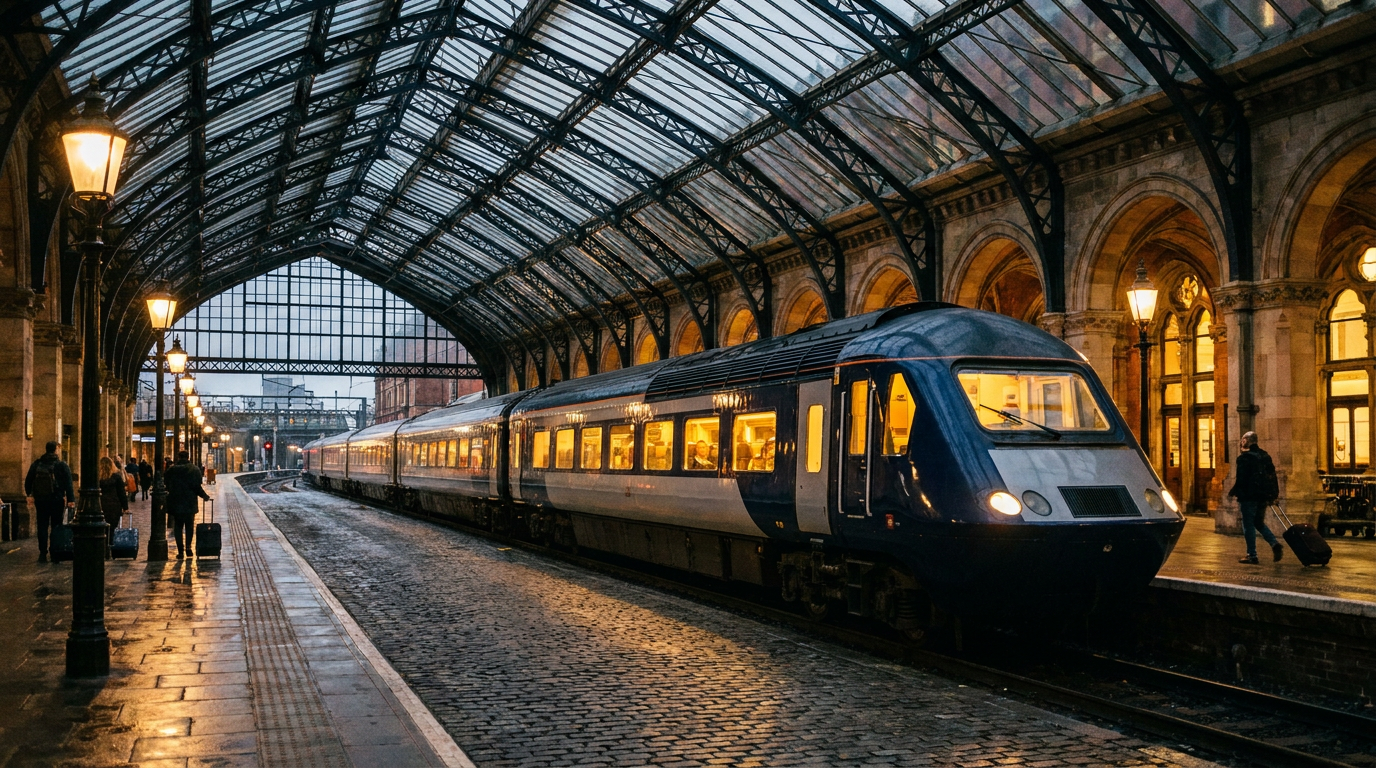
The romanticized era of the European sleeper train is undergoing a high-tech, highly practical renaissance. Long dismissed as a relic of the past, overnight rail travel is surging across the continent in 2026. This year marks a turning point, with operators launching a slew of new cross-border routes, deploying next-generation rolling stock, and fundamentally rethinking the passenger experience. The revival is transforming how travelers navigate between major European capitals, offering a seamless hotel-on-wheels alternative to the friction of airport security and short-haul flights.[1][7]
The catalyst for this resurgence is a profound shift in consumer demand, heavily influenced by climate consciousness. A recent survey commissioned by Hitachi Rail revealed that nearly half of travelers intend to swap planes for trains in the coming years to reduce their carbon footprint. By traveling overnight, passengers effectively combine their transportation and accommodation costs while saving daylight hours for exploration. Rail operators are capitalizing on this momentum, recognizing that the modern traveler prioritizes sustainability without wanting to sacrifice comfort.[3]
Leading the charge among state operators is Austria's ÖBB, which has single-handedly kept the night train concept alive over the past decade. On June 14, 2026, ÖBB launched its highly anticipated next-generation "Nightjet" on the Vienna-Zurich route. This rollout is part of a massive €500 million investment in 33 new seven-car trains. The new fleet introduces industry-first "Mini Cabins" designed specifically for solo travelers, alongside premium sleeping compartments equipped with private showers, en-suite toilets, and electronic NFC card access.[2][5]

Beyond luxury upgrades, the new Nightjet fleet addresses modern accessibility and connectivity needs. Each trainset includes a multifunctional car featuring an accessible compartment and restroom for wheelchair users, as well as dedicated spaces for bicycles, strollers, and sports equipment. With enhanced Wi-Fi and inductive charging points, the state-owned operator is aggressively positioning rail as a premium, green alternative to flying. By the end of 2026, ÖBB plans to have 24 of these next-generation trains integrated into its long-distance fleet.[2][5]
While state operators focus on hardware, a different kind of revolution is happening on the operational side. Enter European Sleeper, a Belgian-Dutch rail cooperative founded by enthusiasts and funded by more than 6,000 citizen investors. When the French government abruptly cut subsidies for the state-run Paris-Berlin night train in late 2025, European Sleeper stepped in to rescue the iconic route. The cooperative successfully relaunched the Paris-Berlin service on March 26, 2026, proving that citizen-backed models can compete where legacy monopolies retreat.[1][4]

While state operators focus on hardware, a different kind of revolution is happening on the operational side.
European Sleeper's ambitions extend far beyond a single rescue mission. The cooperative is aggressively building a comprehensive north-south and east-west network. In July 2026, the Paris-Berlin route will be extended to Hamburg. More significantly, on September 9, 2026, the company will launch a brand-new corridor connecting Brussels and Cologne to Switzerland and Milan. By December, this Italian-bound route will expand to include Dutch cities like Breda and Eindhoven, restoring direct overnight links between the Netherlands and Southern Europe that had been severed for years.[4][6]
Other national operators are also forming strategic alliances to stitch the continent's rail map back together. In April 2026, Swiss Federal Railways (SBB) partnered with private operator RDC Germany to launch a new 16-hour overnight route connecting Basel, Switzerland, to Malmö, Sweden, via Copenhagen. This service allows passengers to traverse three countries while they sleep, bypassing multiple airport transfers and opening up Scandinavia to central European travelers.[1][7]
Despite the overwhelming passenger enthusiasm, the economics of night trains remain a fragile mechanism. Operating overnight rail is inherently complex and expensive. Trains must cross multiple national borders, requiring locomotives and drivers certified for different electrical systems and signaling standards. Furthermore, operators face steep track access charges—tolls paid to national infrastructure managers—which can make profitability elusive without government subsidies. The sudden cancellation of the original Paris-Vienna route highlights how vulnerable these services are to political whims.[3]

To navigate these economic hurdles, operators are diversifying their ticketing structures to cater to every budget. A typical European Sleeper train, for example, offers four distinct classes. Budget-conscious travelers can book a reclining seat for as little as €59, while mid-tier options include shared five-person couchettes. At the top end, passengers can reserve private sleeper cars for €129 or more, which include real beds, washbasins, and complimentary breakfast. This tiered pricing is crucial for maximizing occupancy and ensuring the routes remain financially viable.[4][6]
Looking ahead, the 2026 expansion serves as a blueprint for the future of European mobility. As the network matures, the focus is shifting toward seamless integration with daytime high-speed rail and Eurostar connections, allowing passengers to cross the entire continent with a single booking. While infrastructure bottlenecks and funding debates will continue to challenge operators, the sheer volume of new routes and next-generation trains deployed this year cements the night train's status not as a nostalgic novelty, but as a vital pillar of sustainable travel.[1][3]
How we got here
December 2025
The state-run Paris-Berlin night train is discontinued after the French government withdraws operational subsidies.
March 26, 2026
European Sleeper successfully relaunches the Paris-Berlin route, stepping in to replace the cancelled state service.
April 15, 2026
Swiss Federal Railways (SBB) and RDC Germany launch a new overnight route connecting Basel to Malmö.
June 14, 2026
ÖBB debuts its next-generation Nightjet trains on the Vienna-Zurich route, featuring new solo cabins and private showers.
September 9, 2026
European Sleeper is scheduled to launch a new north-south corridor connecting Brussels and Cologne to Milan.
Viewpoints in depth
Sustainable Travel Advocates
View the night train revival as a crucial mechanism for reducing carbon emissions by replacing short-haul aviation.
Environmental advocates argue that the aviation industry's carbon footprint on short-haul European routes is unjustifiable when viable rail alternatives exist. They point to survey data showing that nearly half of consumers are willing to swap planes for trains if the infrastructure supports it. For this camp, the expansion of night trains is not just a matter of passenger comfort, but a necessary structural shift to meet the continent's aggressive climate targets.
Citizen Rail Cooperatives
Believe grassroots funding and agile operations can succeed where state-run monopolies have retreated.
Organizations like European Sleeper represent a fundamental shift in how rail networks are funded and operated. Backed by thousands of citizen investors, this camp argues that legacy state operators are often too slow, overly reliant on government subsidies, and vulnerable to political shifts. By operating as an agile cooperative, they believe they can identify profitable corridors, keep overhead low, and directly serve the latent consumer demand that state operators abandon.
State Rail Operators
Focus on massive capital investments to modernize fleets and provide premium, high-tech passenger experiences.
National carriers like Austria's ÖBB and Switzerland's SBB maintain that only state-backed entities have the capital required to truly modernize the rail experience. They point to their €500 million investments in custom-built rolling stock—featuring NFC locks, private showers, and accessible cars—as proof that premium hardware is required to lure travelers away from airlines. This camp views the night train as a flagship service that enhances the prestige and utility of the entire national rail network.
Pragmatic Skeptics
Highlight the fragile economics of cross-border rail, pointing to high track access charges and reliance on subsidies.
Industry analysts and economic skeptics warn that the current enthusiasm masks deep structural flaws in the European rail market. They note that operating trains across borders requires navigating a patchwork of different electrical systems, signaling standards, and crew certifications. More critically, they argue that steep track access charges levied by national infrastructure managers make it nearly impossible to run profitable night trains without continuous government subsidies, leaving the network vulnerable to future budget cuts.
What we don't know
- Whether the citizen-funded cooperative model can remain financially viable long-term without state subsidies.
- How short-haul airlines will adjust their pricing and routes in response to the expanding night train network.
- If the European Union will intervene to standardize or lower track access charges to encourage more cross-border rail operators.
Key terms
- Couchette
- A basic sleeping compartment on a train, typically featuring four to six bunk beds that convert into seating during the day.
- Track access charges
- Tolls paid by train operators to national infrastructure managers for the right to run trains on their rail networks.
- Rolling stock
- The physical vehicles used on a railway, including locomotives, passenger coaches, and freight wagons.
- NFC card access
- A modern security feature using Near Field Communication technology, allowing passengers to unlock their private train cabins with a digital keycard.
Frequently asked
Are the new European night trains safe?
Yes, modern night trains feature electronic NFC card access for private cabins and comprehensive video surveillance in public cars.
Do the sleeper trains have private bathrooms?
Premium sleeper compartments on the new ÖBB Nightjet trains include private en-suite showers and toilets, while budget couchettes use shared corridor facilities.
Can I take my bicycle on the night train?
Most new generation trains feature dedicated multifunctional cars with spaces for bicycles, strollers, and sports equipment.
Why was the original Paris-Berlin night train cancelled?
The state-run service was discontinued in late 2025 after the French government withdrew subsidies, but it was quickly revived by the private cooperative European Sleeper in March 2026.
Sources
Source coverage
7 outlets
4 viewpoints surfaced







[1]ForbesPragmatic Skeptics
These 4 European Night Trains Are Debuting In 2026
Read on Forbes →[2]Railway-NewsState Rail Operators
ÖBB Celebrates Launch of New Generation Nightjet
Read on Railway-News →[3]Travel TomorrowSustainable Travel Advocates
Night trains map 2026 shows expanding network
Read on Travel Tomorrow →[4]NightrideCitizen Rail Cooperatives
Everything you need to know about the European Sleeper
Read on Nightride →[5]VindobonaState Rail Operators
ÖBB Launches New Nightjet Generation on Vienna-Zurich Route
Read on Vindobona →[6]HourrailCitizen Rail Cooperatives
The European Sleeper network in 2026
Read on Hourrail →[7]The Economic TimesPragmatic Skeptics
These four European night trains are set to be launched for tourists in 2026
Read on The Economic Times →

Every angle. Every day.
Get lifestyle stories with full source coverage and perspective breakdowns delivered to your inbox.