
Escaping the Algorithm: Why the Internet is Retreating to 'Digital Gardens'
Exhausted by the hyper-commercialized public internet, a growing movement of users is reclaiming their digital lives through interconnected, personal 'digital gardens' and private 'cozy web' spaces.
By Factlen Editorial Team
- Digital Gardeners
- Advocates for personal, slow-web spaces who prioritize knowledge management, digital sovereignty, and learning in public.
- Cozy Web Retreaters
- Users seeking private, gatekept communities to escape algorithmic exhaustion and protect their mental health.
- Public Square Advocates
- Critics who worry that retreating to private spaces abandons the open web to bad actors and algorithms.
Why this matters
The way we consume and create information online is fundamentally shifting away from algorithmic feeds toward intentional, user-owned spaces. Understanding this trend offers a practical blueprint for protecting your focus, reducing digital anxiety, and reclaiming ownership of your online identity.
The internet of 2026 is an exhausting place. For over a decade, the dominant mode of online interaction has been the "stream"—a chronological, algorithmically sorted feed designed to maximize engagement, outrage, and time-on-site. Users are increasingly experiencing what researchers call algorithmic burnout, a profound fatigue stemming from the pressure to perform for metrics and navigate a hyper-commercialized public square. In response, a quiet but powerful counter-culture has emerged, fundamentally reshaping how people interact with the web and offering a hopeful blueprint for the future of digital life.[6]
To understand this shift, one must first understand the environment users are fleeing. In 2019, Kickstarter co-founder Yancey Strickler popularized the "Dark Forest Theory of the Internet," borrowing a concept from science fiction author Liu Cixin. Strickler posited that the public web had become a predatory environment stalked by advertisers, tracking bots, trolls, and engagement-hungry algorithms. In a dark forest, revealing your true location or authentic self invites attack. Consequently, the most rational survival strategy for the average user is to stay silent and hide.[2]
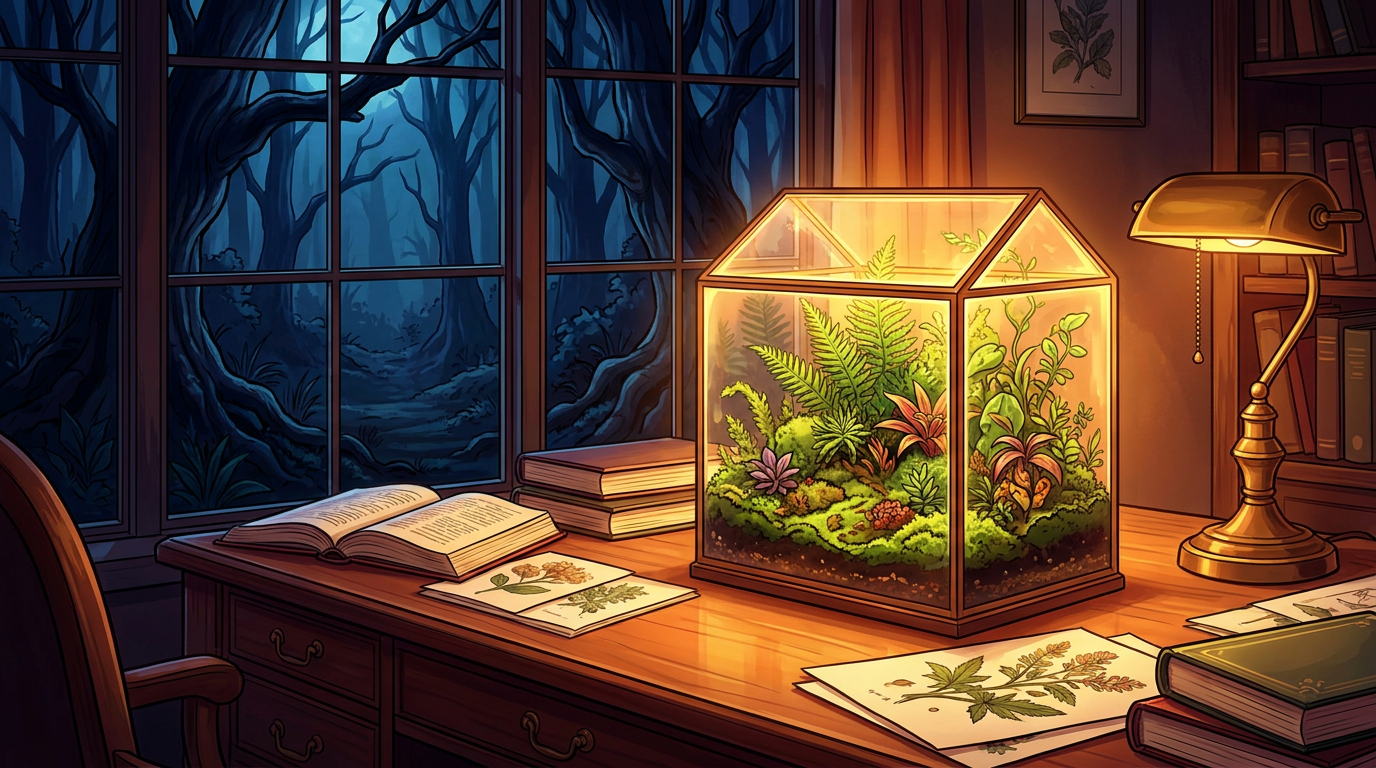
This instinct to hide gave rise to what writer Venkatesh Rao and designer Maggie Appleton termed the "Cozy Web." If the public internet is a dark forest, the Cozy Web consists of the underground burrows where users seek refuge. These are the gatekeeper-bounded spaces we have all retreated to: private Discord servers, group chats, Slack channels, and invite-only message boards. Here, the environment is non-indexed, non-optimized, and non-gamified, allowing for depressurized conversation and genuine human connection away from the glare of the algorithmic spotlight.[1]
But while the Cozy Web offers safety, it is inherently closed off. It fragments the internet into isolated silos, making it difficult to share knowledge broadly or discover new ideas outside of one's immediate social circle. This limitation has sparked a parallel movement that seeks to reclaim the open web without succumbing to its toxic dynamics: the practice of "digital gardening."[7]

Digital gardening is a personal knowledge management and publishing philosophy that treats a website not as a broadcast channel, but as a living, evolving landscape. Unlike traditional blogs, which are strictly chronological and demand polished, "finished" posts, digital gardens are topological. They are spaces where ideas are planted as rough "seedlings," cultivated over time into "budding" thoughts, and eventually matured into "evergreen" knowledge.[3]
The concept, pioneered by thinkers like Mike Caulfield, fundamentally rejects the internet's default setting of "sort by recency." In a digital garden, content is organized by context and connection rather than the date it was published. Visitors navigate through deeply interlinked notes, carving their own unique paths through the creator's mind, much like wandering through a physical botanical garden. There is no algorithm dictating what to read next, only the organic trails of human curiosity.[4]
Technologically, this movement has been accelerated by a new generation of "tools for thought." Applications like Obsidian and Notion, which feature bi-directional linking, allow users to create vast, interconnected webs of personal knowledge. These tools have democratized the process of building a garden, enabling users without extensive web development backgrounds to publish their interconnected notes directly to the web using static site generators like Quartz or Hugo.[3]
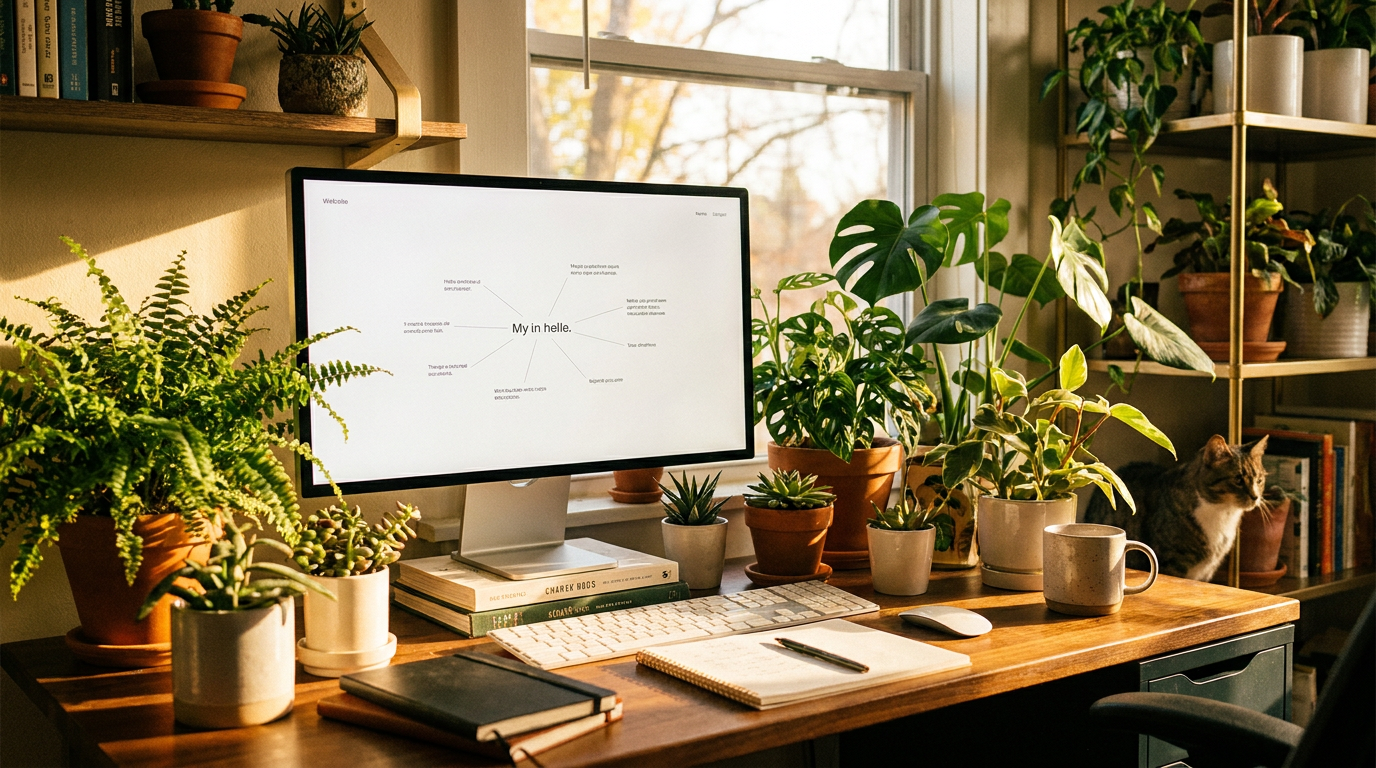
The visual hallmark of these tools is the "graph view"—a constellation of nodes and lines that maps how different ideas relate to one another. For many digital gardeners, this visual representation is deeply motivating. It shifts the focus from producing isolated pieces of content for an audience to building a cohesive, interconnected body of personal knowledge that compounds in value over time.[3]

The visual hallmark of these tools is the "graph view"—a constellation of nodes and lines that maps how different ideas relate to one another.
This shift is a core tenet of the broader "Slow Web" movement. Advocates for the Slow Web argue that technology should serve at a human pace, showing up when needed rather than constantly clawing for attention. By removing the pressure of publish dates, view counts, and comment sections, digital gardening lowers the stakes of sharing online. It normalizes the act of learning in public, allowing creators to be wrong, to iterate, and to grow their ideas transparently.[5][6]
Furthermore, the digital gardening ethos ties heavily into the IndieWeb revival—a push for users to own their data and digital identities. Over the last decade, millions of creators built their audiences on "rented land," relying on platforms like Substack, Medium, or Twitter, only to find themselves at the mercy of sudden algorithmic shifts or corporate policy changes. Hosting a personal digital garden on an independent domain is an act of reclaiming digital sovereignty.[3]
Aesthetically, these spaces often reflect the "Domestic Cozy" or "Biophilic" design trends. Moving away from the high-contrast, corporate homogeneity of major platforms, digital gardens frequently feature muted, earth-toned color palettes, generous white space, and idiosyncratic, personal touches. They are reminiscent of the quirky, highly personalized Geocities sites of the early 2000s, but built with modern, accessible web standards.[1]

However, the retreat into the Cozy Web and the cultivation of walled digital gardens is not without its critics. Some technologists and sociologists warn that abandoning the public square to algorithms and bad actors is a privilege not everyone can afford. When the most thoughtful, nuanced voices retreat into private group chats or bespoke personal sites, the mainstream platforms—where the vast majority of the global population still gets its information—are left to the loudest, most extreme, and most predatory actors.[7]
There is a real concern that the "Dark Forest" will only grow darker if those capable of shining a light decide to build their own private sanctuaries instead. The challenge for the next decade of internet culture is finding a way to bridge these two worlds: maintaining the safety, intimacy, and slow pace of the Cozy Web, while still contributing positively to the broader, public digital commons.[2][7]
Despite these tensions, the rise of digital gardening represents a profound and optimistic shift in internet culture. It proves that the desire for depth, nuance, and quiet contemplation has not been eradicated by the attention economy. People are actively choosing to build machinery—both technological and cultural—to protect their focus and nurture their intellect.[4]
As we move deeper into 2026, the internet is slowly fracturing into distinct biomes. While the algorithmic streams will likely continue to dominate the mass market, the proliferation of digital gardens offers a vital alternative. They stand as quiet, interconnected oases, reminding us that the web can still be a place of serendipity, personal growth, and human-scale connection.[7]
Viewpoints in depth
Digital Gardeners' view
Focuses on the joy of the slow web, personal knowledge management, and owning one's digital identity.
For digital gardeners, the primary goal is intellectual freedom. By moving away from platforms that demand constant, polished output, they reclaim the right to think out loud. This camp values 'evergreen' content that compounds in usefulness over time, rather than ephemeral posts that vanish down a feed. They argue that owning your own domain and data is the only way to build a sustainable, long-term digital presence that isn't subject to the whims of corporate algorithms.
Cozy Web Retreaters' view
Emphasizes safety, escaping trolls, and the necessity of gatekeeping for genuine human connection.
This perspective views the public internet as fundamentally broken and inherently hostile. For these users, the 'Dark Forest' is too exhausting to navigate daily. They argue that true vulnerability, nuance, and community can only exist behind closed doors—in private Discord servers, group chats, and Slack channels. To them, gatekeeping isn't exclusionary; it is a necessary boundary to keep out bad-faith actors and engagement-farming bots.
Public Square Advocates' view
Warns against the dangers of abandoning the open web and the privilege inherent in retreating.
Critics of the Cozy Web movement point out that retreating is a luxury. While tech-savvy or highly connected individuals can build beautiful digital gardens or join exclusive group chats, the vast majority of the world still relies on mainstream platforms for news, connection, and civic discourse. This camp argues that if all the thoughtful, nuanced voices leave the public square, those platforms will be entirely surrendered to extremists, propagandists, and predatory algorithms, ultimately harming society at large.
What we don't know
- Whether digital gardening will remain a niche practice for tech-savvy users or achieve true mainstream adoption.
- How mainstream social media platforms will adapt to the growing user desire for 'slow web' features.
- The long-term societal impact of thoughtful internet users abandoning the public square for private spaces.
Sources
Source coverage
7 outlets
3 viewpoints surfaced







[1]Maggie AppletonDigital Gardeners
The Dark Forest and the Cozy Web
Read on Maggie Appleton →[2]Yancey StricklerCozy Web Retreaters
The Dark Forest Theory of the Internet
Read on Yancey Strickler →[3]MediumDigital Gardeners
The Future of Digital Gardening & The Curated Web in 2026 and Beyond
Read on Medium →[4]Vector MagazineDigital Gardeners
Zoefuturism in the Online World: Cultivating our own Digital Gardens
Read on Vector Magazine →[5]Jesse OrndorffPublic Square Advocates
The Slow Web Dream (and the Reality We're In)
Read on Jesse Orndorff →[6]Are.naCozy Web Retreaters
Slow Web and the Burnout Generation
Read on Are.na →[7]Factlen Editorial TeamPublic Square Advocates
Synthesis by Factlen editorial team
Read on Factlen Editorial Team →

More in culture
See all 32 stories →Art Conservation
Unveiling the Invisible: How AI and Macro-X-Ray Tech Are Rewriting Art History
6 sources
Circular Economy
How the 'Library of Things' and Repair Cafes Are Transforming Neighborhood Economies
8 sources
Digital Gardening
The Rise of the 'Slow Web': How Digital Gardening is Saving Internet Culture
8 sources
Solarpunk Movement
The Rise of Solarpunk: How Literature is Trading Dystopia for Climate Optimism
6 sources
Every angle. Every day.
Get culture stories with full source coverage and perspective breakdowns delivered to your inbox.