
Unveiling the Invisible: How AI and Macro-X-Ray Tech Are Rewriting Art History
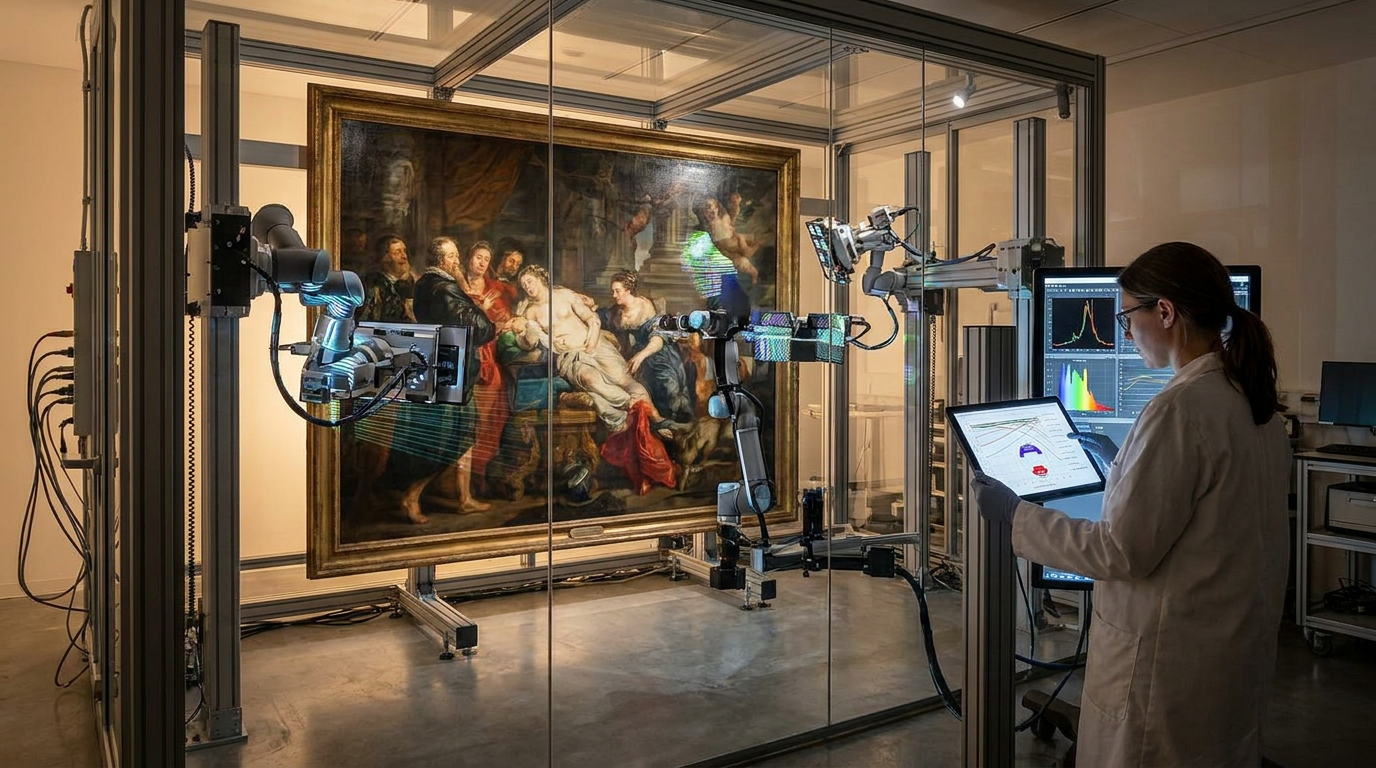
Conservators are combining macro-X-ray fluorescence and artificial intelligence to peer beneath the surface of centuries-old masterpieces without touching the canvas. This non-invasive revolution is revealing hidden paintings, lost sketches, and the original intent of history's greatest artists.
By Factlen Editorial Team
- Art Conservators & Historians
- Focused on preserving the physical integrity and original intent of the artwork.
- Heritage Scientists
- Focused on advancing non-invasive chemical imaging and material analysis.
- Computational Researchers
- Focused on using machine learning to parse massive datasets and predict material behavior.
What's not represented
- · Private art collectors funding conservation efforts
- · Contemporary artists reacting to the discovery of historical hidden works
Why this matters
By eliminating the need for invasive physical sampling, this technology ensures that priceless cultural heritage is preserved intact for future generations. It also democratizes art history, allowing the public to see the hidden creative processes of master painters for the first time.

More in culture
See all 36 stories →Digital Culture
The Rise of the 'Slow Internet' and the Cozy Web
7 sources

Science of Awe
The Science of Awe: How Everyday Wonder Rewires the Brain and Improves Health
8 sources

Well-Being Science
Beyond Happiness: Why Science is Turning to an Ancient Greek Philosophy of Flourishing
7 sources

Eco-Theology
How the World's Major Religions Are Uniting to Drive Global Climate Action
8 sources

Every angle. Every day.
Get culture stories with full source coverage and perspective breakdowns delivered to your inbox.