
EPA and Army Corps Propose Rule Stripping Federal Protection from 94% of US Wetlands
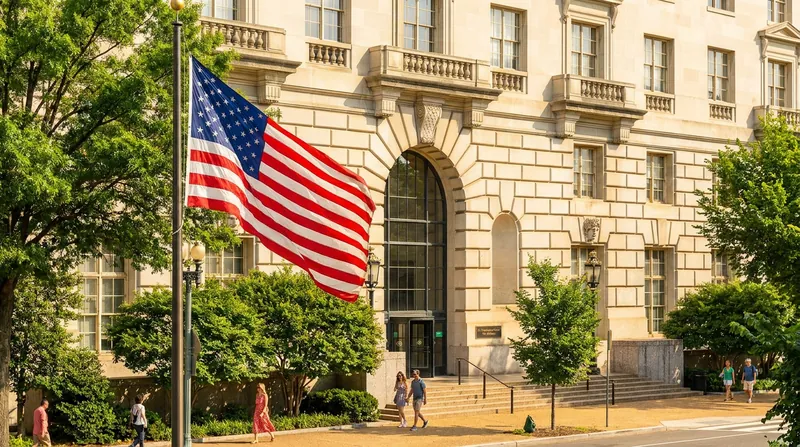
The Environmental Protection Agency and the U.S. Army Corps of Engineers have introduced a supplemental rule that limits Clean Water Act jurisdiction to permanently flowing waters, effectively removing federal oversight from the vast majority of the nation's wetlands and streams.
By Hailey Scott

Share this story
When the Supreme Court curtailed federal water protections in 2023, it left a narrow regulatory window for wetlands that maintained a continuous surface connection to larger navigable bodies. A supplemental rule proposed Friday by the Environmental Protection Agency and the U.S. Army Corps of Engineers closes that window almost entirely, introducing a strict 30-day disruption limit that environmental analysts project will strip federal oversight from 94 percent of the nation's remaining wetlands.[3][4]
The proposal fundamentally rewrites the application of the 1972 Clean Water Act. Under the new framework, streams and rivers only qualify for federal protection if they contain standing or continuously flowing water every day of the year under ordinary conditions. The rule permits a single dry period of no more than 30 consecutive days annually; a stream that experiences multiple dry spells would lose its protected status.[1][3][4]
For wetlands, the standard is even tighter. A wetland must possess a perennial surface water connection to an otherwise protected water body, and only the specific portion of the wetland that is "indistinguishable" from that water remains under federal jurisdiction.[3]
The scale of the jurisdictional contraction is vast. An analysis conducted by the Natural Resources Defense Council indicates the rule endangers 94 percent of wetlands in the United States. Furthermore, the perennial flow requirement eliminates protections for more than three-quarters of the nation's streams, which flow only seasonally or after precipitation events.[1][3][4]
The impact falls disproportionately on the arid American West. In states where ephemeral streams constitute the vast majority of waterways, federal water pollution oversight will effectively cease to exist outside of major river corridors, threatening habitats and drinking water sources.[1][3]
Federal officials and industry advocates frame the contraction as a necessary correction to decades of regulatory overreach. Adam Telle, the official overseeing the Army Corps of Engineers, stated the administration is "overhauling sclerotic government overreach to remove friction from our economy." Trade groups representing homebuilders and landowners argue the bright-line standard provides long-sought clarity, allowing property development without navigating costly federal permitting processes.[1][3]
Environmental organizations warn the rule dismantles the foundational architecture of the Clean Water Act. Jon Devine, director of freshwater ecosystems at the NRDC, characterized the proposal as declaring "open season on the nation's waterways," shifting the costs of water treatment and flood damage onto downstream communities.[1][3][4]
The proposal supersedes an earlier draft released in November, which would have removed protections from an estimated 81 percent of wetlands nationwide. The agencies are accepting public comment on the supplemental rule for 30 days via the Federal Register, with industry analysts anticipating a final rule before the end of the year.[1][3][4]
Viewpoints in depth
Agricultural and Development Sectors
Trade groups and property rights advocates argue the rule provides necessary regulatory clarity.
Industry representatives contend that previous WOTUS definitions created an unpredictable regulatory environment where farmers and builders faced severe penalties for altering minor, seasonal drainage ditches on private land. They view the new perennial-flow standard as a necessary bright line that restores property rights and accelerates infrastructure projects by removing the federal government from local land-use decisions.
Environmental and Public Health Advocates
Conservationists argue the rule ignores hydrological realities and endangers drinking water.
Environmental organizations and municipal water utilities argue the rule ignores the fact that seasonal streams and isolated wetlands feed directly into major drinking water sources. By allowing unrestricted discharge into headwaters and ephemeral streams, they contend the rule will degrade downstream water quality, destroy critical wildlife habitat, and force local taxpayers to fund expensive water filtration upgrades.
Key points
- The EPA and Army Corps proposed a rule limiting Clean Water Act protections to perennial waters flowing every day of the year.
- The rule permits a single dry period of up to 30 consecutive days, removing protections for seasonal and ephemeral streams.
- Environmental analysts project the new definitions will strip federal oversight from 94 percent of U.S. wetlands and over 75 percent of streams.
- Environmental Advocates
- Conservationists argue the rule ignores hydrological realities and endangers drinking water by deregulating seasonal streams.
- Industry and Property Owners
- Trade groups and property rights advocates argue the rule provides necessary regulatory clarity and removes federal overreach.
Perspectives this story doesn't cover
- State-level environmental regulators
- Municipal water utility operators
Sources
Source coverage
4 outlets
2 viewpoints surfaced




- [1]NationofChangeEnvironmental Advocates
Trump EPA proposes rule that would strip protection from most US streams and wetlands
Read on NationofChange → - [2]QuartzIndustry and Property Owners
Trump EPA proposes rule to strip federal wetlands protections - Quartz
Read on Quartz → - [3]ENRIndustry and Property Owners
Feds Further Shrink Federally Protected Wetlands Under the Clean Water Act
Read on ENR → - [4]Center for Western PrioritiesEnvironmental Advocates
Trump administration strips protections for wetlands
Read on Center for Western Priorities →
More in News & Politics
See all →Water Quality
EPA Proposes Repealing Drinking Water Limits for Four PFAS 'Forever Chemicals'
4 sources
Marine Pollution
Open-Loop Marine Scrubbers Cut Air Pollution by Discharging Acidic Washwater and Heavy Metals Directly Into Coastal Waters
10 sources

Carbon Pricing
The Price Floor, the Permit Cap, and the Border Adjustment: How Governments Price Carbon Emissions
5 sources
Climate Science
The Fraction of Attributable Risk: How Scientists Quantify the Human Influence on Extreme Weather Events
9 sources
Comments
Every angle. Every day.
Get News & Politics stories with full source coverage and perspective breakdowns, free every day.