
The Three-Part Test That Determines a State's Right to Secede Under International Law
While separatist movements frequently claim a legal right to independence, international law only recognizes unilateral secession under three narrow conditions. Outside of decolonization, foreign military occupation, or extreme human rights abuses, the territorial integrity of the parent state prevails.

Share this story
In short
- International law does not grant a general right to unilateral secession, prioritizing the territorial integrity of existing states.
- The right to form a new state is universally recognized only for colonies and territories under foreign military occupation.
- The Supreme Court of Canada established that groups with equitable democratic representation possess only a right to internal autonomy.
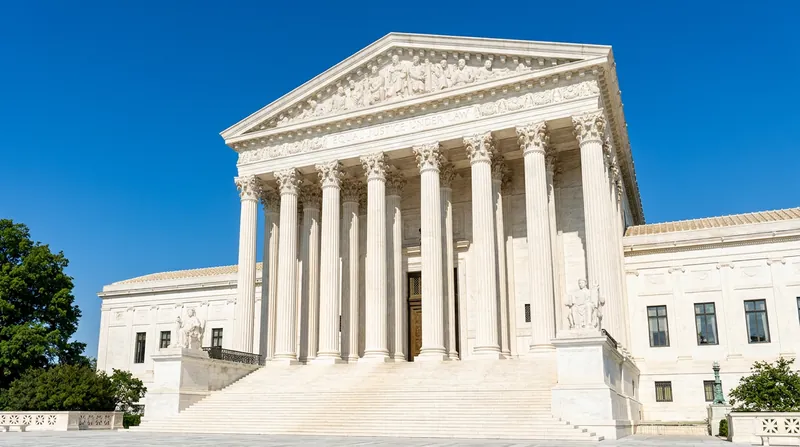
Separatist movements from Catalonia to eastern Ukraine routinely assert that the United Nations Charter guarantees their right to secede, citing the universal "right of peoples to self-determination." The evidence directly contradicts this claim. As the Supreme Court of Canada established in its landmark 1998 Reference re Secession of Quebec, the international legal principle of self-determination has evolved entirely within a framework that protects the territorial integrity of existing states.
Under modern international law, there is no general right to unilateral secession; instead, the law provides a rigid three-part test that permits a territory to break away only when it is a colony, is under foreign military occupation, or is subjected to extreme human rights violations that completely deny its people internal self-determination.[1][4]
The tension between self-determination and state sovereignty is the defining structural conflict of international law. Article 1(2) of the 1945 UN Charter lists the "self-determination of peoples" as a core purpose of the organization. However, as legal scholars at the European Journal of International Law note, international law generally remains neutral on secession itself, neither explicitly authorizing it nor outright prohibiting it unless it involves the illegal use of force.[3]
To resolve this tension, international courts and legal bodies have developed a threshold test that separates lawful external self-determination—the creation of a new state—from unlawful rebellion. The Supreme Court of Canada articulated this framework most clearly in 1998, when the federal government asked the court to determine if the province of Quebec could legally declare independence following the 1995 referendum, which separatists lost by a narrow 50.6 percent to 49.4 percent margin.[1]
The Canadian court ruled unanimously that Quebec could not unilaterally secede, establishing that the right to external self-determination applies only in highly specific scenarios. "A state whose government represents the whole of the people or peoples resident within its territory, on a basis of equality and without discrimination... is entitled to the protection under international law of its territorial integrity," the justices wrote.[1]
The first and most established prong of the secession test applies to decolonization. Following World War II, the international community recognized that populations subjected to "alien subjugation, domination and exploitation" possessed an absolute right to break away from imperial powers. This principle drove the massive expansion of UN membership from 51 original states in 1945 to 193 today, as former colonies across Africa and Asia exercised their right to external self-determination.[4]
The second prong of the test permits secession for territories under foreign military occupation. When a sovereign state is invaded and its territory occupied by an external power, the subjugated population retains the right to self-determination and the restoration of their independence. This criterion ensures that illegal territorial conquests do not extinguish the legal existence of the occupied state.[1]
The third and most contested prong is the doctrine of "remedial secession." This theory posits that a minority group concentrated in a specific territory may claim a right to secede as a measure of last resort if the parent state perpetrates gross human rights violations against them and completely denies them access to government.[3][4]
Remedial secession remains highly controversial among international lawyers. During the 2010 International Court of Justice advisory proceedings regarding Kosovo's 2008 declaration of independence from Serbia, states were deeply divided on whether remedial secession actually exists in customary international law. The ICJ ultimately sidestepped the question, ruling only that Kosovo's declaration did not violate international law, without affirming a positive right to secede.[2]
Legal scholars emphasize that the threshold for remedial secession, if it exists, is exceptionally high. As noted in the Opinio Juris analysis of the 2017 Catalan independence crisis, the Spanish government's refusal to grant Catalonia a binding referendum did not meet the standard of severe oppression. Because Catalans are equitably represented in Spain's democratic institutions and do not face massive human rights violations, they possess only a right to "internal" self-determination—autonomy within the state—not external secession.
The distinction between internal and external self-determination is the mechanism that preserves global stability. Internal self-determination allows a distinct group to pursue its political, economic, social, and cultural development within the framework of an existing state. This is typically achieved through federalism, devolved parliaments, or constitutional guarantees of minority rights.[5]
Only when a state systematically blocks internal self-determination does the question of external secession arise. In the 1998 Quebec reference, the Supreme Court of Canada found that because Quebecers occupied prominent positions within the Canadian government and enjoyed full democratic rights, their internal self-determination was fully realized, extinguishing any legal claim to unilateral secession.[1]
The international community's response to unilateral declarations of independence relies heavily on this three-part framework. When a secessionist entity fails the test, other states generally withhold diplomatic recognition. Collective non-recognition prevents the breakaway region from joining international organizations, accessing global financial systems, or functioning as a sovereign state.[5]
This dynamic was evident in 2014 and 2022, when the Russian Federation attempted to justify its annexation of Ukrainian territories by claiming the Russian-speaking populations in Crimea and the Donbas were exercising their right to self-determination. Because the referendums were conducted under foreign military occupation and lacked the consent of the parent state, the international community overwhelmingly rejected the secessions as illegal violations of Ukraine's territorial integrity.[5]
Conversely, when a parent state consents to the separation, international law readily accepts the new entity. The 2011 independence of South Sudan, achieved through a referendum negotiated with the government in Khartoum following decades of civil war, was universally recognized because it occurred with the parent state's legal consent.[5]
The legal barrier to unilateral secession exists to prevent the endless fragmentation of the global order. The justices of the Supreme Court of Canada noted that international law "does not specifically grant component parts of sovereign states the legal right to secede unilaterally from their 'parent' state," ensuring that political disputes are resolved through domestic constitutional frameworks rather than territorial fracture.[1]
The legal barrier to unilateral secession exists to prevent the endless fragmentation of the global order.
The legal architecture governing statehood treats unilateral secession not as a guaranteed right, but as a factual occurrence that is only legally validated under the most extreme conditions of colonial rule, foreign occupation, or the complete collapse of human rights protections. Until one of those three thresholds is demonstrably crossed, the territorial borders of existing states remain legally inviolable, leaving separatist movements to negotiate their autonomy from within.[5]
Jargon, explained
- External Self-Determination
- The right of a people to form their own independent state, generally restricted under international law to colonies or occupied territories.
- Internal Self-Determination
- The right of a group to pursue political, economic, and cultural development within the borders of an existing sovereign state.
- Territorial Integrity
- The principle under international law that the borders of recognized sovereign states are inviolable and cannot be altered by force or unilateral secession.
- Remedial Secession
- A controversial legal doctrine arguing that a region can unilaterally secede as a last resort if its people suffer gross human rights violations.
- Parent State
- The existing sovereign nation from which a separatist movement or territory is attempting to break away.
Common questions
Does the UN Charter grant a right to secede?
No. While the UN Charter guarantees the "self-determination of peoples," international courts have consistently ruled that this right must be exercised within the framework of existing states, protecting territorial integrity.
What is remedial secession?
Remedial secession is a contested legal theory suggesting that a minority group can legally break away from a parent state if they are subjected to extreme human rights violations and completely denied political representation.
Why was South Sudan's independence legal but Catalonia's was not?
South Sudan achieved independence through a negotiated referendum with the consent of its parent state (Sudan). Catalonia attempted to secede unilaterally against the constitutional law of Spain, which international law does not support.
Did the International Court of Justice legalize secession in the Kosovo case?
No. The ICJ ruled only that Kosovo's specific declaration of independence did not violate international law, but it deliberately avoided stating that Kosovo had a positive legal right to secede.
Competing readings
Territorial Integrity Advocates
States and legal scholars who argue that existing borders must remain inviolable to prevent global destabilization.
This perspective, dominant among existing sovereign states, argues that granting a broad right to unilateral secession would invite endless geopolitical fragmentation. Proponents emphasize that the UN Charter's guarantee of territorial integrity supersedes the right to self-determination once a state is formed. They argue that internal autonomy and democratic representation are sufficient remedies for minority grievances, and that recognizing breakaway regions without the parent state's consent encourages armed rebellion and foreign interference.
Remedial Secession Theorists
Human rights advocates and jurists who argue that severe state violence extinguishes a government's claim to territorial integrity.
This camp contends that sovereignty is conditional on a state's responsibility to protect its population. When a government engages in gross human rights violations, ethnic cleansing, or the complete disenfranchisement of a concentrated minority, these theorists argue the state forfeits its right to territorial integrity. From this viewpoint, external self-determination (secession) becomes a necessary legal remedy of last resort when internal self-determination has been violently denied, even if the parent state objects.
- Territorial Integrity Advocates
- States and legal scholars who argue that existing borders must remain inviolable to prevent global destabilization.
- Remedial Secession Theorists
- Human rights advocates and jurists who argue that severe state violence extinguishes a government's claim to territorial integrity.
Perspectives this story doesn't cover
- Stateless nations seeking UN recognition
- Indigenous populations lacking formal territorial claims
Sources
Source coverage
5 outlets
2 viewpoints surfaced





- [1]Supreme Court of CanadaTerritorial Integrity Advocates
Reference re Secession of Quebec, 2 S.C.R. 217
Read on Supreme Court of Canada → - [2]International Court of Justice
Accordance with international law of the unilateral declaration of independence in respect of Kosovo
Read on International Court of Justice → - [3]EJIL: Talk!Remedial Secession Theorists
A Footnote on Secession
Read on EJIL: Talk! → - [4]Oxford AcademicRemedial Secession Theorists
International Law and Secession
Read on Oxford Academic → - [5]Factlen Editorial Team
Synthesis by Factlen editorial team
Read on Factlen Editorial Team →
More in News & Politics
See all →Parliamentary Mechanics
How Confidence-and-Supply Agreements Keep Minority Governments in Power
2 sources

Coalition Withdrawal
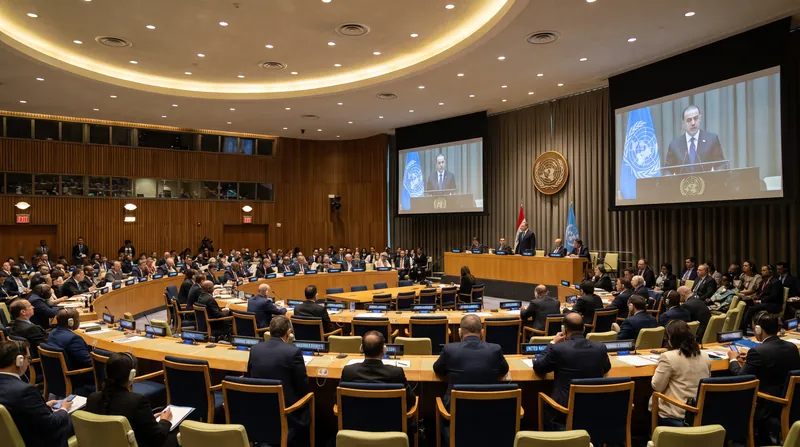
Iraq Announces End of US-Led Military Coalition at UN General Assembly
6 sources
Venezuela Transition
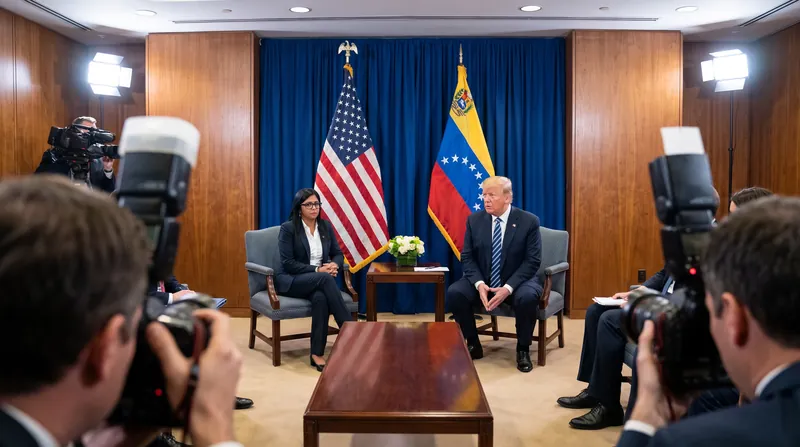
Venezuelan Interim President Meets Trump at UN to Launch $200 Billion Debt Restructuring Talks
9 sources
CBO Scoring
The 'Dynamic Scoring' vs. 'Static Scoring' Trade-Off: How the CBO Estimates the Fiscal Impact of Legislation
8 sources

Comments
Every angle. Every day.
Get News & Politics stories with full source coverage and perspective breakdowns, free every day.