
DOE Proposes Rule to Restrict Future Appliance Energy Efficiency Mandates
The U.S. Department of Energy has proposed a sweeping overhaul of its internal rules, establishing strict new thresholds that would make it significantly harder to mandate energy efficiency upgrades for future household appliances.

Share this story
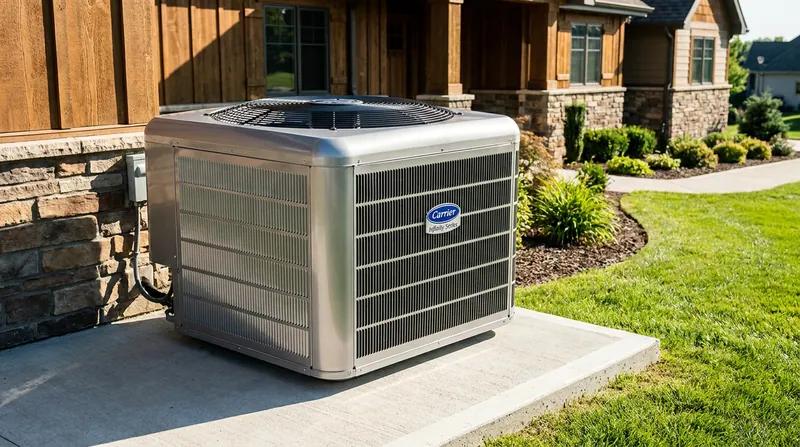
The U.S. Department of Energy (DOE) has initiated a sweeping regulatory overhaul aimed at halting the creation of new federal energy efficiency mandates for household appliances. Announced on July 2, 2026, the Notice of Proposed Rulemaking targets the regulatory framework governing everything from air conditioners and water heaters to washing machines and gas stoves.
Framed by the Trump administration as a move to permanently end restrictive mandates, the proposal seeks to fundamentally alter how the government balances national energy conservation goals against consumer costs. If finalized, the rule would reshape the appliance market for builders, homeowners, and manufacturers for decades to come.[1][2]
The core of the administration’s argument rests on consumer choice and upfront affordability. Energy Secretary Chris Wright argued that decades of tightening federal standards have forced manufacturers to prioritize energy metrics over basic functionality and cost.
In the DOE's official announcement, Wright stated that Americans should be able to choose a dryer that dries clothes on the first try rather than one that takes multiple cycles. The agency contends that previous administrations drove up the retail price of essential household equipment, disproportionately impacting lower-income buyers who are most sensitive to upfront costs.[1]
Rather than repealing existing standards—which is largely prohibited by federal law—the DOE’s proposal rewrites the internal Process Rule. This rule dictates the methodology the department must follow when evaluating and implementing new efficiency requirements under the 1975 Energy Policy and Conservation Act (EPCA). By altering these procedural requirements, the DOE aims to create a significantly higher burden of proof before any future administration can mandate that appliances use less electricity or water.[3][8]
The most significant mechanism in the proposed rule is a strict new definition of what constitutes significant energy savings. Under the revised Process Rule, the DOE would only be permitted to establish a new efficiency standard if it achieves either a 10 percent reduction in full-fuel-cycle energy use over 30 years, or a total savings of at least 2 quadrillion British thermal units (BTUs) over the same period. This quantitative threshold replaces a more flexible framework that allowed the agency to pursue incremental efficiency gains as technology improved.[5][8]
In practice, the 2-quadrillion BTU threshold represents a massive regulatory hurdle. Energy efficiency advocates point out that many of the most successful standards implemented over the past two decades would not have met this strict criteria. For example, a recent standard for commercial water heaters—projected to save facilities $149 million annually by requiring condensing technology—falls short of the proposed threshold and would be blocked under the new rules. By setting the bar exceptionally high, the DOE effectively screens out the vast majority of future efficiency proposals.[5]
The HVAC and appliance manufacturing industries have largely welcomed the procedural changes. Organizations like the Heating, Air-conditioning, & Refrigeration Distributors International (HARDI) argue that the new rule restores necessary economic thresholds that prevent unnecessary increases in the upfront costs of home systems. Industry representatives note that while they support technological advancement, federal mandates often force manufacturers to adopt expensive, proprietary technologies that price out middle-class homeowners when their furnace or air conditioner fails unexpectedly.[4]
Beyond cost, the deregulation effort taps into long-standing consumer frustrations regarding appliance performance. The DOE explicitly cited the degradation of utility in household chores, pointing to washing machines that require longer cycles to clean clothes and low-flow showerheads that provide inadequate water pressure. By freezing future mandates, the administration argues that manufacturers will be free to compete on performance and reliability rather than engineering their products solely to pass federal energy tests.[1][2]
Conversely, consumer and environmental advocates view the proposal as a thinly veiled attempt to dismantle a highly successful federal program. Andrew deLaski, executive director of the Appliance Standards Awareness Project, described the proposed Process Rule as an obstacle course of restrictions designed to bog down the DOE’s congressional mandate. Critics argue that the rule prioritizes the short-term interests of manufacturers over the long-term financial health of American households.[3]
The central counter-argument focuses on the total cost of ownership. While deregulation may lower the sticker price of a new refrigerator or air conditioner, efficiency advocates stress that consumers will ultimately pay more in monthly utility bills over the 10-to-15-year lifespan of the appliance. They argue that the existing federal standards correct a market failure where builders and landlords install the cheapest, least efficient equipment, leaving the end-user or tenant saddled with inflated energy costs for years.[2][6]
The timing of the rollback has also drawn intense scrutiny given the current state of the U.S. power grid. With record-breaking summer heat waves driving up air conditioning demand and the rapid expansion of energy-intensive artificial intelligence data centers, the national electrical infrastructure is under unprecedented strain. Efficiency advocates warn that freezing appliance standards will result in Americans consuming gigawatts of additional power, exacerbating grid instability and increasing the likelihood of rolling blackouts during peak demand periods.[2][3]
Legally, the DOE’s proposal navigates a complex statutory landscape. The Energy Policy and Conservation Act includes a strict anti-backsliding provision, which explicitly prohibits the federal government from weakening or revoking an energy conservation standard once it has been established. Because the DOE cannot legally make existing appliances less efficient, the proposed Process Rule is entirely forward-looking, designed to inhibit future administrations from tightening the screws further.[7][8]
Despite this forward-looking approach, the proposal is expected to face fierce legal challenges. A coalition of Democratic-led states and environmental organizations is already preparing to sue if the rule is finalized. Legal analysts suggest the lawsuits will likely argue that the arbitrary 2-quadrillion BTU threshold violates the DOE’s statutory obligation under the EPCA to continually review and update standards to achieve the maximum improvement in energy efficiency that is technologically feasible and economically justified.[2]
For the homebuilding and remodeling sectors, the immediate impact of the proposal is a period of regulatory certainty. Builders will not have to anticipate sudden, mandate-driven redesigns of HVAC systems or kitchen appliances in the near term. However, legal experts caution that businesses should not assume the efficiency debate is settled. If the rule is tied up in federal courts, manufacturers may still face a patchwork of state-level regulations, as states like California and New York continue to enforce their own strict energy and emissions standards.[4][7]
The proposed rule also includes an early assessment stage designed to quickly screen out efficiency proposals that lack significant economic benefits, further streamlining the rejection of new mandates. Additionally, it makes portions of the Process Rule binding on the agency itself, reducing the discretionary power of future Energy Secretaries to bypass the strict new thresholds.[7][8]
The Notice of Proposed Rulemaking remains open for public comment until August 6, 2026, with a final rule expected to be published shortly thereafter. As the debate moves from the Federal Register to the courts, the outcome will dictate whether the next generation of American home appliances is defined by federal conservation goals or by a deregulated open market.[1][8]
Key points
- The DOE proposed a rule to permanently restrict the creation of future appliance energy efficiency mandates.
- New standards would require saving at least 2 quadrillion BTUs of energy or a 10% reduction in energy use.
- Proponents argue the rule will lower upfront appliance costs and improve performance.
- Critics warn the rollback will increase long-term utility bills and strain the U.S. power grid.
What we don’t know
- Whether the federal courts will uphold the 2-quadrillion BTU threshold as legally valid under the EPCA.
- How individual states like California and New York will respond with their own localized appliance standards.
- The exact impact the rule will have on the long-term research and development budgets of major appliance manufacturers.
How we got here
1975
Congress passes the Energy Policy and Conservation Act (EPCA), establishing the federal appliance standards program.
2020
The Trump administration updates the Process Rule to introduce stricter economic thresholds for new standards.
2021-2024
The Biden administration reverses several of the 2020 changes, accelerating the implementation of new efficiency mandates.
July 2, 2026
The DOE issues a Notice of Proposed Rulemaking to permanently restrict the creation of future appliance mandates.
August 6, 2026
The public comment period for the proposed rule closes, setting the stage for a final decision.
- Deregulation & Industry Advocates
- Argue that strict efficiency mandates raise upfront costs, restrict consumer choice, and degrade appliance performance.
- Efficiency & Consumer Advocates
- Argue that efficiency standards save consumers money on long-term utility bills and reduce strain on the national power grid.
- Legal & Regulatory Analysts
- Focus on the procedural mechanics of the rule, noting the high evidentiary bar it sets for future federal mandates.
Perspectives this story doesn't cover
- State-level energy regulators
- Low-income housing advocates
- Appliance retailers
Sources
Source coverage
8 outlets
3 viewpoints surfaced








- [1]Department of EnergyDeregulation & Industry Advocates
Trump Administration Moves to Permanently End Green New Scam Appliance Mandates
- [2]The Washington PostEfficiency & Consumer Advocates
The Energy Department wants to permanently restrict longstanding efficiency mandates
Read on The Washington Post → - [3]Utility DiveEfficiency & Consumer Advocates
DOE proposes rule to bog down appliance efficiency program
- [4]ACHR NewsDeregulation & Industry Advocates
DOE claims proposed changes will permanently end energy conservation mandates for appliances
- [5]Facilities DiveEfficiency & Consumer Advocates
DOE proposal could eliminate future appliance energy-efficiency mandates
- [6]ForbesEfficiency & Consumer Advocates
Trump's Appliance Efficiency Rollback
- [7]Stuart KaplowLegal & Regulatory Analysts
Rollback of Federal Appliance Efficiency Standards Happening – What Businesses Need to Know
- [8]Foley & LardnerLegal & Regulatory Analysts
DOE Proposes Substantial Revisions to Appliance Efficiency Process Rule

More in Home
See all →Real Estate Law
NAR and Major Brokerages Settle Homebuyer Commission Antitrust Lawsuit for $120 Million
8 sources

Indoor Air Quality
EPA Formaldehyde Risk Assessment Targets Upholstery Foam, Prompting Furniture Industry Overhaul
8 sources

Sleep Tech
How AI-Driven Sleep Systems and Adaptive Mattresses Became the Standard in 2026
8 sources

HVAC Transition
The R-410A Phaseout: How the New Federal Mandate is Reshaping Home Air Conditioning
3 sources
Comments
Every angle. Every day.
Get Home stories with full source coverage and perspective breakdowns, free every day.