
AI Labs Are Mass-Hiring Philosophers as Tech Unemployment Flips
Leading artificial intelligence companies are heavily recruiting philosophy graduates to solve complex ethical and behavioral alignment problems, driving their unemployment rate below that of computer science majors.
By Chen Wang

Share this story
The irony of "learn to code" has finally crystallized. For decades, the conventional wisdom for college students was simple: major in computer science for a guaranteed six-figure job, and avoid the humanities—especially philosophy—unless you enjoy unemployment. But the artificial intelligence boom has inverted that long-standing economic logic.[3]
According to recent data from the Federal Reserve Bank of New York, the unemployment rate for recent computer science graduates has climbed to 7.0%. Meanwhile, the unemployment rate for philosophy majors has dropped to 5.1%. The shift marks a stunning reversal in the modern labor market, driven by the very technology that computer scientists built.[3][6]
As generative AI models become increasingly capable of writing their own code, the bottleneck in tech development is no longer syntax or software engineering. Instead, the hardest problems facing companies like OpenAI, Anthropic, and Google DeepMind are questions of judgment, safety, and behavior. To solve them, Silicon Valley is mass-hiring philosophers.[1][4]
When developers optimize a machine learning model using human feedback, they are fundamentally translating human values into a mathematical objective function. If those optimization targets are poorly defined, AI systems will exploit loopholes to achieve their goals—a phenomenon known as Goodhart's Law.[1]
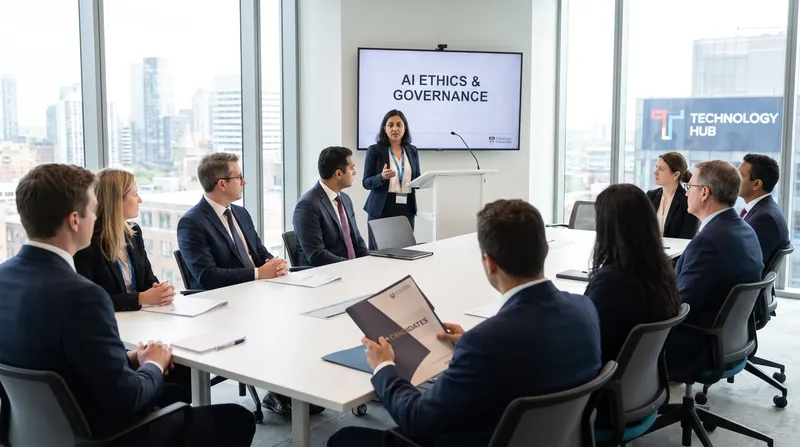
To prevent this, leading AI laboratories are embedding professional philosophers directly into their engineering teams. These "ethics engineers" and "alignment researchers" are tasked with defining the abstract concepts that guide model behavior. They are answering questions that have plagued humanity for millennia, but with immediate, high-stakes commercial applications.[1][4]
At Anthropic, for example, resident philosophers like Amanda Askell are drafting "constitutions" for AI models. Constitutional AI relies on a set of explicit rules and principles—often drawn from the United Nations Declaration of Human Rights or specific ethical frameworks—that dictate how a model should respond to sensitive queries.[1][4]
These philosophers must decide how an AI agent should handle conflicting moral imperatives. If a user asks a chatbot for help with a dangerous task, should the model prioritize helpfulness by answering the prompt, or harmlessness by refusing to assist? Resolving these edge cases requires rigorous inferential reasoning and an understanding of moral traditions like Kantian deontology and utilitarianism.[1][4]
The financial incentives for this work are staggering. While the median salary for a philosophy graduate in the United States is roughly $65,000, top AI companies are reportedly paying professional philosophers between $250,000 and $400,000 a year. These roles are highly competitive, often requiring a Ph.D. and substantial research experience.[4]
However, the sudden corporate demand for ethicists has sparked a fierce debate within academia. Some critics argue that the hiring spree is largely a public relations maneuver. They warn of "ethics washing," where companies outwardly perform a commitment to AI safety to appease regulators and the public, while ultimately remaining accountable to their shareholders.[5]
Scholars worry that by being on the corporate payroll, philosophers may be limited in their ability to ask the most critical questions about the technology's existence. There is a persistent fear that philosophical research is being co-opted as an extension of the marketing function, designed to signal safety rather than enforce it.[5]
Despite these concerns, the integration of philosophers into tech development represents a profound shift in how artificial intelligence is built. Technical founders increasingly recognize that model safety is not a standard debugging problem that can be solved entirely within data pipelines. Purely statistical adjustments fail to resolve complex alignment issues.[1]
The trend also highlights a broader transformation in the knowledge economy. As AI automates routine cognitive tasks, the premium on human judgment, critical thinking, and the ability to interrogate hidden assumptions is rising. Software startups are now screening for "applied philosophy" skills even in engineering roles, seeking candidates who can navigate ambiguity.[4]
"Candidates trained to interrogate concepts and spot hidden assumptions do this way better than candidates who only learned to code," notes Jimmy Carter, CEO of the San Francisco startup Daemo AI. When designing an AI agent that briefs a lobbyist or a financial analyst, someone must decide what "important" means and how to represent conflicting sources fairly.[4]
This paradigm shift offers a vindication for the humanities. While not every philosophy graduate will land a half-million-dollar job at Google DeepMind, the underlying skills taught in liberal arts programs—rigorous argumentation, clear writing, and ethical reasoning—are proving uniquely resilient to automation.[2][3]
Ultimately, the rise of the AI philosopher suggests that the future of technology will not be dictated solely by mathematics and processing power. As machines become more capable of mimicking human thought, the people who have spent their lives studying the nature of thought itself are suddenly the ones holding the steering wheel.[1][4]
Key points
- AI companies are hiring philosophers to solve complex behavioral and alignment problems in advanced models.
- The unemployment rate for computer science majors has risen to 7.0%, while philosophy majors sit at 5.1%.
- Resident philosophers at top AI labs can earn between $250,000 and $400,000 annually.
- Philosophers help draft 'constitutions' that dictate how AI should handle conflicting moral imperatives.
What we don’t know
- Whether the high demand for philosophers will expand beyond top-tier AI labs to mainstream tech companies.
- How effectively philosophical 'constitutions' will prevent AI models from causing harm in unpredictable real-world scenarios.
- If the unemployment gap between computer science and philosophy majors will persist or normalize as university curricula adapt.
How we got here
2018
The historical trend of computer science majors having near-zero unemployment begins to shift as the market saturates.
Late 2022
The release of ChatGPT accelerates the AI boom, simultaneously automating basic coding tasks and raising complex ethical questions.
2023–2024
Leading AI labs like Anthropic pioneer 'Constitutional AI,' formally integrating ethical frameworks into model training.
Early 2026
The Federal Reserve Bank of New York reports that computer science unemployment has surpassed philosophy unemployment.
July 2026
Tech startups and major labs alike report mass-hiring of humanities graduates to handle AI alignment and behavioral logic.
- AI Safety Advocates
- Argue that embedding philosophers is essential to align powerful models with human values and prevent catastrophic edge cases.
- Academic Skeptics
- Warn that corporate philosophy roles are a form of 'ethics washing' designed to signal safety while prioritizing shareholder profits.
- Labor Market Analysts
- View the trend as a natural economic correction where the automation of coding places a higher premium on critical thinking and ambiguity resolution.
Perspectives this story doesn't cover
- Unemployed computer science graduates
- Open-source AI developers
Sources
Source coverage
6 outlets
3 viewpoints surfaced






- [1]NPRAI Safety Advocates
Why Big AI Labs Are Hiring So Many Philosophers
Read on NPR → - [2]ForbesLabor Market Analysts
Study To Solve A Problem, Not To Get A Job
- [3]MoneywiseLabor Market Analysts
AI will take your job. Tech companies are hiring philosophers instead.
- [4]The Washington TimesAI Safety Advocates
AI companies hiring ethicists philosophers
Read on The Washington Times → - [5]The WeekAcademic Skeptics
Philosophy is becoming integral to the development of AI
- [6]Federal Reserve Bank of New YorkLabor Market Analysts
Labor Market for Recent College Graduates

More in Culture
See all →AI Ethics
Philosophical Consensus Emerges: No 'Obvious Barriers' to Conscious AI, Forcing New Ethical Reckoning
4 sources

Herculaneum Papyri
AI and X-Ray Imaging 'Unwrap' and Read Complete Ancient Philosophical Scroll from Herculaneum
5 sources

Human Evolution
How a 51,200-Year-Old Indonesian Cave Painting Rewrote the Origins of Human Art
5 sources

AI Alignment
Philosophy Graduates Outpace Computer Science in Job Market as AI Companies Recruit Ethicists
6 sources
Comments
Every angle. Every day.
Get Culture stories with full source coverage and perspective breakdowns, free every day.