
The End of Isolation: How Venezuela's Catastrophic Earthquake Rewrites the Country's Global Standing
In the aftermath of the devastating June 2026 earthquakes, an unprecedented influx of international aid from the U.S., Israel, and multilateral institutions is ending Venezuela's decades of diplomatic isolation.
By Naina Verma

Share this story
The June 24, 2026, earthquakes that shattered northern Venezuela were a generational tragedy, but the aftermath has triggered an equally seismic geopolitical shift.[3][4]
In the wake of the magnitude 7.2 and 7.5 tremors, an unprecedented wave of international cooperation has effectively ended Venezuela's decades of diplomatic isolation.[2]
The concept of "disaster diplomacy"—where natural catastrophes force estranged or adversarial nations to cooperate—is playing out in real-time across Caracas and the state of La Guaira.
The most striking transformation is the response from the United States. Following years of sanctions and the dramatic political transition in January 2026, Washington has pivoted from economic pressure to massive humanitarian support.[1]
The State Department has pledged over $300 million in relief, characterizing the mobilization as the largest U.S. disaster response this century in terms of speed and personnel.[1]
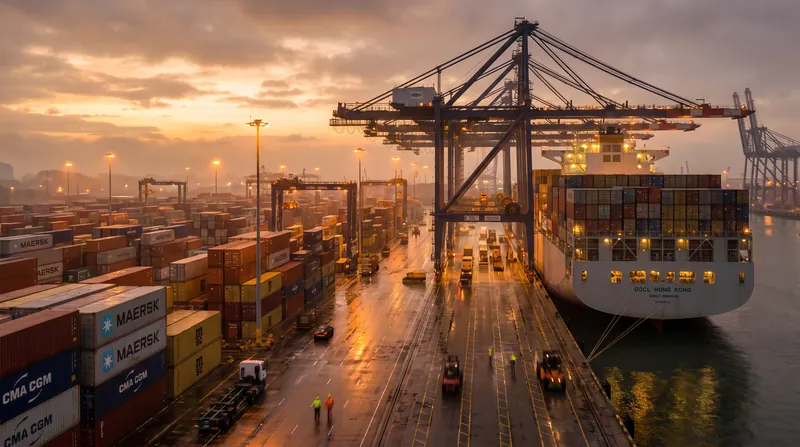
U.S. military personnel have deployed to the Caribbean nation, taking control of logistics at the Simón Bolívar International Airport and the port of La Guaira to facilitate the influx of global aid.[2]
This heavy footprint reflects a new regional strategy, prioritizing overwhelming, rapid humanitarian deployments over slower-paced traditional development assistance.[1]
Beyond Washington, the earthquake has thawed one of Venezuela's most entrenched diplomatic freezes: its relationship with Israel.[2]
For the first time since ties were severed in 2009, an official Israeli delegation—led by the Home Front Command—has arrived in Caracas to assist with search, rescue, and recovery operations.[2]
Multilateral financial institutions, long locked out of Venezuelan state finances due to political standoffs and debt defaults, are also rapidly re-engaging.[3]
The International Monetary Fund has unfrozen $200 million in previously restricted resources to fund immediate reconstruction efforts.[2]
Meanwhile, the World Bank and the Inter-American Development Bank are laying the groundwork for long-term infrastructure loans, targeting the country's decimated electrical grid and water systems.[7]
To manage this sudden influx of foreign capital and personnel, acting Venezuelan President Delcy Rodríguez launched the "Great Mission Venezuela Renace" (Venezuela Reborn), a centralized authority to coordinate international funds and rebuild housing.[2]
However, the heavy international presence has sparked domestic debate, with some factions viewing the influx of U.S. and Israeli military personnel as a complex challenge to national sovereignty, despite the undeniable humanitarian need.[2]
The sheer scale of the physical damage complicates this diplomatic victory. Satellite data indicates nearly 59,000 structures were damaged or destroyed, representing an economic hit of up to 8% of the nation's GDP.[5]
The ultimate test of this renewed global standing will be whether the emergency cooperation translates into sustained diplomatic normalization and structural rebuilding once the immediate crisis fades.[3]
Viewpoints in depth
U.S. Diplomatic Establishment
Views the massive aid deployment as a demonstration of American leadership and a strategic cementing of ties.
For Washington, the earthquake presents an opportunity to solidify the new relationship with Caracas following the January 2026 political transition. By deploying military logistics and pledging $300 million, the U.S. is executing a strategy that favors rapid, overwhelming disaster relief over traditional development aid. This approach aims to stabilize the region, reduce outward migration, and demonstrate tangible benefits of alignment with the United States.
Sovereignty Advocates
Views the influx of foreign military personnel with caution, emphasizing national autonomy.
While acknowledging the desperate need for humanitarian assistance, some domestic factions and regional observers express unease over the heavy presence of U.S. and Israeli military personnel at critical infrastructure nodes like the Simón Bolívar International Airport. They argue that emergency relief should not become a backdoor for permanent foreign military footprints, urging the government to maintain strict oversight of the reconstruction mission.
Multilateral Institutions
Focuses on the technical and financial mechanics required to rebuild the country's infrastructure.
For organizations like the IMF, World Bank, and IDB, the immediate release of emergency funds is only the first step. The long-term challenge lies in navigating Venezuela's historically opaque state finances. These institutions are pushing for rigorous structural censuses and transparent data reporting as prerequisites for the billions of dollars in long-term loans needed to rebuild the decimated electrical grid and water systems.
Key points
- The June 2026 earthquakes in Venezuela have triggered an unprecedented wave of international cooperation.
- The U.S. has pledged over $300 million in aid and deployed military logistics personnel.
- Israel sent an official delegation to Caracas, thawing a diplomatic freeze that began in 2009.
- The IMF released $200 million in frozen funds to assist with immediate reconstruction efforts.
What we don’t know
- Whether the emergency cooperation will lead to permanent diplomatic normalization between Venezuela and Israel.
- How effectively the Venezuelan government will manage and distribute the influx of international reconstruction funds.
- The exact final death toll and complete economic cost of the earthquakes.
How we got here
2009
Venezuela severs diplomatic ties with Israel over the conflict in Gaza.
January 2026
A major political transition in Venezuela leads to the U.S. restoring initial humanitarian funding.
June 24, 2026
Two massive earthquakes strike northern Venezuela, causing widespread devastation.
Late June 2026
The U.S. pledges $300 million in aid and deploys military logistics teams to Caracas.
July 2026
The IMF unfreezes $200 million in funds, and the Venezuelan government launches a centralized reconstruction mission.
- U.S. Diplomatic Establishment
- Views the massive aid deployment as a demonstration of American leadership and a strategic cementing of ties.
- Multilateral Institutions
- Focuses on the technical and financial mechanics required to rebuild the country's infrastructure.
- Sovereignty Advocates
- Views the influx of foreign military personnel with caution, emphasizing national autonomy.
Perspectives this story doesn't cover
- Local Venezuelan Municipal Leaders
- Displaced Residents in La Guaira
Sources
Source coverage
7 outlets
3 viewpoints surfaced







- [1]The Washington PostU.S. Diplomatic Establishment
State Dept. says Venezuela earthquake response is largest in recent years
- [2]VenezuelanalysisSovereignty Advocates
Venezuela Launches Reconstruction Mission, US and Israel Deploy Personnel
- [3]ReliefWebMultilateral Institutions
Venezuela: Earthquakes - Jun 2026
Read on ReliefWeb → - [4]U.S. Geological SurveyMultilateral Institutions
M 7.5 - 28 km SE of Yumare, Venezuela
Read on U.S. Geological Survey → - [5]Miyamoto InternationalMultilateral Institutions
Venezuela Earthquake Response and Damage Assessment
- [6]NPRU.S. Diplomatic Establishment
Death toll in Venezuela earthquakes climbs as international aid arrives
Read on NPR → - [7]BloombergMultilateral Institutions
Multilateral Lenders Eye Venezuelan Infrastructure Rebuilding
More in Content Types
See all →Currency Markets
How the US and Japan Engineered a Rare Joint Intervention to Rescue the Yen
7 sources

Federal Grants
OMB Proposes Reclassifying the Uniform Grants Guidance into Binding Regulations
7 sources
Demographic Shift
The End of the Demographic Dividend: How the Global Fertility Collapse Rewrites the Future of the World Economy
7 sources

Cognitive Science
The Illusion of Explanatory Depth: The Cognitive Science of Why We Overestimate Our Own Knowledge
4 sources

Comments
Every angle. Every day.
Get Content Types stories with full source coverage and perspective breakdowns, free every day.