
Ben Shelton Captures First Grass-Court Title With Thrilling Win Over Taylor Fritz in Stuttgart
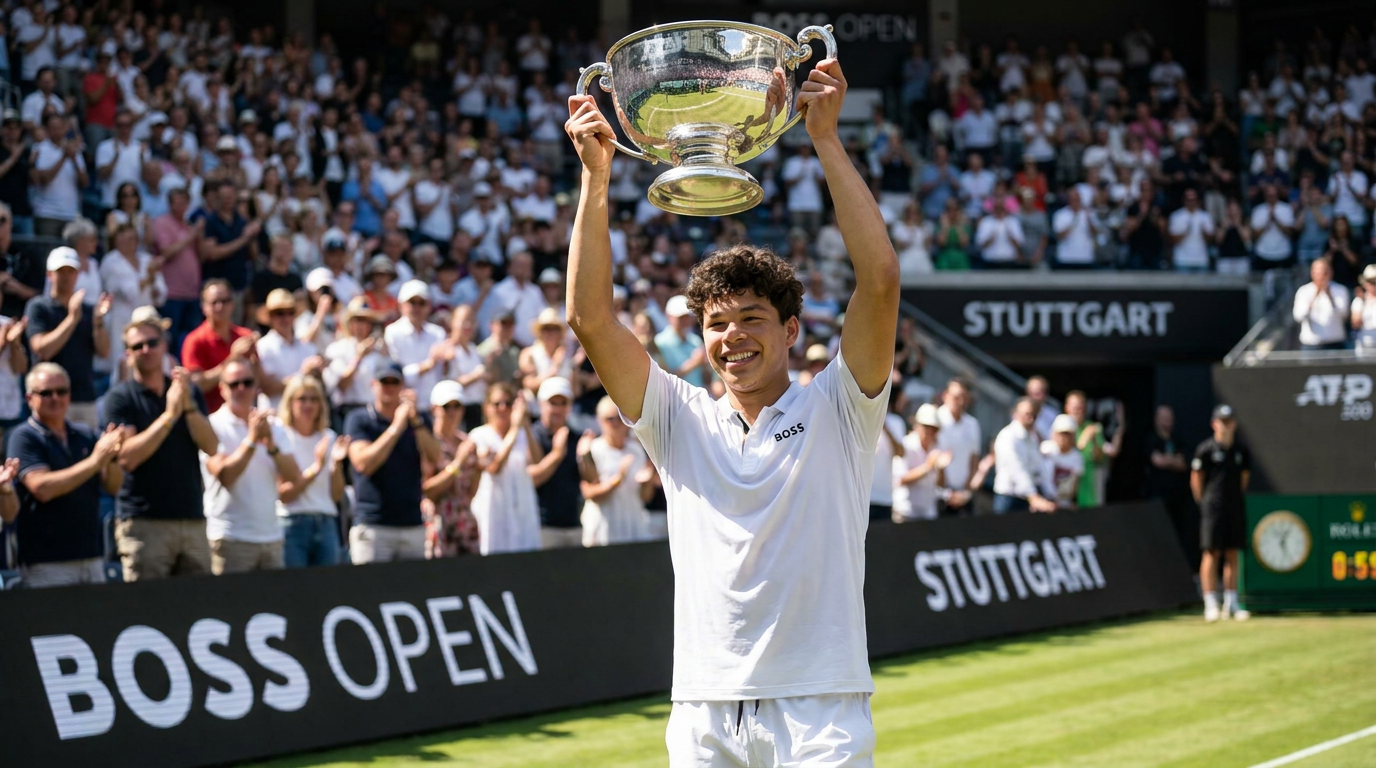
Ben Shelton secured his first career grass-court trophy by defeating defending champion Taylor Fritz in a hard-fought, all-American final at the BOSS Open.
By Factlen Editorial Team
- American Tennis Optimists
- View Shelton's win as proof of US men's tennis depth and readiness for a Grand Slam breakthrough.
- Statistical Analysts
- Focus on the match data, noting Shelton's clutch performance despite losing the overall point count.
- European Tour Observers
- Evaluate the result in the context of the Wimbledon build-up and the transition from clay to grass.
What's not represented
- · Wimbledon Oddsmakers
- · Taylor Fritz's Coaching Camp
Why this matters
Shelton’s triumph on grass proves his booming serve and aggressive baseline game translate to the fastest surface in tennis, instantly elevating him from a dangerous dark horse to a legitimate contender ahead of Wimbledon.
Key points
- Ben Shelton defeated Taylor Fritz 6-4, 2-6, 6-4 to win the BOSS Open in Stuttgart.
- The victory marks Shelton's first career title on grass and his third title of the 2026 season.
- Shelton joins Carlos Alcaraz, Novak Djokovic, and Alexander Bublik as the only players this decade to win titles on clay, grass, and hard courts in a single season.
- Fritz won 85 total points to Shelton's 72, but Shelton saved crucial break points in the deciding set to secure the win.
- Shelton saved three match points earlier in the tournament to reach the final.
Ben Shelton capped off a grueling week of survival tennis with a milestone victory on Sunday, edging compatriot Taylor Fritz 6-4, 2-6, 6-4 to win the BOSS Open in Stuttgart. The triumph marks the 23-year-old's first career title on grass and sends a resounding message to the ATP Tour as the short but critical grass-court season accelerates toward Wimbledon. For a player who built his reputation on the hard courts of North America, conquering the slick, unpredictable lawns of Germany represents a major evolutionary step in his young career. The victory not only secures him a trophy but also provides a massive surge of confidence ahead of the year's third Grand Slam.[2][4]
The all-American final was a showcase of power, precision, and immense mental fortitude. Fritz, the defending champion and tournament's second seed, actually won significantly more total points in the match—85 to Shelton's 72. Yet, tennis is a game of moments, and Shelton played his absolute best tennis when the margins were thinnest. In the deciding third set, the tension reached its peak. Shelton saved two crucial break points at 3-3, relying on his massive left-handed serve to bail him out of trouble. He held his nerve to stay in front, and eventually broke Fritz's serve at 5-4, clinching the championship on his very first match point with a blistering return.[1][6]
With the victory, Shelton joins a highly exclusive club of versatile, multi-surface champions. He becomes just the fourth man this decade—alongside Carlos Alcaraz, Novak Djokovic, and Alexander Bublik—to capture tour-level titles on clay, grass, and hard courts in a single season. Having already hoisted trophies on the indoor hard courts of Dallas in February and the red clay of Munich in May, Shelton's Stuttgart victory proves his booming game can be weaponized in any environment. This rare treble underscores a level of adaptability that many young power players take years to develop, if they ever do.[1][2]

For Fritz, the defeat was a bitter pill to swallow after a stellar week of his own. The world No. 9 had been seeking his 11th career tour title and his sixth overall on grass, a surface where his flat, penetrating groundstrokes and reliable serve traditionally wreak havoc on opponents. A victory on Sunday would have etched Fritz's name into the history books, making him only the second man in the Open Era to successfully defend a Stuttgart title. He would have joined Austrian clay-court legend Thomas Muster, who surprisingly achieved the back-to-back feat on the tournament's former clay surface in 1995 and 1996.[1][6]
Shelton's path to the trophy was anything but a routine, straight-sets march. He was forced to go the distance in all four of his matches at the Tennisclub Weissenhof, spending nearly ten hours on court across the grueling week. In his earlier rounds, he repeatedly found himself in deep deficits, dropping the first set and having to engineer dramatic, energy-sapping comebacks against a field of experienced grass-court operators. That he had enough gas left in the tank to outlast Fritz in a third set speaks volumes about his off-season conditioning and physical durability.[2][5]
Shelton's path to the trophy was anything but a routine, straight-sets march.
The sheer resilience required to reach the final was staggering, even by the standards of professional tennis. In the round of 16, Shelton stared down elimination before saving a match point against fellow American Marcos Giron. Two days later, in a tense semifinal clash with Czech standout Jiri Lehecka, Shelton erased two more match points before clawing his way to victory. That ability to play fearless, aggressive tennis with his back against the wall ultimately defined his championship run. Instead of tightening up under pressure, Shelton consistently swung freely when facing defeat.[1][2]

Tactically, Shelton's success in Stuttgart highlights a rapid maturation in his court craft. Grass courts demand a lower center of gravity, shorter backswings, and a willingness to move forward—traits that do not always come naturally to modern baseline power players who grew up on high-bouncing hard courts. Shelton adapted brilliantly by using his devastating kick serve to open up the court, flattening out his forehand to keep the ball out of Fritz's strike zone, and aggressively closing the net to shorten points before Fritz could establish a baseline rhythm.[4][5]
The final also served as a celebration of the current golden era of American men's tennis. With multiple players firmly entrenched in the top 20, the friendly but fierce rivalry between the likes of Shelton, Fritz, Tommy Paul, and Frances Tiafoe is pushing the entire cohort to new heights. Seeing two Americans battle for a European grass-court title underscores how far the group has come in mastering surfaces outside their domestic comfort zone. They are no longer just hard-court specialists; they are global threats.[4][6]

The BOSS Open has long served as a premier testing ground for players looking to find their footing after the grueling European clay-court swing. The abrupt transition from the slow, high-bouncing dirt of Roland-Garros to the lightning-fast lawns of Stuttgart often trips up even the most seasoned veterans. Shelton's ability to seamlessly shift gears, adjust his footwork, and immediately find his rhythm on the slick grass speaks volumes about his athletic adaptability and his team's preparation. It proves that his game is not rigidly bound to one style of play, but rather fluid enough to conquer the tour's most jarring seasonal shift.[3][5]
As the ATP Tour immediately shifts its focus to the traditional 500-level events at the Queen's Club in London and the Halle Open in Germany, Shelton will arrive with a massive target on his back. He is no longer flying under the radar as a raw prospect with a big serve; his peers now recognize him as a legitimate, multi-surface threat who can hit through the court regardless of the conditions underfoot. How he handles this new mantle of expectation will be the next great test of his career.[2][3]
Ultimately, all roads in June lead to the All England Club. Wimbledon has historically rewarded players who possess unreturnable serves, aggressive instincts, and the courage to dictate play on their own terms. By proving he can survive the physical and mental gauntlet of a grass-court tournament, Shelton has elevated himself from a dangerous dark horse to a genuine second-week contender at the sport's most prestigious major. If he can replicate his Stuttgart magic in London, the rest of the tour is officially on notice.[4][5]
How we got here
Feb 2026
Shelton wins the Dallas Open on indoor hard courts.
May 2026
Shelton captures the BMW Open in Munich on red clay.
June 12, 2026
Shelton saves a match point against Marcos Giron in the Stuttgart round of 16.
June 13, 2026
Shelton erases two match points against Jiri Lehecka to reach the final.
June 14, 2026
Shelton defeats Taylor Fritz to win his first career grass-court title.
Viewpoints in depth
American Tennis Optimists
View Shelton's win as proof of US men's tennis depth and readiness for a Grand Slam breakthrough.
For American tennis fans and domestic broadcasters, an all-American final on European grass is a powerful indicator of the cohort's overall health. Historically, US men have struggled during the European clay and grass swings, preferring the familiar hard courts of North America. Optimists argue that seeing players like Shelton and Fritz battle for titles in Germany proves the current generation has finally developed the all-court games necessary to end the nation's long Grand Slam drought.
Statistical Analysts
Focus on the match data, noting Shelton's clutch performance despite losing the overall point count.
Data-driven observers point out the statistical improbability of Shelton's championship run. Winning a match while being outscored by 13 points (85 to 72) is a rare anomaly in professional tennis, indicating that Shelton relied heavily on clutch serving in high-leverage moments rather than dominating baseline rallies. Analysts suggest that while his mental toughness is elite, consistently winning matches while losing the point count is a difficult tightrope to walk over a best-of-five-set Grand Slam format.
European Tour Observers
Evaluate the result in the context of the Wimbledon build-up and the transition from clay to grass.
European tennis media views the Stuttgart result primarily as a barometer for Wimbledon. They note that the transition from the slow clay of Roland-Garros to the fast grass of Germany is notoriously difficult, and Shelton's ability to adapt so quickly makes him a genuine threat in London. Observers emphasize that his heavy kick serve and willingness to move forward are perfectly suited for the All England Club, elevating him from a dangerous floater to a legitimate second-week contender.
What we don't know
- Whether Shelton's physical endurance will hold up in the best-of-five-set format at Wimbledon after such a grueling week of three-set matches in Stuttgart.
- How Taylor Fritz will rebound mentally from losing a final where he statistically outplayed his opponent in total points.
Key terms
- Open Era
- The current era of professional tennis, which began in 1968 when Grand Slam tournaments allowed professional players to compete alongside amateurs.
- Break point
- A situation in tennis where the receiving player is one point away from winning the game against the server.
- Match point
- A situation where the leading player is one point away from winning the entire match.
- Kick serve
- A type of serve hit with heavy topspin that causes the ball to bounce high and unpredictably, often used to push the opponent out of position.
Frequently asked
Who did Ben Shelton beat to win the Stuttgart Open?
Ben Shelton defeated fellow American Taylor Fritz 6-4, 2-6, 6-4 in the final.
How many titles has Ben Shelton won in 2026?
Shelton has won three titles in 2026, each on a different surface: Dallas (hard), Munich (clay), and Stuttgart (grass).
Did Taylor Fritz win more points in the final?
Yes, despite losing the match, Taylor Fritz won 85 total points compared to Shelton's 72.
Sources
Source coverage
6 outlets
3 viewpoints surfaced






[1]Tennis MajorsStatistical Analysts
Shelton joins Alcaraz, Djokovic and Bublik with clay, grass and hard titles in one season as he takes Stuttgart
Read on Tennis Majors →[2]ATP TourEuropean Tour Observers
Shelton Survives Fritz For First Grass-Court Title In Stuttgart
Read on ATP Tour →[3]SuperSportEuropean Tour Observers
Shelton beats Fritz to claim ATP Stuttgart title
Read on SuperSport →[4]ESPNAmerican Tennis Optimists
Ben Shelton outlasts Taylor Fritz to win Stuttgart Open
Read on ESPN →[5]BBC SportEuropean Tour Observers
Shelton claims maiden grass title with Stuttgart win over Fritz
Read on BBC Sport →[6]CBS SportsAmerican Tennis Optimists
Ben Shelton defeats Taylor Fritz in all-American Stuttgart final for first grass-court trophy
Read on CBS Sports →
More in sports
See all 10 stories →Injury
Tour de France Injury Report: Van Aert Sidelined as Key Riders Race to Recover
8 sources
Standings
Pogačar and Del Toro Dominate June Standings as the 2026 Tour de France Looms
6 sources
Women's Rugby
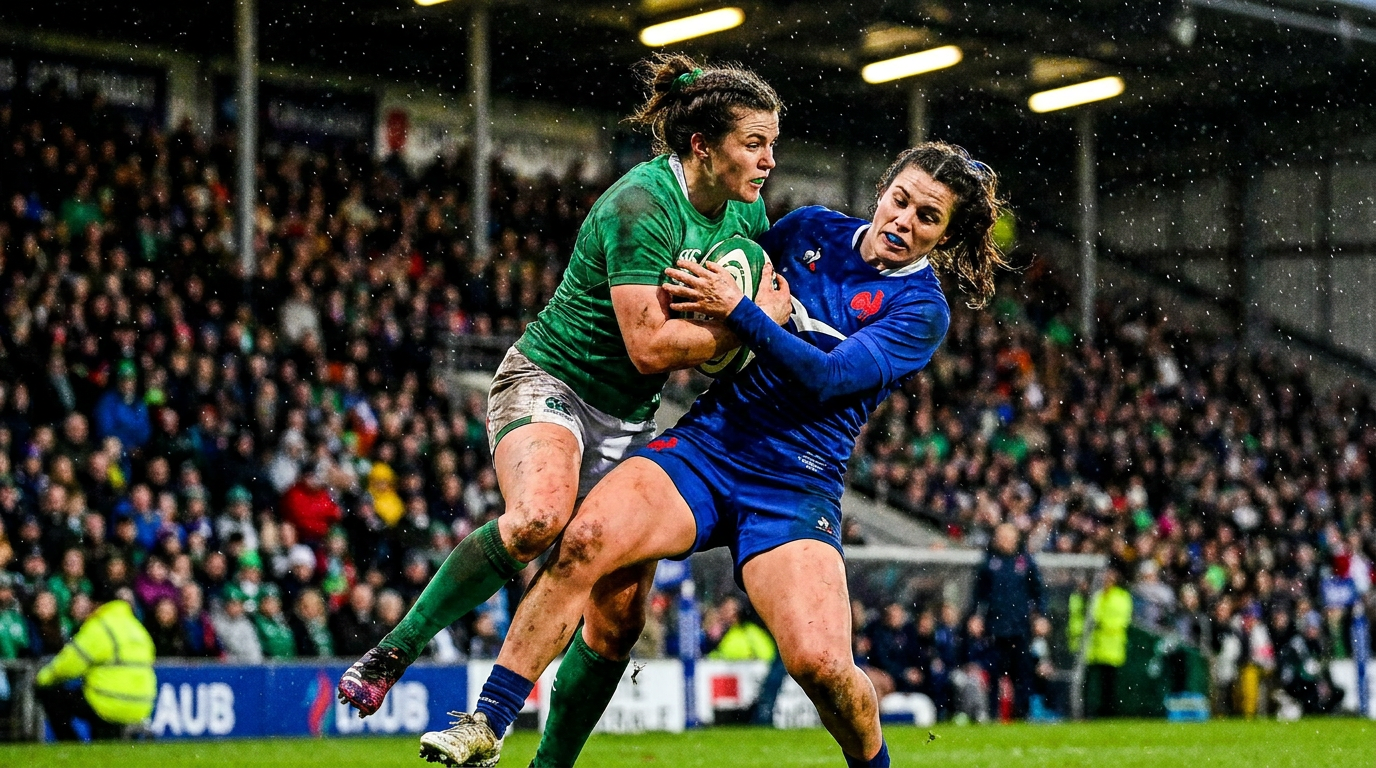
The 2026 WXV Global Series: How World Rugby is Transforming the Women's Game
6 sources
Women's Wrestling
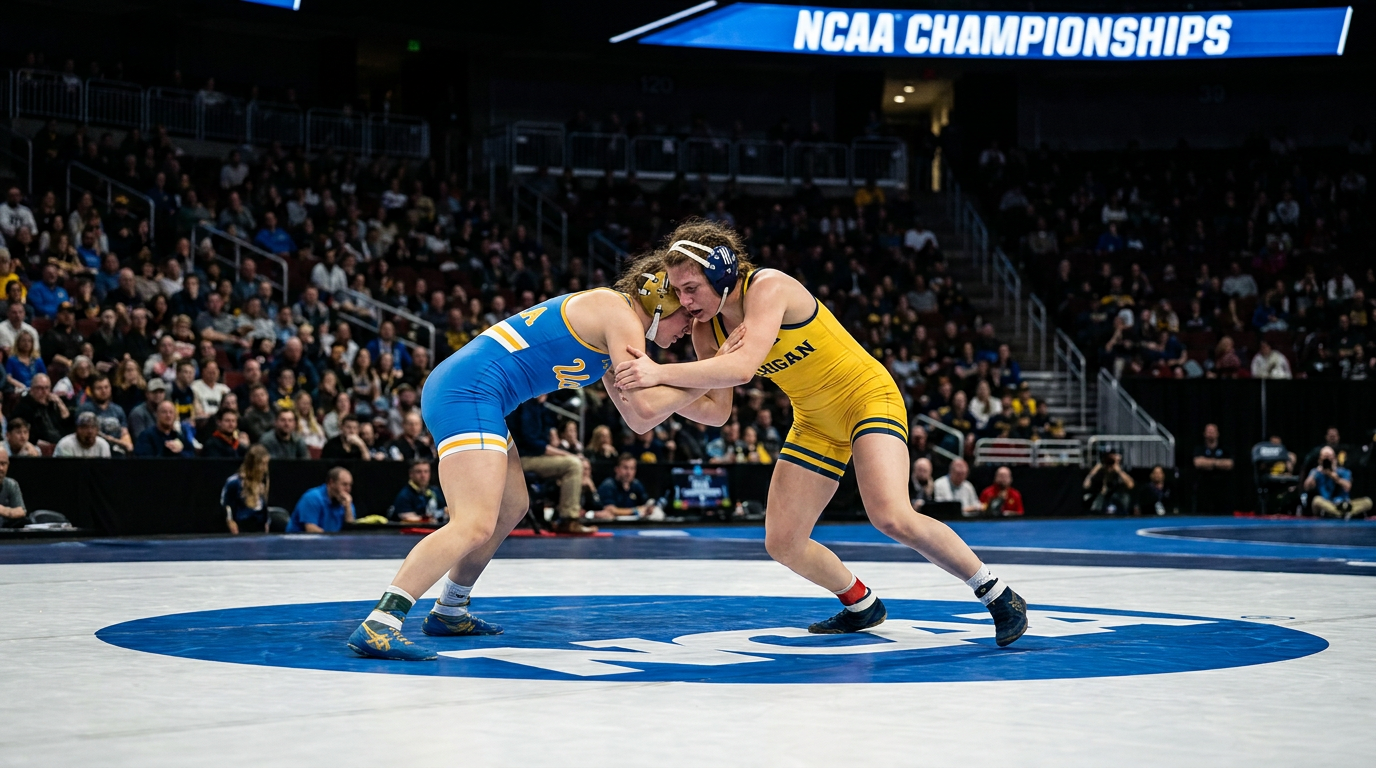
How Women's Wrestling Became the Fastest-Growing Sport in America
5 sources
Every angle. Every day.
Get sports stories with full source coverage and perspective breakdowns delivered to your inbox.