
Why the 'No-Dig' Method is Revolutionizing Home Gardening
By leaving the soil undisturbed and layering compost on top, gardeners are ditching their spades to cultivate healthier plants and dramatically reduce their workload.
By Factlen Editorial Team
- Horticultural Researchers
- Focuses on the biological ecosystem beneath the surface, highlighting the critical role of undisturbed mycorrhizal fungi networks and the soil food web.
- Organic Gardening Practitioners
- Focuses on the practical, labor-saving benefits and yield outcomes, arguing that working with nature eliminates the need for synthetic fertilizers.
- Agricultural Extension Programs
- Focuses on the structural mechanics of the soil, emphasizing how avoiding tillage preserves soil aggregates, prevents erosion, and improves water percolation.
What's not represented
- · Commercial synthetic fertilizer manufacturers
- · Traditional rototiller equipment manufacturers
Why this matters
Traditional gardening demands hours of back-breaking labor and inadvertently damages the microscopic ecosystems necessary for plant health. By adopting no-dig methods, home gardeners can dramatically reduce their workload, eliminate most weeding, and cultivate more resilient, higher-yielding crops while sequestering carbon in the soil.
Key points
- No-dig gardening eliminates the need to turn or till the soil, relying instead on top-dressing beds with organic compost.
- Avoiding the spade preserves vital mycorrhizal fungi networks and soil aggregates, leading to healthier, more resilient plants.
- The method dramatically reduces weeding, as dormant weed seeds remain buried and existing weeds are smothered.
- Long-term trials indicate that undisturbed soil consistently produces higher crop yields than traditionally dug beds.
- Undisturbed soil acts as a powerful carbon sink and retains moisture significantly better during droughts.
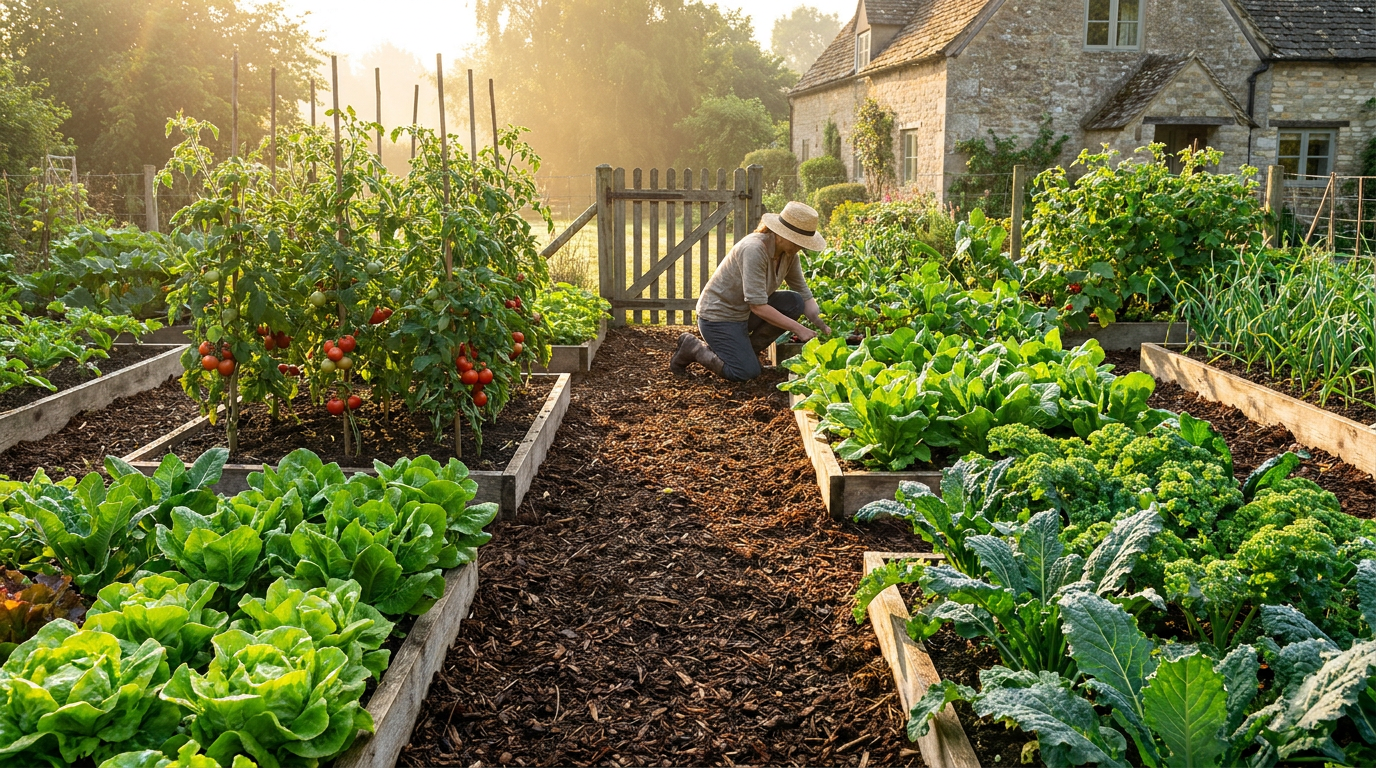
Spring arrives, and the traditional image of the gardener emerges: a figure wrestling with a spade, turning over heavy clods of earth to prepare beds for the season. For generations, "double-digging" was the unquestioned gospel of horticulture, a back-breaking ritual believed essential for aerating the ground and incorporating nutrients. But a quiet revolution is taking root in backyards and market farms alike. It proposes a radical alternative: put the shovel away and leave the soil alone.[3]
Known as no-dig or no-till gardening, this method upends centuries of agricultural dogma by treating the soil not as an inert medium to be manipulated, but as a complex, living ecosystem. The core premise is elegantly simple. Instead of cultivating the earth, gardeners layer organic matter—like compost, well-rotted manure, or leaf mold—directly on top of the existing ground.[1][4]
This top-dressing mimics the natural processes of a forest floor, where fallen leaves and decaying debris continually build fertility from the top down. By allowing the soil to remain undisturbed, the no-dig approach preserves the delicate biological architecture that traditional tilling routinely bulldozes.[2][7]
The science behind the movement centers on the soil food web. Healthy soil is teeming with life, from visible earthworms to microscopic bacteria and fungi. When a spade slices through a garden bed, it physically destroys the natural drainage channels created by worms and disrupts the intricate networks of mycorrhizal fungi.[1][5]

These fungal networks are the unsung heroes of the garden. Operating symbiotically with plant roots, mycorrhizae extend far beyond the plant's own reach, scavenging for water and essential nutrients like phosphorus. In exchange, the plant provides the fungi with sugars generated through photosynthesis. Tilling severs these microscopic lifelines, forcing plants to expend more energy rebuilding their root systems and making them more reliant on synthetic fertilizers.[2][7]
Beyond the microscopic level, avoiding the spade preserves soil aggregates—tiny clumps of organic matter, silt, and clay bound together by fungal glues. These aggregates create vital pore spaces that allow oxygen to penetrate and water to percolate. The University of Nebraska-Lincoln Extension notes that tilling physically pulverizes these aggregates, leading to compacted soil that is prone to surface crusting and erosion.[6]
For the home gardener, the most immediate and celebrated benefit of the no-dig method is a dramatic reduction in weeds. Traditional digging acts as a churn, bringing dormant weed seeds from deep underground up to the surface, where exposure to sunlight triggers germination.[3][4]
For the home gardener, the most immediate and celebrated benefit of the no-dig method is a dramatic reduction in weeds.
By contrast, the no-dig method smothers existing weeds under a thick layer of mulch or compost. If a new bed is particularly overgrown, practitioners often lay down sheets of plain, uninked cardboard before adding compost—a technique sometimes called "lasagna gardening." The cardboard blocks light, killing the weeds below, and eventually decomposes into the soil. Airborne weed seeds that land on the loose compost surface are easily plucked or hoed away because they lack a firm anchor.[1][8]

The method also offers significant climate resilience. Undisturbed soil acts as a powerful carbon sink. Digging exposes buried organic matter to oxygen, accelerating decomposition and releasing carbon dioxide into the atmosphere. Furthermore, the thick layer of surface compost acts like a sponge, dramatically improving moisture retention. During hot, dry spells, no-dig beds require far less watering than their tilled counterparts, a crucial advantage as summer droughts become more frequent.[2][7]
Skeptics often wonder if abandoning the plow comes at the cost of productivity. The evidence suggests the exact opposite. Charles Dowding, a pioneering market gardener in the UK who has championed the method since the 1980s, has conducted rigorous side-by-side trials for years.[4][8]
In Dowding's comparative beds—one tilled, one no-dig, both receiving the exact same amount of compost and identical plantings—the no-dig beds consistently yield higher harvests. Over one eight-year period, his no-dig trial bed produced an additional 100 kilograms of vegetables compared to the dug bed. The plants in the undisturbed soil establish faster, root deeper, and exhibit greater resilience to pests and diseases.[2][4]

The horticultural establishment has taken notice. The Royal Horticultural Society (RHS), historically a bastion of traditional gardening techniques, has fully embraced the no-dig philosophy. At RHS Garden Wisley, their World Food Garden is maintained entirely without digging, serving as a high-profile demonstration of the method's efficacy and environmental benefits.[1]
Transitioning to a no-dig system is remarkably straightforward, though it requires an initial investment in organic matter. University extension programs advise starting in the autumn, allowing winter frosts and soil organisms time to break down the initial layers. However, beds can be established in the spring and planted into immediately.[5][6]
The primary challenge for newcomers is sourcing enough compost to establish the first 4-to-6-inch layer. While homemade compost is ideal, establishing multiple beds often requires purchasing bulk municipal compost or well-rotted manure.[4][8]
There are also localized uncertainties. In exceptionally wet climates, thick organic mulches can sometimes harbor slugs and snails, requiring gardeners to be vigilant during the spring establishment phase. Additionally, heavily compacted urban soils or areas with severe hardpan may benefit from a one-time mechanical aeration—such as using a broadfork to crack the subsoil without turning it—before transitioning strictly to a no-till regimen.[1][8]
Despite these minor hurdles, the consensus among soil scientists and agronomists is clear. By stepping back and allowing the subterranean ecosystem to function as nature intended, gardeners can harvest healthier crops, sequester carbon, and reclaim countless hours previously lost to the spade. The future of sustainable horticulture, it seems, involves doing a lot less.[3][7][9]
How we got here
1949
A. Guest publishes 'Gardening without Digging', one of the earliest modern texts advocating for the method.
1982
Market gardener Charles Dowding begins experimenting with no-dig methods, eventually becoming its leading global pioneer.
2013–2020
Dowding conducts a rigorous 8-year side-by-side trial, proving no-dig beds yield significantly more produce than tilled beds.
2021
The Royal Horticultural Society features a dedicated No-Dig Allotment Garden at the Hampton Court Palace Garden Festival.
2024–2026
Major university agricultural extensions formally adopt and promote no-till methods for home gardeners to improve climate resilience.
Viewpoints in depth
Agricultural Extension Programs
Focuses on the structural mechanics of the soil.
University extension programs emphasize how avoiding tillage preserves soil aggregates, prevents erosion, and improves water percolation. They argue that tilling physically pulverizes the structural integrity of the soil, leading to compaction and surface crusting. By adopting no-till methods, they note that gardens become significantly more resilient to extreme weather, absorbing heavy rainfall without washing away and retaining moisture during prolonged droughts.
Organic Gardening Practitioners
Focuses on the practical, labor-saving benefits and yield outcomes.
For practitioners and market farmers, the primary appeal of no-dig gardening is its efficiency. They argue that working with nature rather than against it eliminates the need for synthetic fertilizers and dramatically reduces the time spent weeding and watering. Pioneers like Charles Dowding point to decades of side-by-side trials demonstrating that undisturbed soil consistently out-produces tilled soil, proving that back-breaking labor is not a prerequisite for a bountiful harvest.
Horticultural Researchers
Focuses on the biological ecosystem beneath the surface.
Researchers highlight the critical role of undisturbed mycorrhizal fungi networks and the broader soil food web. They view the soil not as dirt, but as a living organism. From this perspective, digging is a destructive event that severs the symbiotic fungal lifelines plants rely on to gather nutrients and water. By leaving the soil intact, they argue, plants naturally develop stronger immune systems and deeper root structures, reducing the need for external chemical interventions.
What we don't know
- While the method is proven for home gardens and market farms, it remains unclear how easily thick-mulch no-dig systems can scale to massive industrial agriculture operations.
- The exact timeline for severely degraded or chemically depleted urban soils to rebuild their natural fungal networks under a no-dig regimen varies widely and is difficult to predict.
Key terms
- Mycorrhizal fungi
- Beneficial fungi that form a symbiotic relationship with plant roots, extending their reach to gather water and nutrients.
- Soil aggregates
- Tiny clumps of soil particles bound together by organic matter and fungal glues, crucial for water drainage and root growth.
- Top-dressing
- The practice of applying a layer of compost or organic matter to the surface of the soil rather than mixing it in.
- Soil food web
- The complex community of interconnected organisms living in the soil, from microscopic bacteria to earthworms.
- Lasagna gardening
- A method of building a garden bed by layering materials like cardboard and compost directly over existing ground.
Frequently asked
Can I start a no-dig bed over an existing lawn?
Yes. You can lay plain cardboard directly over the grass to smother it, then add a thick layer of compost on top and plant immediately.
Won't a thick layer of compost attract weeds?
Airborne seeds may land and sprout, but because the compost is loose and undisturbed, they are easily removed. The cardboard and compost smother existing perennial weeds.
Do I ever need to dig the soil again?
Generally, no. The only exceptions are when harvesting root vegetables like potatoes, or if you are dealing with severely compacted urban soil that requires initial aeration.
How do I fertilize a no-dig garden?
The annual top-dressing of 1-2 inches of compost feeds the soil food web, which in turn naturally provides all the necessary nutrients to the plants without synthetic fertilizers.
Sources
Source coverage
9 outlets
3 viewpoints surfaced







[1]Royal Horticultural SocietyHorticultural Researchers
No-dig gardening
Read on Royal Horticultural Society →[2]Science FocusHorticultural Researchers
No dig gardening? Sometimes, it really is easy being green
Read on Science Focus →[3]University of Minnesota ExtensionAgricultural Extension Programs
Healthier soil, less work with no-till gardening
Read on University of Minnesota Extension →[4]Charles DowdingOrganic Gardening Practitioners
What is no dig
Read on Charles Dowding →[5]Soil AssociationOrganic Gardening Practitioners
What is no-dig gardening?
Read on Soil Association →[6]University of Nebraska-Lincoln ExtensionAgricultural Extension Programs
Benefits of No-Till Gardening
Read on University of Nebraska-Lincoln Extension →[7]Joe GardenerOrganic Gardening Practitioners
No-Dig Gardening, with Charles Dowding
Read on Joe Gardener →[8]University of New Hampshire ExtensionAgricultural Extension Programs
Low and No Till Gardening
Read on University of New Hampshire Extension →[9]Factlen Editorial TeamHorticultural Researchers
Synthesis by Factlen editorial team
Read on Factlen Editorial Team →

Every angle. Every day.
Get home stories with full source coverage and perspective breakdowns delivered to your inbox.