
US and Iran Reach Preliminary Peace Deal to Reopen Strait of Hormuz, but Israeli Operations in Lebanon Threaten Ceasefire
The United States and Iran have agreed to a 60-day ceasefire and the reopening of the Strait of Hormuz, sending global oil prices tumbling from their wartime peaks. However, the fragile framework faces immediate hurdles as Israel rejects demands to withdraw its forces from southern Lebanon, prompting warnings from Tehran.
By Factlen Editorial Team
- U.S. Administration
- Argues the deal successfully averts a global economic catastrophe by restoring the flow of oil and creating a 60-day window to negotiate a permanent end to Iran's nuclear ambitions.
- Israeli Government
- Views the framework as a dangerous capitulation that leaves the Iranian regime intact, maintaining that Israel must continue military operations in Lebanon to secure its northern border.
- Iranian Government
- Insists the ceasefire applies to all regional fronts and demands that Israel withdraw from southern Lebanon as a strict condition for the deal's survival.
- Congressional Critics
- Warns that the secret memorandum unfreezes billions in Iranian assets without strict, permanent nuclear verification, effectively funding future proxy attacks.
- Global Energy Markets
- Expresses relief over the unblocking of the Strait of Hormuz, though cautions that clearing naval mines and restoring supply chains will take months.
What's not represented
- · Lebanese Civilians
- · European Allies
Why this matters
The reopening of the Strait of Hormuz—which handles a fifth of the world's oil—promises to ease a historic energy shock that drove crude prices past $120 a barrel and threatened a global recession. However, if the ceasefire collapses over Israel's ongoing campaign in Lebanon, the resulting escalation could plunge global markets back into crisis and draw the U.S. into a prolonged regional war.
Key points
- The U.S. and Iran have agreed to a preliminary memorandum of understanding to end their three-month conflict.
- The framework includes a 60-day ceasefire, the lifting of the U.S. naval blockade, and the reopening of the Strait of Hormuz.
- Global oil prices dropped sharply to roughly $82 a barrel following the announcement.
- Iran insists the ceasefire requires Israel to halt its military operations and withdraw from southern Lebanon.
- Israeli officials have rejected the demand, stating they are not bound by the U.S.-Iran agreement.
- The deal faces fierce bipartisan pushback in Washington over its secrecy and lack of permanent nuclear restrictions.
The United States and Iran have reached a preliminary memorandum of understanding to end a devastating three-month war, establishing a 60-day ceasefire and paving the way for the reopening of the Strait of Hormuz. The breakthrough, announced by President Donald Trump over the weekend, aims to lift a U.S. naval blockade and halt hostilities that have severely disrupted global trade. A formal signing ceremony is scheduled for Friday in Geneva, Switzerland, with U.S. Vice President JD Vance and Iranian negotiator Mohammad-Bagher Ghalibaf expected to attend.[1][3]
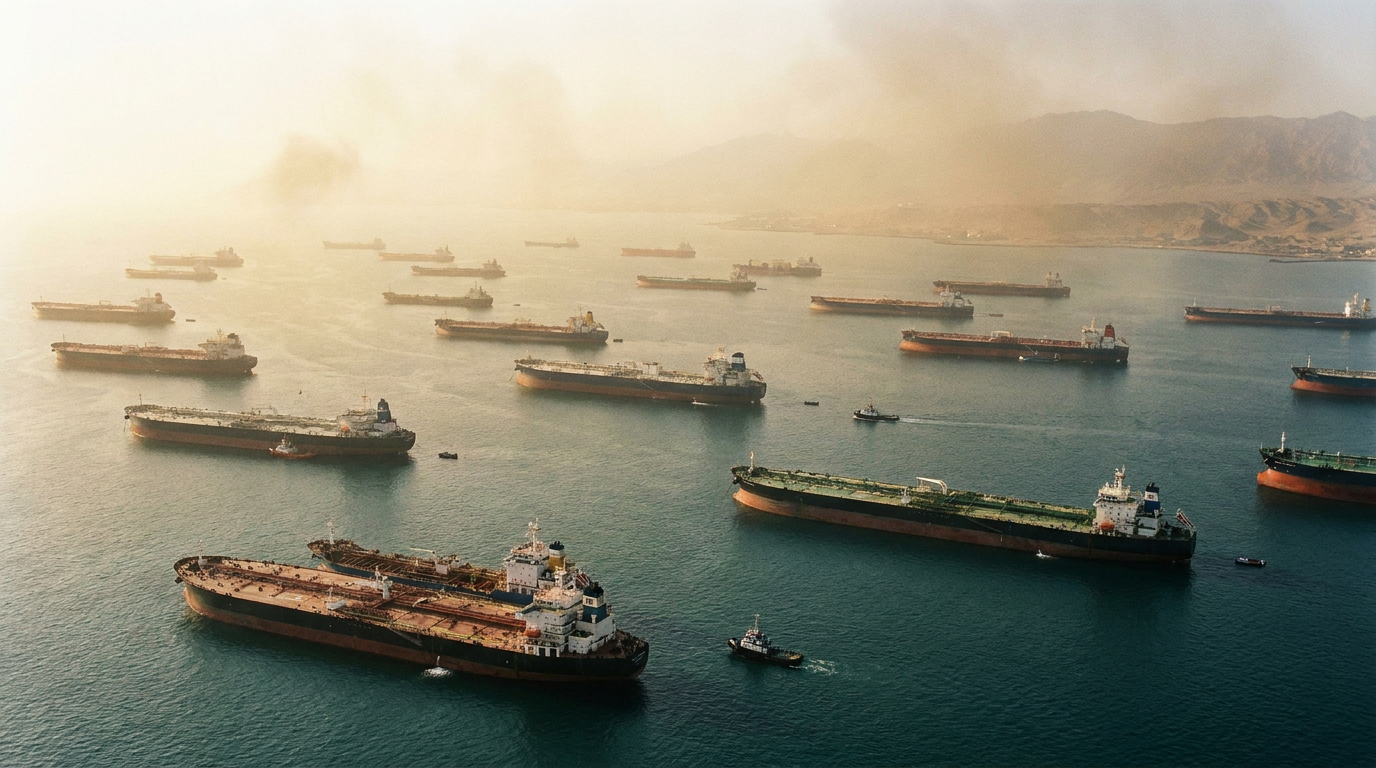
The immediate economic impact was profound. Brent crude, the international oil benchmark, tumbled more than 4% to roughly $82 a barrel following the announcement, down from a wartime peak of $126. The closure of the Strait of Hormuz in early March had effectively erased 20 million barrels of oil a day from the global market—roughly a fifth of the world's supply—triggering what the International Energy Agency characterized as a historic energy security crisis.[3][5][7]
"The deal with the Islamic Republic of Iran is now complete," Trump posted on his Truth Social platform. "Ships of the world, start your engines. Let the oil flow!" The president framed the agreement as a diplomatic triumph that averts a global recession and prevents Iran from obtaining a nuclear weapon, though the text of the memorandum remains largely classified.[1][3]

However, the fragile framework is already threatening to unravel over parallel conflicts in the region. Iranian Foreign Minister Abbas Araghchi warned Tuesday that the ceasefire applies to all fronts, explicitly stating that any continued Israeli military presence or airstrikes in southern Lebanon would constitute a direct violation of the U.S.-Iran agreement.[4][6]
However, the fragile framework is already threatening to unravel over parallel conflicts in the region.
Israeli officials swiftly rejected Tehran's ultimatum. National Security Minister Itamar Ben-Gvir declared that "Trump's agreement does not bind us," insisting that Israeli forces will not withdraw from Lebanese territory until Hezbollah's military infrastructure is completely dismantled. The Israeli military underscored this stance by launching fresh drone and airstrikes on several towns in southern Lebanon on Wednesday.[1][4]
The defiance has exposed a widening rift between Washington and Jerusalem. Speaking at the G7 summit in Évian-les-Bains, France, Trump publicly criticized Israeli Prime Minister Benjamin Netanyahu's handling of the northern front. Trump described recent Israeli bombing campaigns in Beirut as "vicious" and urged Israel to behave "more responsibly," arguing that the parallel conflict is needlessly complicating the broader peace effort.[1][6]

Back in Washington, the preliminary deal is facing fierce bipartisan headwinds. Lawmakers have criticized the administration for keeping the exact terms of the memorandum secret. Democratic Senator Richard Blumenthal called the framework a "surrender in effect," warning that it could unfreeze billions of dollars in Iranian assets without imposing permanent, verifiable destruction of Tehran's highly enriched uranium stockpiles.[2]
Critics also point to reports that the deal includes a $300 billion reconstruction investment fund, financed by Gulf states, designed to incentivize Iran to dismantle its nuclear program. Hardliners in both the U.S. and Israel argue that the agreement leaves the Iranian clerical regime intact and rewards its aggression, merely delaying a final reckoning over its nuclear ambitions.[1][2]
Even if the diplomatic hurdles are cleared, energy experts caution that consumers will not see immediate relief at the gas pump. The Strait of Hormuz has been heavily militarized, and clearing naval mines to ensure safe passage for commercial shipping could take weeks. Furthermore, securing maritime insurance and restarting shut-in oil production in countries like Iraq and Kuwait will require months of sustained stability before global supply chains fully normalize.[5]
How we got here
Feb 28, 2026
The U.S. and Israel launch a joint military campaign against Iran following the collapse of nuclear negotiations.
Mar 4, 2026
Iran closes the Strait of Hormuz and the U.S. imposes a naval blockade, triggering a historic global energy crisis.
Jun 14, 2026
President Trump announces a preliminary peace agreement has been reached to reopen the Strait and end hostilities.
Jun 15, 2026
Oil prices tumble to a three-month low as markets react to the ceasefire framework.
Jun 19, 2026
Formal signing ceremony scheduled in Geneva, Switzerland, to initiate the 60-day negotiation period.
Viewpoints in depth
The U.S. Administration's View
The White House frames the deal as a necessary step to avert a global economic meltdown.
President Trump and his administration argue that the preliminary agreement successfully averts a global economic catastrophe by restoring the flow of oil through the Strait of Hormuz. They maintain that the 60-day ceasefire creates a crucial window to negotiate a permanent end to Iran's nuclear ambitions without further American bloodshed, viewing the lifting of the naval blockade as a pragmatic trade-off for global market stability.
The Israeli Government's View
Israeli leaders view the framework as a dangerous capitulation that leaves the Iranian regime intact.
Prime Minister Benjamin Netanyahu and his hardline coalition partners argue that the U.S.-Iran deal abandons Israel's core security needs by failing to permanently dismantle Iran's nuclear infrastructure. They insist that Israel is not bound by Washington's agreements and must continue its military operations in Lebanon to secure its northern border against Hezbollah, regardless of the diplomatic fallout.
Congressional Critics
Lawmakers warn that the secret memorandum unfreezes billions in Iranian assets without strict verification.
Bipartisan critics in Washington argue that the "secret" memorandum of understanding reads like a surrender. They warn that unfreezing billions in Iranian assets and establishing a $300 billion reconstruction fund without imposing permanent, verifiable destruction of Tehran's highly enriched uranium stockpiles merely rewards aggression and funds future proxy attacks against U.S. allies.
Global Energy Markets
Analysts express relief over the unblocking of the Strait of Hormuz but caution about long recovery times.
Energy analysts and importing nations are breathing a sigh of relief over the prospect of 20 million barrels of daily oil supply returning to the market. However, they caution that clearing naval mines, securing maritime insurance, and restarting shut-in oil production in neighboring Gulf states will take months of sustained stability, meaning the economic shockwaves of the three-month war will persist.
What we don't know
- Whether Israel will scale back its operations in Lebanon under pressure from the White House, or if continued strikes will cause Iran to abandon the ceasefire.
- The exact mechanisms for verifying Iran's compliance with the temporary freeze on its nuclear program during the 60-day window.
- How quickly maritime insurance markets will allow commercial shipping to fully resume transit through the heavily mined Strait of Hormuz.
Key terms
- Strait of Hormuz
- A narrow maritime chokepoint between the Persian Gulf and the Gulf of Oman, through which approximately 20% of the world's oil supply transits.
- Memorandum of Understanding (MOU)
- A preliminary, non-binding agreement outlining the broad terms of a ceasefire and a framework for future, more detailed negotiations.
- Brent Crude
- The primary international benchmark price for purchases of oil worldwide.
Frequently asked
Will gas prices drop immediately?
No. Energy experts warn that clearing naval mines from the Strait of Hormuz, securing maritime insurance, and restarting shut-in oil production will take weeks or months.
Does this deal end Iran's nuclear program?
Not permanently. The current framework establishes a 60-day window for technical negotiations to address Iran's enriched uranium stockpiles and nuclear infrastructure.
Why is Lebanon involved in the deal?
Hezbollah, an Iran-allied militant group, has been fighting Israel in Lebanon. Iran considers the defense of its regional allies part of the broader conflict and demands an Israeli withdrawal.
Sources
Source coverage
7 outlets
5 viewpoints surfaced







[1]The GuardianGlobal Energy Markets
US president says strait of Hormuz will be open from Friday but questions remain over waterway fees and Israeli breaches of ceasefire in Lebanon
Read on The Guardian →[2]Fox NewsCongressional Critics
Republicans, media rip Trump's secret Iran deal, with the harshest critics calling it a surrender
Read on Fox News →[3]Al JazeeraIranian Government
World leaders welcome US-Iran 'peace deal' announcement
Read on Al Jazeera →[4]CBS NewsIsraeli Government
Iran says Israeli troops must leave Lebanon under agreement with U.S.
Read on CBS News →[5]AP NewsGlobal Energy Markets
Oil and gas supplies could take months to return to normal after Iran deal to open Strait of Hormuz
Read on AP News →[6]TimeCongressional Critics
Why Lebanon Matters to an Eventual US-Iran Peace Deal
Read on Time →[7]AxiosU.S. Administration
Oil prices sink on announcement of Iran deal
Read on Axios →

More in news politics
See all 6 stories →Strait of Hormuz
How the New US-Iran Deal Reopened the Strait of Hormuz
8 sources
Workplace Policy
Fact-Checking the 32-Hour Workweek: What the Global Trials Actually Show
7 sources

National Identity
American Pride and Belief in the 'American Dream' Plummet Ahead of 250th Anniversary
7 sources
Strait of Hormuz
U.S. Secures Strait of Hormuz as Trump Administration Brokers Controversial Iran Pact
8 sources

Every angle. Every day.
Get news politics stories with full source coverage and perspective breakdowns delivered to your inbox.