
U.S. Military Strike in Venezuela Kills Tren de Aragua Gang Leader Niño Guerrero
President Trump announced that a coordinated U.S. military strike in Venezuela killed Héctor Rusthenford Guerrero Flores, the fugitive leader of the transnational Tren de Aragua gang.
By Factlen Editorial Team

- U.S. Administration
- Focuses on neutralizing transnational threats through aggressive military action and decapitation strikes.
- Venezuelan State Security
- Prioritizes eliminating a powerful domestic criminal syndicate and demonstrating cooperative capability.
- International Legal Observers
- Questions the legality and precedent of using military missiles and wartime authorities for anti-gang operations.
What's not represented
- · Venezuelan civilian populations affected by the gang
- · Families of those killed in broader Operation Southern Spear strikes
Why this matters
The targeted killing removes the head of a transnational crime syndicate that has been a primary focus of U.S. law enforcement, while marking a significant and unprecedented level of military cooperation between the United States and the Venezuelan government.
Key points
- U.S. military forces killed Tren de Aragua leader Héctor Rusthenford Guerrero Flores in a missile strike in Venezuela.
- The operation was closely coordinated with Venezuelan security forces, marking a significant shift in bilateral relations.
- Guerrero Flores, alias 'Niño Guerrero,' was a wanted fugitive with a $5 million U.S. bounty for racketeering and drug trafficking.
- The strike is part of a broader, aggressive U.S. military campaign in the region known as Operation Southern Spear.
President Donald Trump announced late Friday that a U.S. military strike in Venezuela successfully killed Héctor Rusthenford Guerrero Flores, the fugitive leader of the transnational criminal organization Tren de Aragua. The targeted assassination removes the head of a syndicate that has been a primary focus of U.S. law enforcement and border security efforts. Trump confirmed the death in a social media post, describing the operation as a "swift and lethal kinetic strike" designed to eliminate a man he called one of the most ruthless gang leaders in the hemisphere. The announcement brings a sudden end to a massive international manhunt for Guerrero Flores, who had evaded capture for years while expanding his criminal empire across South and North America.[1][2]
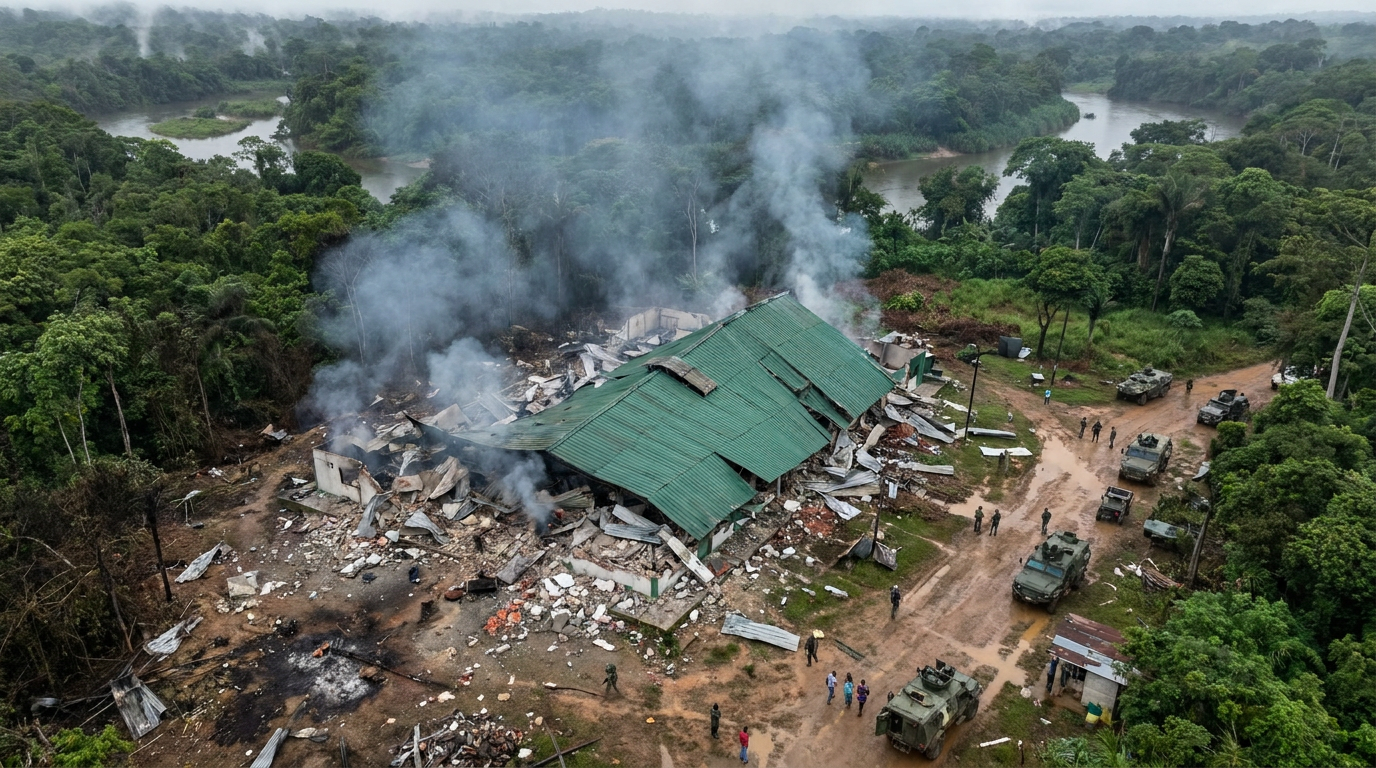
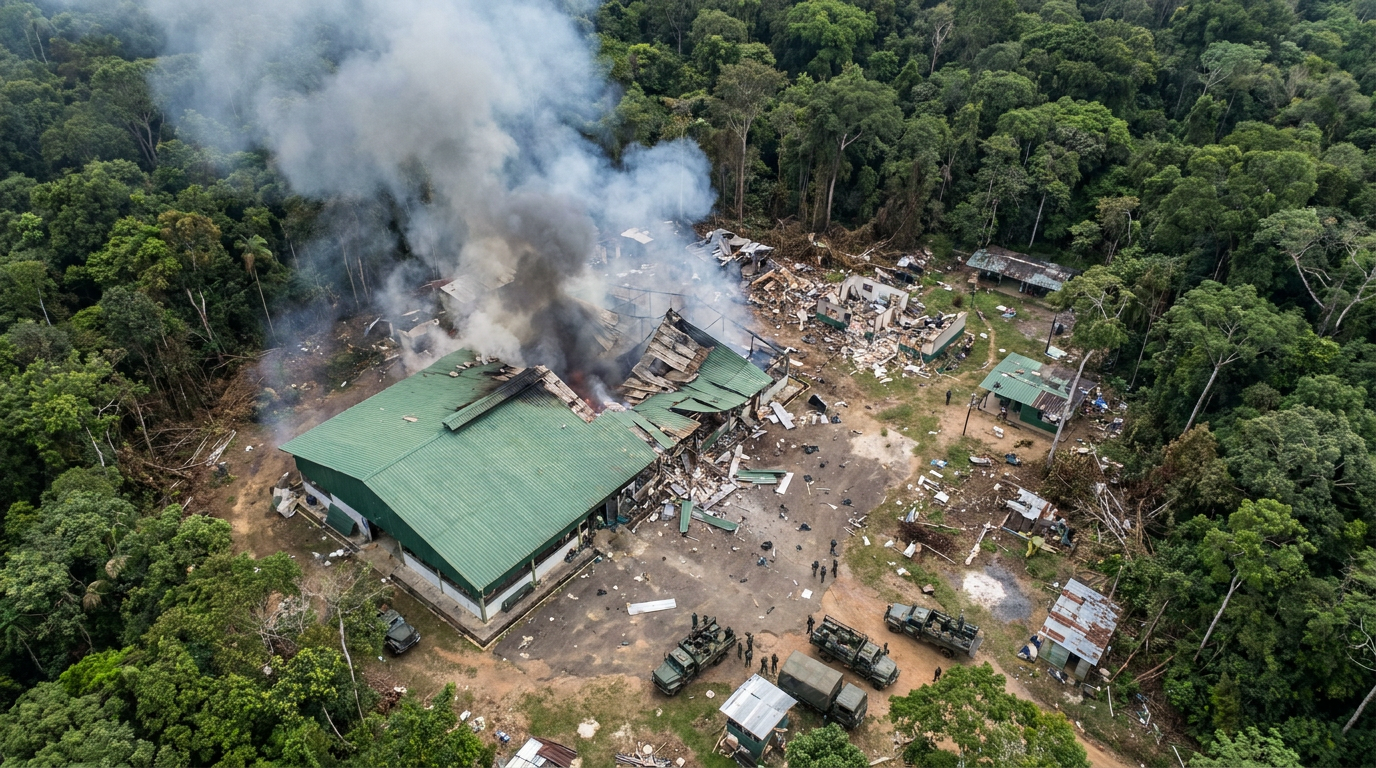
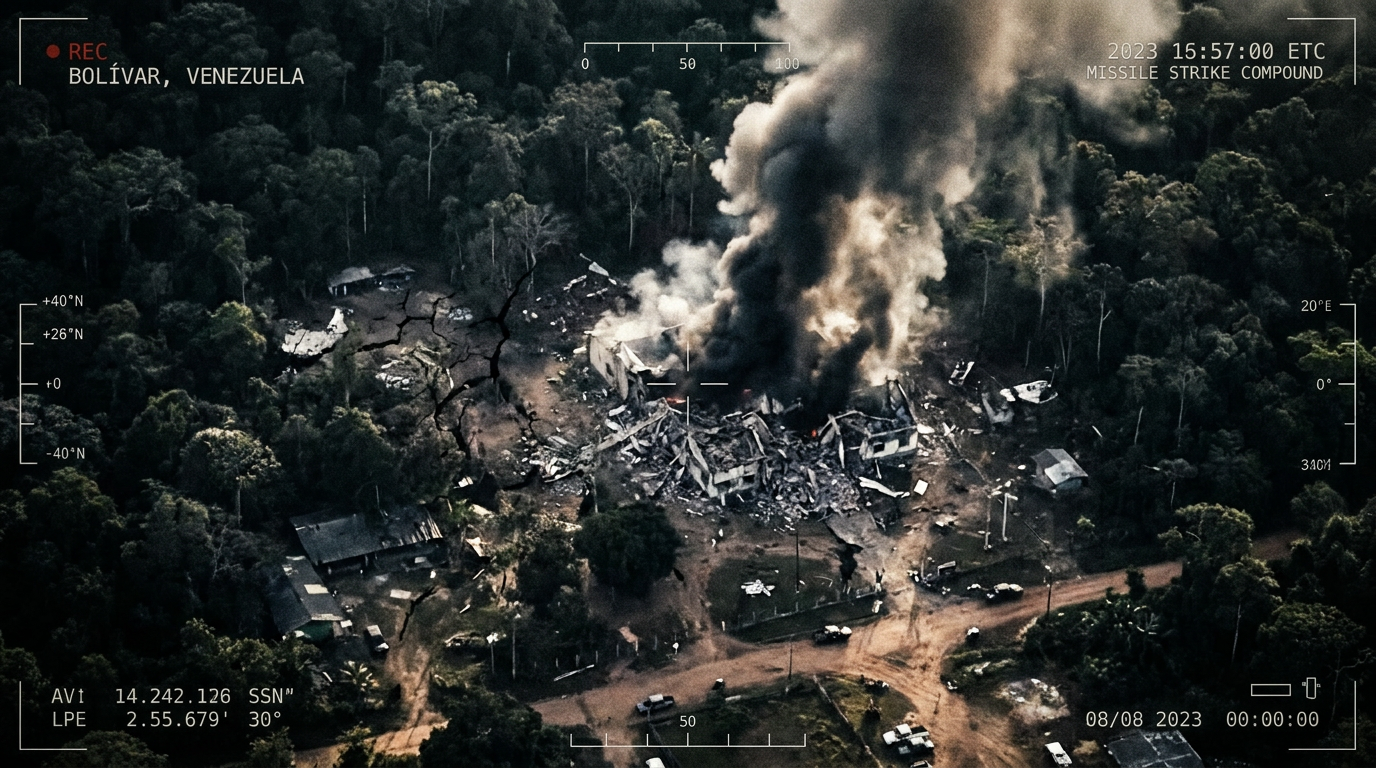
The operation was carried out earlier in the week by the U.S. Southern Command and Joint Special Operations Command forces. According to defense officials familiar with the matter, the military utilized a precision missile to destroy a secure compound where Guerrero Flores was hiding. To corroborate the strike and demonstrate its effectiveness, the administration released unclassified aerial video footage on social media showing a projectile obliterating a small building with a green roof. The Central Intelligence Agency reportedly provided the critical on-the-ground intelligence that pinpointed the gang leader's exact location, enabling the military to execute the strike with lethal accuracy and minimal warning.[2][3]
In a significant geopolitical development, the strike was conducted in direct coordination with the Venezuelan government. Defense Secretary Pete Hegseth stated that the operation took place "in full collaboration with Venezuelan security forces," a sentiment echoed by Trump, who noted that the U.S. is currently "working very well" with its counterparts in Caracas. Venezuela's communications ministry formally confirmed the joint operation, stating it occurred in the country's Bolívar state to target organized crime. This level of direct military and intelligence cooperation marks a dramatic pivot in bilateral relations, which have historically been defined by deep hostility and mutual suspicion.[2][3][4]

Guerrero Flores, widely known by his alias "Niño Guerrero," had a notorious criminal trajectory that made him a top target for international law enforcement. He ran Tren de Aragua for more than a decade, transforming it from a localized prison gang operating out of Venezuela's Tocorón penitentiary into a sprawling transnational syndicate. Under his leadership, the group became heavily involved in drug trafficking, widespread extortion, sex trafficking, and human smuggling across the Americas. His influence grew so vast that in 2023, Venezuelan authorities deployed 11,000 troops to raid the Tocorón prison in an attempt to capture him, only to find that he had already escaped the facility.[2][3]
Guerrero Flores, widely known by his alias "Niño Guerrero," had a notorious criminal trajectory that made him a top target for international law enforcement.
The U.S. government had steadily escalated its pursuit of the gang leader over the past year. In December, Guerrero Flores was indicted in a New York federal court on severe charges including racketeering conspiracy, cocaine conspiracy, and providing material support to terrorists. Following the unsealing of the indictment, the U.S. State Department offered a $5 million reward for information leading to his capture or conviction. The Trump administration subsequently designated Tren de Aragua as a Foreign Terrorist Organization, invoking wartime authorities to systematically target its leadership, financial networks, and logistical operations.[1][5]
The joint strike represents a stark reversal from the rhetoric that dominated U.S.-Venezuela relations just months ago. The Trump administration had previously accused former Venezuelan President Nicolás Maduro of directly controlling Tren de Aragua and weaponizing the gang to "invade" the United States—a claim that was contradicted by declassified U.S. intelligence assessments. Following a U.S. military operation in January that removed Maduro from power to face drug charges, Washington appears to have rapidly rebuilt intelligence-sharing channels with the remaining Venezuelan state security apparatus to target mutual threats and stabilize the region.[1][2][3]

The assassination of Guerrero Flores is the highest-profile action in a broader, highly aggressive U.S. military posture in the region known as Operation Southern Spear. Launched in September 2025, the campaign has seen the U.S. military conduct dozens of strikes on alleged drug-smuggling vessels in the Caribbean Sea and the Eastern Pacific Ocean. The administration has justified the use of lethal force by classifying the targets as "narcoterrorists." According to tracking data, these maritime strikes have resulted in over 200 deaths, drawing intense scrutiny from international legal observers who question the use of military missiles for counter-narcotics enforcement.[1][6]
While the elimination of its top commander decapitates Tren de Aragua's historical leadership structure, the long-term impact on the gang's operations remains uncertain. Security analysts caution that transnational syndicates often operate through decentralized cells, and the sudden removal of a central figure can sometimes trigger violent internal succession battles rather than immediate collapse. Furthermore, the strike raises profound questions about the future of U.S. military operations within sovereign Latin American territory, testing the boundaries of how far the administration is willing to deploy kinetic force in its ongoing war against organized crime.[3][6][7]
How we got here
2023
Venezuelan authorities deploy 11,000 troops to raid the Tocorón prison, but Guerrero Flores escapes.
February 2025
The U.S. designates Tren de Aragua as a Foreign Terrorist Organization.
September 2025
The U.S. military launches Operation Southern Spear, beginning a series of lethal strikes on alleged smuggling vessels.
December 2025
Guerrero Flores is indicted in a New York federal court on racketeering and drug trafficking charges.
June 2026
A coordinated U.S. missile strike in Venezuela kills Guerrero Flores.
Viewpoints in depth
U.S. Administration
The Trump administration frames the strike as a decisive victory in its war against transnational criminal organizations.
President Trump and Defense Secretary Pete Hegseth have positioned the killing of Guerrero Flores as proof that their aggressive military posture in the hemisphere is yielding results. By designating Tren de Aragua as a terrorist organization and invoking the Alien Enemies Act, the administration has utilized wartime authorities to target gang leadership and conduct strikes on alleged smuggling vessels. They argue that eliminating top commanders is necessary to stem the flow of illicit drugs and violence into the United States, framing the operation as a fulfillment of promises to secure the homeland.
Venezuelan Security Forces
Venezuelan authorities view the joint operation as a step toward neutralizing a domestic threat and normalizing international security relations.
For the Venezuelan state, Tren de Aragua has long been a severe internal security challenge. In 2023, the government deployed 11,000 troops to raid the Tocorón prison in an unsuccessful attempt to capture Guerrero Flores. By cooperating with U.S. intelligence and special operations, Venezuelan security forces managed to eliminate their most wanted fugitive while simultaneously demonstrating a willingness to partner with Washington on counter-narcotics and anti-terrorism initiatives following the removal of former President Nicolás Maduro.
Human Rights and Legal Observers
Legal experts and human rights organizations express concern over the expanding use of lethal military force outside traditional war zones.
While acknowledging the criminality of Tren de Aragua, international legal observers and human rights groups have raised alarms about the precedent set by Operation Southern Spear. Critics point to the broader campaign of maritime strikes that have killed over 200 people without trial, questioning the legality of using military missiles for law enforcement objectives. They argue that designating street gangs as foreign terrorist organizations blurs the line between policing and warfare, potentially violating international law regarding the use of lethal force.
What we don't know
- Who will succeed Guerrero Flores as the leader of Tren de Aragua.
- Whether the decapitation strike will significantly disrupt the gang's decentralized operations across the Americas.
- The full extent of intelligence sharing and future military cooperation planned between the U.S. and Venezuela.
Key terms
- Tren de Aragua
- A transnational criminal organization that originated in a Venezuelan prison, involved in drug trafficking, extortion, and human smuggling.
- Kinetic Strike
- A military attack involving active weaponry, such as a missile or bomb, intended to cause physical damage or death.
- Joint Special Operations Command (JSOC)
- A component of the U.S. military responsible for studying special operations requirements and conducting covert or complex missions.
- Operation Southern Spear
- A U.S. military campaign initiated in late 2025 targeting alleged drug-smuggling vessels and narcoterrorist networks in the Americas.
Frequently asked
Who was Héctor Rusthenford Guerrero Flores?
Also known as 'Niño Guerrero,' he was the long-time leader of the Tren de Aragua gang and a wanted fugitive with a $5 million U.S. bounty on his head.
Did the U.S. act alone in the strike?
No. Both U.S. and Venezuelan officials confirmed that the operation was closely coordinated between the CIA, U.S. military forces, and Venezuelan security services.
What is Tren de Aragua?
It is a Venezuelan street and prison gang that expanded into a transnational criminal syndicate. The U.S. designated it as a terrorist organization in 2025.
How was the strike carried out?
U.S. Joint Special Operations Command forces used a precision missile to destroy a compound in Bolívar state, Venezuela, where Guerrero Flores was located.
Sources
Source coverage
7 outlets
3 viewpoints surfaced







[1]Associated PressU.S. Administration
Trump says US military strike killed leader of Tren de Aragua gang with help from Venezuela
Read on Associated Press →[2]CBS NewsU.S. Administration
Trump says U.S. killed Tren de Aragua leader in airstrike in Venezuela
Read on CBS News →[3]The Washington PostVenezuelan State Security
U.S. forces kill Venezuelan Tren de Aragua gang leader, Trump says
Read on The Washington Post →[4]The GuardianInternational Legal Observers
Trump says leader of Venezuelan Tren de Aragua gang killed in US strike
Read on The Guardian →[5]NPRInternational Legal Observers
Trump says U.S. military strike killed leader of Tren de Aragua gang
Read on NPR →[6]WikipediaInternational Legal Observers
United States strikes on alleged drug traffickers during Operation Southern Spear
Read on Wikipedia →[7]Al JazeeraInternational Legal Observers
How many times has the US struck Venezuelan vessels?
Read on Al Jazeera →
More in news politics
See all 154 stories →Media Consolidation
DOJ Approves $111 Billion Paramount-Warner Bros. Merger, Reshaping Media Landscape
9 sources

Tren de Aragua
U.S. Military Strike in Venezuela Kills Tren de Aragua Leader Niño Guerrero
7 sources
Tren de Aragua
U.S. Military Strike in Venezuela Kills Tren de Aragua Leader Niño Guerrero
7 sources
Information Integrity
The 'Mind Vaccine': How Prebunking is Winning the War Against Misinformation
6 sources

Every angle. Every day.
Get news politics stories with full source coverage and perspective breakdowns delivered to your inbox.