
U.S. Military Strike in Venezuela Kills Tren de Aragua Leader Niño Guerrero
The U.S. military, in coordination with Venezuelan security forces, conducted a missile strike that killed the founder of the transnational gang Tren de Aragua.
By Factlen Editorial Team
- U.S. Administration & Defense Officials
- Argues that military force is a necessary and justified response to a transnational criminal organization that poses a direct national security threat.
- Legal & Intelligence Analysts
- Questions the legal framework of using military strikes and wartime statutes against civilian criminal networks.
- International Observers
- Focuses on the geopolitical implications of the strike and the unprecedented coordination with the transitional Venezuelan government.
What's not represented
- · Venezuelan civilians living in the areas targeted by U.S. military strikes
- · Families of individuals summarily deported under the Alien Enemies Act
Why this matters
The assassination marks a dramatic escalation in the U.S. government's use of military force against criminal syndicates, setting a controversial legal precedent for treating gang members as enemy combatants on foreign soil.
Key points
- A U.S. military missile strike in Venezuela killed Héctor Rusthenford Guerrero Flores, the founder of the Tren de Aragua gang.
- The operation was carried out by the Joint Special Operations Command and coordinated with Venezuelan security forces.
- The Trump administration designated Tren de Aragua a Foreign Terrorist Organization in 2025, shifting the response to a military objective.
- The U.S. has killed over 200 people in related military strikes on suspected drug boats since September 2025.
- Legal experts have heavily criticized the use of military force and the Alien Enemies Act against a civilian criminal syndicate.
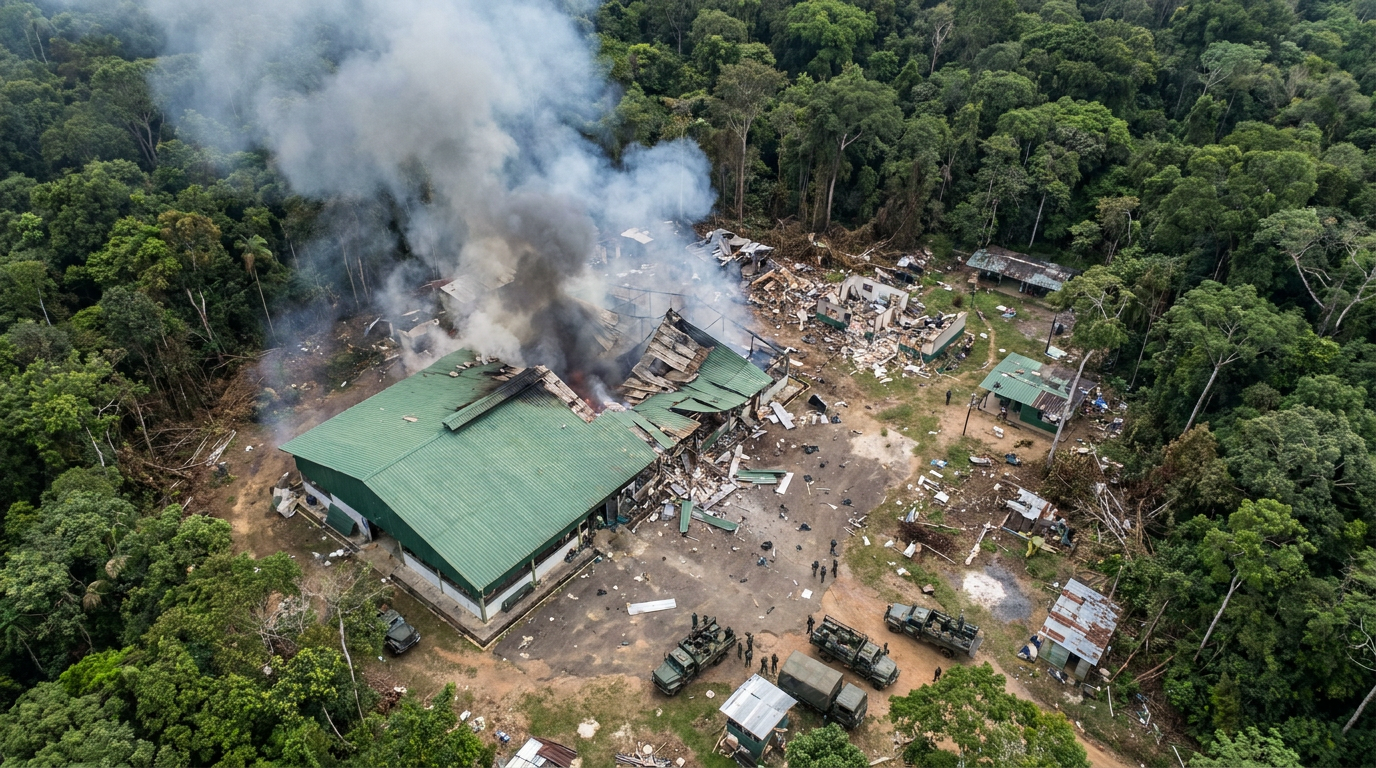
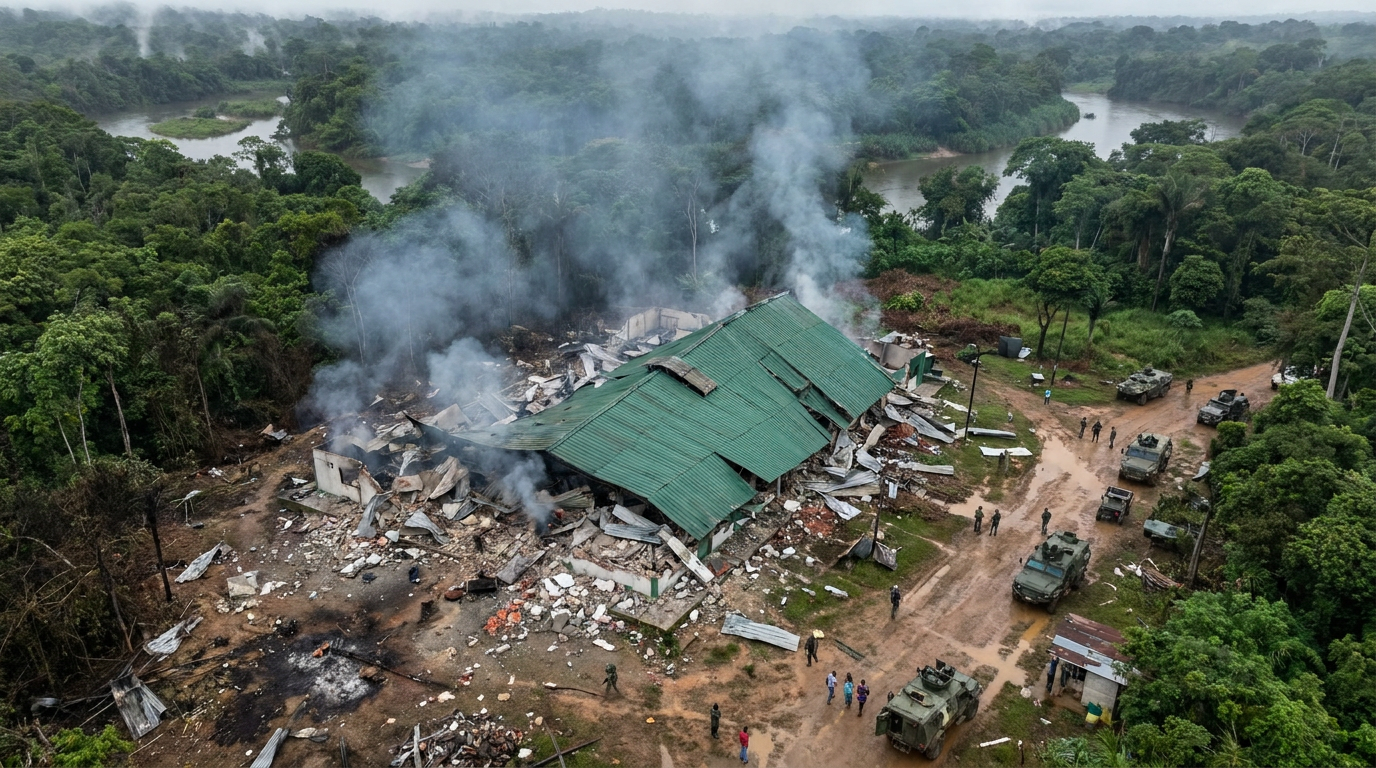
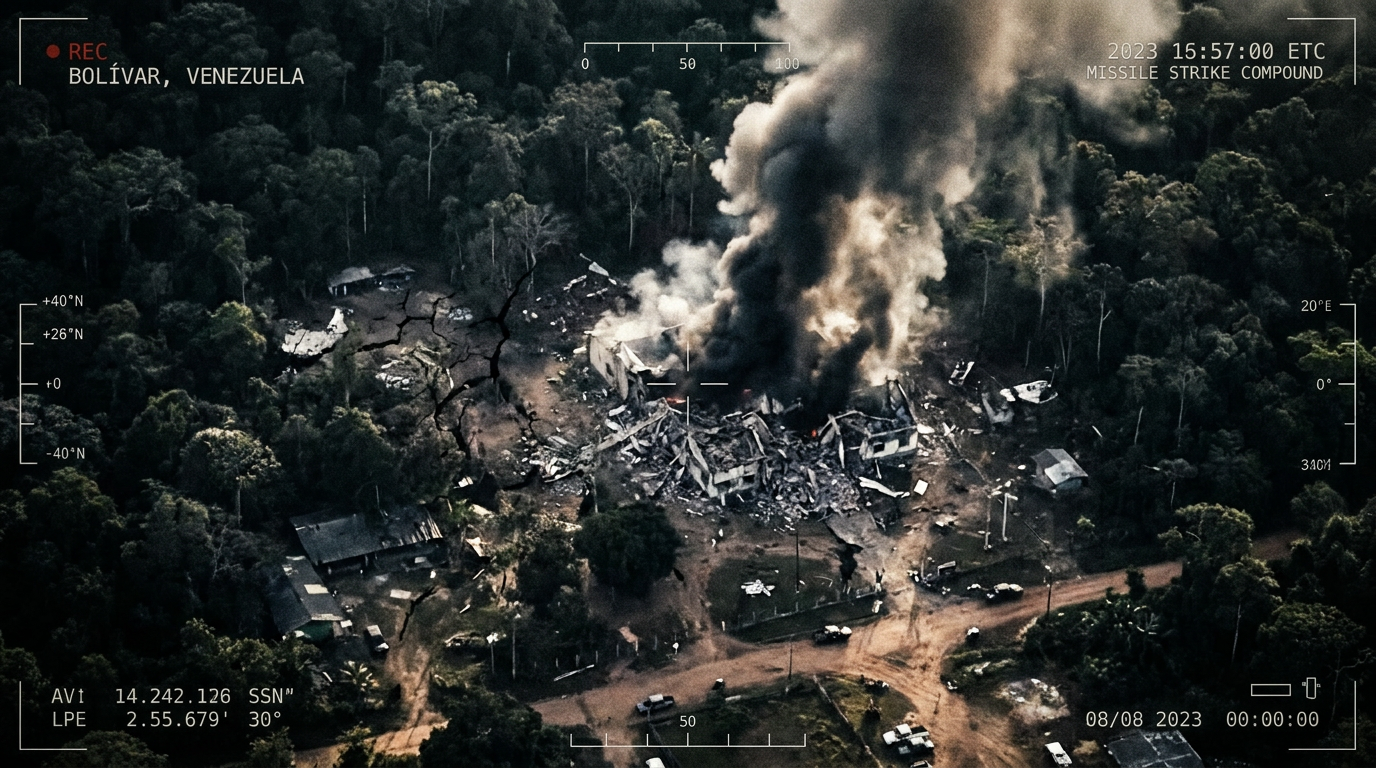
The U.S. military has killed Héctor Rusthenford Guerrero Flores, the founder and leader of the transnational Venezuelan gang Tren de Aragua, in a targeted missile strike within Venezuela. President Donald Trump announced the operation late Friday, describing it as a "swift and lethal kinetic strike" carried out by the U.S. Southern Command. The assassination of Guerrero, widely known by his alias "Niño Guerrero," marks a dramatic escalation in the administration's aggressive and highly controversial military campaign against the criminal syndicate. Trump shared an unclassified aerial video on his social media platform showing a projectile obliterating a small building with a green roof, declaring that the gang's leadership would no longer find safe haven in the hemisphere.[1][2]
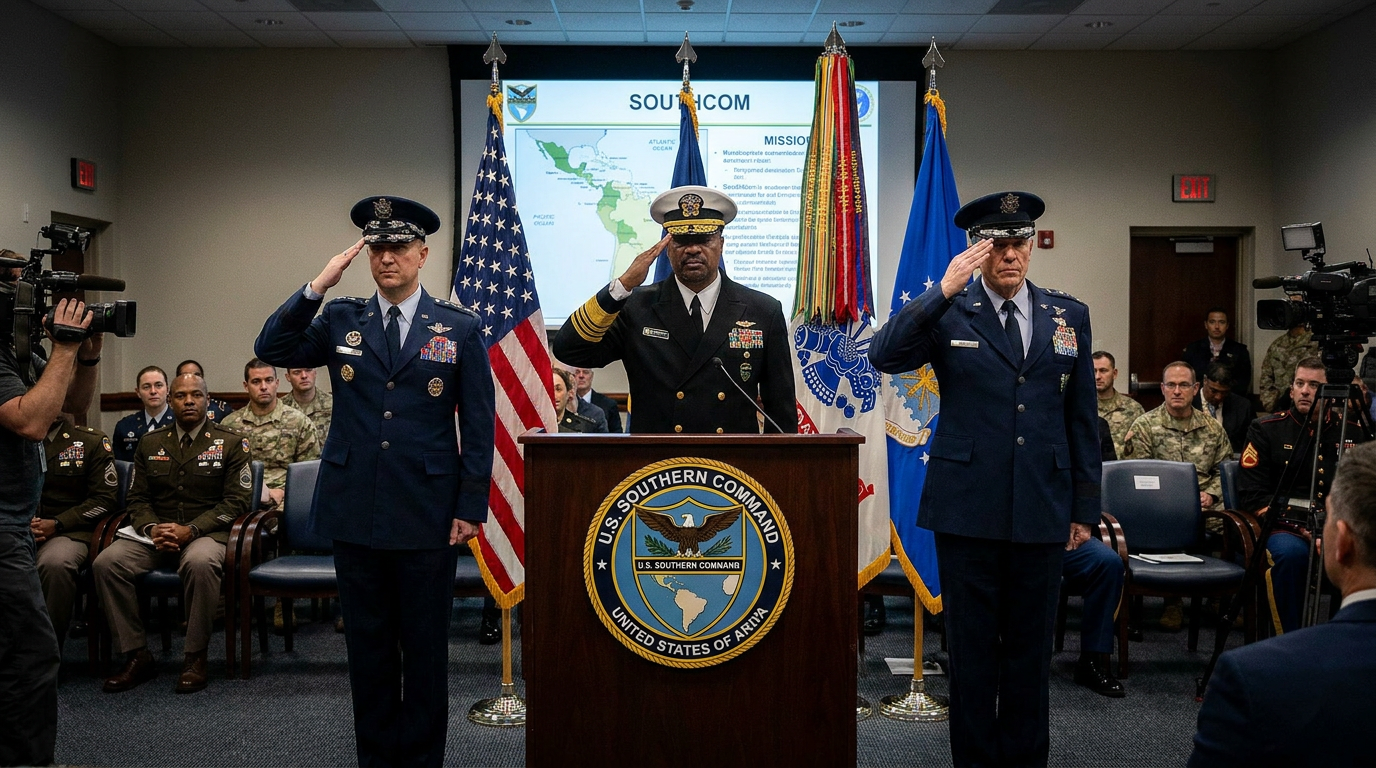
The strike targeted a compound in Venezuela's Bolívar state and was conducted with the direct assistance of the Venezuelan government. Defense Secretary Pete Hegseth confirmed the operation, stating it was executed earlier in the week by the Department of War—the recently renamed Department of Defense—"in full collaboration with Venezuelan security forces." According to defense officials, the Joint Special Operations Command (JSOC) carried out the strike using a missile, relying on intelligence provided by the CIA. The Venezuelan communications ministry subsequently released a statement confirming the "combined operation" aimed at dismantling organized crime networks within its borders.[2][3]
This level of bilateral military coordination highlights the dramatically altered relationship between Washington and Caracas. In January 2026, the United States launched a military intervention in Venezuela that resulted in the capture and removal of former President Nicolás Maduro, who was brought to New York to face federal drug trafficking charges. Since then, the U.S. has worked closely with the transitional Venezuelan authorities to target illicit networks. Guerrero had been a top priority for both nations; he was indicted in a New York federal court late last year on charges including racketeering, cocaine conspiracy, and providing material support to terrorists, carrying a $5 million State Department bounty for information leading to his capture.[2][4]

Tren de Aragua originated more than a decade ago inside Venezuela's notoriously lawless Tocorón prison, where Guerrero was incarcerated for murder. As the Venezuelan economy collapsed under corruption and plummeting oil prices, the gang capitalized on the mass exodus of millions of citizens, expanding its operations across Latin America and eventually into the United States. Authorities have linked the syndicate to a sprawling portfolio of criminal enterprises, including human trafficking, extortion, contract killings, and migrant smuggling. By the time Venezuelan security forces raided the Tocorón facility in 2023, Guerrero and his top lieutenants had already vanished, managing the gang's decentralized cells from the shadows.[1][5]
Tren de Aragua originated more than a decade ago inside Venezuela's notoriously lawless Tocorón prison, where Guerrero was incarcerated for murder.
The Trump administration designated Tren de Aragua a Foreign Terrorist Organization in early 2025, a pivotal move that shifted the U.S. response from a law enforcement issue to a military objective. The president has consistently blamed the group for fueling violence and illicit drug distribution in American cities, framing their presence as an "invasion." This terrorist designation provided the administration with the legal framework to authorize an unprecedented use of military force against a criminal enterprise. "Killing cartel members who poison our fellow citizens is the highest and best use of our military," Vice President JD Vance stated, echoing the administration's hardline stance on narcoterrorism.[4][7]
The legal justification for deploying military assets against civilian criminal networks has drawn intense scrutiny from legal scholars and human rights advocates. Since September 2025, the U.S. military has conducted a series of lethal strikes against suspected drug-smuggling boats in the Caribbean Sea and the Eastern Pacific Ocean. According to reports, at least 207 people have been killed in these maritime operations. The administration maintains that it is engaged in an "armed conflict" with these groups, relying on the president's Article II constitutional authority and the inherent right of self-defense under international law to authorize the lethal force.[5][6]

Critics argue that applying the tools of war to a criminal syndicate enters deeply problematic and legally ambiguous territory. Lawmakers and intelligence analysts have questioned the precedent set by treating gang members as enemy combatants subject to extrajudicial killings. Furthermore, the administration's domestic crackdown on alleged Tren de Aragua operatives has relied on the Alien Enemies Act of 1798—a wartime statute used to summarily deport hundreds of Venezuelan men to maximum-security prisons in El Salvador. Judges and civil rights groups have challenged these deportations, arguing that many of the men were denied due process and lacked proven gang affiliations.[2][6]
The administration's narrative surrounding Tren de Aragua has also clashed with the assessments of its own intelligence agencies. For months, President Trump asserted that the gang operated under the direct control of the Maduro regime, using this claim to justify broader actions against the former Venezuelan government. However, a declassified National Intelligence Council assessment concluded that the Venezuelan government did not direct the gang and largely viewed it as a potential security threat. Despite these contradictions, the successful elimination of Guerrero is being touted by the White House as a definitive victory, with Trump warning that the U.S. will continue to hunt down the group's remaining operatives "anytime, anyplace."[2][3]
How we got here
2013
Niño Guerrero returns to Tocorón prison, where he consolidates control and expands Tren de Aragua.
January 2025
The Trump administration designates Tren de Aragua as a Foreign Terrorist Organization.
March 2025
The U.S. invokes the Alien Enemies Act of 1798 to begin mass deportations of accused gang members.
September 2025
The U.S. military begins conducting lethal strikes against suspected drug-smuggling boats in the Caribbean.
January 2026
U.S. forces intervene in Venezuela, capturing former President Nicolás Maduro on drug charges.
June 12, 2026
A U.S. missile strike in Bolívar state kills Niño Guerrero in coordination with Venezuelan authorities.
Viewpoints in depth
U.S. Administration & Defense Officials
Argues that military force is a necessary and justified response to a transnational criminal organization that poses a direct national security threat.
From the perspective of the White House and the Department of War, Tren de Aragua is not merely a criminal gang, but a bloodthirsty terrorist organization conducting irregular warfare against the United States. Officials argue that the group's involvement in drug trafficking, human smuggling, and domestic violence constitutes an 'invasion' that traditional law enforcement is ill-equipped to handle. By designating the group as a Foreign Terrorist Organization, the administration believes it is fully justified in utilizing Article II constitutional powers and the Alien Enemies Act to eliminate leadership targets like Niño Guerrero and dismantle the syndicate's operational infrastructure.
Legal & Intelligence Analysts
Questions the legal framework of using military strikes and wartime statutes against civilian criminal networks.
Legal scholars and civil rights advocates view the administration's military campaign against Tren de Aragua as a dangerous expansion of executive power. Critics argue that applying the laws of armed conflict to a civilian crime syndicate bypasses constitutional due process and sets a perilous precedent for extrajudicial killings. Furthermore, intelligence analysts point out that the administration's core justification—that the gang was a proxy for the Maduro regime—was directly contradicted by the National Intelligence Council. This camp warns that invoking the 1798 Alien Enemies Act to summarily deport individuals without proven gang ties undermines fundamental human rights.
International Observers
Focuses on the geopolitical implications of the strike and the unprecedented coordination with the transitional Venezuelan government.
For diplomatic and international observers, the strike is most notable for what it reveals about the rapidly shifting geopolitical landscape in South America. Following the U.S. military intervention in January 2026 that ousted Nicolás Maduro, Washington has forged an unlikely alliance with the transitional Venezuelan authorities. The fact that the CIA and JSOC are now conducting joint kinetic operations with Venezuelan security forces on sovereign Venezuelan soil illustrates a profound realignment. Observers note that while this cooperation has proven effective in targeting mutual threats like Tren de Aragua, it also raises questions about the long-term stability and sovereignty of the post-Maduro government.
What we don't know
- Whether the assassination of Niño Guerrero will fracture Tren de Aragua or lead to retaliatory violence across its decentralized cells.
- The exact number of civilian casualties, if any, resulting from the missile strike on the Bolívar state compound.
- How federal courts will ultimately rule on the legality of using the Alien Enemies Act to deport accused gang members.
Key terms
- Tren de Aragua
- A transnational criminal syndicate that originated in a Venezuelan prison and expanded across the Americas, involved in human trafficking and drug smuggling.
- Joint Special Operations Command (JSOC)
- A component of the U.S. military responsible for studying special operations requirements and conducting covert strikes and counter-terrorism missions.
- Alien Enemies Act of 1798
- A U.S. law that grants the president the authority to apprehend and deport resident aliens if their home country is at war with the United States.
- Foreign Terrorist Organization (FTO)
- A designation by the U.S. State Department that allows the government to target a group's finances and authorizes broader military and law enforcement actions.
Frequently asked
Who was Niño Guerrero?
Héctor Rusthenford Guerrero Flores, known as Niño Guerrero, was the founder and top leader of the Venezuelan transnational gang Tren de Aragua.
Where did the military strike take place?
The missile strike targeted a Tren de Aragua compound in Venezuela's Bolívar state and was coordinated with Venezuelan security forces.
Why is the U.S. military targeting a gang?
The Trump administration designated Tren de Aragua a Foreign Terrorist Organization in 2025, allowing the U.S. to use military force under the premise of an "armed conflict" against narcoterrorists.
What is the Alien Enemies Act of 1798?
It is a wartime statute the administration has invoked to summarily deport hundreds of accused gang members to maximum-security prisons, a move that has faced significant legal challenges.
Sources
Source coverage
7 outlets
3 viewpoints surfaced







[1]The GuardianInternational Observers
Trump says leader of Venezuelan Tren de Aragua gang killed in US strike
Read on The Guardian →[2]CBS NewsInternational Observers
Trump says U.S. killed Tren de Aragua leader in airstrike in Venezuela
Read on CBS News →[3]The Washington PostLegal & Intelligence Analysts
U.S. forces kill Venezuelan Tren de Aragua gang leader, Trump says
Read on The Washington Post →[4]NewsweekU.S. Administration & Defense Officials
Trump Says Tren de Aragua Leader, Niño Guerrero, Killed in Strike
Read on Newsweek →[5]AP NewsU.S. Administration & Defense Officials
Trump says US military strike killed leader of Tren de Aragua gang with help from Venezuela
Read on AP News →[6]LawfareLegal & Intelligence Analysts
Did the President's Strike on Tren de Aragua Violate the Law?
Read on Lawfare →[7]PBSInternational Observers
Trump's strike on alleged Venezuelan drug boat raises questions about his use of military power
Read on PBS →
More in news politics
See all 155 stories →Transnational Crime
U.S. Military Strike in Venezuela Kills Tren de Aragua Gang Leader
7 sources
Media Consolidation
DOJ Approves $111 Billion Paramount-Warner Bros. Merger, Reshaping Media Landscape
9 sources

Tren de Aragua
U.S. Military Strike in Venezuela Kills Tren de Aragua Leader Niño Guerrero
7 sources
Information Integrity
The 'Mind Vaccine': How Prebunking is Winning the War Against Misinformation
6 sources

Every angle. Every day.
Get news politics stories with full source coverage and perspective breakdowns delivered to your inbox.