
U.S. and Iran Set to Sign Framework Agreement as Regional Tensions Threaten Deal
The United States is preparing to sign an initial framework agreement in Switzerland aimed at ending the 110-day conflict with Iran and reopening the Strait of Hormuz. However, continued Israeli military operations in Lebanon are straining the fragile pact and testing the administration's diplomatic leverage.
By Factlen Editorial Team
- U.S. Executive Branch
- Prioritizes securing a diplomatic victory to stabilize global energy markets and lower domestic gas prices ahead of the midterm elections.
- Iranian Leadership
- Demands a comprehensive regional cessation of hostilities, including a halt to Israeli operations in Lebanon, as a prerequisite for unblocking shipping lanes.
- Israeli Security Establishment
- Views military operations in Lebanon as a non-negotiable national security imperative that must remain separate from the U.S.-Iran maritime agreement.
- Global Energy Markets
- Reacting purely to the probability of the Strait of Hormuz reopening, pricing in immediate relief while remaining sensitive to regional escalation.
What's not represented
- · Lebanese civilians affected by the border operations
- · European allies reliant on the Strait of Hormuz
Why this matters
This agreement could end a major geopolitical crisis that has disrupted global shipping and spiked energy costs for over three months. However, if the deal collapses over ongoing fighting in Lebanon, the U.S. risks being drawn into a wider regional war just months ahead of the midterm elections.
Key points
- U.S. officials are in Switzerland to sign an initial framework agreement with Iran.
- The deal aims to end a 110-day conflict and reopen the Strait of Hormuz to commercial shipping.
- Anticipation of the agreement has driven Brent crude oil prices to a three-month low.
- Iran is threatening a 'harsh response' and may walk away if Israel continues operations in Lebanon.
- The linkage between the maritime deal and the Lebanese border is severely straining U.S.-Israel relations.
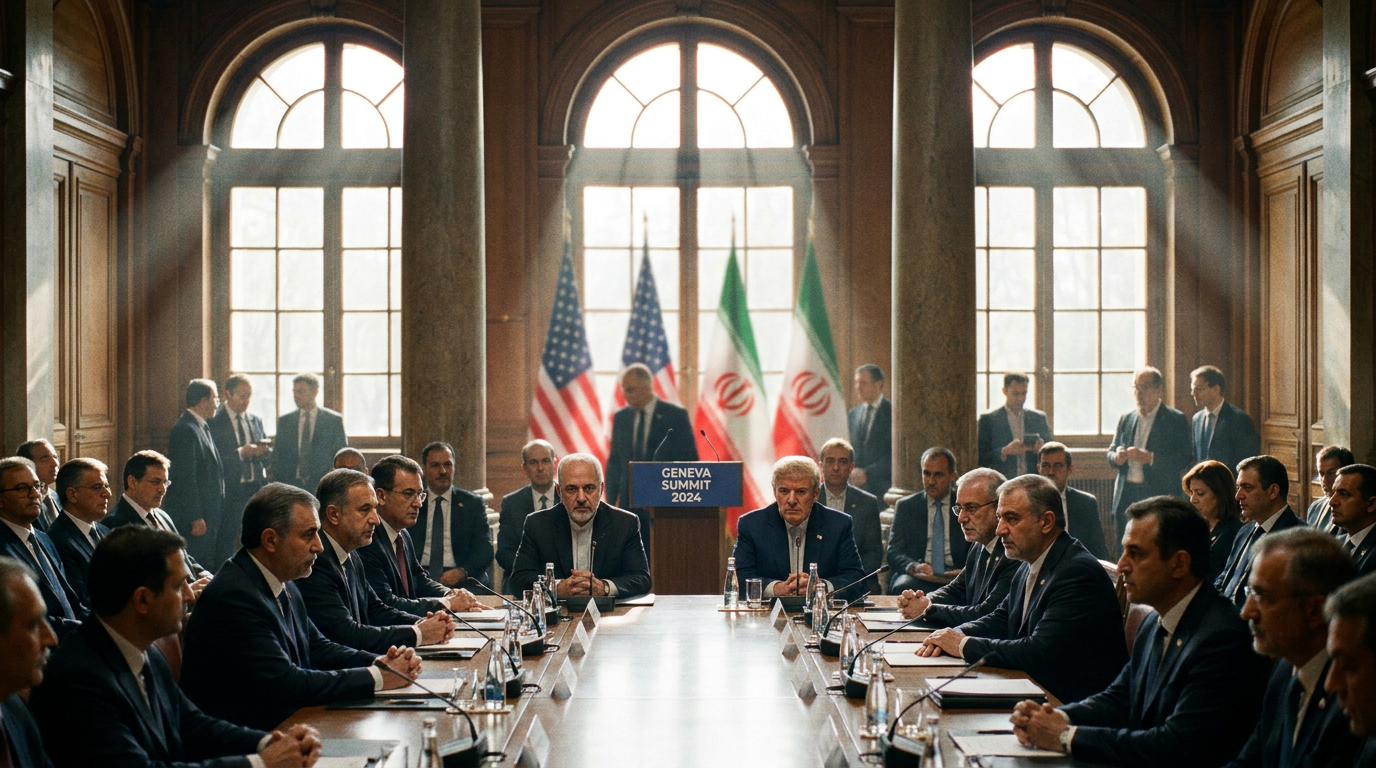
The United States diplomatic delegation has arrived in Geneva, Switzerland, carrying the mandate to sign a historic initial framework agreement between Washington and Tehran. The diplomatic breakthrough aims to formally end a 110-day military and economic crisis that has severely disrupted global shipping and rattled international markets. While the exact parameters of the written agreement remain largely classified, the core objective is clear: a mutual de-escalation of direct hostilities and the immediate reopening of the Strait of Hormuz to unfettered commercial traffic. The signing ceremony represents the culmination of weeks of intense, high-stakes backchannel negotiations that have tested the limits of American diplomatic leverage in the Middle East.[1]
President Donald Trump, wrapping up his attendance at the G7 summit in Évian-les-Bains, France, has positioned the impending agreement as a cornerstone foreign policy achievement. Administration officials are framing the deal as a fulfillment of promises to stabilize volatile global markets and extract the United States from the brink of a prolonged regional conflict. By dispatching his Vice President to handle the formal signing, the President is signaling the administration's full executive weight behind the pact while managing allied coordination from the European summit. The White House is eager to pivot from crisis management to showcasing tangible economic relief for American consumers as the November midterm elections loom on the horizon.[1][4]
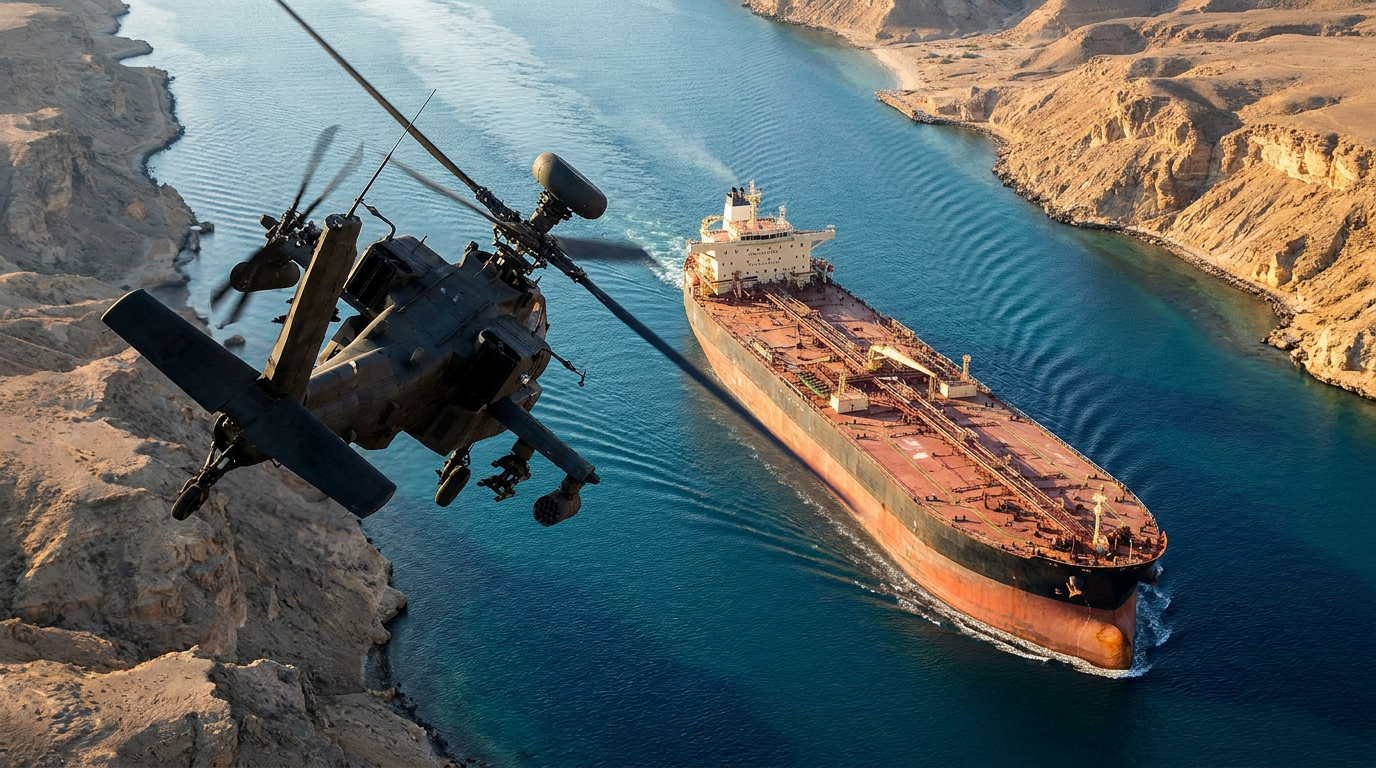
The mere anticipation of a signed framework has already sent powerful ripples through global energy markets, delivering immediate economic relief. Brent crude oil prices have continued a sharp slide, dropping to their lowest levels since early March, effectively erasing the risk premium that had inflated energy costs over the past three months. Traders are pricing in the imminent reopening of the Strait of Hormuz, a vital maritime chokepoint through which roughly a fifth of the world's daily oil consumption typically flows. If the agreement holds and commercial vessels can safely navigate the corridor without the threat of seizure or attack, analysts expect a further stabilization of global supply chains and a corresponding drop in domestic gasoline prices.[2][5]

However, the diplomatic victory lap in Switzerland is being overshadowed by a rapidly deteriorating security situation in the Levant that threatens to unravel the entire framework. Israel has intensified its military operations in southern Lebanon, targeting entrenched militant infrastructure in a campaign that Jerusalem views as an existential necessity. This continued offensive has infuriated Tehran, which considers the Lebanese theater inextricably linked to the broader regional conflict. The disconnect between the bilateral U.S.-Iran negotiations in Geneva and the active combat zone on Israel's northern border has exposed a critical vulnerability in the architecture of the peace deal.[3][7]
Iranian officials have issued a stark public ultimatum, warning of a "harsh response" if the United States fails to compel Israel to cease its attacks in Lebanon. Tehran's top envoys have explicitly stated that the viability of the peace deal—and the promised unblocking of the Strait of Hormuz—is entirely dependent on a comprehensive cessation of hostilities that includes the Lebanese border. This maximalist demand places the U.S. administration in an excruciatingly difficult position, forcing Washington to choose between securing its landmark diplomatic achievement and supporting its closest Middle Eastern ally's localized security objectives.[3]

Iranian officials have issued a stark public ultimatum, warning of a "harsh response" if the United States fails to compel Israel to cease its attacks in Lebanon.
The crisis is placing unprecedented strain on the historically tight relationship between the U.S. administration and the Israeli government. Washington desperately needs a period of absolute regional quiet to implement the complex sequencing of the Iran agreement and reap the domestic political benefits of lower gas prices. Conversely, the Israeli security establishment argues that pausing operations in Lebanon would allow hostile forces to regroup and pose an unacceptable threat to northern Israeli communities. The friction between Washington's macro-strategic goals and Jerusalem's tactical imperatives is creating one of the most significant diplomatic rifts between the two capitals in recent memory.[4][6]
Behind closed doors, Israeli diplomats are reportedly pushing back against the notion that their northern operations should be held hostage by the U.S.-Iran maritime agreement. They maintain that the framework being signed in Switzerland is fundamentally a bilateral understanding regarding direct U.S.-Iran engagement and Gulf shipping lanes, not a comprehensive regional ceasefire that dictates Israel's defense posture. This compartmentalized view of the conflict is fundamentally at odds with Tehran's holistic approach, leaving American negotiators scrambling to bridge an ideological gap that threatens to collapse the deal before the ink is even dry.[6][7]
The stakes for the U.S. administration are incredibly high, extending far beyond the immediate geopolitics of the Middle East. With the midterm elections approaching, the White House is acutely aware that a collapse of the deal and a subsequent spike in gas prices could have devastating electoral consequences. The administration has invested immense political capital in the narrative of being peacemakers who can deliver economic stability. If Iran walks away from the table in response to Israeli actions, the U.S. risks being dragged back into a costly, open-ended conflict that would alienate voters and embolden domestic political opponents.[4][6]

As the U.S. delegation prepares to sit down at the negotiating table in Geneva, the atmosphere is fraught with uncertainty. The initial framework is expected to establish a phased timeline for de-escalation, beginning with a mutual stand-down of naval assets in the Persian Gulf and the gradual resumption of commercial shipping. However, the implementation of these steps will require unprecedented verification mechanisms and a level of mutual trust that currently does not exist. Every movement of a warship, every public statement, and every artillery shell fired in Lebanon will be heavily scrutinized for signs of bad faith.[1][5]
Ultimately, the success or failure of the Switzerland summit may not be decided in the negotiating room, but on the ground in the Middle East. The U.S. administration is now racing against the clock, deploying intense diplomatic pressure on both Jerusalem and Tehran to prevent a localized tactical dispute from detonating a macro-level strategic agreement. Whether the U.S. can successfully thread this needle—securing the reopening of the Strait of Hormuz while managing the explosive dynamics of the Israeli-Lebanese border—will likely define the legacy of its foreign policy and the trajectory of the global economy for the remainder of the year.[2][3][6]
How we got here
Early March 2026
Regional hostilities escalate, severely disrupting commercial shipping traffic through the Strait of Hormuz.
Mid-May 2026
Secret backchannel negotiations accelerate between Washington and Tehran to establish terms for de-escalation.
June 14, 2026
An initial agreement in principle is reached between the U.S. and Iran.
June 17, 2026
U.S. officials arrive in Geneva, Switzerland, to formally sign the diplomatic framework.
Viewpoints in depth
The U.S. Administration's View
Focused on securing a major foreign policy win and stabilizing the economy ahead of elections.
For the White House, the framework agreement represents a critical opportunity to pivot from crisis management to delivering tangible economic relief. Administration officials view the reopening of the Strait of Hormuz as the paramount strategic objective, necessary to lower domestic gas prices and calm volatile global markets. They are intensely frustrated by the prospect of a localized border dispute in the Levant derailing a macro-level diplomatic achievement that has taken months of delicate backchannel negotiation to secure.
Iran's View
Insisting that any de-escalation must be comprehensive and include a halt to Israeli operations in Lebanon.
Tehran views the regional conflict holistically, refusing to compartmentalize the maritime security of the Persian Gulf from the security of its allied militant groups in the Levant. Iranian leadership argues that the U.S. cannot expect a cessation of hostilities in one theater while actively supporting or permitting its ally to conduct offensives in another. By threatening a 'harsh response' and tying the Strait of Hormuz to the Lebanese border, Iran is attempting to leverage its control over global shipping lanes to force a broader regional ceasefire.
Israel's View
Maintaining that northern border security is an independent, non-negotiable imperative.
The Israeli security establishment firmly rejects the linkage between the U.S.-Iran maritime framework and its ongoing military operations in southern Lebanon. Jerusalem argues that the campaign against entrenched militant infrastructure is an existential necessity to protect its northern communities, entirely distinct from the geopolitical maneuvering over Gulf shipping lanes. Israeli officials are pushing back against intense pressure from Washington, warning that pausing operations to accommodate the U.S. diplomatic timeline would allow hostile forces to regroup and pose an unacceptable long-term threat.
What we don't know
- The exact, classified parameters of the framework agreement being signed in Switzerland.
- Whether the U.S. will successfully pressure Israel to pause its operations in Lebanon to save the deal.
- How quickly commercial shipping traffic will return to normal levels in the Strait of Hormuz if the agreement holds.
Key terms
- Strait of Hormuz
- A critical maritime chokepoint between the Persian Gulf and the Gulf of Oman, through which approximately 20% of the world's global oil consumption passes.
- Framework Agreement
- An initial diplomatic pact that establishes broad principles and mutual commitments, serving as the foundation for a more detailed, binding treaty to be negotiated later.
- Brent Crude
- A major global benchmark for oil prices, used to price two-thirds of the world's internationally traded crude oil supplies.
Frequently asked
What is the purpose of the Switzerland summit?
The U.S. and Iran are signing an initial framework agreement to end a 110-day conflict and reopen the Strait of Hormuz to commercial shipping.
Why are oil prices dropping?
Energy markets are reacting positively to the anticipated reopening of the Strait of Hormuz, erasing the risk premium that had inflated crude prices since March.
How does Lebanon factor into the deal?
Iran has threatened to walk away from the agreement if Israel continues its military operations in southern Lebanon, creating a major diplomatic hurdle for U.S. negotiators.
Sources
Source coverage
7 outlets
4 viewpoints surfaced







[1]NPRU.S. Executive Branch
Morning news brief: JD Vance heads to Switzerland to sign initial agreement between U.S. and Iran
Read on NPR →[2]Al JazeeraIranian Leadership
Oil prices continue slide amid hopes for peace, opening of Strait of Hormuz
Read on Al Jazeera →[3]The GuardianIranian Leadership
Middle East crisis live: Iran threatens 'harsh response' if Israel fails to cease attacks in Lebanon
Read on The Guardian →[4]Fox NewsU.S. Executive Branch
Administration nears historic Iran framework as G7 wraps, eyeing economic relief
Read on Fox News →[5]ReutersGlobal Energy Markets
Brent crude hits three-month low on anticipated Strait of Hormuz reopening
Read on Reuters →[6]The New York TimesIsraeli Security Establishment
A Fragile Peace: How the U.S.-Iran Deal Strains the Washington-Jerusalem Alliance
Read on The New York Times →[7]The Times of IsraelIsraeli Security Establishment
Israel maintains Lebanon operations despite looming US-Iran framework
Read on The Times of Israel →

More in news politics
See all 7 stories →Georgia Senate
Rep. Mike Collins Wins Georgia GOP Senate Runoff, Setting Up Matchup Against Sen. Jon Ossoff
7 sources

Strait of Hormuz
How the New US-Iran Deal Reopened the Strait of Hormuz
8 sources
Workplace Policy
Fact-Checking the 32-Hour Workweek: What the Global Trials Actually Show
7 sources

National Identity
American Pride and Belief in the 'American Dream' Plummet Ahead of 250th Anniversary
7 sources
Every angle. Every day.
Get news politics stories with full source coverage and perspective breakdowns delivered to your inbox.