
The Ultimate Guide to Buying an E-Bike in 2026
With the e-bike market maturing, choosing the right electric bicycle requires understanding motor types, sensor technology, and battery capacity. This comprehensive guide breaks down the essential components to help you find the perfect ride for your commute, fitness, or weekend adventures.
By Factlen Editorial Team
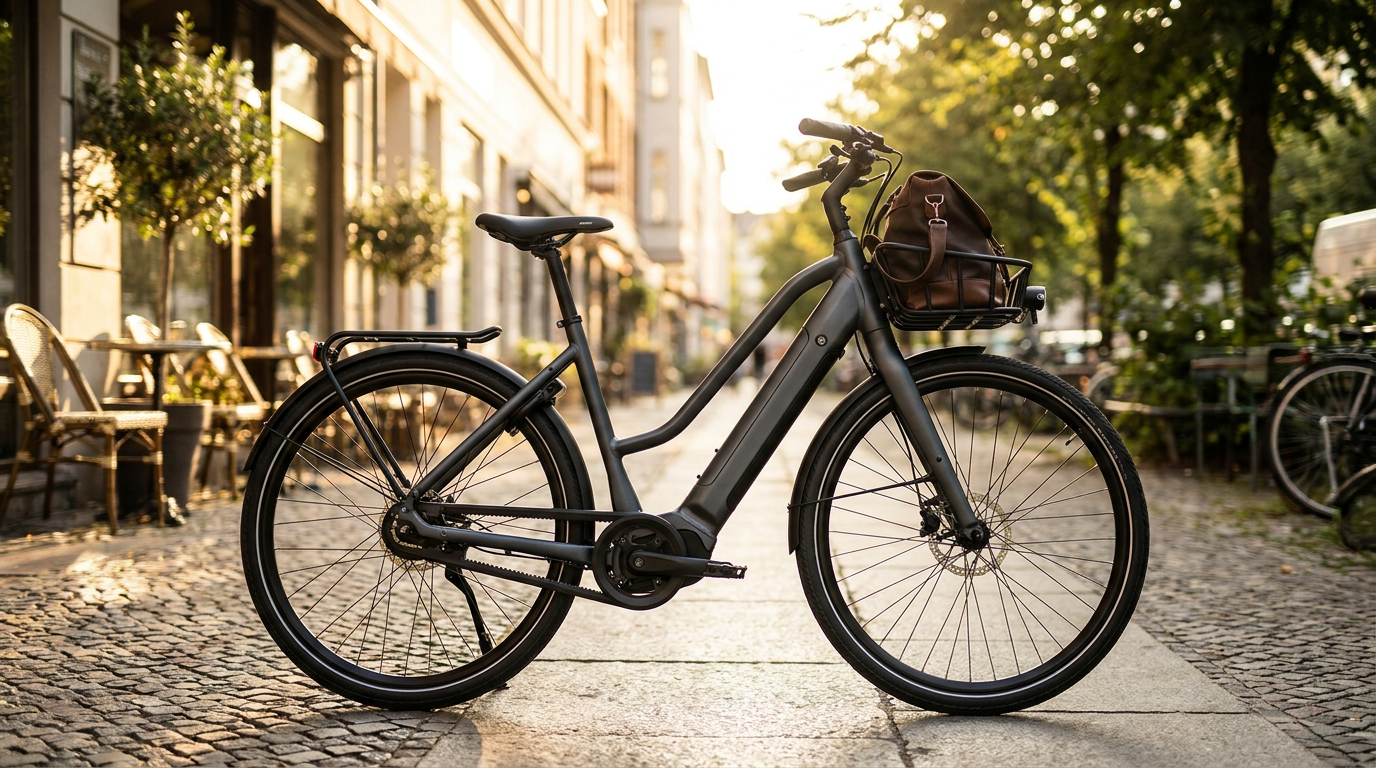
- Urban Commuters
- Value reliability, integrated lighting, fenders, and smooth power delivery for daily transit.
- Budget-Conscious Buyers
- Prioritize affordability and simplicity, often favoring hub motors and cadence sensors for flat terrain.
- Performance & Trail Riders
- Demand natural ride feel, balance, and high torque, strongly preferring mid-drive motors and torque sensors.
What's not represented
- · Traditional Cyclists
- · Local Bike Shop Mechanics
Why this matters
E-bikes have evolved from niche gadgets into viable, eco-friendly car replacements. Understanding the underlying technology ensures you invest in a machine that safely and efficiently meets your daily transportation needs without overpaying for unnecessary features.
Key points
- Determine your primary use case—commuting, trails, or errands—before looking at technical specifications.
- Hub motors offer affordability and simplicity, while mid-drive motors provide superior hill-climbing efficiency and balance.
- Torque sensors deliver a natural, responsive ride feel, whereas cadence sensors act more like an on/off switch for motor power.
- Real-world battery range is typically 60 to 70 percent of a manufacturer's advertised maximum under ideal conditions.
- Hydraulic disc brakes are essential safety components due to the increased weight and speed of electric bicycles.
The electric bicycle market has reached a state of maturity in 2026. No longer viewed simply as novelty gadgets or heavy, cumbersome conversions, modern e-bikes are sophisticated, purpose-built machines that serve as primary transportation for millions. Whether you are looking to replace car trips, conquer daunting hills, or simply keep up with faster friends on weekend rides, the right e-bike can fundamentally change how you move.[8]
However, the sheer volume of options can be overwhelming for first-time buyers. The key to finding the perfect electric bike is not chasing the highest specifications on paper, but rather matching the technology to your specific riding environment and daily needs. Before looking at battery sizes or motor wattages, riders must first define their primary use case: urban commuting, off-road trail riding, or casual weekend cruising.[6]
The foundational decision in choosing an e-bike often comes down to the motor's placement. The industry is currently divided into two main categories: hub-drive motors and mid-drive motors. Each offers a distinct riding experience, price point, and mechanical philosophy.[1][2]
Hub motors are the older and more common technology, typically housed in the center of the rear wheel. Because they operate independently of the bicycle's standard drivetrain, they are relatively simple to manufacture and maintain, making them highly cost-effective. For riders on a budget or those who primarily ride on flat terrain, a hub motor provides ample, straightforward propulsion.[2]

However, hub motors have inherent limitations. Because the heavy motor sits inside the wheel, it alters the bike's weight distribution, making the rear end feel heavy and sometimes cumbersome to maneuver at low speeds. Furthermore, because the motor does not utilize the bike's gears, it can struggle on steep inclines, operating less efficiently and draining the battery faster when pushed hard on hills.[1][2]
Mid-drive motors, by contrast, are mounted directly at the bike's bottom bracket, between the pedals. This central, low placement preserves the natural balance and handling of a traditional bicycle. More importantly, a mid-drive motor transfers its power through the bike's chain and gears.[1]
This mechanical synergy allows the motor to operate at its most efficient speed, much like a car transmission shifting gears on a steep grade. When a rider shifts into an easier gear to climb a hill, the mid-drive motor benefits from that same mechanical advantage. The result is vastly superior climbing ability and overall battery efficiency, though mid-drive systems are notably more expensive and require purpose-built frames.[1][2]
This mechanical synergy allows the motor to operate at its most efficient speed, much like a car transmission shifting gears on a steep grade.
Beyond the motor's location, the 'brain' of the e-bike—the sensor system—dictates how that power is delivered. E-bikes rely on either cadence sensors or torque sensors to tell the motor when and how much to assist the rider.[3][4]
A cadence sensor acts much like a simple on/off switch. It detects whether the pedals are turning; if they are, the motor delivers a predetermined amount of power based on the selected assist level. This setup is inexpensive and allows riders to achieve high speeds with very little physical effort, which is ideal for relaxed cruising or commuting without breaking a sweat. However, the power delivery can sometimes feel abrupt or 'jerky,' lacking the nuance of a natural pedal stroke.[3][4][5]
Torque sensors offer a much more refined experience. Instead of just measuring if the pedals are turning, a torque sensor measures exactly how hard the rider is pushing. The motor then amplifies that specific effort in real-time. If you pedal gently, the motor provides a gentle assist; if you stand up and mash the pedals on a steep hill, the motor surges with matching power.[3][5][7]

This dynamic response makes a torque-sensor e-bike feel like riding a traditional bicycle, but with superhuman legs. It provides smoother starts, better low-speed control in traffic, and improved battery efficiency, as the motor only delivers maximum power when genuinely needed. Unsurprisingly, torque sensors are standard on premium mid-drive bikes, while cadence sensors dominate the budget hub-motor market.[4][5]
Battery capacity is the next critical specification, typically measured in Watt-hours (Wh). A higher Wh rating equates to a larger 'gas tank' and a longer potential range. Most modern commuter e-bikes feature batteries ranging from 400 to 750 Wh, providing ample energy for daily transit.[6]
Buyers should be wary of manufacturer range claims, which are often calculated under ideal, flat-ground conditions with a lightweight rider using the lowest assist setting. In real-world conditions—factoring in hills, wind, cargo, and higher assist levels—riders should expect to achieve roughly 60 to 70 percent of the advertised maximum range. If a bike claims a 50-mile range, planning for 30 to 35 miles is a safer bet.[6]

Frame geometry also plays a vital role in daily usability. While traditional 'step-over' frames offer structural rigidity preferred by mountain bikers, 'step-through' frames have surged in popularity across all demographics. The ability to easily mount and dismount without swinging a leg high in the air is invaluable for commuters wearing work clothes, parents carrying children, or anyone loading the bike with heavy groceries.[6]
Because e-bikes are significantly heavier than traditional bicycles—often weighing between 45 and 70 pounds—and travel at higher average speeds, robust stopping power is non-negotiable. Hydraulic disc brakes are widely considered essential for modern e-bikes, offering consistent, powerful stopping ability in all weather conditions with minimal hand effort.[6]
Finally, buyers must navigate the three-class legal system used in most North American jurisdictions. Class 1 bikes provide pedal-assist only up to 20 mph. Class 2 bikes include a throttle, allowing the bike to move without pedaling, also capped at 20 mph. Class 3 bikes are pedal-assist only but provide support up to 28 mph, making them popular for long-distance commuters sharing the road with cars.[6]

Ultimately, an e-bike is a significant investment in personal mobility. While direct-to-consumer online brands offer tempting prices, purchasing from a local dealer provides crucial advantages: professional assembly, warranty support, and the indispensable opportunity to test-ride different motor and sensor combinations before committing to a purchase that will redefine your daily routine.[6][8]
How we got here
Early 2010s
Hub motors dominate the early consumer e-bike market, offering affordable but heavy and unrefined conversion options.
2014
Bosch introduces its first major mid-drive e-bike system to the North American market, shifting the industry toward integrated, gear-driven motors.
2020
The global pandemic triggers a massive boom in e-bike sales as commuters seek socially distanced transportation alternatives.
2024
Battery technology improvements lead to the widespread adoption of high-capacity cells, pushing average commuter ranges past 50 miles.
2026
The market matures with highly specialized models, making torque sensors and hydraulic brakes standard on mid-tier commuter bikes.
Viewpoints in depth
The Commuter's View
Focuses on replacing car trips with reliable, low-maintenance daily transit.
For daily commuters, an e-bike is a utility vehicle rather than a piece of sporting equipment. This camp prioritizes features like step-through frames for riding in work clothes, integrated lighting, and hydraulic brakes for wet-weather safety. They often prefer Class 3 bikes for higher top speeds to keep up with city traffic, and value battery reliability over raw torque.
The Budget-Conscious View
Focuses on maximizing value and accessibility for casual riders.
This perspective argues that the high cost of premium mid-drive e-bikes creates an unnecessary barrier to entry. By utilizing proven, inexpensive hub motors and cadence sensors, budget-friendly brands can offer highly capable bikes for a fraction of the price. For riders tackling flat suburban streets or paved trails, this camp maintains that the nuanced feel of a torque sensor isn't worth a massive price premium.
The Performance View
Focuses on ride quality, mechanical synergy, and natural cycling dynamics.
Enthusiasts and trail riders argue that the bicycle's fundamental balance shouldn't be compromised by heavy rear-wheel motors. This camp strongly advocates for mid-drive systems and torque sensors because they amplify human effort rather than overriding it. By leveraging the bike's mechanical gearing, these systems offer superior climbing ability and a ride feel that mimics a traditional bicycle, which is essential for technical terrain.
What we don't know
- How upcoming changes to local trail and path regulations will affect where Class 2 and Class 3 e-bikes can legally be ridden.
- Whether solid-state battery technology will become commercially viable for e-bikes in the near future, which could drastically reduce weight.
- How the secondary market for used e-bikes will evolve as older batteries degrade and require expensive replacements.
Key terms
- Watt-hour (Wh)
- A measurement of battery capacity that indicates how much energy the battery can store, directly impacting the bike's range.
- Mid-Drive Motor
- An electric motor positioned at the center of the bike between the pedals, which powers the chain and utilizes the bike's gears.
- Hub Motor
- An electric motor built directly into the center of the front or rear wheel, operating independently of the bike's gears.
- Torque Sensor
- A sensor that measures how hard the rider is pedaling and adjusts the motor's power output to match their physical effort.
- Cadence Sensor
- A sensor that detects whether the pedals are turning and delivers a fixed amount of motor assistance based on the selected setting.
- Pedelec
- A term commonly used in Europe (and increasingly globally) for an electric bicycle that only provides assistance when the rider is pedaling.
Frequently asked
How far can I actually ride on a single charge?
Real-world range is typically 60% to 70% of the manufacturer's advertised maximum. A standard 500 Wh battery usually provides 30 to 45 miles of range, depending on hills, rider weight, and the assist level used.
Do I still get a workout on an electric bike?
Yes. Because e-bikes use pedal-assist technology, you still have to pedal to move. Studies show e-bike riders often get more exercise overall because they ride further and more frequently than they would on a traditional bike.
What is the difference between Class 1, 2, and 3 e-bikes?
Class 1 provides pedal-assist up to 20 mph. Class 2 includes a throttle for propulsion without pedaling, also capped at 20 mph. Class 3 provides pedal-assist up to 28 mph and generally does not feature a throttle.
Can I ride an e-bike in the rain?
Yes, the electrical components on modern e-bikes are sealed and water-resistant. However, it is recommended to avoid submerging the motor or battery in deep water and to dry the bike after wet rides.
Sources
Source coverage
8 outlets
3 viewpoints surfaced








[1]Bosch eBike SystemsPerformance & Trail Riders
Hub vs. Mid-Drive Motors: What's the Difference?
Read on Bosch eBike Systems →[2]Cycle VoltaBudget-Conscious Buyers
Hub Motor Vs. Mid-Drive Motor
Read on Cycle Volta →[3]AventonPerformance & Trail Riders
Comparing Torque vs Cadence Sensors
Read on Aventon →[4]Ride1UpPerformance & Trail Riders
Ebike Sensors: Torque vs Cadence
Read on Ride1Up →[5]Electric Bike ComparePerformance & Trail Riders
Torque Sensor vs Cadence Sensor on an E-Bike
Read on Electric Bike Compare →[6]Riding 5Urban Commuters
How to Choose Your First E-Bike
Read on Riding 5 →[7]HeybikeBudget-Conscious Buyers
Torque vs Cadence Sensors: Which is Right for You?
Read on Heybike →[8]Factlen Editorial TeamUrban Commuters
Synthesis by Factlen editorial team
Read on Factlen Editorial Team →

Every angle. Every day.
Get shopping stories with full source coverage and perspective breakdowns delivered to your inbox.