
The Two-Step Lock: How DNA Methylation and Histone Modification Silence Genes
Cells use a coordinated chemical tag-team of histone deacetylation and DNA methylation to permanently lock away specific genetic sequences, a mechanism conserved across both plant development and human biology.
By Mateo Ramos

- Clinical Oncologists
- Focus on the therapeutic potential of reversing aberrant DNA methylation to reactivate tumor suppressor genes in cancer patients.
- Plant Geneticists
- Study epigenetic silencing as a fundamental defense mechanism against foreign DNA and a tool for crop engineering.
- Structural Biologists
- Investigate the precise physical interactions and sequential dependencies between histone-modifying enzymes and DNA methyltransferases.
Why this matters
Understanding how cells physically lock away DNA sequences explains how a single genome can produce hundreds of different cell types, and reveals the exact chemical vulnerabilities that researchers are now targeting to reverse cancer growth.
On September 10, 2015, plant geneticists published a comprehensive mapping in Frontiers in Plant Science detailing how transgenic crops actively silence foreign genes, demonstrating that organisms do not just passively ignore unrecognized DNA—they actively lock it away. This process relies on a highly coordinated chemical tag-team: DNA methylation and histone modification. Together, these two systems dictate which parts of the genome are read and which are permanently archived.[2]
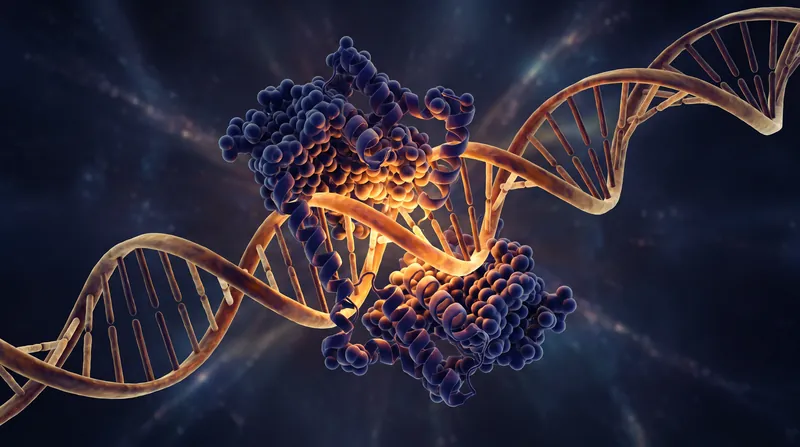
The mechanism operates as a microscopic two-step verification system. Inside the nucleus, exactly 147 base pairs of DNA wrap around an octamer of proteins called histones, forming a complex known as chromatin. When a gene needs to be turned off—whether it is a viral sequence in a plant or a tumor suppressor gene in human cancer—the cell tightens this spooling into a dense 30-nanometer fiber so tightly packed that the transcription machinery cannot access the genetic code.[1][6]
The first step in this lockdown involves histone modifications, specifically deacetylation. Enzymes known as histone deacetylases (HDACs) remove acetyl groups from the lysine residues extending from the histone tails. In plant models, the enzyme HDA6 acts as the primary initiator, stripping away the chemical markers that normally keep the chromatin open and accessible to the cell's reading machinery.[4][5]
Removing these acetyl groups increases the positive charge on the histone proteins. Because the DNA backbone carries a strong negative charge, this chemical shift causes the DNA to bind more tightly to the histone spool. The physical condensation of the chromatin represents the first barrier to gene expression, but it is highly reversible. "DNA methylation and histone modification are the primary epigenetic mechanisms regulating gene transcription," the NCBI StatPearls database outlines, noting that these changes alter how the body reads a sequence without changing the sequence itself.[1]
To make the silencing permanent, the cell deploys a second mechanism: DNA methylation. DNA methyltransferases (DNMTs) attach a single methyl group—composed of one carbon and three hydrogen atoms—directly to the cytosine bases of the DNA strand. This occurs almost exclusively at sites where cytosine sits next to guanine, known as CpG sites, converting the base into 5-methylcytosine.[6]
This interplay is not coincidental; the two systems are physically and biochemically linked. The removal of acetyl groups by enzymes like HDA6 creates the necessary chromatin environment that recruits DNA methyltransferases to the site. Without the initial histone modification, the DNA methylation machinery struggles to establish a permanent lock on the gene, demonstrating a sequential dependency.[4][5][7]
This interplay is not coincidental; the two systems are physically and biochemically linked.
In human biology, this exact sequence governs cellular differentiation. A liver cell and a neuron contain the exact same genome; they differ only in which genes have been permanently silenced by this methylation-histone interplay. During embryonic development, roughly 70 percent of the 28 million CpG sites in the human genome become methylated to lock in cellular identity and prevent inappropriate gene expression.[1][6]
However, when this system misfires, the consequences are severe. In human oncology, researchers have mapped the "DNA hypermethylome"—a landscape where cancer cells hijack this silencing machinery to turn off tumor suppressor genes. Instead of a genetic mutation breaking the gene, the cell's own epigenetic enzymes bury it under dense chromatin.[3]
Clinical data shows that in certain colorectal and breast cancers, up to 400 regulatory genes are silenced through aberrant hypermethylation rather than structural mutation. Because the underlying DNA sequence remains intact, this presents a unique therapeutic vulnerability: if the chemical locks can be removed, the tumor suppressor genes can be reactivated to halt the malignancy.[3][6]
The evidence for this cross-kingdom conservation is robust, but the exact binding kinetics remain partially obscured. While the dependency of DNA methylation on prior histone deacetylation is well-documented in both Arabidopsis plants and human cancer lines, the specific protein-protein interactions that bridge the two enzyme complexes are still being mapped by structural biologists.[4][5][7]
Furthermore, the durability of these chemical locks varies significantly. While DNA methylation is generally considered a stable, long-term silencing mechanism, recent studies indicate that it is more dynamic than previously thought, with active demethylation processes occurring during specific developmental windows and in response to environmental stress.[1]
The challenge for clinical translation lies in the precision of the intervention. Current epigenetic drugs, such as DNA methyltransferase inhibitors currently in Phase II and III clinical trials, operate globally across the genome. They successfully reactivate silenced tumor suppressors, but they also risk unlocking viral sequences or oncogenes that the cell had appropriately sequestered.[3][6]
The next frontier in this field is targeted epigenetic editing. By utilizing engineered guide RNAs to direct histone modifiers and DNA methyltransferases to specific genomic loci, researchers aim to silence or activate individual genes without disrupting the entire cellular epigenome.[4]
Until those targeted delivery systems are perfected, the primary utility of mapping the DNA hypermethylome remains diagnostic. The specific patterns of DNA methylation and histone modification offer a highly accurate molecular fingerprint, allowing clinicians to detect malignancies and predict treatment responses long before structural mutations become apparent.[3][6]
Viewpoints in depth
The Clinical Oncology View
Viewing epigenetic silencing as a reversible disease mechanism rather than a permanent genetic defect.
For decades, cancer was viewed strictly as a disease of genetic mutation—structural damage to the DNA sequence itself. The mapping of the DNA hypermethylome shifted this paradigm. Clinical oncologists now recognize that many cancers survive not by breaking tumor suppressor genes, but by burying them under dense, methylated chromatin. Because these epigenetic locks are applied by enzymes, they can theoretically be removed by enzyme inhibitors, offering a pathway to cure that does not require editing the underlying DNA.
The Plant Genetics View
Understanding silencing as an active, evolutionary defense system against viral and foreign DNA.
Plant researchers studying transgenic crops provided crucial insights into how organisms handle unrecognized genetic material. When foreign DNA is introduced into a plant genome, the plant does not passively accept it. Instead, enzymes like HDA6 actively recognize the anomaly, strip away the acetyl groups, and recruit DNA methyltransferases to lock the sequence down. This demonstrates that epigenetic silencing evolved in part as a sophisticated genomic immune system.
What we don’t know
- The precise physical protein-protein interactions that bridge histone deacetylases and DNA methyltransferases during the handoff phase of silencing.
- How cells selectively target specific CpG islands for hypermethylation in cancer while leaving the rest of the genome hypomethylated.
- The exact environmental triggers that initiate active DNA demethylation during specific developmental windows.
Sources
Source coverage
7 outlets
3 viewpoints surfaced






- [1]StatPearlsStructural Biologists
Genetics, Epigenetic Mechanism
Read on StatPearls → - [2]Frontiers in Plant SciencePlant Geneticists
Epigenetic silencing in transgenic plants
Read on Frontiers in Plant Science → - [3]Human Molecular GeneticsClinical Oncologists
Epigenetic gene silencing in cancer: the DNA hypermethylome
Read on Human Molecular Genetics → - [4]Mutation ResearchStructural Biologists
Epigenetic interplay between histone modifications and DNA methylation in gene silencing
Read on Mutation Research → - [5]Plant Signaling & BehaviorPlant Geneticists
Epigenetic interplay of histone modifications and DNA methylation mediated by HDA6
Read on Plant Signaling & Behavior → - [6]Subcellular BiochemistryClinical Oncologists
The Role of DNA Methylation and Histone Modifications in Transcriptional Regulation in Humans
Read on Subcellular Biochemistry → - [7]Factlen Editorial Team
Synthesis by Factlen editorial team
Read on Factlen Editorial Team →
Comments

More in Science
See all →Carbon Removal
New Electrochemical Device Pulls CO2 From Air Without Extreme Heat, Overcoming Major Direct Air Capture Hurdle
3 sources

Genetic Circuits
The Structural Mechanics of the Lac Repressor: How Allolactose Unlocks Bacterial Gene Expression
8 sources
Indo-Pacific Climate
How the Indian and Pacific Oceans Are Breaking a 400-Year Climate Link
5 sources

Protein Misfolding
The PrPSc Conformation: How Misfolded Prion Protein Catalyzes the Conversion of PrPC to Cause Transmissible Spongiform Encephalopathies
11 sources

Every angle. Every day.
Get Science stories with full source coverage and perspective breakdowns delivered to your inbox.